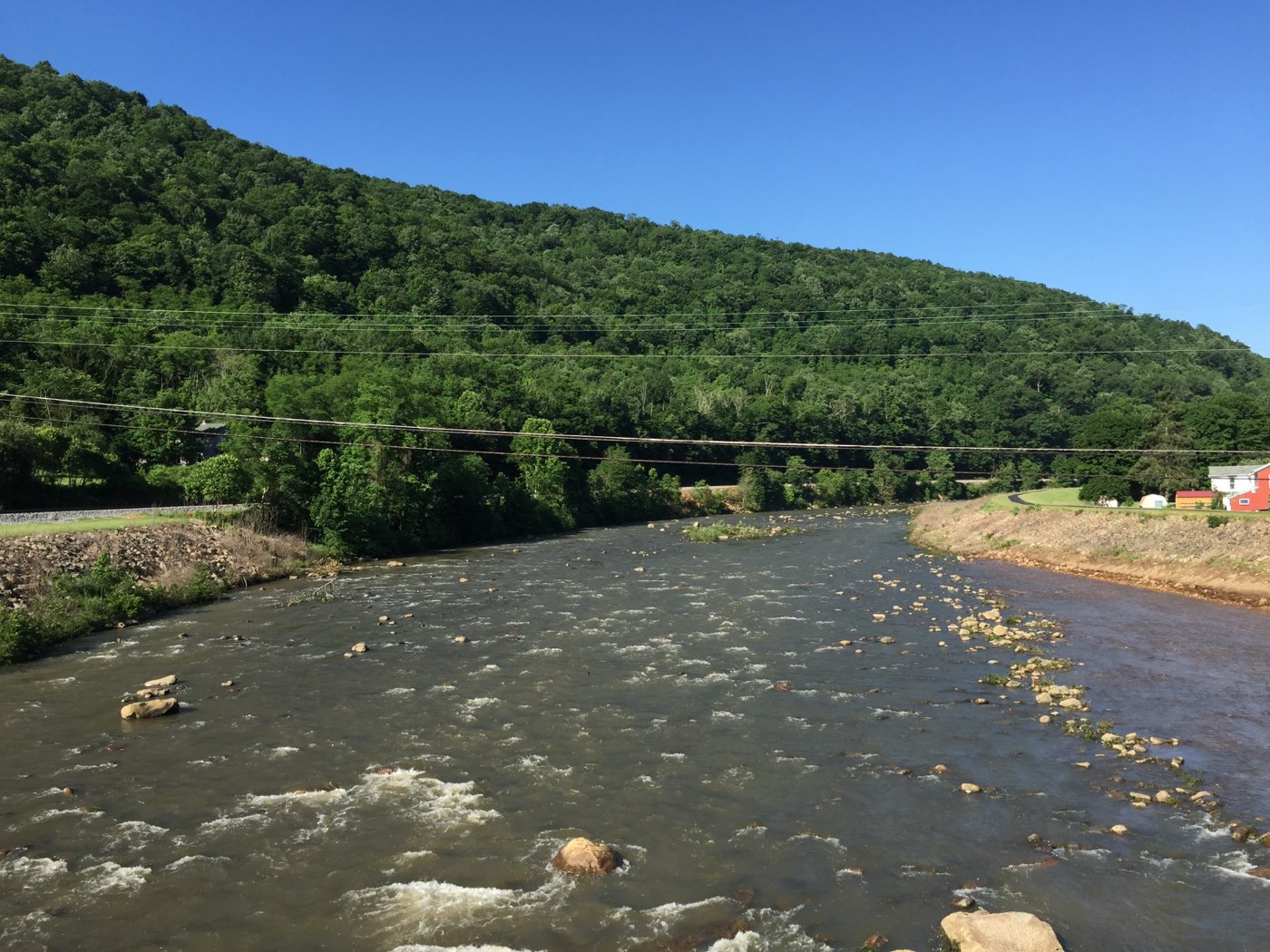
The best streamer fly rod for Mid-Atlantic trout and smallmouth this fall is the Sage R8 Core 690-4 at $1,100: a fast-action 6-weight with a butt section built to turn over full sink-tip lines and articulated flies without folding. The value pick is the Echo Streamer X 690-4 at $574.99, a rod Kelly Galloup designed around one job, throwing heavy flies with a minimum of false casts. The Scott Centric C907/4 ($995) is the third option, a 7-weight built for open smallmouth water where line speed and distance matter more than finesse. All three cover the 6 to 7-weight window that handles articulated streamers and sink tips on the Savage, the North Branch Potomac, Penns Creek, and Mid-Atlantic smallmouth rivers like the Susquehanna and Shenandoah in fall.
The variable that decides this category is not the line weight printed on the blank, but how much power sits in the butt section: that is what turns over a weighted sink tip and a six-inch articulated fly without folding the rod into a tailing loop at 40 feet. A 6-weight with a soft butt struggles with the same fly a 7-weight throws all day, and a 7-weight with a stiff tip beats up a caster's arm on an afternoon of small buggers. Match the butt to the fly, not just the number on the rod.
The picks at a glance
| Pick | Best for | Price (as of September 2026) | Distinguishing spec |
|---|---|---|---|
| Sage R8 Core 690-4 | Big rivers, full sink tips, smallmouth | $1,100 | Cork and EVA fighting butt built into every 5wt to 9wt R8 Core |
| Echo Streamer X 690-4 | First dedicated streamer rod, budget pick | $574.99 | 4.1 oz, taper reverse-engineered for heavy flies |
| Scott Centric C907/4 | Open water, long repeated casts | $995 | Top of Scott's recovery-speed scale |
How to choose a streamer fly rod
Line weight and grain window
A 6-weight throws flies up to about 4 inches and lightly weighted sink tips without complaint, and it covers most Mid-Atlantic trout water. Step up to a 7-weight for 5 to 6-inch articulated patterns, bulkier sculpin heads, and smallmouth work on bigger rivers where wind and distance both increase. None of the three rods here publish a recommended line weight beyond the number stamped on the blank, so match the fly to the rod rather than the other way around. A size 2 Clouser casts fine on a 6-weight; a 6-inch articulated sculpin does not.
Action and recovery
Fast action means the rod bends mostly in the top third and snaps back straight quickly after the stop. A slow recovery lets the tip keep moving after the stop, which opens the loop and costs the accuracy a big fly needs to land tight to a log or a rock seam. All three rods here are built fast. Scott's own comparison chart puts the Centric at the fastest recovery tier in its lineup. Sage and Echo publish no numeric scale, but both describe the same goal in their own copy: a stiff bottom section that loads quickly under a heavy fly and a tip that stops moving with it.
Fighting butt and grip
A fighting butt, the short extension below the reel seat, braces against a forearm or a hip during a long day of stripping and gives leverage when a fish that ate an articulated streamer turns and runs for structure instead of coming to hand. Sage builds a cork and EVA fighting butt into every R8 Core from 5-weight through 9-weight, the 690-4 included. Echo shapes the Streamer X's grip to Kelly Galloup's own casting stroke; the product page lists no fighting butt on either the 690-4 or the 790-4. Scott's page for the C907/4 does not list one either, unlike the 9-foot-6 C955/4 and C956/4 built in the same series with boat fishing in mind.
Sink tip handling
A sinking or sink-tip line pulls harder against the rod on the pickup than a floating line of the same weight, because the sinking portion keeps sinking as it loads. A rod with a soft mid-section cannot lift that line cleanly off the water, so the back cast collapses before it starts. Sage says the R8 Core's powerful butt section "accommodates a full lineup of sinking tip lines," and the same strength that pulls a smallmouth out of a rock seam is what keeps a sink tip from folding the rod on the pickup. Echo built the Streamer X around the same problem from the fly end: the company reverse-engineered the taper to deliver heavy payloads with a minimum number of false casts, which matters when a sink tip needs picking up, re-aiming, and dropping again in a tight run.
Sage R8 Core 690-4: the top pick
Specs:
- Length and line: 9'0", 6-weight, 4 pieces
- Action: Fast (Sage's multi-application, fast-action line)
- Grip: Flor grade full-wells cork handle with cork and EVA fighting butt
- Reel seat and guides: Gunmetal anodized aluminum up-locking reel seat with hidden hook keeper; Fuji ceramic stripper guides with hard chromed snake guides
- Price: $1,100 as of September 2026
- Built on Bainbridge Island, Washington
Sage markets the 690-4 for one job among several the R8 Core line covers: a rod able to "cast large, heavy and wind-resistant flies long distances or into heavy winds," and the company calls it out specifically for big river trout fishing and smallmouth bass. That is close to the exact water this roundup covers, the wider stretches of the Susquehanna and the Shenandoah where a 6-weight needs to carry a sink tip and an articulated fly 50 feet into wind. Sage's R8 material system packs more graphite fiber into the wall with what the company calls a nano-sintered resin, and the stated result is a stiffer butt paired with a tip sensitive enough to still register a strip-take.
The limit is price and missing weight data. At $1,100 it costs more than either other rod here, and Sage publishes no ounce figure for the 690-4, so a buyer cannot compare swing weight against the Echo's published 4.1 oz without casting both side by side.
Buy if: You fish big Mid-Atlantic water from a boat or wide wading water, throw full sink tips, and want a fighting butt built in.
Skip if: You fish small freestone streams where a rod this powerful overpowers the water.
Echo Streamer X 690-4: the value pick
Specs:
- Length and line: 9'0", 6-weight, 4 pieces (also built as the 790-4, 9'0", 7-weight, 4 pieces, same price)
- Weight: 4.1 oz for the 690-4; 4.3 oz for the 790-4 (Echo's published figures)
- Action: Fast tip over a powerful bottom section, per Echo's own description
- Grip: Kelly Galloup's custom handle shape
- Price: $574.99 as of September 2026
- Designed to a blueprint from streamer innovator Kelly Galloup
Echo built the Streamer X around a single stated goal: hit a coffee cup at 50 feet with a fly bigger than the cup, with the taper reverse-engineered to deliver a heavy fly with a minimum number of false casts. That goal matters on Mid-Atlantic water, where a cast to a log jam or a rock seam often gets one shot before a fish eats or spooks. At $574.99 it costs about half the Sage, and the 4.1 oz weight is the only published figure among the three rods here, useful for a caster weighing whether an 8-hour day of stripping big flies will wear out an arm.
The limit is component detail. Echo does not publish a guide brand, a stripping-guide insert material, or a reel-seat material grade for the Streamer X, and the rod ships in one grip shape built around Galloup's own stroke rather than a choice of handle sizes.
Buy if: This is your first dedicated streamer rod, or you want a 6 or 7-weight built for one job at roughly half the price of the field.
Skip if: You want graded cork and premium guide hardware and are willing to pay for it.
Scott Centric C907/4: line speed for open water
Specs:
- Length and line: 9'0", 7-weight, 4 pieces
- Action: Fast; Scott's own comparison chart rates the Centric line's recovery speed at its fastest tier
- Grip and guides: Flor grade cork; titanium stripping guides with zirconia inserts; Snakebrand Universal snake guides
- Reel seat: Fully milled aluminum reel seat with micarta insert and type III hard coat
- Price: $995 as of September 2026
- Made in Montrose, Colorado
Scott's own copy calls the C907/4 "the ultimate tool for streamers, bass bugs, or any time big fish want a big meal," and singles it out as one of the most fun rods in the whole Centric series to cast, crediting the combination of light swing weight, power, and responsiveness. That combination earns its keep on open smallmouth water, the wider Susquehanna below Harrisburg and the Shenandoah's main stem, where a caster covers a lot of bank from a boat or a long wade and needs to fire repeated 60-foot casts without the rod feeling like work by the fourth hour.
The limit is missing specifics. Scott's page lists no ounce weight and no fighting butt for the C907/4, unlike the 9-foot-6 C955/4 and C956/4 in the same series, which the company builds with nymphing and streamer fishing from a boat specifically in mind. A caster who wants that extra leverage against a hard-running fish should compare those two lengths before buying the shorter model.
Buy if: You fish open, wide water and want the fastest-recovering rod in this group for long, repeated casts.
Skip if: You fish tight, brushy Mid-Atlantic freestone water where a 9-foot 7-weight is more rod than the cover calls for.
Which one to buy
Start with where you actually fish. The Savage and the North Branch Potomac run mostly pocket water and short pools, and a 9-foot 6-weight with a fast-loading tip, the Sage or the Echo, covers that water without feeling like a broomstick on a 30-foot cast. The lower Susquehanna, the Shenandoah's main stem, and the wider pools on Penns Creek reward the Scott's extra line speed when a cast needs to cross 50 or 60 feet of river before the fly reaches the bank.
Then weigh the price against how often the rod actually leaves the garage. The Sage costs $525 more than the Echo for a fighting butt, higher-graded cork, and ceramic guide inserts, upgrades that matter to someone fishing 60 or more days a year who wants the rod to hold up to that use. For someone fishing streamers a handful of weekends each fall, that gap buys a reel and a spool of sink-tip line instead.
For the typical reader of this site, a Mid-Atlantic trout angler who adds a few smallmouth trips a year and fishes streamers mostly in October and November, I would buy the Echo Streamer X 690-4. It does the one job this roundup covers, articulated flies and sink tips on 6 to 7-weight water, without asking for $1,100, and the 790-4 at the same price covers bigger flies and windier days without buying a second rod.
Questions people ask
Do I need a 6-weight or a 7-weight for streamer fishing?
A 6-weight handles flies up to about 4 inches and covers most Mid-Atlantic trout water. Step up to a 7-weight for 5 to 6-inch articulated patterns, bulkier sculpin heads, and smallmouth water on bigger rivers like the lower Susquehanna, where wind and distance both increase.
Can I fish streamers on my 5-weight trout rod?
A 9-foot 5-weight throws a size 6 to 8 bugger without trouble, the kind of streamer covered in our best 5-weight fly rods roundup. Articulated flies over 4 inches and full sink-tip lines ask more of the butt section than most 5-weights are built to give.
Do I need a sink-tip line for fall streamer fishing?
Only in higher or off-color flows. In low, clear water, a floating line with a long leader turns over a small streamer without plowing the bottom of a shallow riffle. Save a sink tip for stained water or deeper runs where the fly needs to get down fast.
What action is best for throwing big articulated streamers?
Fast. A fast-action rod's stiff butt section loads quickly under a heavy fly, and its quick recovery keeps the tip from wobbling on the stop, which is what lets a 6-inch fly land accurately at 40 feet instead of piling up short.
Related reading
- Smallmouth bass on the fly for the gear table that explains why smallmouth ask more of a rod than trout do.
- Best 5-weight fly rods for lighter rods built for dries and nymphs rather than articulated flies.
- Savage River, Maryland for the freestone pocket water a 6-weight covers well.
- North Branch Potomac for tailwater trout holding through the fall.
- Susquehanna smallmouth fly fishing for the open water where the 7-weight earns its keep.
Updated October 10, 2026.