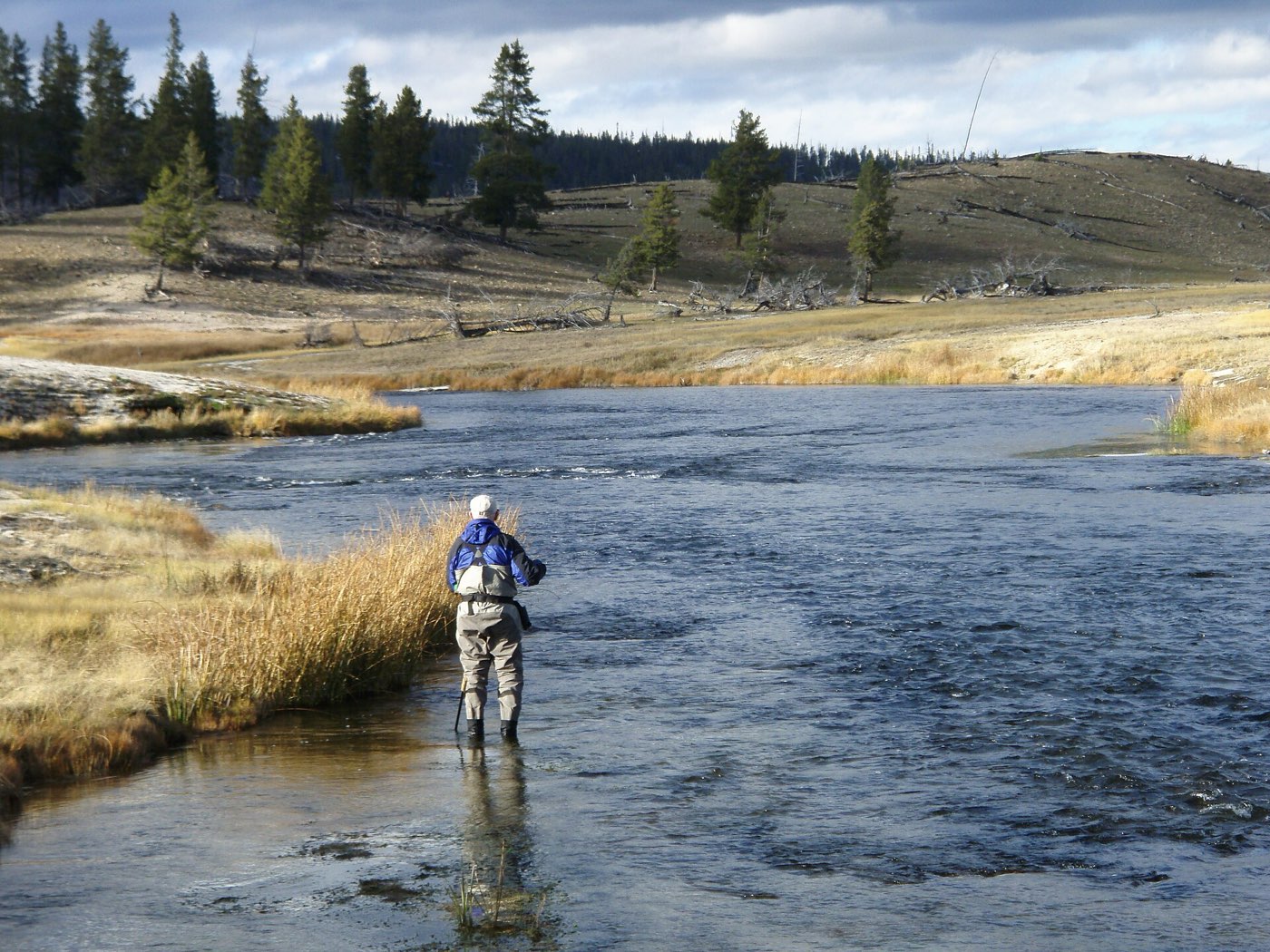
The best wader under $300 for fall and winter trout fishing in the Mid-Atlantic is the Orvis Clearwater at $298: four-layer nylon construction with a 30K waterproof rating and neoprene booties built into the gravel guards. The value pick is the Frogg Toggs Hellbender Pro at $230, a 4-ply nylon wader with a double-taped 4mm neoprene bootie. The Redington Escape sits between them at $249.99, with a lighter 3-layer upper over a 4-layer lower panel. All three are current stockingfoot chest waders, verified on the manufacturer's own product page as of September 2026.
The variable that decides this category is how many fabric layers sit where, because a wader does not fail evenly. The knees, seat, and lower legs take the abrasion from kneeling on gravel and brushing streamside rock; the chest and shoulders almost never touch anything. A wader that puts four layers low and three up top is making a deliberate trade, not cutting a corner.
The picks at a glance
| Pick | Best for | Price (as of September 2026) | Distinguishing spec |
|---|---|---|---|
| Orvis Clearwater | All-around fall and winter wading | $298 | 4-layer nylon shell, 30K waterproof / 8K breathability rating |
| Redington Escape | A lighter fit for long walks to the water | $249.99 | 3-layer upper over a 4-layer lower panel |
| Frogg Toggs Hellbender Pro | Tightest budget, or a backup pair | $230 | 4-ply nylon with double-taped 4mm neoprene booties |
How to choose a wader under $300
Layer count, and where it sits
A breathable wader is a sandwich: an outer face fabric, a waterproof-breathable membrane, and usually an inner liner that protects the membrane from your knees and gear. "4-layer" means an extra reinforcing layer somewhere in that stack, almost always at the legs and seat where abrasion happens. Orvis builds the Clearwater as nylon shell, polyurethane membrane, and nylon tricot liner across the whole wader and backs it with a 30,000mm waterproof / 8,000 g/m²/24hr breathability rating, numbers it publishes on the product page. Redington splits the difference on the Escape, running a lighter 3-layer fabric on the upper body and stepping up to 4-layer only on the lower half, which cuts weight where you do not need abrasion resistance and keeps it where you do. Frogg Toggs does not publish a waterproof/breathability figure for the Hellbender Pro's 4-ply nylon, so you cannot compare its membrane on paper the way you can the Clearwater's.
Seams: taped or welded decides where a wader actually leaks first
Fabric almost never fails on a wader still under warranty age. Seams do, because every needle hole in a taped seam or every fold in a welded one is a spot where water pressure can find a gap over a season of kneeling and crawling through brush. Taped seams run interior tape over a stitched seam and are the standard construction at this price band; welded seams skip the needle entirely and are more common on waders well above $300. None of the three waders here publish welded-seam construction, so treat seam care (rinsing grit out of the knees, drying waders inside out) as part of owning any sub-$300 pair, not an afterthought.
Neoprene booties and gravel guards in cold water
The bootie is the one place a breathable wader has to give up breathability entirely, because it has to seal against a wading boot for hours in cold water. Frogg Toggs specs a 4mm double-taped neoprene bootie on the Hellbender Pro, thick enough to add real insulation against the boot sole. Orvis integrates the gravel guard into the bootie itself rather than as a separate strap, which keeps grit from working down between bootie and boot top on a long wade. A thin bootie is the first thing to feel in December wading, well before the shell fabric tells you anything.
What a sub-$300 price actually cuts
At this price you are not getting what the $450-and-up tier charges for: Simms prices its Freestone stockingfoot wader at $450 and the Freestone Z at $549.95, both confirmed on simmsfishing.com, and that premium buys a published wader-specific warranty (Simms backs the Freestone with a 60-day no-questions leak replacement and 365 days of free leak repairs after that) plus a heavier QuadraLam fabric rated at 42 ounces in a men's medium. Orvis covers the Clearwater for 60 days with a no-questions replacement or refund, then repairs manufacturing defects only and charges $60 for a repair of wear or damage. Redington and Frogg Toggs publish even less warranty detail for their sub-$300 models. Budget for the possibility that a repair at this price tier means a tube of seam sealant, not a free replacement.
Orvis Clearwater: the top pick
Specs:
- Fabric: 4-layer waterproof breathable nylon (nylon shell, polyurethane membrane, nylon tricot liner)
- Waterproof / breathability rating: 30K waterproofness / 8K breathability
- Booties: anatomical neoprene booties with gravel guards built in, not strapped on
- Conversion: opposing side-release buckles for waist-high conversion on warm days
- Storage: external stretch-panel pocket plus a kangaroo-style chest handwarmer pocket
- Price: $298 as of September 2026 (item #2TZX)
- Care: washable, imported
The Clearwater is the only wader of the three that publishes a specific waterproof and breathability number, and 30K/8K is a real four-layer figure, not an entry-level one inflated for a spec sheet. The integrated gravel guard is the detail that separates it from a wader that just adds a neoprene sock: grit cannot work its way between a separate guard and the bootie top because there is no seam there to work into. At $298 it is $2 under the article's price cap, which is close enough that a size or color surcharge could push a specific order over $300, so check the cart total before checkout.
The limit is the warranty and the data sheet. Orvis's wader warranty page gives the Clearwater 60 days of no-questions replacement or refund; after that, only manufacturing defects are covered, wear and accidents are not, and a repair through Orvis costs $60. There is no published bootie thickness or wader weight either, so you are trusting the four-layer spec and the integrated gravel guard design more than a full data sheet.
Buy if: You want the most fabric layers and the best-documented waterproof rating available under $300, and you are willing to convert to waist-high on a warm fall afternoon.
Skip if: You want a warranty that covers leaks past the first 60 days without a $60 repair fee.
Redington Escape: the lighter middle option
Specs:
- Construction: 3-layer upper over a 4-layer lower panel
- Price: $249.99 as of September 2026
- Category: Redington's current mid-tier stockingfoot chest wader, between the $149.99 Crosswater and the $379.99 Sonic-Pro
- Type: stockingfoot chest wader, men's and women's versions offered
The Escape's split-layer build is the clearest example of the "layers where it matters" idea on this list: a lighter 3-layer chest and shoulders you never kneel on, a heavier 4-layer lower half you do. That trade should mean less bulk and better airflow on a long approach hike to a Mid-Atlantic freestone stream, before you have even rigged a rod. At $249.99 it undercuts the Orvis Clearwater by roughly $48 while sitting well above Redington's own $149.99 Crosswater.
The limit here is what Redington does not publish. Unlike Orvis and Frogg Toggs, Redington's own materials do not spell out a bootie thickness, a gravel guard design, or a waterproof/breathability rating for the Escape, so this review can confirm the layer construction and price but not compare its bootie or membrane numbers directly against the other two picks.
Buy if: You want the lightest upper-body fabric on this list for a long hike to the water.
Skip if: You want a published spec sheet as detailed as the Clearwater's before you spend $250.
Frogg Toggs Hellbender Pro: the value pick
Specs:
- Upper: DriPore Plus 4-ply nylon with double-reinforced knees
- Booties: double-taped 4mm neoprene booties
- Guards: attached gravel guards with integral lace hooks
- Suspenders: adjustable X-back suspenders with low-profile locking buckles
- Storage: dual-entry zippered handwarmer chest pocket, horizontal zippered storage pocket, and a separate zippered flip-out security pocket
- Price: $230.00 as of September 2026
The Hellbender Pro is the current model in this line, and that matters because Frogg Toggs is winding down the plain Hellbender: its product page lists that older wader at a $99.99 clearance price marked "Final Sale," with every size except small showing as sold out. The Pro's 4mm double-taped bootie is thicker than most sub-$250 waders bother to publish, which is the one number here that goes head-to-head with the Clearwater's cold-weather case.
The limit is documentation again, in the other direction from Redington. Frogg Toggs lists plenty of feature bullets, pockets, guards, suspenders, but no waterproof or breathability rating for the 4-ply nylon, so there is no way to compare its membrane against the Clearwater's published 30K/8K figure. At $230 you are also $68 under the Clearwater, money that buys a second pair as a boat or truck backup rather than one better wader.
Buy if: You want the thickest published bootie neoprene on this list at the lowest of the three prices.
Skip if: You want a documented waterproof rating to compare against other four-layer waders.
Which one to buy
Start with how you actually fish. If most days involve a long walk to a Mid-Atlantic freestone stream before you ever wet a line, the Redington Escape's lighter 3-layer upper is worth the tradeoff in published detail, because you feel that weight on the hike in more than you feel it standing in the river. If you fish 20 to 40 days a year through a full Mid-Atlantic fall and winter and want the best-documented cold-water setup at this price, the four-layer Clearwater and its integrated gravel guard beat the Escape's unpublished bootie spec.
The Frogg Toggs Hellbender Pro earns its spot by being $68 cheaper than the Clearwater while matching its bootie thickness claim, which makes it the right call for a first serious wader, a loaner for a guest angler, or a backup pair left in the truck. It is not the wader to buy if a leak in January means driving home early.
For the typical reader of this site, a Mid-Atlantic trout angler fishing through the fall and into winter, I would buy the Orvis Clearwater. The published 30K/8K rating and the integrated gravel guard are the only cold-weather-relevant specs on this list backed by actual numbers, and $298 keeps it inside the budget this article set out to cover.
Questions people ask
Are waders under $300 warm enough for winter wading?
None of the three waders here are insulated; all three are breathable shells meant to keep water out, not to keep you warm on their own. Warmth comes from what you wear underneath: a base layer and a fleece or wading pant layered inside the wader, sized up enough that the wader itself does not compress the insulation.
What is the actual difference between a 3-layer and a 4-layer wader?
The number is how many fabric layers are bonded together at that section of the wader, not the whole garment uniformly. A 4-layer build adds a reinforcing layer at the legs and seat, where kneeling and brushing against rock do the most damage, while a 3-layer build saves weight in areas like the chest that rarely touch anything abrasive. The Redington Escape mixes both approaches in one wader.
Do cheaper waders leak more than expensive ones?
Not necessarily from the fabric itself. Seams, the stitched-and-taped or welded joints between fabric panels, are the more common failure point regardless of price, and none of the three waders in this roundup publish welded-seam construction. Rinsing grit out of the knees after a muddy wade and drying waders inside out protects seams on any wader, expensive or not.
Should I buy stockingfoot or bootfoot waders for Mid-Atlantic trout streams?
Stockingfoot, paired with a separate wading boot, is the standard choice for wading rocky freestone and limestone streams because the boot gives real ankle support on uneven rock and can be resoled without replacing the wader. All three picks in this roundup are stockingfoot models built to pair with a wading boot you choose separately.
Related reading
- Best fly fishing waders across every price range
- Simms G3 Guide waders review: the step-up option above $300
- Best wading boots for wet wading
- Beginner fly fishing trout guide for the Mid-Atlantic
Updated September 24, 2026.