Quick reference
| Field | Value |
|---|---|
| State / region | New Mexico, northwest corner below Navajo Dam near the Colorado border |
| Species | Rainbow trout, brown trout |
| Best months | Fishes year-round; March–April and October–early November combine ideal flows with baetis hatches |
| Water type | Cold bottom-release tailwater, 42–46°F year-round |
| Difficulty | Intermediate to advanced — tiny flies, light tippet, and educated trout, offset by very high fish density |
| Wading | Generally easy at normal flows over cobble and sand; watch for deep slots and drop-offs along current seams |
Why fish here
The San Juan below Navajo Dam is a benchmark Western tailwater. Bottom-release flows hold the river at 42–46°F in every month, driving a midge-based food factory that supports trout densities often cited around 15,000 fish per mile in the first 3.75 miles of designated Quality Waters. Anglers travel from across the country for those numbers — and for realistic shots at fish over 20 inches in clear, heavily structured water.
The fishing itself is a specific discipline. Long flats, gentle runs, and side channels demand precise indicator nymphing, flies down to size 26, and 5X–7X fluorocarbon. The trout are educated, and depth and drift matter more than pattern most days. But the density is forgiving in its own way: flows typically run in an ideal 300–500 cfs band, and once an angler dials in the rig, frequent hookups and double-digit days are realistic. The river has a deserved reputation as both a proving ground and a confidence-builder for technical nymphing.
The other draw is the calendar. Reliable winter fishing, spring and fall baetis windows, and summer PMDs mean there is no true off-season — the San Juan fishes in almost every month, with the crowds rather than the trout dictating when to come.
The river, section by section
Quality Waters: Navajo Dam to Texas Hole
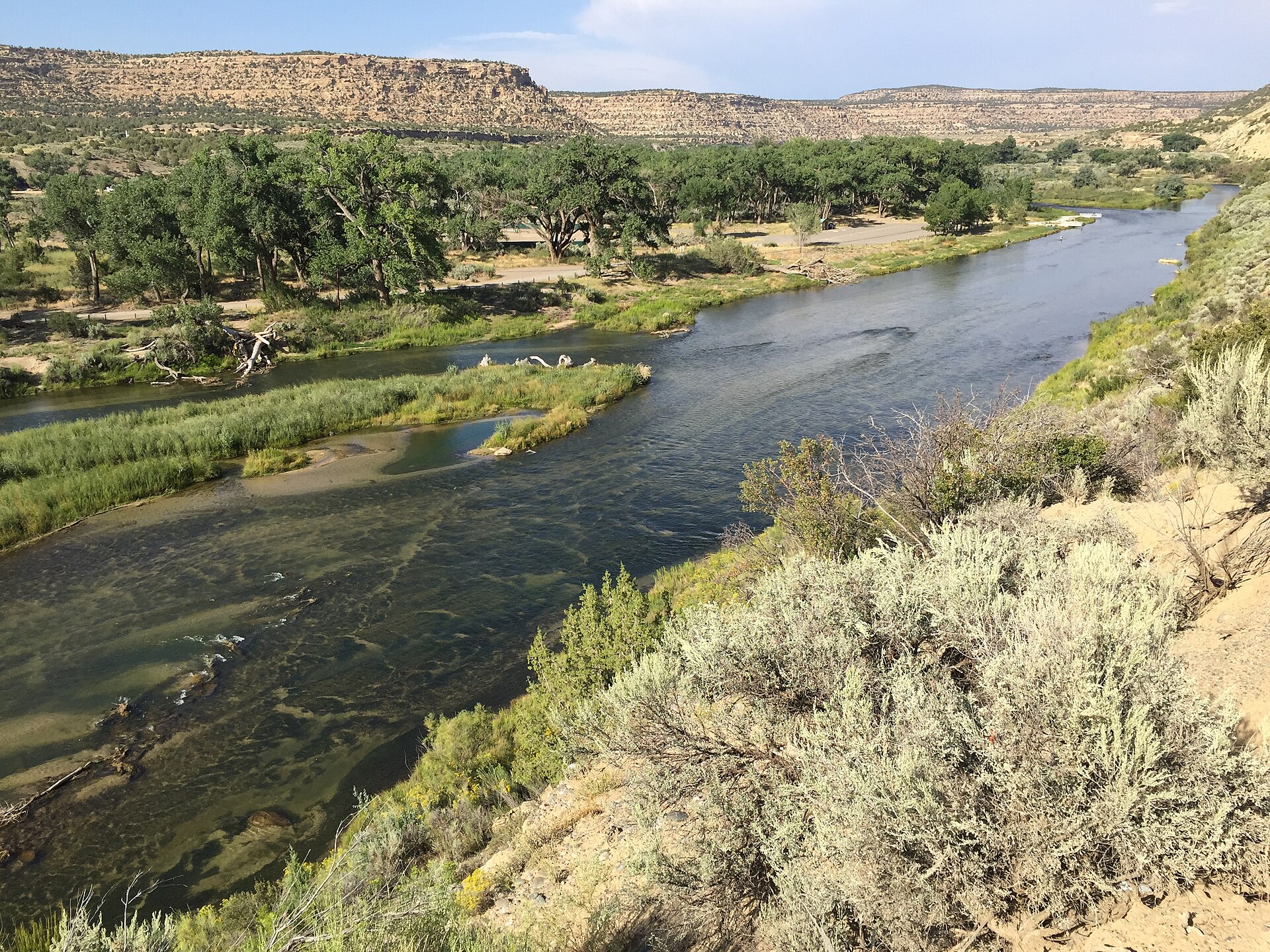
Access: Navajo Dam tailwater access immediately below the dam, with public parking off NM-511 at the main tailrace; Texas Hole day-use area and parking at the lower end of the reach. Character: Broad, moderate-gradient tailwater, typically 60–100+ feet wide — long slow pools, gentle riffles, and extensive shallow flats over cobble and sand, cut by mid-river bars and channels. Easy wading at normal flows, with deep slots and sudden drop-offs along the main current seams. Species mix: Rainbow and brown trout with a strong tilt toward quality-size fish under special regulations; fish over 20 inches are present and targeted regularly. Crowding: The most popular reach on the river. Texas Hole in particular gets crowded on weekends, holidays, and prime spring and fall windows; weekdays and winter run noticeably quieter, though pressure never fully disappears. Notable hatches: Midges year-round in sizes 18–28 drive most subsurface feeding; spring and fall baetis (18–20) produce dry-fly windows on calm, overcast days; PMDs (14–16) show from early July through late September in softer currents and on the flats.
This is the water that defines San Juan fishing: long lanes, slow drifts, and fish that punish sloppy mends. Indicator nymphing over long distances is the standard technique, and the extensive flats reward anglers who slow down, watch for subtle risers, and adjust depth in small increments. The Upper Flats near the dam offer some of the river's best sight-fishing when light allows.
Quality Waters: Texas Hole to Crusher Hole
Access: Texas Hole parking and day-use area at the upper boundary; established wade paths and pullouts along the state-managed Quality Waters corridor; Crusher Hole access at the downstream end. Character: More defined runs, deeper pools, side channels, and long tailouts, with slightly more gradient and structure than the immediate tailrace. Moderate, safe wading at normal flows — stay alert to deep slots, cross-channel currents, and drift-boat traffic from guided float trips. Species mix: Rainbows and browns throughout, with many mid-size fish and regular encounters with large trout sustained by the restrictive regulations. Crowding: Heavily fished thanks to easy access and productive water. Pressure moderates slightly compared with the dam tailrace but stays high in the famous runs and pools near established trails. Notable hatches: Midges in 20–28 remain the staple, especially in slow pools and tailouts; spring and fall baetis bring up pods of risers along soft edges; summer PMDs in 14–16 run July–September, with fish switching between emergers and duns by current speed and light.
The added structure in this reach opens up more techniques than the flats upstream. Indicator rigs still dominate, but swinging leeches and streamers through the deeper buckets and seams moves fish that ignore size-24 midges — a worthwhile change of pace when the drift gets stale or flows come up.
Below Quality Waters: Crusher Hole downstream
Access: Crusher Hole marks the lower end of the Quality Waters; additional public access points and roadside pullouts continue downstream under general regulations. Character: Tailwater character continues with more varied structure — slower, wider pools and runs influenced by downstream sediment and tributary inputs. Wading is accessible in many areas but less uniform than the manicured Quality Waters, with irregular banks and deeper holes. Species mix: A mixed trout fishery of rainbows and browns. Numbers remain good, though densities and average size run somewhat below the regulated water upstream. Crowding: Generally lighter than the Quality Waters, but the mix broadens to bait and spin anglers, and well-known pullouts still draw weekend pressure. Notable hatches: Midges, baetis, and PMDs mirror the upstream calendar with slightly less intensity; San Juan Worms, leeches, eggs, and general attractor nymphs work year-round.
This is the reach for anglers who value elbow room over maximum density. The fish see fewer artificial flies, selectivity drops, and attractor rigs that get refused upstream often work without fuss.
Hatches and seasons
| Months | Hatches | Flies |
|---|---|---|
| Jan–Feb | Midge larva, pupa, and occasional surface clusters through the day; sporadic winter baetis on cloudy days | Zebra Midge, Black Beauty, WD-40 #20–26; Griffith's Gnat and cluster midges #20–24; RS-2 #20–22 |
| Mar–Apr | Strong midges plus building spring BWO hatches, often on overcast afternoons | Zebra Midge, Red Annelid, Disco Midge #20–26; Parachute BWO or Sparkle Dun #18–20; RS-2 and WD-40 #20–22 |
| May–Jun | Midges continue; baetis lingers early; first PMDs in softer water by late June | Midge nymphs and emergers #20–26; BWO comparaduns #18–20 (early May); PMD nymphs and emergers #14–16 |
| Jul–Sep | Consistent midges; PMDs important July through late September; some bankside terrestrials on warm afternoons | PMD duns and emergers (Comparadun, Sparkle Dun) #14–16; midge pupa/emergers #20–26; ants and beetles #16–18 |
| Oct–Nov | Fall baetis can be excellent, with risers in calm, cloudy conditions; midges stay strong | Parachute BWO, CDC BWO #18–20; RS-2 and WD-40 #20–22; Zebra Midge and Black Beauty #20–26 |
| Dec | Primarily subsurface midges, occasional clusters in mild weather; sporadic winter baetis | Red Annelid, Zebra Midge #20–26; Griffith's Gnat #20–24; RS-2 #20–22 |
Recommended flies (by season)
| Season | Top patterns | Why |
|---|---|---|
| Spring | Zebra Midge, Red Annelid (San Juan Worm), WD-40, RS-2, Parachute BWO, small egg patterns #18–26 | Cold, stable flows and rich midge/baetis production make small nymphs and emergers essential; BWOs give reliable dry-fly windows on overcast afternoons, while eggs and worms capitalize on spawning-related feeding and elevated flows |
| Summer | PMD emergers and duns (Comparadun, Sparkle Dun), midge pupa, RS-2, San Juan Worms, leeches, ants and beetles #14–22 | PMDs become a major food source July through September in softer currents; midges stay the baseline, worms and leeches produce in higher flows and deep slots, and terrestrials work near banks in warm, low water |
| Fall | Parachute BWO, RS-2, WD-40, Zebra Midge, Red Annelid, bunny and marabou leeches #18–26 | Fall baetis brings some of the year's best dry-fly fishing while midges feed trout steadily; attractors and leeches produce as fish feed heavily ahead of winter |
| Winter | Midge larva and pupa (Zebra Midge, Black Beauty), Red Annelid, small emergers, Griffith's Gnat #20–26 | Stable 42–46°F water keeps trout active, but midges dominate the menu; tiny, well-presented subsurface flies on light fluorocarbon are critical for selective winter fish |
Gear notes
A 9-foot 4- to 6-weight with a weight-forward floating line is the all-around choice — enough rod to mend long indicator rigs while protecting 5X–6X tippet. Many regulars favor a 9- to 10-foot 5- or 6-weight for general nymphing, and 10–11-foot 2- to 4-weights are popular for euro-style work. Rig 9–12 foot leaders tapered to 4X–6X with 5X–7X fluorocarbon droppers for the midges and baetis; split shot and small indicators handle the fine depth control the river demands. The water runs about 45°F in every season, so chest waders and solid boots are non-negotiable, and a wading staff helps in the deeper slots and higher releases.
Logistics
- Regulations: The first 3.75 miles below Navajo Dam are designated Quality Waters (Special Trout Waters): artificial flies and lures only, single barbless hooks, a maximum of two flies per line, and a one-trout bag limit with a 20-inch minimum — in practice the Navajo Dam-to-Crusher Hole corridor is fished as catch-and-release. Below Crusher Hole, general New Mexico coldwater rules apply, including bait and standard bag limits. A New Mexico fishing license is required; management is by the New Mexico Department of Game and Fish, and anglers should check the current proclamation since boundaries and rules change.
- Access points:
- Navajo Dam Tailwater Access — primary public access immediately below the dam, with parking and state-managed angler access to the tailrace and upper flats.
- Texas Hole — the well-known central day-use area in the Quality Waters, with parking and wade access to multiple productive runs, pools, and flats.
- Crusher Hole — access at the downstream end of the Quality Waters, marking the transition to general regulations.
- Closest fly shop: Duranglers (Durango)
- Nearest towns: Navajo Dam, Bloomfield, Aztec, Farmington, Durango
- Closest gauge: USGS 09355500 — San Juan River near Archuleta, NM — flows of 300–500 cfs are typical and very fishable for wading and technical nymphing; substantially higher releases limit wading and shift the game toward deep nymphing or swinging streamers and leeches.
When NOT to fish here
Heavy releases from Navajo Dam that push flows well above normal wading levels make the river difficult and sometimes unsafe to wade, concentrating fish in limited soft water — check the gauge before driving. The heaviest crowds hit on mild spring and fall weekends when baetis hatches and ideal flows line up; anglers who value solitude should avoid exactly those windows or fish midweek. And shoulder-season wind is a real factor: on the broad flats, strong wind wrecks the precise indicator drifts and tiny dry-fly presentations the river requires.
Where to fish next
- Fly Fishing in New Mexico — the full state guide
- Animas River — a freestone alternative less than an hour north through Durango, Colorado
- Rio Grande — northern New Mexico's mix of tailwater and freestone reaches for a change from tailwater technicality