The water
San Juan River (below Navajo Dam)
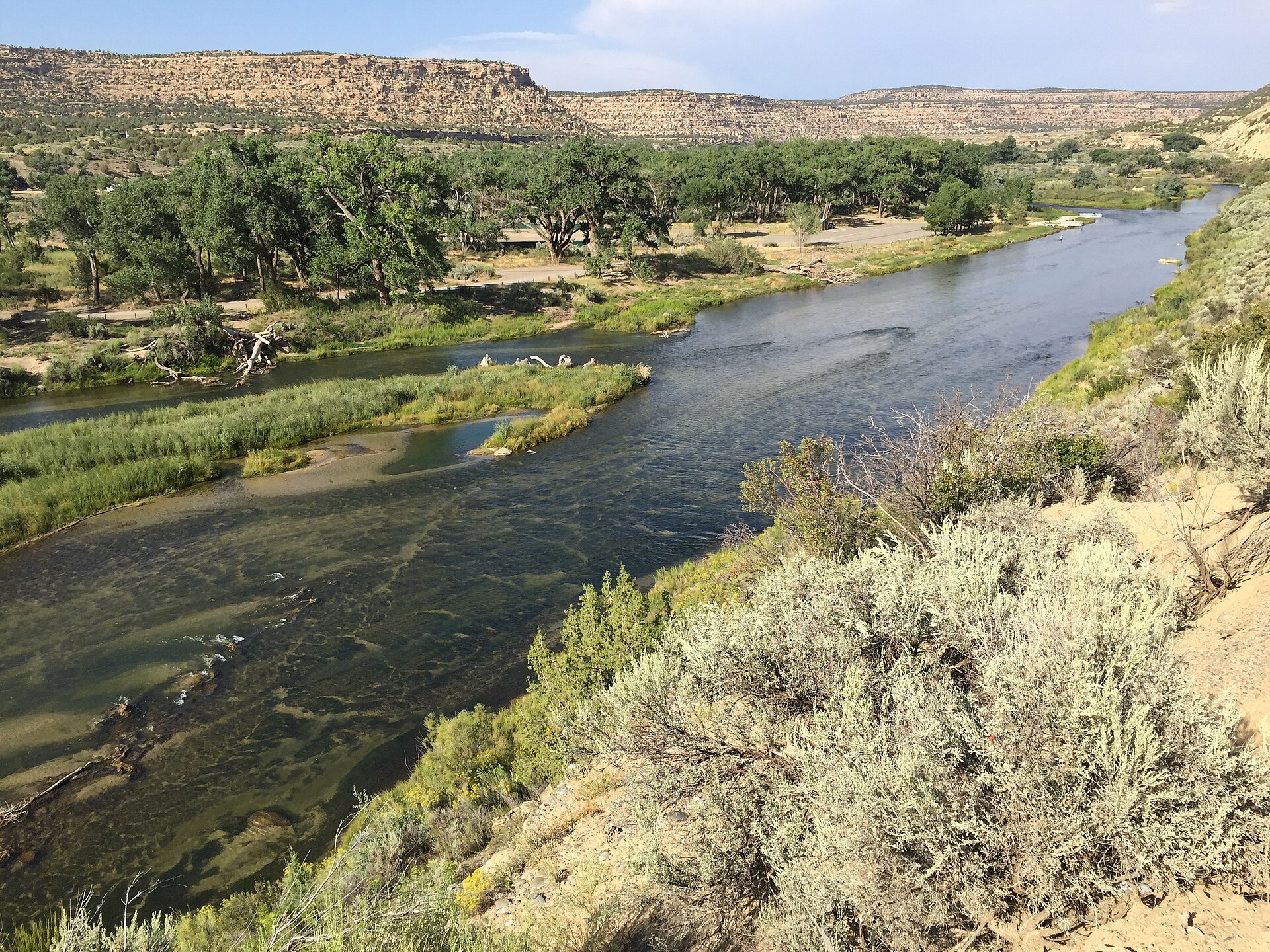
The San Juan is New Mexico's flagship: a cold, stable tailwater in the northwest corner that fishes year-round for rainbows and browns. The famous Quality Waters section immediately below Navajo Dam offers well-marked wade access at spots like the Texas Hole and Upper Flats, with multiple public pull-outs along the first several miles. The food base is small — heavy midge activity all year, Baetis in spring and fall, plus scuds and aquatic worms — so tiny nymphs and emergers are standard. Peak fishing typically runs late fall through spring when flows and temperatures are most stable, and summer nymphing stays consistent. The Quality Waters carry special regulations, including catch-and-release sections and gear restrictions, so check current boundaries before you rig up. Full San Juan River guide
Rio Grande (Pilar reach and Gorge)
The Rio Grande through its gorge between Taos and Española is big, rugged freestone water — brown and rainbow trout in the cooler stretches, with smallmouth bass, carp, and northern pike taking over the warmer water near Pilar. Trout fishing is best in spring and fall at moderate flows; summer shifts the game toward the warmwater species downstream. Caddis and mayflies come off in spring and early summer, stoneflies show in some canyon stretches, and terrestrials — ants, beetles, hoppers — matter from midsummer into fall. Public access is extensive through the gorge and around Pilar, with roadside pull-outs and designated recreation sites on federal and state land. Some gorge sections carry specific gear or harvest rules, so check the proclamation and posted signs.
Pecos River
East of Santa Fe in the Sangre de Cristos, the upper Pecos is the state's classic small-mountain freestone. Browns and rainbows dominate the canyon water along NM 63, while wilderness lakes and some headwaters hold Rio Grande cutthroat. Snowmelt usually moderates by late May, and the river fishes well through October — summer is prime dry-fly time in the upper river and wilderness tributaries. Expect Baetis in spring and fall, caddis and stoneflies from late spring into early summer, and strong hopper-beetle-ant fishing in mid to late summer. Access is well developed through Pecos Canyon and into Pecos Wilderness trailheads, with numerous national forest campgrounds and day-use sites. Certain reaches and wilderness lakes carry special tackle and harvest limits.
Rio Chama
The Chama, west of Española, splits into distinct personalities: headwaters above the town of Chama, canyon stretches, and tailwater-influenced water below El Vado Dam that holds good rainbows. Reservoirs moderate flows, so summer often fishes well above town even when other freestones run thin. The canyon's stonefly hatch runs late May through June, backed by Baetis, Pale Morning Duns, caddis, and terrestrials from spring through fall. Public access comes via forest roads above Chama and in federally and state-managed canyon sections, with more access near El Vado and Abiquiu reservoirs. Flows and rules vary considerably between segments, so match your plan to the current proclamation.
Cimarron River
The Cimarron drains Eagle Nest Lake in the northeast, and the lake is its great advantage: buffered from heavy spring runoff, it's often fishable when every other northern river is blown out. Browns and rainbows hold in the canyon water along US 64 below the lake, with roadside and trail access across state park and other public lands that allow walk-in fishing. The stonefly hatch starts in late May and runs through June, joined by caddis and mixed mayflies, then hoppers, beetles, and ants through summer. Fishing stays consistent into early fall. Sections influenced by Eagle Nest Lake and state park boundaries may carry specific harvest limits.
Rio Costilla
In the far north near the Colorado border, the Rio Costilla is the state's showcase Rio Grande cutthroat recovery fishery. It's a short-season proposition by design: the river closes for spring spawning and reopens after July 1, then fishes well through September. Summer brings typical high-country mayfly and caddis hatches plus ants and beetles in the warm months. Camping and road access are plentiful near the river, with public land in the Valle Vidal and along stretches below the fish barrier, where rainbows are stocked seasonally. Species-specific protective regulations apply — read them before you go.
Jemez River and watershed
Northwest of Albuquerque, the Jemez Mountains hold a network of small streams reached via NM 4 and NM 485 through Santa Fe National Forest — pull-outs, campgrounds, and trailheads put you on browns and rainbows within about an hour of the city. Snowmelt typically subsides by late May, and the fishing holds up through summer into early fall. Baetis come off in spring and fall, caddis and stoneflies in late spring and early summer, and the pocket water fishes hoppers and beetles well all summer. Individual streams carry different bag limits and gear rules, so check both the statewide proclamation and local forest regulations.
Gila River tributaries
Willow Creek, Mineral Creek, and Mogollon Creek, near Reserve and the Gila Wilderness in the southwest, hold the state's other native: the Gila trout. This is remote water — trail and forest-road access, some of it hiked in from trailheads near the Catwalk area — and the reward is solitude in desert-mountain country few anglers ever fish. Late spring through early fall offers the most reliable access and stable flows. Hatches run to small high-country mayflies and caddis plus summer terrestrials, but stealth and presentation matter more than pattern. These creeks sit inside the Gila trout recovery program, with limited stocking and specific species-protection rules; verify current regulations before fishing.
Seasons at a glance
Spring (April–June) and fall (September–October) are the prime windows on most freestones and tailwaters statewide. Snowmelt runs hardest through April and May on the Pecos, Jemez, and Chama, moderating by late May — the Cimarron, buffered by Eagle Nest Lake, is the standard runoff-season workaround. Summer opens the high country: Rio Costilla cutthroat after the July 1 reopening, Gila trout creeks, wilderness lakes, and terrestrial fishing everywhere, plus warmwater action on the lower Rio Grande. Winter belongs to the San Juan, where stable tailwater flows keep midge fishing productive when the rest of the state locks up.
Beyond trout
The lower Rio Grande near Pilar is the headline warmwater fishery — smallmouth bass, carp, and northern pike mixed in with trout, all takeable on the fly. Beyond the river, many state reservoirs hold bass, walleye, and pike that respond to streamers and crayfish patterns, giving anglers a legitimate off-season and hot-weather program.
Licenses and regulations
All anglers need a valid New Mexico fishing license from the New Mexico Department of Game and Fish, with additional requirements and stamps for certain species or waters spelled out in the annual fishing proclamation. Special-regulation water matters here more than in most states — the San Juan Quality Waters, Rio Costilla's seasonal closure, and the Gila trout recovery streams all carry their own rules, noted per river above. Regulations change annually; verify current rules in the New Mexico Department of Game and Fish fishing proclamation before any trip. [NMDGF regulations link — TK official URL]
What's changing
Effective January 2025, the catch-and-release special trout water below Navajo Dam moved to a stricter 2-fish limit (down from 3) with artificial flies and lures only, per the NMDGF 2025 fishing rules booklet released in October 2024. Otherwise the state made no major statewide regulation overhauls for 2025, and routine stocking continues on the Rio Grande, Red River, and Cimarron. Anglers also report improving wild brown and cutthroat numbers on the upper Chama above El Vado following recent Trout Unlimited habitat work, and better Rio Grande cutthroat counts on the Rio Costilla.
Where to start
If you get one weekend, the honest answer depends on the month. From November through March, drive to Navajo Dam and fish the San Juan's Quality Waters — nowhere else in the state fishes as well in winter. From late May through September, base in the Taos–Santa Fe corridor instead: a day on the Pecos or Cimarron, a day in the Rio Grande Gorge, and you'll see two completely different versions of New Mexico trout fishing without a long drive between them. If natives are the point, plan around the Rio Costilla after July 1 or commit to the hike into Gila trout country.
Neighboring states worth pairing with a trip: