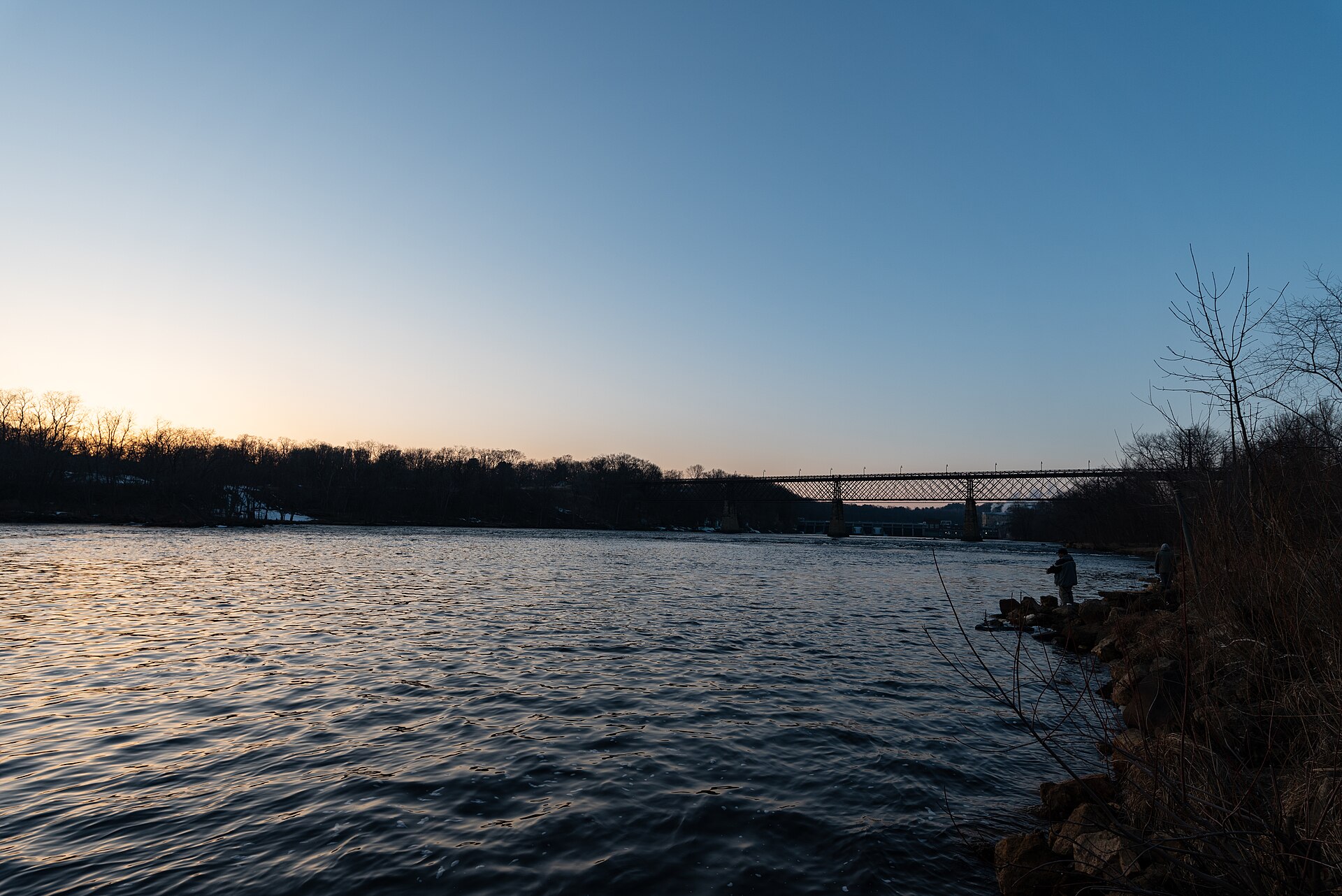
The water
Bois Brule River
The Brule, in Douglas County's Lake Superior drainage, is Wisconsin's most storied river — resident browns, brookies, and rainbows in the upper river, plus steelhead, lake-run browns, and coho salmon pushing up from Lake Superior. Spring and early summer are best for resident trout on Hendricksons, Blue-winged Olives, and heavy caddis from May through August, with Hexagenia coming off on slower reaches around late June nights. Fall and late spring bring the lake-run fish. Access is a major asset: the Bois Brule River State Forest provides designated access points, campgrounds, and trails along both the upper and lower river. Sections carry special trout regulations that differ between reaches — check current rules. Full Bois Brule guide
Kinnickinnic River
The "Kinni" flows through River Falls in western Wisconsin, a spring creek dense with wild browns and brookies. Early summer and fall are prime; the lower reaches can warm in midsummer, when mornings fish best. Caddis are the workhorse hatch from May through September, layered over spring Hendricksons and Blue-winged Olives, and the summer terrestrial fishing — ants, beetles, hoppers along grassy banks — is excellent. Access is good around River Falls via city-owned corridor lands, nearby state and county properties, and bridge pullouts feeding public trails on the upper and middle river. Some reaches carry special regulations with reduced bag limits and gear restrictions above and below town.
Rush River
Pierce County's Rush is a spring creek on the Driftless fringe with a reputation for brown trout that run larger than the neighborhood average, plus brook trout in the mix. Spring through early summer delivers the classic sequence — early caddis, then Hendricksons and Blue-winged Olives — and summer brings strong caddis activity with a nighttime Hexagenia hatch in the slower lower sections. Fall fishes well for aggressive pre-spawn browns in cooling water. Access follows the western Wisconsin pattern: bridge pull-offs, road crossings, and designated angler easements across agricultural land near Maiden Rock and Ellsworth. Special-regulation stretches with size and bag limits apply on some reaches.
Kickapoo River (West Fork)
The West Fork of the Kickapoo, near Viroqua and La Farge, is the heart of the Driftless experience: wild browns and brookies in spring-fed water with the region's hallmark hatches. Hendricksons and Blue-winged Olives come off in spring, heavy caddis run May through August, Hexagenia shows on slower pools around late June nights, and terrestrials matter through midsummer. Spring and early summer offer the most consistent flows; fall trades some hatch activity for lighter pressure and active fish. Public angler easements, walk-in areas, and road crossings — plus state and county lands near La Farge and Viroqua — make this some of the most accessible wade fishing in the region. Some reaches carry special harvest restrictions.
Black Earth Creek
West of Madison in Dane County, Black Earth Creek is southern Wisconsin's best-known spring creek and its most convenient — minutes from the capital, with public corridor access along the Highway 14 corridor through parks, easements, and multiple bridge points near Cross Plains. Wild browns and brookies feed on early Blue-winged Olives and Hendricksons in April and May, strong caddis from May into summer, and fall Blue-winged Olives and Mahogany Duns through October. Midsummer is terrestrial time along the grassy banks. Portions are managed as high-quality trout water with reduced creel limits and protected habitat zones; review the section-specific rules near Cross Plains and upstream.
Namekagon River
The Namekagon flows toward the St. Croix through Sawyer and Washburn counties, and it splits its personality by reach: trout in the cooler upper river, smallmouth through the broader middle and lower water. Spring and early summer bring Blue-winged Olives, Hendricksons, and caddis for the trout; summer and early fall shift the action to smallmouth on baitfish and crayfish patterns, with terrestrials working along wooded banks. Much of the river lies within the Saint Croix National Scenic Riverway, which brings significant federal public access, county lands, and numerous boat landings and canoe access points near Hayward and Trego. Trout and warmwater regulations both apply depending on reach, with special rules inside the Riverway.
Wolf River
The Wolf, in east-central Wisconsin around New London and Fremont, is primarily a warmwater fishery — smallmouth, walleye, and musky, with seasonal trout in some tributaries. Late spring through early fall offers stable flows and comfortable wading and floating. The fishing is forage-driven: baitfish and crayfish patterns for bass, larger flies for musky. The late-June Hexagenia hatch produces large nocturnal emergences on some slower reaches, influencing both tributary trout and bass feeding behavior — a rare crossover event worth planning around. Public access sites and boat landings line the corridor, including landings near New London in Mukwa Township, and most anglers float or wade from public landings and road crossings. Statewide warmwater regulations apply on most water.
Lower Wisconsin River
Below Sauk City, the Lower Wisconsin runs broad and sandy toward the Mississippi, and its smallmouth fishery remains overlooked relative to the state's trout water. Summer and early fall are prime, when bass, carp, channel catfish, and panfish are active and flows suit both wading and boating. Crayfish and baitfish patterns do the subsurface work, and evening popper fishing for smallmouth can be strong in stable summer flows. The Lower Wisconsin State Riverway provides abundant access — public boat landings, state wildlife areas, and sandbar access along the whole corridor. Statewide warmwater regulations apply with some local variations; note the size and bag limits for riverine smallmouth.
Seasons at a glance
May through early July is the core trout season: Hendricksons and Blue-winged Olives give way to sustained caddis, and the Hexagenia hatch peaks around late June on slower water from the Driftless creeks to the northern rivers. Spring creeks fish earlier and later than freestones thanks to stable spring-fed flows — fall Blue-winged Olives and Mahogany Duns keep Black Earth Creek and the Driftless streams productive through October, and pre-spawn browns get aggressive on the Rush as water cools.
The lake-run calendar runs opposite the resident-trout peak. Great Lakes tributaries, the Brule chief among them, fish best in spring and fall when steelhead, coho, and lake-run browns enter the rivers. Warm water fills the middle: smallmouth and carp fish best midsummer into fall on the Lower Wisconsin, Namekagon, and Wolf.
Beyond trout
Wisconsin's warmwater fly fishing deserves more attention than it gets. The Lower Wisconsin River offers extensive, lightly pressured smallmouth water for anglers throwing streamers and crayfish patterns, and lakes like Winnebago and Castle Rock produce summer bass and panfish on flies. Pike and carp add sight-fishing options statewide, and the Great Lakes tributaries deliver seasonal coho and other lake-run fish to anglers swinging larger streamers and egg patterns.
Licenses and regulations
The Wisconsin Department of Natural Resources (DNR) manages the state's fisheries. Anglers need a valid Wisconsin fishing license, plus an inland trout stamp for designated trout waters or a Great Lakes trout and salmon stamp when targeting trout and salmon in Great Lakes waters and tributaries. Special-regulation sections — reduced bag limits on the Kinnickinnic, quality-management water on Black Earth Creek, reach-specific rules on the Brule — are noted per river above. Regulations change annually; confirm current rules with the Wisconsin DNR before fishing.
Where to start
For one weekend, go to the Driftless in late May or June. Base in Viroqua, fish the West Fork of the Kickapoo and the surrounding easement water, and you will hit the overlap of caddis, late spring mayflies, and the first Hex nights — with enough public access to change streams on a whim. If the trip runs to early fall instead, drive north: the Bois Brule pairs resident trout with the front end of the lake-run season in a single river.
Neighboring states worth a look: