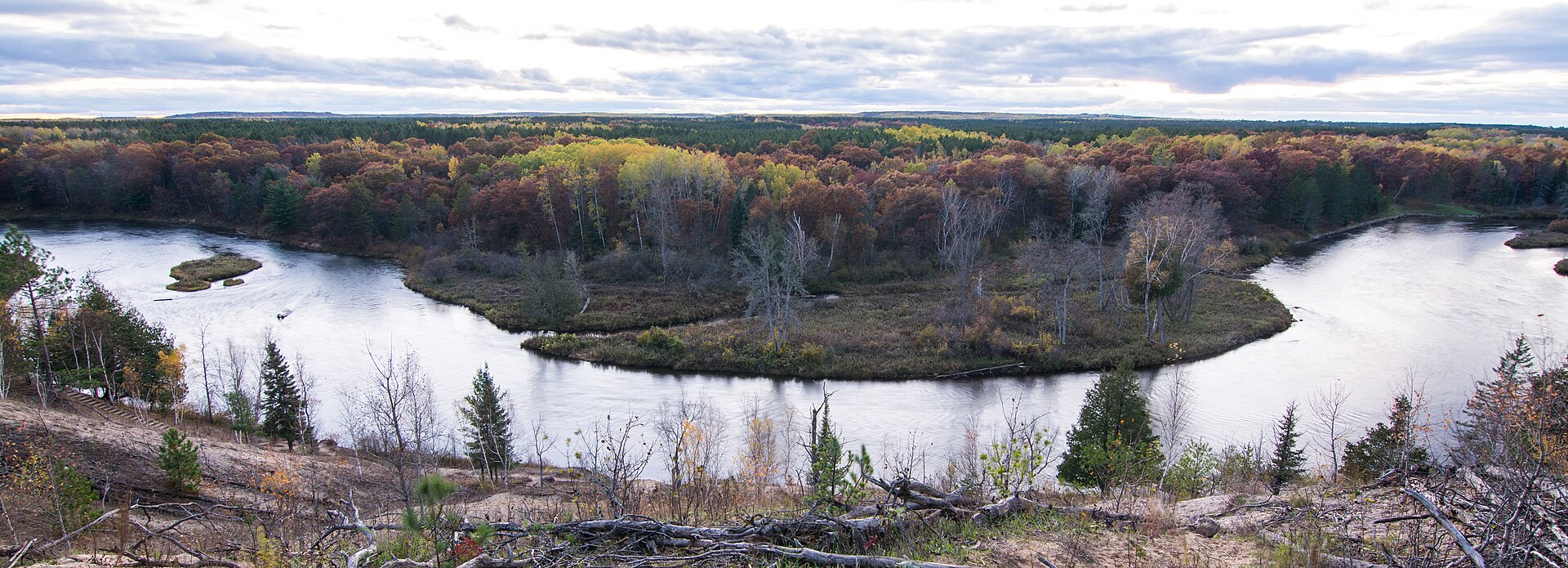
The water
Au Sable River
The Au Sable near Grayling is Michigan's flagship trout stream and the home of its most famous water: the catch-and-release "Holy Waters" stretch, managed as a premier reach for wild browns, brookies, and rainbows. The hatch calendar is the draw — Hendricksons in April and May, Brown Drakes in late spring, then the Hex after dark in late June and early July, followed by Tricos, blue-winged olives, and ant-and-beetle fishing through summer. Prime dry-fly season runs late May through July; early spring and late fall fish well on nymphs and streamers with lighter pressure. Access is extensive through DNR-maintained sites, bridges, and state forest land, with multiple walk-in points on the Holy Waters. Blue Ribbon sections carry special gear and seasonal regulations — check the DNR rules for your reach. Full Au Sable River guide
Manistee River
The Manistee runs west from near Grayling toward Lake Michigan, and it fishes as two rivers. The upper and middle reaches are Blue Ribbon trout water — browns, brookies, and rainbows on Hendricksons and caddis from April through June, with Hex in some slower stretches. The lower river is a migratory fishery: chinook and coho in September through November, steelhead behind them and through winter in the lower sections, feeding on eggs and nymphs. State and national forest land, public access sites, and boat launches support both wading and floating. Regulations shift by segment — trout rules upstream, species-specific seasons and size rules on the salmon and steelhead water — so read the DNR listings for the reach you plan to fish.
Pere Marquette River
The Pere Marquette near Baldwin may be Michigan's most complete river: resident browns and rainbows from May through September, then salmon and steelhead from September clear through April. The hatch list runs from early-spring stoneflies through April–May Hendricksons, June Hex on the slower water, and October caddis with fall terrestrials; egg and baitfish patterns take over when the lake-run fish arrive. Public access sites, canoe launches, and national forest land provide wade and float access, with established trails at the common put-ins and take-outs. Blue Ribbon sections carry gear restrictions and seasonal limits, and the salmon and steelhead rules vary by reach and season.
Boardman River
The Boardman gives Traverse City a wild-trout stream at its doorstep: 36 miles designated as both a Michigan Natural River and Blue Ribbon Trout stream, holding browns, brookies, and rainbows. It fishes best May through September, with strong morning and evening dry-fly work in summer on Hendricksons, blue-winged olives, Sulphurs, and caddis, plus ants and beetles through the warm months. Brown trout hold along the shaded banks and undercut structure. Public access is generous — access areas, bridges, and trails from Traverse City up into the forested reaches near Mayfield. The Blue Ribbon sections use special harvest and gear rules built to protect wild fish; check the Natural River and trout regulations for your segment.
Muskegon River
The Muskegon, in the west-central Lower Peninsula near Newaygo, is the state's big-water generalist. Steelhead and salmon peak in March–April and October–November; resident browns and rainbows fish well from late spring into early fall on caddis, mayflies, and midges; and summer brings legitimate smallmouth fishing on baitfish patterns and poppers. Egg and baitfish flies dominate during the runs. Numerous public launches and nearby public land make it a hub for guided float trips, with DIY wading where flows and structure allow. Steelhead and salmon segments carry their own seasons, size limits, and gear rules, and trout regulations vary by reach.
Huron River (Proud Lake area)
The Huron near Milford is southeast Michigan's close-to-home option — a warmwater river where smallmouth and sunfish are the everyday targets from late May through September, with seasonal steelhead moving through in the cooler months. There is no hatch to match here; the game is streamers and poppers imitating minnows, crayfish, and frogs for bass, nymphs and attractors for panfish, and egg or baitfish patterns when steelhead show. Proud Lake Recreation Area provides developed access, parking, and trails, with easy wading and small-craft entry. General statewide warmwater rules apply, with any local restrictions listed in DNR publications for the Huron system.
Paint Creek
Paint Creek is the Detroit metro's trout stream, flowing from Lake Orion toward the Clinton River corridor through a suburban landscape of greenways, parks, and road crossings. Browns and rainbows fish best April through June, when cool flows carry mayfly and caddis activity, and again in September and October on streamers and nymphs as temperatures drop. Hatches are mixed enough that general attractor dries and nymphs cover most days. For anglers in southeastern Michigan, it is the rare quality trout option inside a short drive. Sections carry trout-focused regulations that may include special seasons or harvest limits — verify current DNR rules before fishing.
Black River (Pigeon River Country)
The Black River, east of Gaylord in the Pigeon River Country, is the pick for anglers who want brook trout and solitude over numbers of boats. Brookies and browns feed through a range of northern freestone hatches — mayflies, caddis, terrestrials — and respond well to small attractor dries in the lightly developed, forested watershed. May through September is the season, with late spring and early summer prime and evening and early morning the productive hours. The river and its tributary Canada Creek sit amid extensive public forest land, with informal walk-in access from public roads and trails. Brook trout size and creel limits follow statewide trout regulations; confirm any special rules for specific reaches.
Seasons at a glance
| Window | What's fishing |
|---|---|
| March–April | Spring steelhead on the Muskegon, Manistee, and Pere Marquette; early nymphing on trout streams |
| Late April–May | Hendricksons statewide; prime trout on Paint Creek and the northern rivers |
| Late May–early July | The peak: Brown Drakes, then the after-dark Hex on the Au Sable, Manistee, and Pere Marquette |
| July–September | Tricos, terrestrials, brook trout in the north; smallmouth on the Muskegon and Huron |
| September–November | Chinook and coho runs, then fall steelhead; streamer season for big browns |
| Winter | Steelhead in lower river sections for anglers willing to work for them |
Beyond trout
Michigan's warmwater fly fishing stands on its own: smallmouth and largemouth bass, sunfish, and crappie fill its inland lakes and larger rivers, and the state is a serious pike and muskie destination — Lake St. Clair and the Grand River are prime systems, with pike peaking in spring and muskie from late summer through fall. These are big-streamer and topwater fisheries, built around baitfish, frog, and crayfish imitations worked along weedlines and structure.
Licenses and regulations
The Michigan Department of Natural Resources (Michigan DNR) manages all of it. A valid Michigan fishing license covers fly fishing on public waters, with resident and nonresident options; there is no separate trout stamp. What demands attention instead is the reach-by-reach structure: Blue Ribbon trout sections, catch-and-release water like the Holy Waters, and salmon and steelhead segments each carry their own gear, season, and harvest rules, noted per river above. Regulations change annually — check the current Michigan DNR regulations before you fish.
What's changing
No major statewide regulation or stocking changes took effect for 2025; the DNR's 2024 stocking report shows stable brown and rainbow plants on the Au Sable, Manistee, and Pere Marquette. One access note: the USFS closed a short spur road to the North Branch Au Sable near Luzerne in late 2024 for erosion control, though wade-in access remains via the main trail. Anglers report earlier, shorter Hex windows on the Manistee tied to warmer nights, and the Betsie River below Thompsonville is fishing better for late-season browns after recent woody-habitat work by the Conservation Resource Alliance.
Where to start
If you get one weekend, make it the last week of June near Grayling. Fish the Au Sable's Holy Waters on attractors and terrestrials through the afternoon, rest, then be on a slow, silty stretch at dark for the Hex — it is the single most distinctive experience Michigan fly fishing offers. If your weekend lands in October instead, drive west: the Pere Marquette or Muskegon with a stick of egg patterns and streamers will put you on salmon with steelhead arriving behind them.
More regional guides: Fly Fishing in Wisconsin, Fly Fishing in Ohio, Fly Fishing in Indiana