The best fluorocarbon tippet for Mid-Atlantic trout is TroutHunter Fluorocarbon: a 50-meter spool for $29.95 with a published 5X rating of 4.9 lb at 0.0058 inches. Scientific Anglers Absolute Fluorocarbon Trout is the value pick, $16.95 to $39.95 depending on spool length, with a 5X diameter of 0.006 inches and 4.6 lb of rated strength. Orvis Mirage runs $16.95 to $49.95 and earns its slot on turnover power for big streamers and nymph rigs rather than on the tightest strength-to-diameter number. All three are 100 percent fluorocarbon, so the bigger decision most days on the water is fluorocarbon versus nylon, not which fluorocarbon brand to tie on.
The variable that decides whether fluorocarbon earns its price over nylon is density, not clarity. Fluorocarbon sinks because it is denser than water. Nylon sits close to neutral and rides higher in the film. That difference in sink rate, not a marketing claim about invisibility, is why fluoro dominates nymph and streamer leaders and why a lot of dry-fly anglers still tie nylon to the fly.
The picks at a glance
| Pick | Best for | Price (as of September 2026) | Distinguishing spec |
|---|---|---|---|
| TroutHunter Fluorocarbon | All-around nymphing, best price per yard | $29.95 | 4.9 lb at 5X (0.0058 in), 50m spool, about $0.55 per yard |
| Scientific Anglers Absolute Fluorocarbon Trout | Value, buying several sizes at once | $16.95 to $39.95 | 4.6 lb at 5X (0.006 in / 0.15 mm), 30m or 100m spool |
| Orvis Mirage | Turning over streamers and heavy nymph rigs | $16.95 to $49.95 | 11 published break-strength options from 6 to 60 lb |
How to choose a fluorocarbon tippet
Refractive index and visibility, not invisibility
Fluorocarbon bends light closer to the way water does than nylon does. Orvis states outright that Mirage has a "refraction index similar to water," which is the honest version of the marketing claim: a fluorocarbon strand shows less of a glare or highlight underwater than a nylon strand of the same diameter. That is a real, if modest, advantage in gin-clear spring creeks and slow tailwater pools where a trout gets a long look at the leader. It is not invisibility. A trout that refuses a fly is usually reacting to drag, a shadow crossing the water, or the leader's silhouette against the sky, not to the refractive index of the last two feet of line.
Density and sink rate
Fluorocarbon is denser than water; nylon is close to neutral. Sunline, a line manufacturer, publishes a specific gravity of roughly 1.78 for fluorocarbon against roughly 1.14 for nylon, with water at 1.0. That gap is why a fluorocarbon tippet actively sinks rather than floating in the surface film. For a nymph or a streamer, that sink rate removes slack and keeps the leader from hinging above the fly on the drift. For a dry fly, the same property works against you: a long fluorocarbon section ahead of a size 18 dry can tug the fly's hackle down into the film before the fish ever sees it.
Abrasion resistance
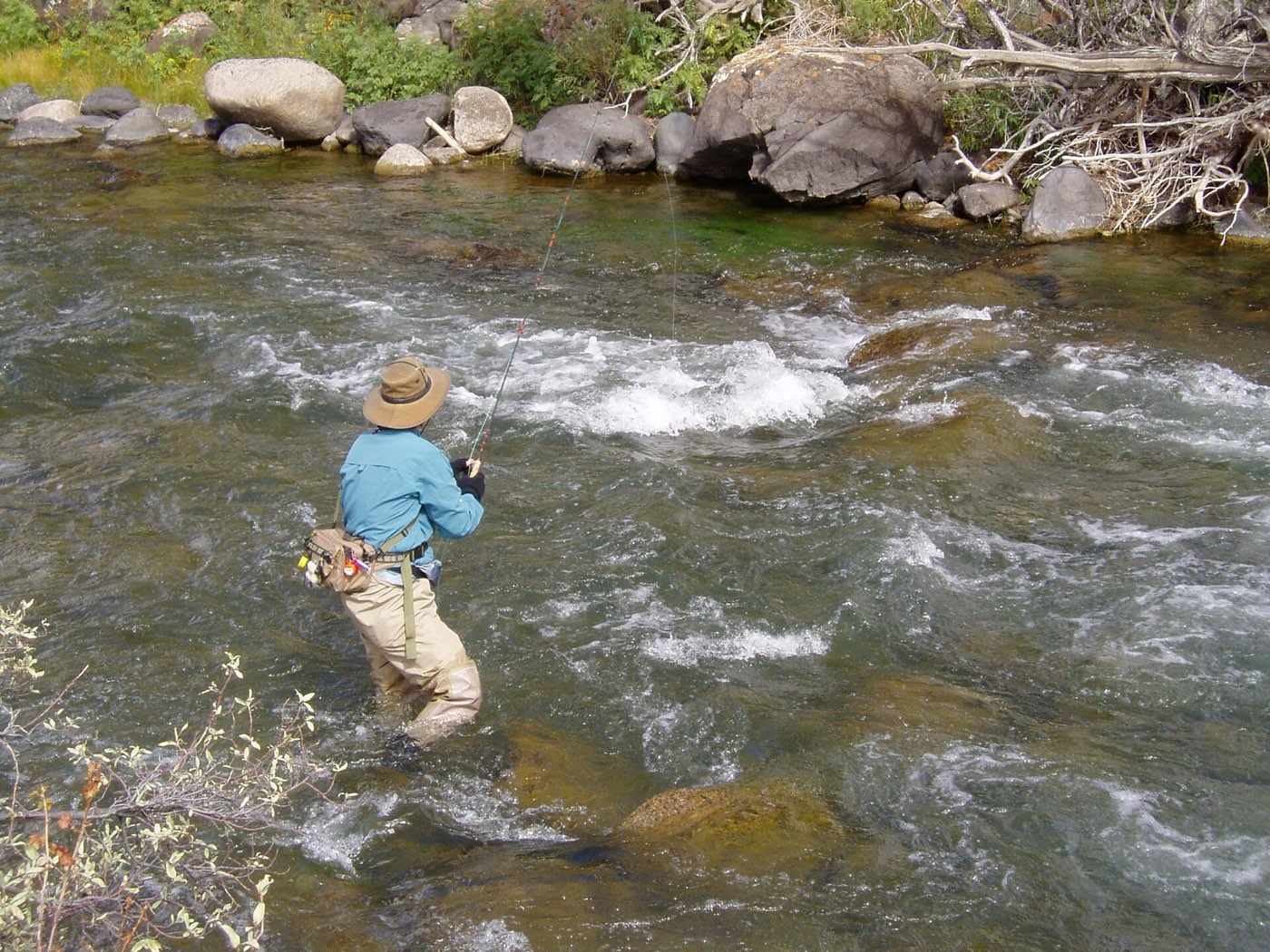
All three tippets reviewed here claim strong abrasion resistance, and the mechanism behind the claim is the same across brands: fluorocarbon's tighter molecular packing makes the strand harder to nick on a rock, a log, or a trout's teeth than a nylon strand of equal diameter. That resistance matters most on freestone water with structure close to the fish, like a Savage River pocket or a Gunpowder Falls log jam, where a leader takes real abrasion on nearly every hooked fish.
Knot behavior: lubrication and extra turns
Fluorocarbon is stiffer and slicker than nylon, and both properties work against a clean knot. The extra stiffness makes the coils want to spring open before you can cinch them, and the low friction lets a dry knot slip through itself under load. Wet the knot with saliva or stream water before pulling it tight, and add one or two more turns than you would tie in the nylon equivalent of the same clinch or blood knot. Scientific Anglers markets a 15 percent knot-strength gain on its current Absolute fluorocarbon over its previous material for exactly this reason: knot failure, not straight-line breakage, is where most fluorocarbon tippet actually lets go.
Stretch, shock strength, and when nylon is the better choice
Fluorocarbon stretches less than nylon under the same load, which means less give to absorb a hard strike or a sudden hookset. On light tippet, that lack of stretch raises the odds of a break at the moment of the take rather than during the fight. Nylon's extra stretch acts like a shock absorber, which is one reason it stays the better choice for long, careful drag-free drifts to a spooky riser on light tippet, and for any rig where a small dry fly needs to sit high and dry rather than get pulled toward the surface tension by a denser material. Fluorocarbon's advantages: sink rate, abrasion resistance, and refractive index, matter most below the surface, on nymphs, streamers, and any dropper fished subsurface.
TroutHunter Fluorocarbon: the top pick
Specs:
- Sizes: 2X through 10X, including half sizes at 3.5X, 4.5X, 5.5X, and 6.5X
- 5X diameter: 0.0058 in
- 5X rated strength: 4.9 lb (TroutHunter's published "fishing strength" figure, measured with a knot tied in rather than bare-line tensile strength)
- Spool length: 50m (about 54.7 yards) at every size except 2X, which ships on a 40m spool
- Price: $29.95 per spool as of September 2026
- Price per yard at 5X: about $0.55
- Packaging: UV-protective, waterproof spool packaging on a large-arbor polycarbonate spool
TroutHunter states there has been no change to its fluorocarbon material or fishing-strength rating since the line's early awards, including a first-place finish in George Anderson's 2012 Tippet Shoot Out across spool design, advertised-strength accuracy, abrasion resistance, and casting performance. Whatever the marketing history is worth, the numbers on the current spec table hold up on their own: a 5X strand rated at 4.9 lb and 0.0058 inches is competitive with anything else reviewed here, and the 50-meter spool works out to the lowest price per yard of the three picks at roughly $0.55.
The half sizes are the other reason to buy this brand specifically. A 4.5X or 5.5X option lets you split the difference between a size that turns over a heavier nymph and one that is fine enough to fool a technical riser, without jumping a full X size in diameter. The limit is availability outside specialty fly shops and TroutHunter's own site; big-box stores and grocery-aisle tackle sections will not stock it.
Buy if: You want the lowest verified price per yard here and fish enough different X sizes to use the half-size options.
Skip if: You only buy tippet at a general sporting-goods store and don't want to order online or through a fly shop.
Scientific Anglers Absolute Fluorocarbon Trout: the value pick
Specs:
- Sizes: 0X through 7X, including half sizes at 4.5X, 5.5X, and 6.5X
- 5X diameter: 0.006 in (0.15 mm)
- 5X rated strength: 4.6 lb (2.1 kg)
- Spool length: 30m standard; a 100m spool is also sold at 5X and every whole X size except 7X, 6.5X, 5.5X, and 4.5X
- Price: $16.95 to $39.95 depending on spool length and size, as of September 2026
- Extras: silicone band to protect the spool from UV exposure, a patented built-in line cutter, and a claimed 15 percent higher knot strength than SA's earlier fluorocarbon material
Scientific Anglers describes the Absolute line as supple enough for a drag-free drift, which is a fair claim next to TroutHunter's stiffer co-polymer feel; softer material coils less on the reel and lays down straighter on the water. The 100m spool option at 5X is the practical reason this is the value pick: buying the longer spool once, instead of two or three 30m spools over a season, drops the effective cost per yard for anglers who go through a lot of tippet at one size.
The limit is that Scientific Anglers publishes a single price range for the whole product line rather than a price broken out by spool length and size, so you will not know the exact 30m or 100m price for 5X until it is in a cart. The strength numbers themselves, 4.6 lb at 0.006 inches, sit close to TroutHunter's 4.9 lb at a slightly finer 0.0058 inches, which means the two are near-equivalents on paper at 5X.
Buy if: You use one or two X sizes heavily and want the 100m spool option to cut cost per yard.
Skip if: You want a single confirmed price before you shop, since the manufacturer page only lists a range.
Orvis Mirage: turning over streamers and heavy nymph rigs
Specs:
- Sizes: 0X through 7X, plus 3X-5X and 4X-6X multi-packs
- Published break strengths across the line: 6, 8, 12, 16, 20, 25, 30, 35, 40, 50, and 60 lb
- Spool options: 30m, 100m, and a 3-pack
- Price: $16.95 to $49.95 depending on spool and pack size, as of September 2026
- Material: 100 percent fluorocarbon with what Orvis calls patented extrusion taper technology
- Manufacturer claim: refraction index similar to water
Orvis built Mirage around turnover power, and the product copy is specific about the job: guides use it for nymphing and for casting big streamer flies, along with fooling wary fish in spring creeks and still water. The extrusion taper technology is Orvis's name for its manufacturing process; the company does not publish more detail about it than the name on this product page, so treat it as a claim rather than a measured mechanism.
The gap in Orvis's own page is a plain-text diameter and strength chart by X size. The 11 break strengths are listed for the whole product line, not mapped to a specific X size in the page's text, and the actual chart lives behind an interactive tool on Orvis's site rather than in the static copy. That means this review cannot hand you a verified 5X diameter and strength figure for Mirage the way it can for TroutHunter and Scientific Anglers; check Orvis's own tippet chart before you order a specific size if the exact number matters for your leader build.
Buy if: You need turnover on a heavy streamer or a two-fly nymph rig more than you need the single finest strength-to-diameter number at one X size.
Skip if: You want a verified 5X diameter and strength figure without visiting an interactive chart first.
Which one to buy
Start with fluorocarbon versus nylon, not brand. If most of your casts are nymphs, streamers, or anything fished under the surface, fluorocarbon's density and abrasion resistance are worth the extra cost over nylon. If you spend most of a day on technical dry-fly water with small flies and light tippet, nylon's stretch protects the tippet on the hookset better than any fluorocarbon here does.
Once you are buying fluorocarbon, TroutHunter's 50-meter spool at $29.95 is the cleanest number on this list: a verified 4.9 lb at 5X, a fine 0.0058-inch diameter, and the lowest price per yard of the three picks. Scientific Anglers earns its slot when you are buying in bulk at one or two sizes, since the 100m spool cuts cost per yard further once you know the exact price at checkout. Orvis Mirage is the one to reach for specifically when turnover matters more than knowing the precise 5X number going in, on a heavy nymph rig or a size 4 streamer.
For the typical reader of this site, a Mid-Atlantic trout angler fishing nymphs and streamers 20 to 40 days a year, I would buy TroutHunter Fluorocarbon for the standard nymph box and keep a spool of nylon on hand for technical dry-fly days.
Questions people ask
Is fluorocarbon tippet actually invisible to fish?
No. Fluorocarbon's refractive index is closer to water's than nylon's, which cuts down the glare a leader shows underwater, but nothing sold as fishing line is invisible. Most refusals come from drag, a shadow, or the leader's silhouette, not the material's optical properties.
Why does my fluorocarbon knot keep slipping?
Fluorocarbon is stiffer and more slippery than nylon, so a dry knot pulled tight quickly can slip through itself under load. Wet the knot before cinching it and tie one or two more turns than you would for the same knot in nylon.
Does fluorocarbon's sink rate hurt dry-fly presentations?
Yes, for the section closest to the fly. Fluorocarbon's specific gravity is roughly 1.78 against water's 1.0, so a long fluorocarbon tippet ahead of a small dry can pull the fly down into the surface film. Many anglers keep nylon on the last section ahead of a dry fly and save fluorocarbon for nymphs and streamers.
What tippet size should I use for typical Mid-Atlantic trout nymphing?
4X to 6X covers most rigs, matched to the point fly's hook size and the water's clarity. Step down to 6X or 7X for small midge patterns and stay at 4X or 5X for bigger stonefly and perdigon-style nymphs that need more turnover power.
Related reading
- Euro nymphing: rig and technique
- Essential fly fishing knots for tippet and leader
- High stick nymphing in pocket water
- Best strike indicators for nymph fishing
Updated September 28, 2026.