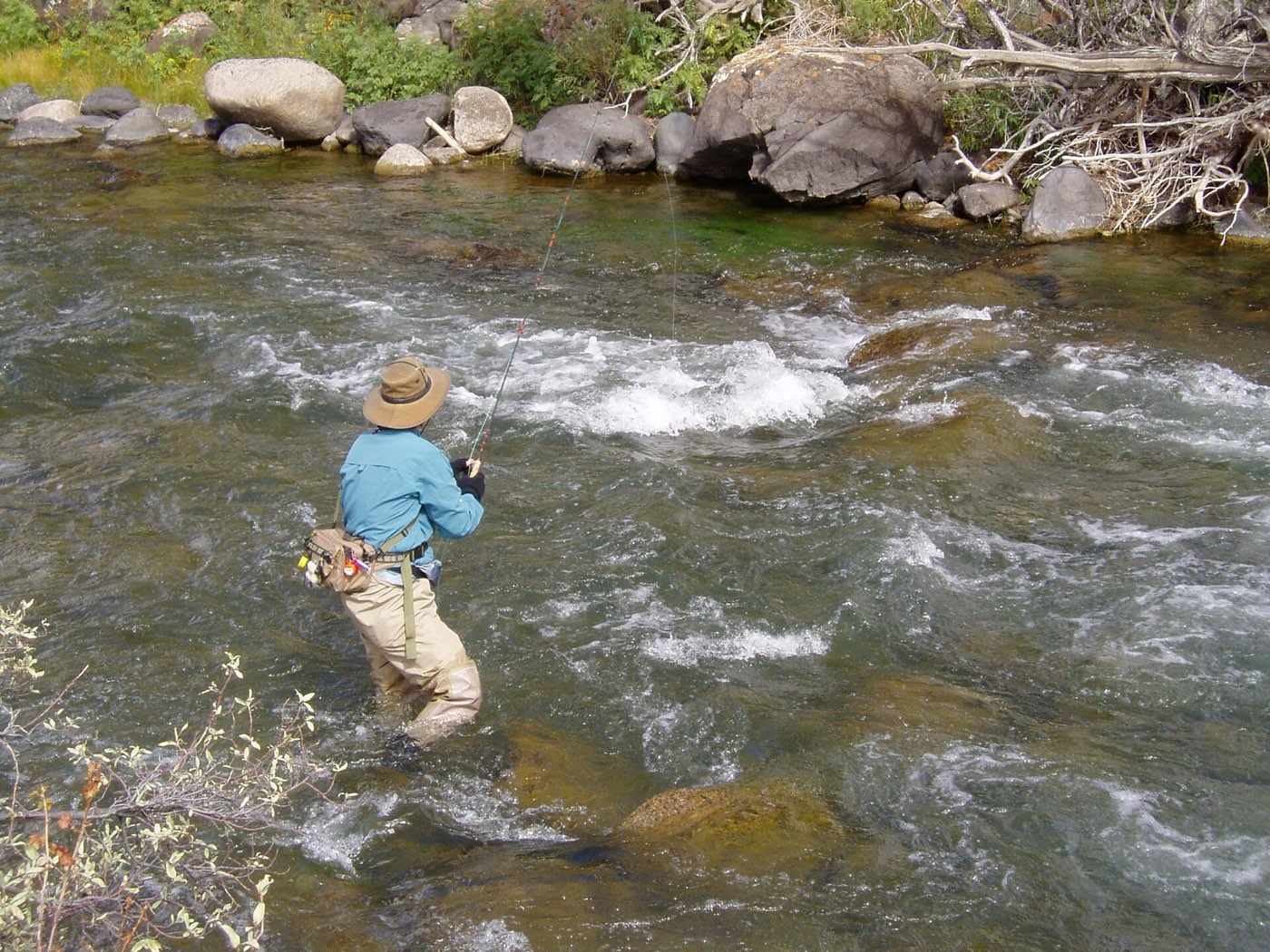
High-stick nymphing is the closest fly fishing comes to dapping. You drift a weighted nymph through pocket water at rod's-length distance, holding the line off the surface so the fly tracks at depth without drag. It out-fishes indicator nymphing in fast water under 30 feet because there is no slack between you and the fly — the take registers as a shudder in the rod tip, not a slow indicator dip.
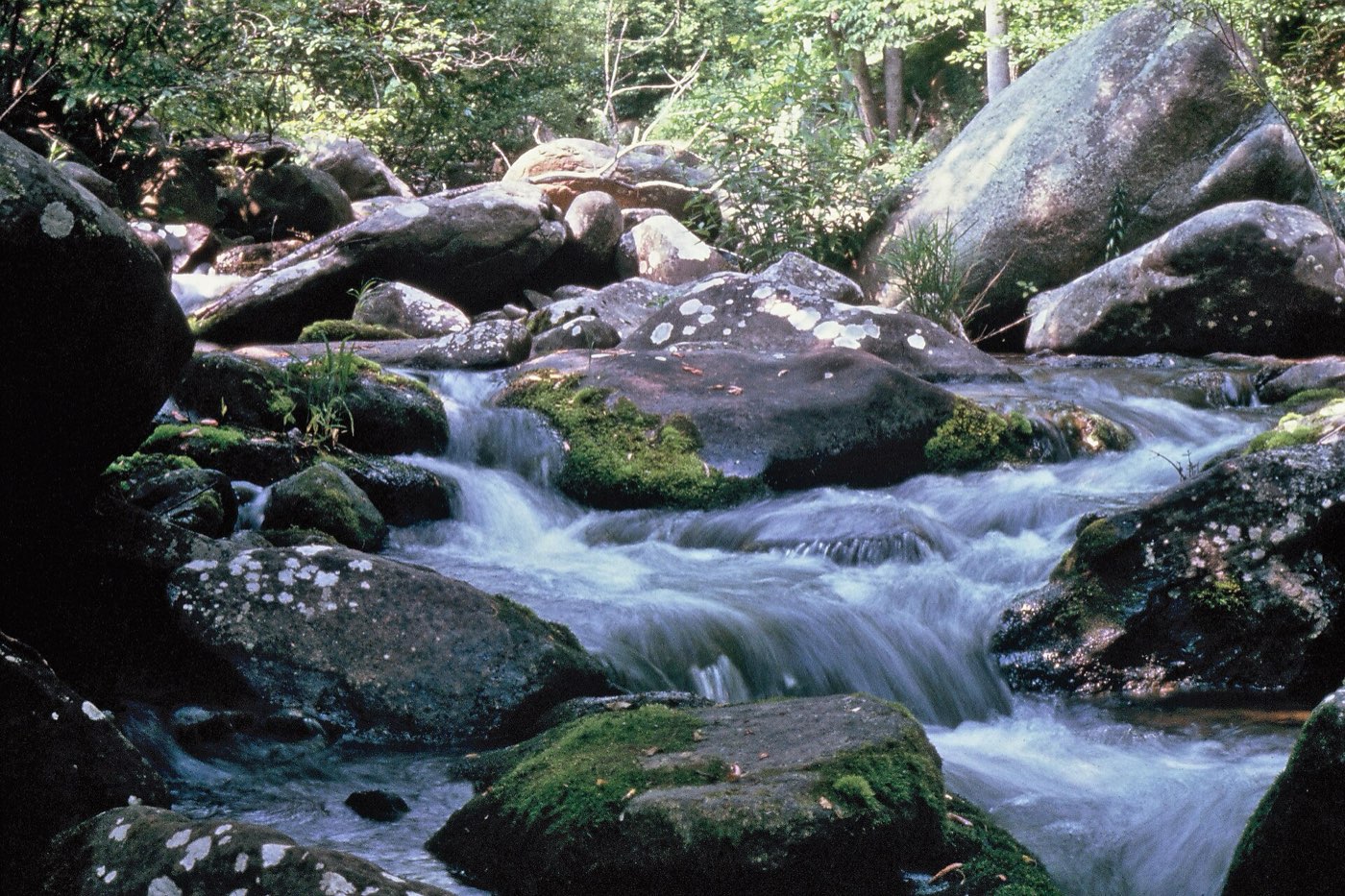
The technique works best in pocket water and plunge pools where you can wade within 12–25 feet of holding fish. It is the wrong tool for tailwaters with long casting lanes or spring creeks where a noisy approach spooks fish.
What you need
- A 9ft to 10ft rod, 4 or 5 weight. Longer rods extend reach. The Orvis Recon 9ft 5wt works; a 10ft 4wt euro-style nymphing rod is purpose-built but not necessary.
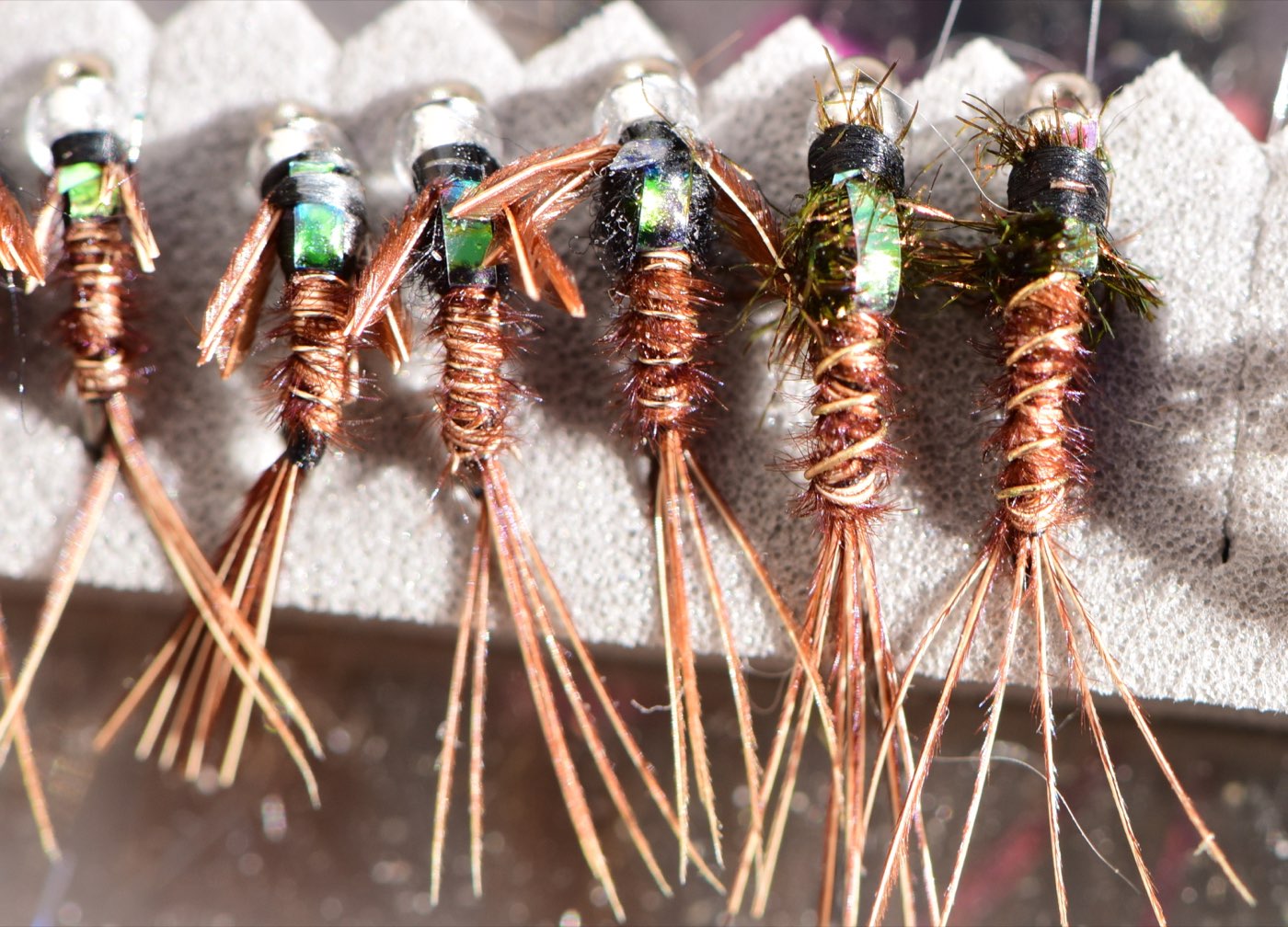
- A weighted nymph or nymph plus dropper. Pheasant Tail, Hare's Ear, Frenchie — heavy enough to tick the bottom in the depth you are fishing.
- 9ft 4X or 5X leader plus 2–4 ft of tippet. Tie the dropper 18 inches above the point fly.
- Wading boots with grip — felt or studded. The wading is the harder part of the technique. Orvis Pro Wading Boot or equivalent.
The drift
Identify a holding lie: a soft seam behind a rock, a current crease where two flows meet, or the back end of a plunge pool. Pocket water hides fish in slots between fast water; that's the target.
Position upstream and across from the lie at 12–25 ft. Not directly upstream — you'll line the fish. Cast at a 45-degree angle.
Cast just upstream of the lie. The fly should sink to depth before it reaches the holding water. In water over 3 ft deep, this means casting 6–10 ft upstream of the strike zone with a heavy enough fly to sink that fast.
Raise the rod tip as the fly drifts to keep slack out of the leader. Your goal is a tight line from rod tip to fly, with the line angle leading the fly through the drift. The leader should enter the water at roughly 45 degrees to the surface.
Track the fly's drift with the rod tip. Move the rod tip downstream at the speed of the current, keeping the leader in the same plane.
Strike on anything: a hesitation, a tick, a sideways drift of the leader. Most takes are hard to detect — set on suspicion, not certainty.
Reading takes
The take feels like the fly suddenly has weight. In fast water this can also be a rock — strike anyway. False positives cost nothing but false negatives lose fish.
In pocket water you will set on bottom contact 5–10 times for every fish. That is the cost of fishing the right depth. If you never touch bottom you are fishing too shallow. If you snag every drift you are fishing too heavy or too slow.
Common mistakes
Wading too aggressively. Pocket water fish hold close. A heavy step on a streambed cobble transmits 30 feet through fast water. Move slowly, plant each foot deliberately, and approach from below if possible.
Leading the fly too hard. If you raise the rod tip too fast you accelerate the fly and pull it out of the strike zone. The rod tip should match the surface current speed, not exceed it.
Fishing too long. Each pocket gets 3–6 drifts. If a fish is going to eat, it eats early. After 6 drifts you are training the fish to refuse — move on.
Wrong fly weight. The fly needs to reach the bottom 2/3 of the water column within 4–6 feet of landing. If it is not, add weight (a tungsten bead pattern, or split shot 6–8 inches above the fly). If it is dragging bottom the whole drift, drop weight.
When this stops working
In water deeper than 4 feet, water moving slower than walking pace, or water where the fish are visible and skittish, switch to indicator nymphing or dry-dropper. High-sticking fails when:
- The reach exceeds your rod length plus your wading distance (~30 ft)
- The fish are seeing your wading wake before they see the fly
- The depth requires more than 1.5x your leader length to reach the bottom
The technique is targeted. Use it where it belongs and it will out-produce every other nymphing method in the same water.