The RIO Gold WF5F has been the default 5-weight trout line recommendation long enough that asking why is a legitimate question. Some lines hold their reputation past their prime. The Gold earns it on a specific technical decision that has held up across multiple redesigns: the line ships half a line weight heavy.
A standard WF5F nominates a 210-grain head. The Gold delivers approximately 220 grains. The difference is not arbitrary — it matches the way most modern trout rods are built. Medium-fast and fast-action rods load most efficiently at the high end of or slightly above their nominal line weight. A true 210-grain line on a medium-fast 5-weight often feels underweighted, requiring longer strokes to load the blank. The Gold loads the blank earlier and returns crisper turnover without requiring a longer haul.
Spec sheet
- Profile: Weight-forward floating (WF5F)
- Head length: Approximately 36 feet
- Head weight: Approximately 220 grains (half line weight heavy)
- Tip: MaxFloat tip — high-floating first three feet of the front taper
- Core: Low-stretch ConnectCore monofilament
- Finish: Smooth coating, color-coded by section (front taper, head, running line)
- Loops: Factory welded at front and rear
- MSRP: $99
In use
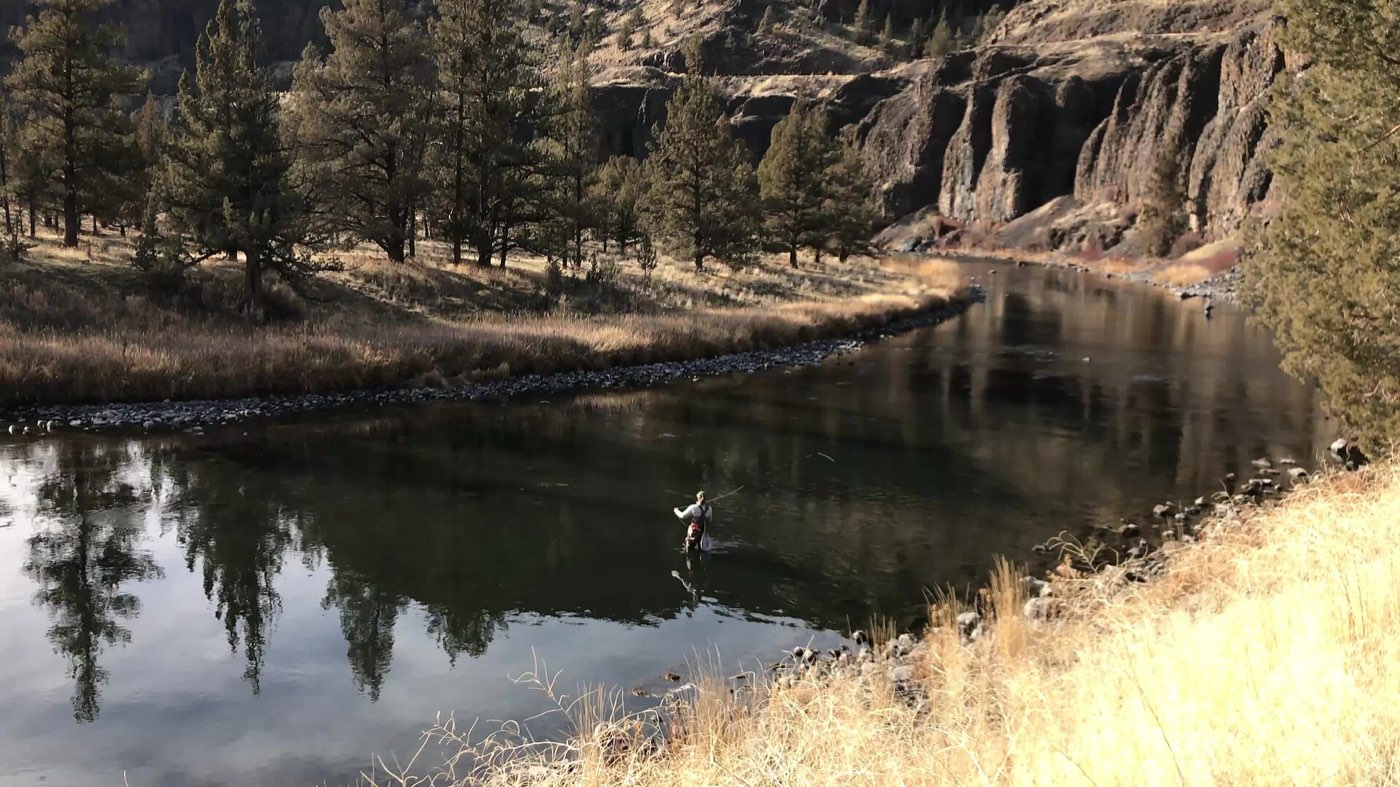
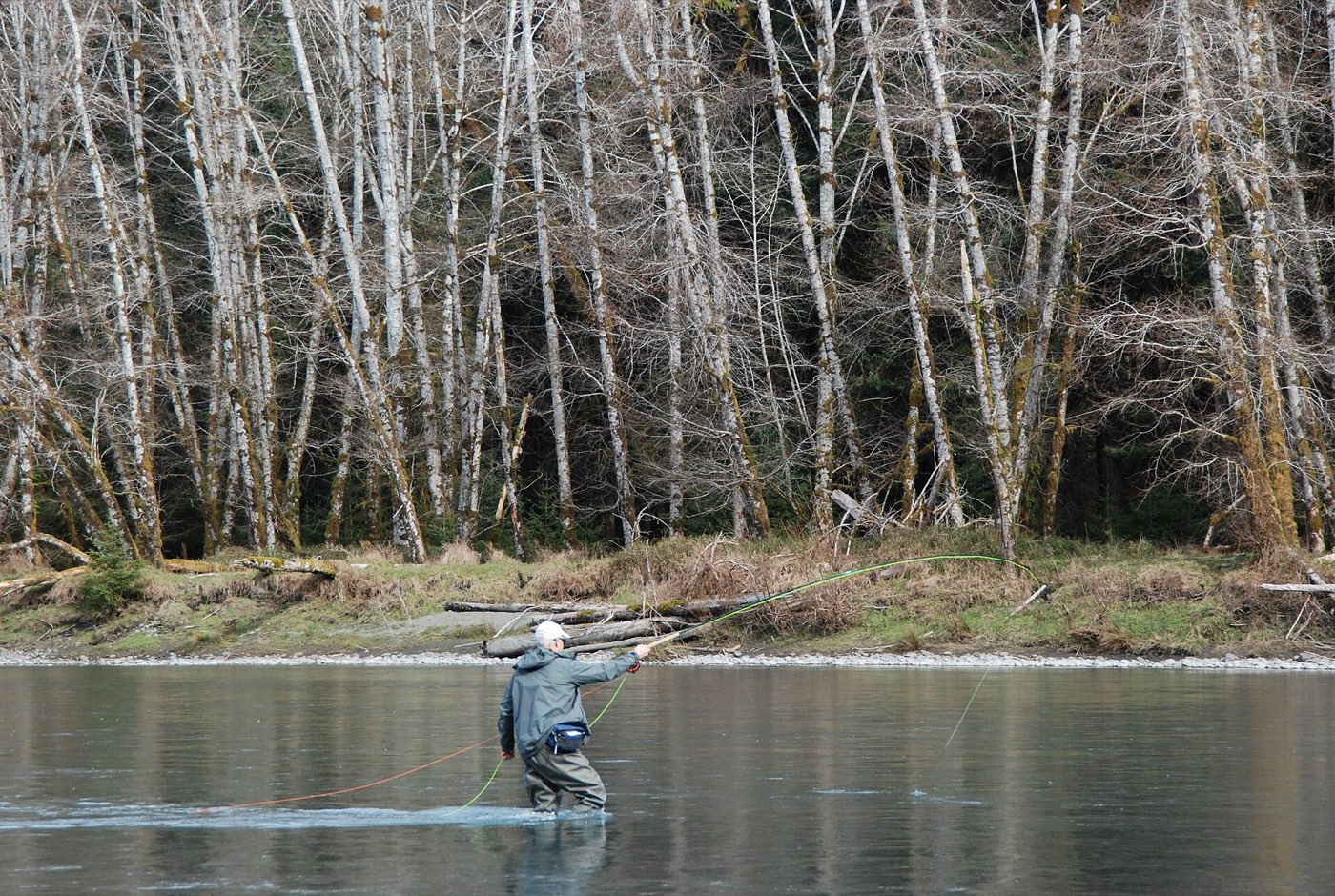
The front taper is long enough to turn over dry flies cleanly at 25 feet and loaded enough for a single haul into wind at 50 feet. Turnover on 9ft 5X leaders is clean without punching too hard. On spring creeks and slow pools where accuracy at 20–40 feet matters, the Gold stays out of the way — it turns the leader without slap on flat water and mends with a single upstream flip.
Cold weather is a quiet strength. On 50°F spring mornings the Gold shot cleanly after a single false cast; the Amplitude MPX needed more working out on the same days.
The MaxFloat tip keeps the front three feet from sinking in slow or still water, which matters on tailwaters and lakes where a sinking line tip creates drag on a floating presentation. In fast freestone rivers the difference is minimal; in slow pool water it is the difference between a drag-free drift and constant mending.
The ConnectCore monofilament reduces stretch compared to braided cores. Standard fly lines stretch under load, which softens take detection at distance. A fish at 55 feet on a conventional line communicates through a longer, more elastic column than the same fish on a low-stretch core. The Gold's ConnectCore keeps the connection from the rod tip to the fly more direct.
Where it runs out of range
The Gold is not optimized for heavy indicator nymphing. The front taper is too gradual to punch a large indicator and split shot through wind — for those rigs, a dedicated indicator line carries the mass where it is needed. Light indicator work is fine: a small yarn or Oros indicator with one fly turns over without trouble.
Streamer duty follows the same logic. The Gold handles a single fly at a moderate stripping pace; it is the wrong line for heavy articulated patterns into wind, where a heavier line or a shooting-head setup does the work.
Against the Amplitude MPX
The Scientific Anglers Amplitude MPX is the primary alternative at the same price tier. The Amplitude uses a textured surface coating that reduces line-on-guide friction, which SA claims extends shooting distance. In side-by-side use, the Amplitude shoots slightly farther on the same casting stroke; the Gold tracks more precisely at short-to-mid range and is quieter through the guides. At 60+ feet with a long leader the Gold shows some sag through the rear taper — this is where distance-oriented casters drift toward the Amplitude. Neither advantage is decisive for most trout fishing; the choice depends on what you prioritize — distance or close-range accuracy.
What rod it matches
The Gold pairs well on medium-fast and fast-action rods. Specific pairings that work cleanly: the Orvis Recon 9ft 5wt, the Echo Carbon XL 9ft 5wt, and the TFO Axiom II 9ft 5wt. On a fast-action rod like the Orvis Helios 4 9ft 5wt or Sage R8 Core 9ft 5wt, the slight extra head weight feels natural and the loop tightens correctly. On a very slow-action rod (glass, soft graphite), the Gold may overload the tip; a true 210-grain line is a better match.
Line care
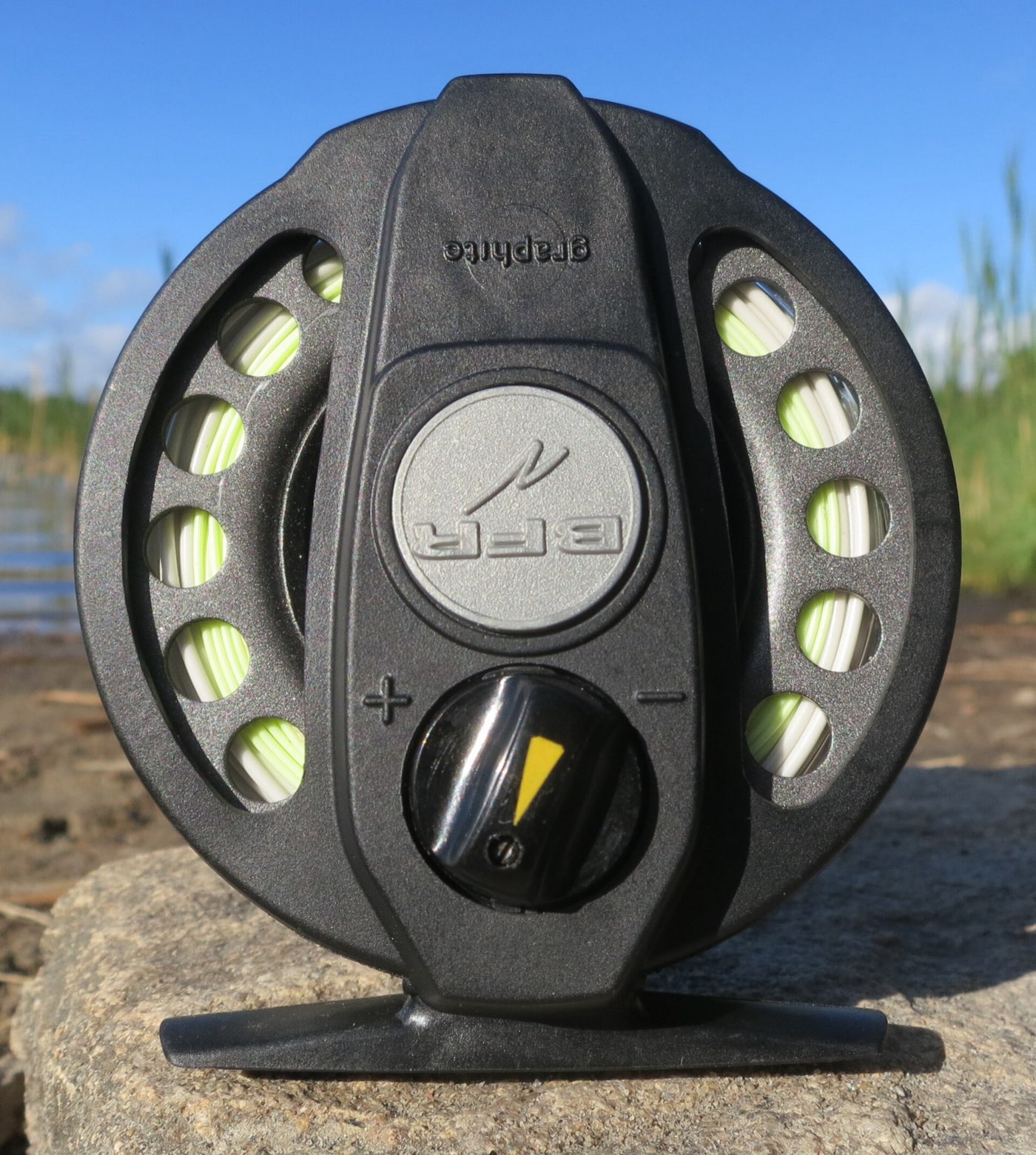
The Gold's coating develops memory coiling in temperatures below 40°F. Run the head through your hands 15–20 times before the first cast in cold weather to restore flexibility. Store the reel out of direct sun and away from heat — closed trunk in summer heat degrades most line coatings over a season. Wash the line every three to four trips with a diluted mild soap solution and rinse clean; the coating holds performance longer with regular cleaning.
Replace the line when the head shows cracking or when the running line develops persistent coiling that does not straighten under light hand pressure. Most Gold lines last 2–4 seasons under regular use with care. Our longest-running test line went three seasons at 50+ days a year before minor micro-cracks appeared in the coating — and it still fished; we retired it out of preference, not necessity.
The recommendation
The Gold is the right starting line for most 5-weight trout setups because it eliminates the need to troubleshoot a mismatch between line and rod weight before you can cast effectively. At $99 it is not cheap, but it is not something to save money on — an underweighted line on a medium-fast rod creates problems that show up as casting errors when the actual issue is a gram differential in line weight.
For anglers who prioritize shooting distance over close-range precision, the Amplitude MPX is worth comparing before buying.