Quick reference
| Field | Value |
|---|---|
| State / region | Illinois, northeastern Illinois south of the Chicago metro |
| Species | Smallmouth bass, walleye, largemouth bass, northern pike, catfish, crappie and other panfish; stocked trout seasonally in Rock Creek |
| Best months | May–June and September–October for smallmouth; summer for consistent warmwater action |
| Water type | Warmwater freestone river |
| Difficulty | Beginner-friendly to intermediate — forgiving fish, but slick-rock wading and streamer work take practice |
| Wading | Feasible across long reaches at low to moderate flows; slick rock throughout — cleated boots and a staff strongly advised |
Why fish here
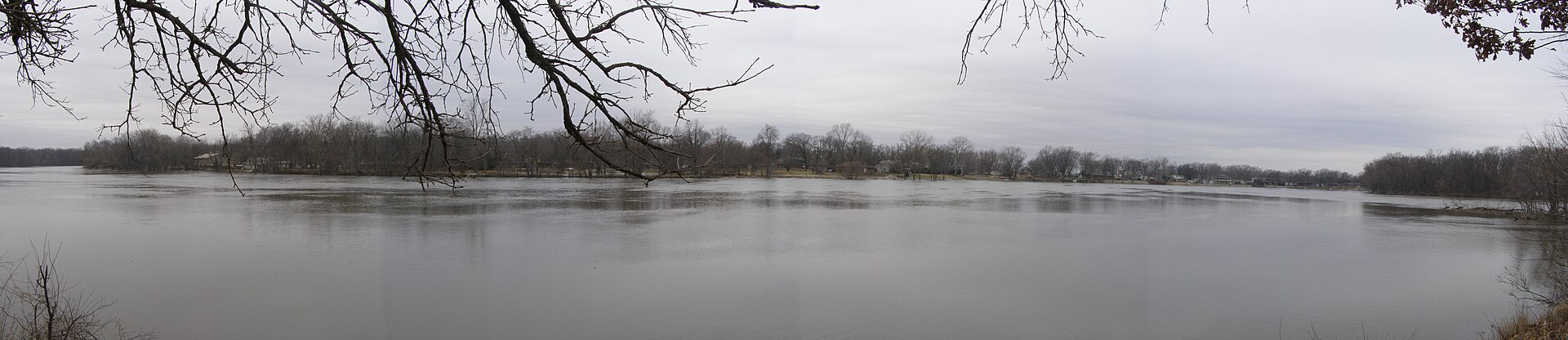
The Kankakee is a large, relatively clear warmwater freestone river crossing northern Illinois, part of a designated National Water Trail, and widely regarded as one of the state's premier smallmouth bass fisheries. Its broad gravel-and-rock bottom builds long runs, shallow riffles, and deeper pools, and its structure — boulders, submerged logs, bridge pilings, current seams — sets up exactly the kind of streamer and topwater fishing fly anglers want from a smallmouth river. The most productive water is well documented: a 25-mile stretch from Bourbonnais downstream to the I-55 bridge is identified as the best overall smallmouth fishing on the river.
The species mix goes well beyond bass. A notable spring walleye run concentrates fish in the deeper runs and pools, and catfish, crappie, and occasional northern pike fill out a diverse warmwater target list in a single system. Rock Creek, the tributary inside Kankakee River State Park, adds seasonal stocked trout and more classic insect-driven fishing — a useful change of pace and a reliable backup when the main river runs high.
For Chicago-area anglers, the practical case is as strong as the fishing one: the river sits an easy drive south of the metro, with miles of wadable shoreline and abundant public access through Kankakee River State Park, municipal parks, and bridge crossings.
The river, section by section
Bourbonnais to Kankakee River State Park — the core smallmouth reach
Access: Multiple public access points and bridges in and near Bourbonnais and Kankakee; extensive access and parking within Kankakee River State Park along Illinois Route 102 and River Road. Character: Medium-large river, clear to slightly stained, gravel and rock bottom — shallow riffles, long runs, and deeper pools around bends, islands, and bridge pilings. Moderate gradient with abundant seams, eddies, and rocky flats. Species mix: Primarily smallmouth bass, with walleye (especially spring), catfish, crappie, and occasional pike. Crowding: Busy on weekends near popular access and inside the state park; weekdays are lighter. Peak pressure comes in spring and early summer. Notable hatches: Generic mayflies, caddis, and midges are present but secondary; baitfish and crayfish forage plus terrestrials drive most of the fly fishing.
This is the stretch that anchors the river's reputation — the upstream end of the 25 miles rated best on the river. Wading is possible across much of it, though slick rock and higher flows demand care. Work streamers and crayfish patterns through the seams and around structure, and save poppers for low light, when smallmouth push shallow and feed on top.
Kankakee River State Park — mainstem and Rock Creek confluence
Access: Signed lots throughout the park along Route 102 and River Road, including near the main river and near Rock Creek's mouth; trails and footpaths reach shoreline and wading water on both. Character: The mainstem here is broad, rocky freestone — deep pools, long glides, riffles around islands, heavy structure from boulders, logs, and pilings. Rock Creek is a smaller, faster tributary with a steep rocky channel of pockets and runs. Species mix: Main river — smallmouth, walleye, catfish, crappie, panfish. Rock Creek — seasonally stocked trout plus smallmouth and other warmwater species. Crowding: Heavy park use on fair-weather weekends, including non-anglers; more solitude comes from hiking away from road access. Weekdays and shoulder seasons are quieter. Notable hatches: Rock Creek supports more classic trout-style insect activity — mayflies, caddis, midges — making nymphs and general dries effective; the main river fishes on forage patterns, with surface action in evening and low-light windows.
The park is the logical base of operations: the densest access on the river, two distinct fisheries within walking distance, and a built-in bad-weather plan. When rain blows out the mainstem, Rock Creek — steeper, quicker to clear — often stays fishable, and its stocked trout give a 4-weight something to do in spring and fall. A wading staff and cleated boots earn their keep on both waters.
Momence / Island Park reach
Access: Island Park at Momence, at Illinois Route 17 and Illinois Route 1, offers documented public access with riffles, rocks, and wadable shoreline; additional municipal parks and bridges in Momence provide bank access (confirm specifics locally). Character: Clear, rocky freestone with pronounced riffles and rock gardens that concentrate smallmouth. Wide, moderate gradient; wadable at low to moderate flows but slick underfoot and hazardous after heavy rain. Species mix: Strong smallmouth in the riffles and runs; panfish, plus occasional walleye and catfish in deeper pools and around structure. Crowding: A known local spot with moderate weekend and summer-evening pressure — generally lighter than the state park, especially weekdays. Notable hatches: Forage-driven — minnow patterns, crayfish imitations, and generic streamers produce consistently, with opportunistic surface feeding in warm, stable weather.
The Momence reach rewards anglers who like reading pocket water at bass scale: the rock gardens break the river into defined holding lies, and a methodically fished streamer covers them efficiently. It is the pick for a quieter session away from the park crowds.
Seasons and forage
| Months | Conditions / forage | Flies |
|---|---|---|
| Mar–Apr | Warming water ramps up baitfish and crayfish activity; the walleye run and pre-spawn smallmouth concentrate in deeper runs and pools | Clouser Minnow #4–6, Woolly Bugger #4–8, Lefty's Deceiver 3–5", Wisco Cisco 3–5", leech patterns #4–8, crawfish streamers #4–6 |
| May–Jun | Rising insect activity (mayflies, caddis, terrestrials) on Rock Creek and slow margins; smallmouth move shallow and feed aggressively near structure | Poppers #6–8, Clouser Minnow #4–6, crawfish patterns #4–6, Woolly Bugger #6–8, hoppers and terrestrials #10–14 for Rock Creek trout |
| Jul–Sep | Warmest water and strong terrestrial activity; smallmouth take topwater in low light and streamers around boulders, logs, and seams | Poppers #6–8, deer-hair divers, Clouser Minnow #2–6, crayfish imitations #2–6, Woolly Bugger #4–8, hoppers and beetles along banks |
| Oct–Nov | Cooling water triggers baitfish migrations; larger smallmouth and walleye feed hard as hatches fade | Large streamers (3–5" Wisco Cisco, Bangtails, Lefty's Deceiver), Clouser Minnow #2–6, Woolly Bugger and Clawdads #4–8, leeches on sinking or sink-tip lines |
Recommended flies (by season)
| Season | Top patterns | Why |
|---|---|---|
| Spring | Clouser Minnow #4–6, Woolly Bugger #4–8, 3–5" baitfish streamers (Wisco Cisco, Lefty's Deceiver, Bangtails), crawfish and leech patterns | Pre-spawn smallmouth and walleye feed heavily on baitfish and crayfish in deeper runs and around structure; sink-tips keep the larger profiles near bottom where fish hold |
| Summer | Poppers #6–8, deer-hair divers, Clouser Minnow #4–6, crayfish streamers #4–6, smaller Woolly Buggers #6–8, hoppers and beetles for Rock Creek | Warm water and lower flows bring smallmouth to topwater near structure in low light, while baitfish and crayfish stay the core forage; terrestrials and nymphs play a larger role on Rock Creek |
| Fall | Large 3–5" baitfish streamers, Clouser Minnow #2–6, Woolly Bugger and Clawdads #4–8, leeches on sinking lines | Cooling temperatures push larger bass and walleye onto substantial meals; big, natural-colored streamers on sink-tip or intermediate lines reach fish in deeper pools and runs |
| Winter | Smaller streamers and leeches fished slow; nymphs and egg patterns in Rock Creek when trout are present | Metabolism slows and fish stack in the deepest, slowest water — subtle, slow subsurface presentations produce, and Rock Creek trout respond to standard nymph tactics in open seasons |
Gear notes
For the mainstem smallmouth and walleye fishery, a 9-foot 6- or 7-weight is the standard call, with some local anglers going to 6- through 8-weights in spring to turn over larger streamers on heavier sink-tips. A floating line covers most days; add a short sink-tip or intermediate line (around 3 ips) for spring and fall streamer work. Leaders run 7.5–9 feet with 0X–3X tippet. For Rock Creek trout, a 4- or 5-weight with 9-foot leaders and 5X–6X tippet matched to nymphs and smaller dries is appropriate. Chest waders, a wading staff, and cleated boots are strongly advised — both the main river and Rock Creek have slick, rocky bottoms and variable depths.
Logistics
- Regulations: A valid Illinois fishing license from the Illinois Department of Natural Resources (IDNR) is required, and anglers targeting trout in Rock Creek need an additional trout stamp. Statewide seasons, size limits, and bag limits vary by species, and some sites carry special rules such as catch-and-release periods or lure restrictions — consult the current Illinois Fishing Information booklet before fishing, as regulations change annually. No fly-fishing-only or designated catch-and-release reaches on the Kankakee mainstem are documented in the research sources.
- Access points:
- Kankakee River State Park — main river access along the Route 102 corridor: multiple signed parking areas and river access sites for shore and wade fishing
- Rock Creek access at Kankakee River State Park — park roads and trails to the creek near its confluence; a productive alternative when the main river is high and the spot for stocked trout in spring and fall
- Island Park at Momence (Route 17 & Route 1) — public park access with riffles, rocks, and wadable shoreline
- Closest fly shop: Fly-Fishing Guide, Kankakee
- Nearest towns: Kankakee, Bourbonnais, Momence
- Closest gauge: USGS 05520500 — Kankakee River at Momence, IL — about 13 miles upstream of the Bourbonnais reach, so local inflow can add to what the gauge shows
When NOT to fish here
Stay off the main river during and immediately after major rain — the Kankakee runs high and turbid, wading becomes unsafe, and the river is effectively blown out; Rock Creek is the recommended fallback in those conditions. Summer heat waves with very warm water and bright midday sun slow the bite and stress fish — fish the early and late windows instead. Holiday weekends and peak fair-weather days pack Kankakee River State Park with anglers and non-anglers alike, so plan on weekdays or on hiking away from the parking areas if solitude matters.
Where to fish next
- Fly Fishing in Illinois — the full state guide
- Fox River — another northern Illinois warmwater bass fishery within day-trip range of Chicago
- DuPage River — a smaller Illinois smallmouth stream for lighter rods and closer quarters