Woolly Bugger
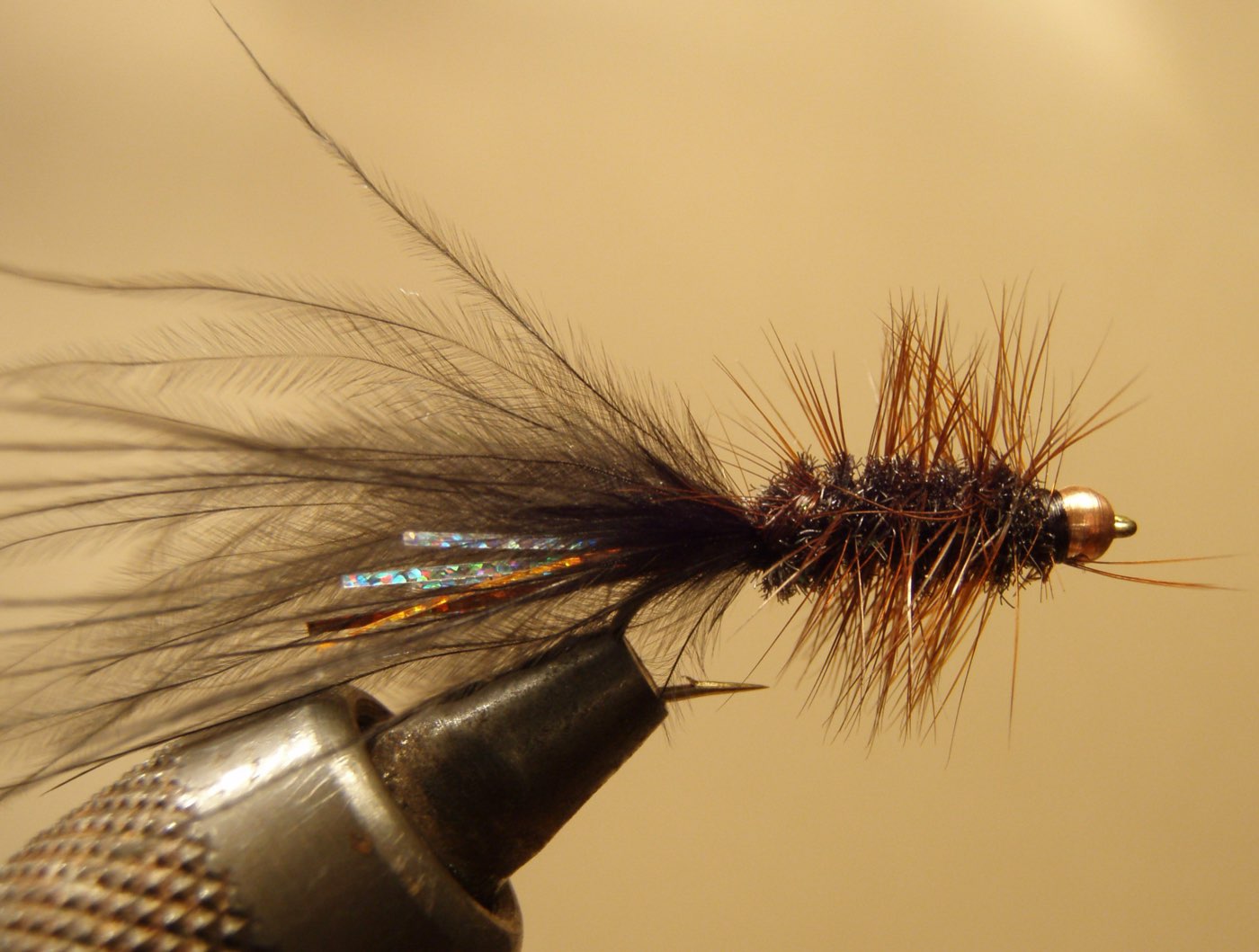
Materials
- Hook: 3XL streamer hook, sizes 4–10
- Thread: 6/0 or 140-denier, black
- Eyes: Bead chain eyes, small (optional weighted version)
- Tail: Black marabou, generous clump, shank length
- Body: Black or olive chenille
- Hackle: Grizzly or black saddle hackle, palmered over body
Tying steps
-
If tying the bead-chain-eye version, tie in eyes in a figure-8 wrap 3–4 eye-widths back from the hook eye.
-
Lay a thread base from behind the eyes (or from behind the hook eye) back to the bend.
-
Cut a generous clump of black marabou. Tie in at the bend; tail length equal to one shank length.
-
Tie in chenille at the bend by the last quarter-inch of the chenille core, leaving the fibers free.
-
Tie in a saddle hackle at the bend by the tip.
-
Wind the chenille forward in touching wraps, covering the thread base completely, stopping just behind the bead eyes or hook eye.
-
Palmer the hackle forward over the chenille body in 6–8 evenly spaced spirals, each turn angling slightly toward the eye to sweep fibers backward.
-
Tie off the hackle at the front of the body. Trim the hackle tip.
-
If using bead chain eyes, figure-8 the thread between and around the eyes several times to build a solid base, then form a thread head over the assembly.
-
Whip finish behind the hook eye. Apply head cement or UV resin to the head and over the bead chain eye wraps if applicable.
Notes
The most reliable streamer for trout, bass, and nearly every other predatory fish in fresh water. The marabou tail pulses with every current variation; the palmered hackle breathes on the swing. Black in murky water, olive in clear. Fish it on a sink tip to reach depth quickly, or weight the pattern with a tungsten cone or bead chain eyes for dead-drift presentations in deep pools.
Where this fly works
- Kenai River
- Sipsey Fork
- White River
- Colorado River at Lee's Ferry
- Farmington River
- White Clay Creek
- Chattahoochee River (Buford Dam)
- Wailua River
- Upper Iowa River
- South Fork of the Snake River
- Kankakee River
- Arkansas River
- Cumberland River (Wolf Creek Dam)
- Swift River
- Big Hunting Creek
- North Branch Potomac
- West Branch Penobscot River
- Au Sable River
- Root River
- Lake Taneycomo
- Bighorn River
- Madison River
- Missouri River
- Smith River
- Yellowstone River
- Missouri River (Garrison Dam Tailrace)
- Niobrara River
- Upper Connecticut River (Trophy Stretch)
- South Branch Raritan River
- Truckee River
- Upper Delaware River
- Mad River
- Lower Mountain Fork River
- Deschutes River (Lower)
- Susquehanna River
- Chattooga River
- Rapid Creek
- Guadalupe River
- Green River (below Flaming Gorge Dam)
- Mossy Creek
- Shenandoah River
- Battenkill River
- Bois Brule River
- Elk River