Quick reference
| Field | Value |
|---|---|
| State / region | Missouri, southwest Missouri below Table Rock Dam near Branson |
| Species | Rainbow trout, brown trout, warmwater species in the middle and lower lake |
| Best months | October–May; summer fishes well when generation keeps water cool |
| Water type | Tailwater (river-like above, reservoir below) |
| Difficulty | Beginner-friendly to intermediate — high catch rates, but midge fishing runs small and generation complicates wading |
| Wading | Limited and flow-dependent; most anglers fish from drift boats or docks |
Why fish here
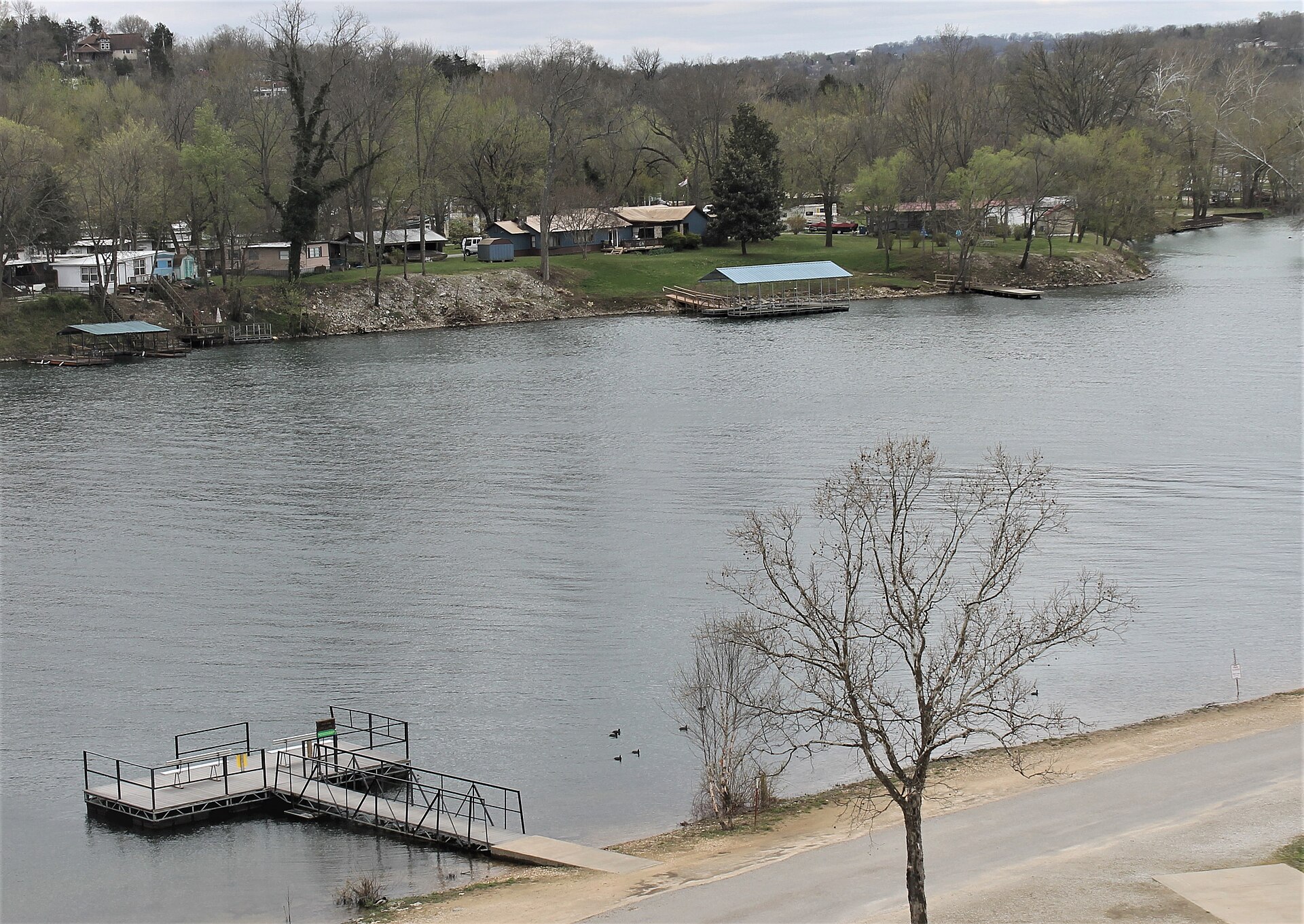
Lake Taneycomo is a coldwater tailwater created by Table Rock Dam on the White River, running through the Branson area of southwest Missouri. Despite the name, it fishes like a river in its upper three to four miles below the dam, then gradually flattens into a lake environment downstream. Cold releases from Table Rock Dam keep water temperatures suitable for trout year-round, so there is no true off-season here — the fishery is managed as a twelve-month operation.
The numbers explain the draw. Roughly 750,000 trout are stocked annually — rainbows monthly, browns once a year — and the upper tailwater carries an artificial-only Special Management Area built to grow quality fish. The result is one of the most productive trout fisheries in the Midwest: abundant rainbows delivering steady action, plus a legitimate chance at brown trout over 20 inches, which anglers regularly target with streamers, especially after dark.
The other distinguishing feature is the setting. This is drift-boat and dock fishing minutes from a major tourist town, with commercial docks, marinas, and guide services concentrated along the upper lake. That means easy logistics and plenty of access — and it also means sharing the water in peak season. Anglers who come for consistent cold flows, heavily stocked trout, and trophy browns generally consider that a fair trade.
The river, section by section
Table Rock Dam to closed zone boundary (uppermost tailwater)
Access: Public areas immediately below Table Rock Dam; fishing is prohibited within 760 feet of the dam. Most anglers put in at commercial docks or use guide services launching just downstream of the closed zone. Character: Narrow, swift tailwater reach — steep by Ozark standards, with defined runs and deeper channels rather than broad riffles. Depth and current change quickly with generation. Species mix: Primarily stocked rainbows with some browns, both benefiting from cold, well-oxygenated water near the dam. Browns carry a 20-inch minimum here. Crowding: Heavy boat and dock traffic in summer and on weekends; weekdays and late fall through winter are quieter, though guide boats work this reach regularly. Notable hatches: Midges hatch sporadically year-round, strongest late morning through afternoon; scuds and sow bugs are staple food forms.
This is the true headwater of Taneycomo and the reach most controlled by what Table Rock Dam is doing. When generation kicks on, flows can go from gentle to pushy in a short time — most fishing here is from boats because safe wading windows are limited. Soft hackles fished as emergers work whenever midges are moving, which is most days.
Closed zone to Fall Creek — the Special Management Area
Access: Public access along the roughly three-mile reach from the closed zone boundary to the mouth of Fall Creek, via marinas and docks on the upper lake and boat ramps and resort docks on the Branson side. Character: Fishes like a medium-sized tailwater river — relatively narrow, with long runs, gentle pools, and limited shallow bars. Wading is possible in selected spots at low generation but limited overall; most anglers drift. Species mix: Heavily stocked rainbows plus annually stocked browns. A 12–20 inch slot limit protects quality rainbows; browns carry the lake-wide 20-inch minimum. Crowding: The favorite fly fishing section, with consistent pressure from guides and DIY anglers April through November and on weekends. Night streamer fishing adds after-dark traffic in peak seasons. Notable hatches: Year-round midges in sizes 18–24, often strongest midday into afternoon; scuds and sow bugs form the invertebrate base.
If you fish Taneycomo once, fish here. The Special Management Area restricts anglers to flies and artificial lures — no soft plastics, no natural or scented baits — and the slot limit keeps a strong population of quality-size rainbows in the reach. The gradient eases compared to the dam reach, but there is still real current and defined seams, ideal water for indicator nymphing and swinging soft hackles. This is also where the night-streamer game for big browns is centered.
Fall Creek to the U.S. Highway 65 bridge
Access: Public and private docks and marinas near Branson, plus boat ramps along the main lake corridor. Shore access is limited by bankside development; drift boats and rental boats are common. Character: The lake broadens and slows — deeper pooled water, few true riffles, low gradient. Wading opportunities are scarce in the main channel. Species mix: Rainbows and browns remain abundant, especially upstream of Highway 65 where a trout permit is required to fish for any species; toward the bridge, crappie, bass, and panfish show up along structure and docks. Crowding: Busy in summer and holidays given the proximity to Branson resorts; weekdays outside peak tourist season are calmer. Notable hatches: Midges are still the most consistent insect, but surface hatches fade in this deeper, slower habitat — scud, sow bug, and small baitfish imitations matter more than matching a discrete hatch.
This is transition water. The tailwater influence still keeps it cool, but the habitat reads reservoir more than river, and most anglers here fish from boats or docks rather than working seams. For the fly angler it is secondary water — worth covering from a boat, not the reason to make the trip.
Below the Highway 65 bridge (lower lake)
Access: Marinas, public boat ramps, and resort docks scattered along the lower lake toward Powersite Dam; some bank fishing in public park areas, but boat access dominates. Character: Full reservoir — wide, deep, slow, and influenced more by the downstream impoundment than by Table Rock generation. Wading is largely impractical. Species mix: A mixed fishery — rainbows and browns alongside crappie, bluegill, hybrid striped bass, largemouth and smallmouth bass, carp, and drum. Warmwater species make up a growing share of the catch, especially in summer. Crowding: Heavy recreational boating on warm weekends and holidays; serious trout-focused fly fishing pressure is much lower than in the upper tailwater. Notable hatches: Hatches are not the story here; fishing revolves around forage fish and attractor tactics, though midge, scud, and baitfish imitations still take trout when they are present.
Include this reach if you want variety — the multi-species dock fishing is real — but trout-focused fly anglers will spend their time upstream.
Hatches and seasons
Taneycomo is primarily a subsurface fishery. Midges, scuds, and sow bugs drive the food chain, and generation-driven flows favor nymphs and streamers over classic hatch-matching dry fly work.
| Months | Hatches | Flies |
|---|---|---|
| Mar–Apr | Consistent midges, intensifying as days lengthen; scuds and sow bugs remain staples | Black copperhead and Ruby midges (16–20), tan/gray scuds (14–18), natural soft hackles (14–18), small olive buggers and CQ/JQ streamers (8–10) |
| May–Aug | Steady midges with strong afternoon and evening activity; scuds and baitfish key, big trout on streamers at night | Ruby and tungsten bead midges (14–20), gray/tan scuds (14–18), soft hackles (14–16), olive buggers and JQ streamers (6–10), eggs and cream mop flies when there is chop |
| Sep–Nov | Cooler weather sustains strong midge activity; browns respond to larger food and night streamers | Black copperhead and Ruby 2 midges (18–22), scuds and sow bugs (14–18), soft hackles (14–16), larger streamers and stickbaits after dark |
| Dec–Feb | Midges continue but more sporadic; cold, clear water favors small nymphs fished slow | Tiny midges (18–24) under indicators, gray/tan scuds (16–18), sow bugs, small subdued buggers on slower banks and seams |
Recommended flies (by season)
| Season | Top patterns | Why |
|---|---|---|
| Spring | Ruby midge (16–20), black copperhead midge (18–22), tan/gray scud (14–18), soft hackles (14–16), olive Woolly Bugger or CQ/JQ streamer (8–10) | Increasing daylight and stable tailwater temps make midges the primary hatch; abundant scuds and sow bugs drive subsurface feeding, and streamers cover higher flows |
| Summer | Ruby 2 and tungsten bead midges (14–20), scuds and sow bugs (14–18), peach/pink eggs (16–18), olive Woolly Buggers and JQ streamers (6–10), cream Mop Fly in choppy conditions | High invertebrate productivity plus heavy stocking means aggressive feeding all day; streamers and eggs shine during generation pulses and low light |
| Fall | Black copperhead midges (18–22), Ruby midges (16–20), scuds/sow bugs (14–18), soft hackles (14–16), larger streamers and stickbaits for browns | Cooler water and pre-spawn brown trout behavior make fish responsive to both small technical patterns and larger meaty offerings — excellent nymphing, strong night streamer fishing |
| Winter | Tiny midges (18–24) under indicators, gray/tan scuds (16–18), sow bugs, small subdued Woolly Buggers, occasional egg and Mop Fly patterns | Cold, clear water pushes feeding subsurface; small natural patterns presented slowly in deeper runs consistently take trout |
Gear notes
A 9-foot 5-weight covers Taneycomo's mix of indicator nymphing, dry-dropper, and streamer work, with enough backbone for larger browns and longer casts from a boat. Fish a weight-forward floating line for most situations and carry a sink-tip or bank-shot style streamer line for night fishing and heavy generation. Leaders of 9–12 feet with 4X–6X tippet cover midge and scud presentations; step up to 3X–4X for streamers and around docks. Porous-soled waders are prohibited on the lake, so bring rubber-soled boots — and plan around the reality that wading is limited and flow-dependent. Many regulars fish exclusively from drift boats or docks.
Logistics
- Regulations: Managed by the Missouri Department of Conservation with special tailwater rules. No fishing within 760 feet of Table Rock Dam. From the closed zone to the mouth of Fall Creek: flies and artificial lures only, pole-and-line only, with soft plastics and natural/scented baits prohibited, and a 12–20 inch protected slot on rainbows (release immediately). Lake-wide: four trout daily (eight in possession), only one brown daily (two in possession), browns must be 20 inches minimum. Upstream of the Highway 65 bridge, a trout permit is required in addition to a fishing permit to fish for any species; lake-wide, a trout permit is required to possess trout. Porous-soled waders are banned everywhere on the lake. Regulations change annually — verify with MDC before your trip.
- Access points:
- Table Rock Dam tailwater — upper access immediately below the dam; the first 760 feet are closed, and boats launch just downstream of the boundary
- Fall Creek area — downstream boundary of the Special Management Area, the landmark separating artificial-only water from mixed-tackle middle lake
- U.S. Highway 65 bridge (Branson) — the regulatory line for trout permit requirements
- Closest fly shop: Chartered Waters Trout Shop & Guide Service, Branson
- Nearest towns: Branson, Hollister, Forsyth
- Flows: No active USGS gauge reports Taneycomo — flow here is Table Rock Dam generation. Check the Corps/SWPA Table Rock generation schedule before wading; when units come online the water rises fast, so a rising schedule means get out.
When NOT to fish here
Do not wade or fish from small craft when Table Rock Dam is generating hard — rising water and strong current create genuine safety hazards in the upper tailwater and make precise presentations difficult. Check the generation schedule before committing to a wading plan. Peak summer tourist periods and holiday weekends bring heavy boat traffic and crowded docks around Branson, which degrades the upper-lake fly fishing experience even when the fish are eating. Thermal stress is not a concern up top thanks to cold dam releases, but the lower lake fishes poorly for trout in the hottest months, when warmwater species dominate that water.
Where to fish next
- Fly Fishing in Missouri — the full state guide
- Table Rock Lake — the reservoir above the dam, a warmwater and mixed-species fishery minutes from the tailwater
- Bull Shoals Lake — the next major impoundment downstream on the White River system