The water
Lake Taneycomo
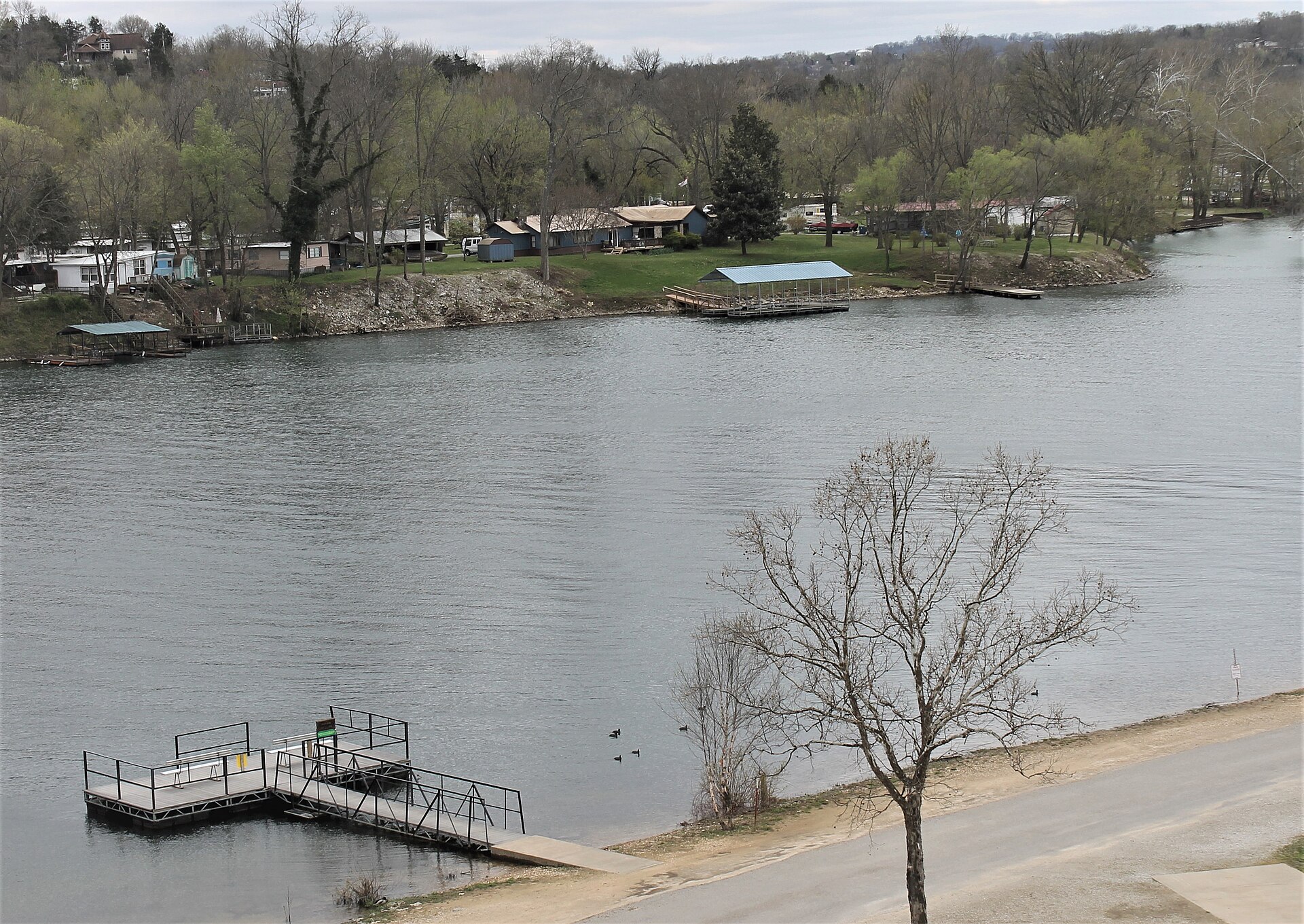
Taneycomo is a lake in name only — below Table Rock Dam near Branson, it behaves like a big, cold tailwater and produces some of the Midwest's most consistent trout fishing, including real trophy potential for browns in the colder months. October through May is the core season, with cool water and steady generation; summer fishes well when generation keeps temperatures down. This is a subsurface game: midges, scuds, sowbugs, and small mayflies, with nymphs and streamers outproducing dry flies under generation-driven flows. Public access is extensive, with ramps and public fishing areas along the Highway 165 and 265 corridor near Branson, and public docks for wade or boat access. Designated trout management zones carry specific length, creel, and method restrictions, all well signed by the Department of Conservation. Full Lake Taneycomo guide
Current River
The Current is Missouri's classic spring creek progression: stocked park water inside Montauk State Park — including a fly-only area — giving way to the Blue Ribbon section below Montauk Spring, where flies-and-artificials-only rules and tight harvest limits protect wild rainbows and browns. Trout fishing runs year-round, peaking March through early June and again September through November; summer fishes best to nymphs early and late. The forage is pure spring creek — scuds, sowbugs, cress bugs, and midges all year, caddis and modest mayflies in the warm months, ants and hoppers along the grass banks in late summer. Smallmouth take over downstream. Access is excellent through the park and the conservation-area walk-ins along the Blue Ribbon reach toward Akers.
Eleven Point River
The Eleven Point, in the southeastern Ozarks, is the state's most underrated trout water: a National Wild & Scenic River where the Blue Ribbon reach below Greer Spring holds wild rainbows under artificials-only, restrictive-harvest rules, with strong smallmouth fishing in the same system. Spring and fall bring prime flows, clear water, and comfortable wading; summer fishes best early and late. Trout feed on the standard Ozark spring-system menu — scuds, sowbugs, midges, caddis — while the smallmouth in the riffles and bluff pools want crayfish, minnows, and terrestrials. The river is built for floating, with multiple public accesses and canoe launches, plus walk-in access at designated river accesses and conservation areas. Wild & Scenic corridor regulations are posted at access sites.
Bennett Spring
Bennett Spring, near Lebanon in the Niangua drainage, is the archetypal Missouri trout park: a heavily stocked rainbow fishery with manicured access, marked fishing zones including fly-only areas, and easy wading throughout the state park. The season runs March 1 through October 31 on daily tags, with strong fishing around the opener and through the cooler spring and fall months. A winter catch-and-release season, under artificials-only rules, offers excellent fishing with light pressure — the park at its best for many fly anglers. Scuds, sowbugs, eggs, and generic nymphs produce consistently; caddis and small mayflies matter in spring and fall, midges all year. It is also a practical basecamp: the Niangua below the park runs wilder and quieter.
North Fork of the White River
The North Fork, below Rainbow Spring in the south-central Ozarks, carries Blue Ribbon water where flies and artificial lures only, with restrictive harvest, sustain high-quality wild trout fishing for rainbows and browns. The big spring influence keeps it fishable most of the year; spring and fall offer the best flows and temperatures, and summer mornings and evenings fish well with nymphs and streamers. Scuds, sowbugs, midges, and caddis drive the trout reaches, and the lower, warmer water turns to smallmouth on crayfish and baitfish patterns. Conservation areas, river accesses, and campgrounds provide public access along the Blue Ribbon sections, with put-ins and take-outs suited to float trips toward the Arkansas line.
Gasconade River
The Gasconade meanders through the central Ozarks toward the Missouri River, and it is a smallmouth river first — spotted and largemouth bass and sunfish fill out the catch. April through October is the season, with peak smallmouth fishing from late spring through early fall; in summer heat, the deep bluff pools hold the larger fish, and shaded runs fish best early and late. Streamers and crayfish patterns are the core approach, matching a forage base of crayfish, shiners, and terrestrials. Multiple public accesses, ramps, and conservation areas serve the upper and middle river, and the popular float sections let anglers cover bluff pools and riffles by canoe or kayak. Statewide black bass rules apply on most reaches, with special length limits on some Ozark stream stretches.
Meramec River
The Meramec runs from the Ozarks to the Mississippi near St. Louis, making it the metro area's serious smallmouth option. May through September is topwater season — long, clear evening pools produce strong surface action for smallmouth and spotted bass from late May into early fall — while April and October fish well on streamers and subsurface patterns. Poppers, crayfish patterns, and baitfish imitations cover the forage. Largemouth, sunfish, and catfish add variety in the lower river. Public accesses, conservation areas, and parks line the river, especially through the upper and middle Ozark reaches near Steelville and Sullivan and again near St. Louis. Statewide black bass rules govern most water, with reach-specific length limits listed by the Department of Conservation.
Jacks Fork River
The Jacks Fork, a Current River tributary near Eminence, is the prettiest version of the Ozark smallmouth problem: water so clear the bass can study your fly from a distance, which makes accuracy and subtlety count more than pattern. May through September is prime, with excellent topwater evenings in the pools through summer. Crayfish patterns, baitfish imitations, and poppers are the standard tools. National Park Service and Scenic Riverways facilities provide put-ins and take-outs for float trips, with walk-in access at several bridge crossings and river access points. The river fishes under statewide black bass regulations, with special length limits common to quality smallmouth streams — verify section rules before fishing.
Seasons at a glance
Trout fishing runs year-round but peaks twice: March through early June and September through November, when spring creeks and the Taneycomo tailwater hold cool water, active fish, and comfortable weather. The trout parks operate March 1 to October 31, then shift to winter catch-and-release — a quiet-season option worth planning around. Taneycomo's cold-month fishing (October–May) offers the best trophy window. Smallmouth season runs late April through October, with topwater peaking from late May into early fall. Summer is not lost time: spring influence keeps the trout branches cold enough for morning and evening fishing, and the bass rivers fish well in the same low-light hours.
Beyond trout
Ozark smallmouth water — the Gasconade, Meramec, Jacks Fork, and Big Piney — stands with any warmwater fishing in the Midwest, and it floats as well as it fishes. Reservoirs add another layer: Table Rock and Stockton produce bass and seasonal white bass runs on streamers around points, coves, and dam areas, with Stockton's fall white bass and walleye fishing drawing surprisingly little fly pressure. Carp, walleye, and catfish round out the fly options in select lakes and larger rivers.
Licenses and regulations
The Missouri Department of Conservation manages the state's fisheries. Anglers need a valid Missouri fishing permit, plus a trout permit to keep trout or to fish designated trout waters; the four trout parks additionally require a daily tag during the main season. The regulation structure is layered — Blue Ribbon artificials-only reaches, park zones, trout management areas on Taneycomo, and special black bass length limits on Ozark streams — with the river-specific notes above as a starting point. Rules change annually; check the current Missouri Department of Conservation regulations and the agency's official site before your trip.
Where to start
For one weekend, drive to the Current. Fish Montauk State Park's fly-only water the first morning to find your rhythm, then spend the rest of the trip on the Blue Ribbon water downstream, drifting scuds and sowbugs through the spring-fed runs toward Akers — March through early June or October are the windows. If you would rather trade numbers for solitude, float the Eleven Point below Greer Spring instead and fish trout water and smallmouth water in the same day. Taneycomo in winter is the third answer, and the best one for a shot at a big brown.
More regional guides: Fly Fishing in Arkansas, Fly Fishing in Iowa, Fly Fishing in Kansas