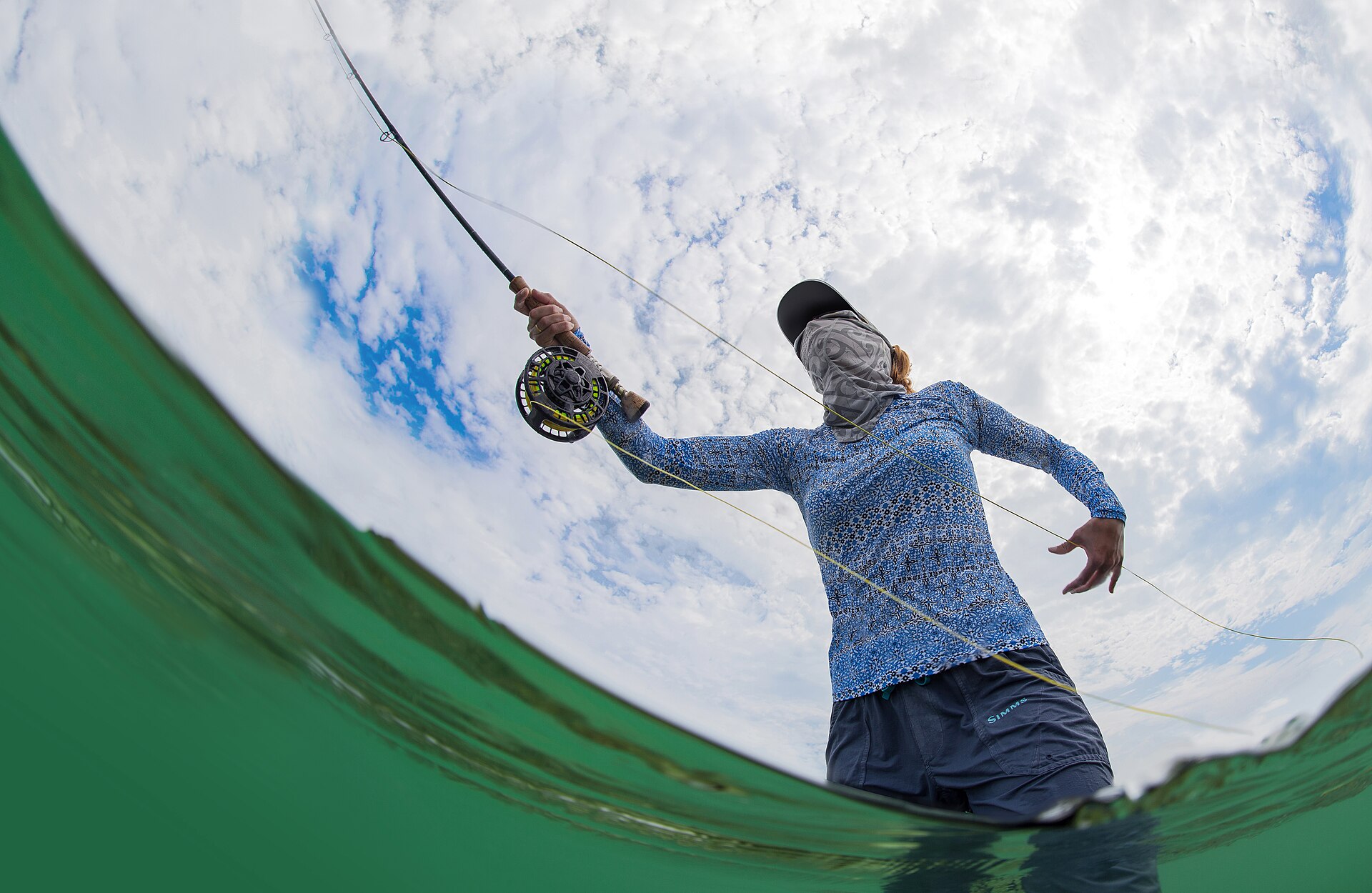
The water
Florida Keys flats and backcountry
The island chain from Key Largo to Key West is the reference point for American saltwater fly fishing. Bonefish and permit work the turtle-grass flats from March into November, with mixed flats fishing extending from late July into January depending on conditions; migratory tarpon peak in late spring and summer. Everything is sight-fishing — cruising and tailing fish on flats, channel edges, and mangrove shorelines, matched with shrimp, crab, and baitfish patterns. Access is primarily by boat from public marinas and ramps in Key Largo, Islamorada, Marathon, Big Pine Key, and Key West, though select hard-bottom flats, causeways, and bridges allow wading, and Everglades National Park waters adjoin the chain. Tarpon, bonefish, and permit carry specialized rules on top of statewide saltwater regulations, and park waters add federal regulations. Full Florida Keys guide
Biscayne Bay
Minutes from downtown Miami, Biscayne Bay holds legitimate flats fishing for bonefish, permit, tarpon, and snook. Spring through early fall is prime for bonefish and permit on the shallow flats, with tarpon moving through in late spring and early summer and mixed inshore fishing available through winter in decent weather. Bonefish and permit feed on shrimp and crabs over clear bottom; tarpon and snook chase mullet along channels and mangrove edges. Access is mostly boat-based from public ramps and marinas around Miami, Key Biscayne, and Homestead, and Biscayne National Park adds shoreline and kayak access to flats and mangrove edges. Bonefish and tarpon carry special protections, and the national park brings extra rules on harvest and boating.
Ten Thousand Islands and the Everglades backcountry
The western Everglades, out of Everglades City and Chokoloskee, is the wildest fly water in the state — a maze of mangrove islands, oyster bars, and tidal creeks holding snook, redfish, tarpon, and seatrout. Spring through early fall is the peak for snook, redfish, and tarpon along the mangrove shorelines; cooler months favor redfish and seatrout in stable weather. Everything keys on tide and bait movement, with baitfish, shrimp, and crab imitations doing the work around creek mouths and bars. Access is by skiff or kayak from ramps near Chokoloskee, Everglades City, and Marco Island; most of the area sits inside Everglades National Park, whose federal rules on gear, speed zones, and harvest — including closed periods for snook — overlay state regulations.
Mosquito Lagoon
North of Cape Canaveral, Mosquito Lagoon is Florida's best-known redfish water. Fall through spring is the prime sight-fishing window, when cooler, clear water makes redfish, seatrout, and black drum visible on shallow grass flats, sand holes, and oyster bars; summer fishes early and late around boat traffic and thunderstorms. Mullet, pinfish, shrimp, and small crabs drive the diet, and calm, low-light conditions make the fishing. Most of the shoreline is undeveloped, so access runs through boat ramps and kayak launches along the Indian River Lagoon system and Canaveral National Seashore. Redfish, seatrout, and black drum carry slot and bag limits, and federal refuge boundaries add speed zones and closures.
Crystal River and the Nature Coast
The estuaries around Crystal River and Homosassa, on the central Gulf coast, offer expansive, lightly developed shallow-water fishing for redfish, snook, seatrout, and migrating tarpon. Spring through fall is the productive stretch, with tarpon tracking the coast in late spring and early summer. Anglers pole skiffs across grass flats and oyster bars in very shallow, clear water, keying on mullet schools, baitfish, shrimp, and crabs around creek mouths. Boat and kayak access comes via public ramps around Crystal River and Homosassa and nearby wildlife management areas. Regional slot and bag limits apply to snook, redfish, and seatrout, and parts of the river system carry manatee protection zones and speed restrictions.
Tomoka River
The Tomoka, near Ormond Beach, is the underrated pick — a brackish, low-traffic river where kayak anglers target juvenile tarpon, snook, and redfish. Late spring through early fall in warm, stable weather is the best window. Fish feed on mullet, small baitfish, shrimp, and crabs around bends, marsh edges, and structure, and flies simply imitate that forage. Public launches and parks along the river corridor, including areas near Tomoka State Park, make access easy for paddlecraft and small boats. The river falls under Florida's saltwater and brackish regulations, with snook seasons and size restrictions worth checking before a trip.
Lake Okeechobee
Okeechobee is the freshwater flagship: a vast, shallow lake ringed with vegetation, holding largemouth bass, bluegill, and crappie. Spring through fall is the widely favored season, with early morning and evening the productive hours in the heat. Bass and panfish feed on shad, shiners, and minnows, so subsurface baitfish patterns and poppers around vegetation and canal edges are the standard program. Public boat ramps and canals ring the lake's perimeter, and most anglers fish from boats or kayaks launched at public facilities. Florida freshwater regulations apply, and water-level management can affect access in certain areas.
Tamiami Canal
The canal along U.S. 41 between Miami and Naples is Florida's most accessible fly fishery — miles of roadside water holding largemouth, panfish, exotic cichlids, and, in some reaches, snook and tarpon when warm-season high water moves brackish fish into the system. Spring through fall is the season, mornings and evenings best. Anglers prospect banks, culverts, and structure with streamers, poppers, and small subsurface flies. Pull-offs along the Tamiami Trail provide abundant walk-in shore access, with kayak launches at select ramps and bridges. Freshwater sections follow inland regulations; brackish and tidal reaches fall under saltwater rules.
Seasons at a glance
There is no closed season, just rotation. Late spring through summer is the marquee stretch: migratory tarpon through the Keys, Biscayne Bay, and the Gulf coast, with peak snook and permit fishing and bonefish active on the flats. Fall through spring belongs to the redfish waters — Mosquito Lagoon and the Nature Coast fish best in cooler, clearer water, and winter can still produce mixed inshore fishing in the Keys and Biscayne Bay when weather cooperates.
Freshwater runs spring through fall, fished early and late around the heat. The practical constraints are weather events rather than seasons: summer thunderstorms, winter cold fronts, and wind, which dictates which shorelines are fishable on any given day.
Beyond trout
Florida inverts the usual state-guide structure: saltwater is the main event, and the freshwater section is the sidebar. Redfish, snook, tarpon, bonefish, permit, and seatrout define the fishery from the Panhandle to the Keys. On the freshwater side, largemouth bass, panfish, and exotic species fill lakes, canals, and slow rivers — Okeechobee, Kissimmee, and the Tamiami Canal chief among them.
Licenses and regulations
The Florida Fish and Wildlife Conservation Commission (FWC) manages the state's fisheries. Anglers need a valid Florida license, with separate saltwater and freshwater licenses depending on where they fish; there is no trout stamp because the state manages no significant trout fisheries. Species rules do the heavy lifting here — slot limits, bag limits, and seasonal closures for snook, redfish, and seatrout, plus specialized rules for tarpon, bonefish, and permit — and federal regulations overlay Everglades and Biscayne national park waters, as noted per water above. Regulations change annually; verify current rules with the FWC before fishing.
What's changing
No notable FWC regulation or access changes were identified for 2025–26 — snook and tarpon limits and Everglades access rules carry over. The bigger stories are on the water itself: parts of the Everglades and Ten Thousand Islands are still recovering from the 2024 hurricane season, with some backcountry flats silted or altered, and persistent red tide and algal blooms have hurt redfish and snook numbers on Gulf coast flats near Fort Myers and Charlotte Harbor. Anglers are also reporting tarpon arriving earlier in spring in the Keys and Biscayne Bay as water temperatures rise.
Where to start
If you get one weekend and want the full Florida experience, go to Islamorada between April and June. Fish the ocean-side and backcountry flats with a guide — tarpon migrating through, permit and bonefish on the flats, and the highest concentration of fly-fishing infrastructure in the state. If the Keys budget is a stretch, drive to Titusville instead: Mosquito Lagoon redfish fish well from fall through spring, kayak access keeps costs down, and sight-fishing shallow grass for tailing reds is as good an introduction to Florida fly fishing as exists. Either way, watch the weather window, not the calendar.