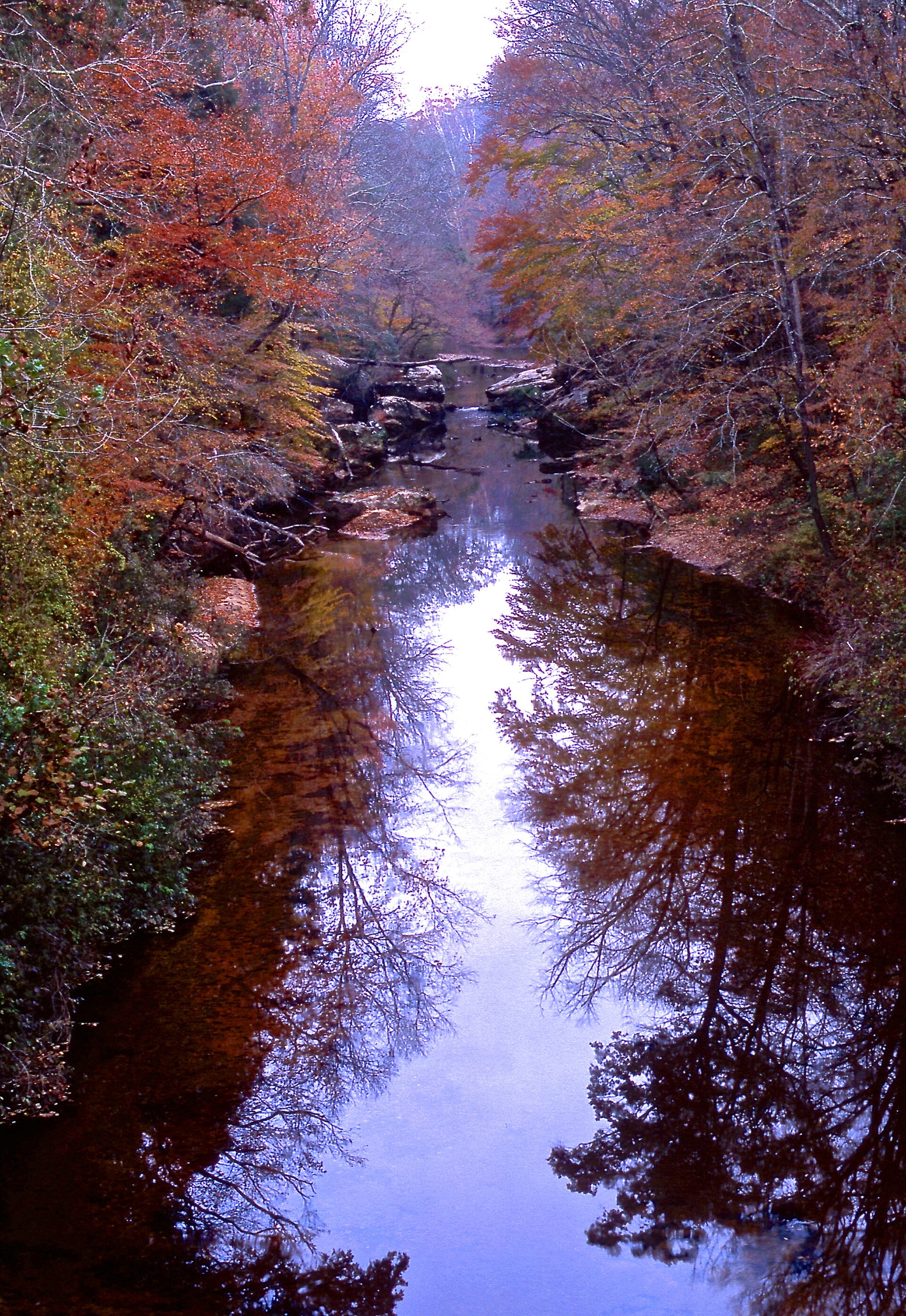
The water
Sipsey Fork (Black Warrior River tailrace)
Alabama's only designated public trout water, and the anchor of fly fishing in the state. The Sipsey Fork runs cold and clear below Lewis Smith Dam near Jasper, through and alongside Bankhead National Forest, and monthly stockings of rainbow trout keep it fishable twelve months a year. Cooler months tend to fish best, when oxygen levels are higher and the trout are more active. This is a nymph, small-dry, and streamer game: caddis, mayflies, and midges come off at various times year-round, and general attractors and midge patterns cover most days. Walk-in access is good near the powerhouse and at multiple points along the tailrace, with Riverside Fly Shop just upstream of the popular water. Check the generation schedule before you go — flows change the river completely — and review current trout regulations and creel limits. Full Sipsey Fork guide
Little River (West Fork, DeSoto State Park)
The West Fork of Little River on Lookout Mountain is the closest thing Alabama has to a mountain freestone experience, except the fish are redeye bass and bluegill instead of trout. It fishes from spring through early fall, peaking in summer when redeyes and panfish are most aggressive on top. Small terrestrial dries, poppers, and little streamers do the work here; this is classic light-rod surface fishing. Walk-in access runs through DeSoto State Park along the DeSoto Scout Trail and the yellow trail, with more water in the adjacent Little River Canyon National Preserve. Standard statewide warmwater regulations apply, though it's worth confirming site-specific rules inside the park and preserve.
Cahaba River
The Cahaba flows 194 miles southwest through the Birmingham metro and beyond, and it may be the best value in Alabama fly fishing: quality bass and panfish water minutes from the state's biggest population center, with far less pressure than the Sipsey Fork. Redeye bass, spotted bass, and sunfish take small streamers, poppers, and nymphs that imitate the river's minnows, crayfish, and terrestrials. Late spring through early fall is prime, and moderate summer flows open up plenty of wading. Public access points are numerous along its length, including water near the U.S. Highway 280 dam, Lake Purdy, and Perry Lake Park. General statewide black bass and panfish rules apply.
Coosa River
The Coosa is big-river bass water running southwest through east-central Alabama past Gadsden, broken into a chain of reservoirs and river reaches. Largemouth, spotted bass, striped bass, catfish, and bream all show up on the fly, with spring and fall the windows for river-run bass and stripers and steady warmwater action through summer when flows cooperate. Forage is baitfish and crayfish, so streamers and poppers are the staples. Access comes via an extensive network of public boat ramps and shoreline points managed by Alabama Power and municipalities, varying pool by pool. Statewide black bass regulations apply, with possible lake- or reach-specific size and creel limits — worth checking before targeting stripers or big bass.
Tennessee River (Wheeler and Guntersville)
Across north Alabama, the Tennessee River and its major reservoirs — Wheeler and Guntersville among them — offer the state's biggest warmwater fishery. Largemouth, smallmouth, and spotted bass share the water with stripers, catfish, and bluegill. Spring is the prime window for pre-spawn and spawning bass and striped bass, and topwater and subsurface fishing stays solid through summer and into fall. Shad dominate the forage, backed by crayfish and occasional mayfly hatches, so shad streamers, crayfish patterns, and poppers cover it. Access is ample through state parks including Joe Wheeler State Park and numerous boat ramps along the reservoirs. Reservoir-specific size and creel limits layer on top of statewide rules, and striper regulations can differ by reach.
Mobile-Tensaw River Delta
North of Mobile Bay, the Mobile-Tensaw Delta spreads roughly 25,000 acres of public creeks, bayous, and channels across the line between fresh and salt. That means an unusual mixed bag: largemouth and striped bass, bream, and catfish share water with redfish and speckled trout as the delta shades brackish. Spring through fall fishes best, once flows stabilize and bait stacks up. The forage is complex — shad, mullet, shrimp, crabs, minnows — so baitfish streamers, shrimp patterns, and poppers fished along grass edges, bays, and river mouths all have their days. Multiple public boat launches serve the complex. Regulations straddle two rulebooks: freshwater limits for bass and bream, marine regulations for redfish and specks, so consult both.
Mobile Bay and the Gulf Coast
Alabama's inshore saltwater game centers on Mobile Bay and the Gulf Shores–Orange Beach beaches. Redfish, speckled trout, flounder, Spanish mackerel, and ladyfish are the targets, with spring, summer, and fall the most consistent seasons; in winter, bait and trout slide to deeper, warmer water and the shallow game thins out. The forage list is long — mullet, menhaden, croaker, killifish, shrimp, crabs, sandfleas — and the fly list matches it: Clousers, Deceivers, gurglers, shrimp imitations, spoon flies, and surf candies fished around grass flats, docks, and beaches. Public access is extensive via marinas, piers, beaches, and launches. Marine regulations govern here, including slot limits and creel restrictions for redfish and spotted seatrout, and you'll need a saltwater license.
Mud Creek (Tannehill Ironworks Historical State Park)
Mud Creek, near McCalla in Tannehill Ironworks Historical State Park, is one of only three locations in Alabama stocked with trout. It's a small, easy-access cool-season fishery: fall through early spring is when stockings keep fishable numbers of rainbows in the creek. Nobody is matching hatches here — generic nymphs, small streamers, and attractor dries are the program. It makes a convenient half-day for Birmingham-area anglers who want bent rods on trout without the drive to the Sipsey. Confirm park-specific rules and trout limits before fishing.
Seasons at a glance
Spring (late March through May) is the broadest window: pre-spawn and spawning bass on the Tennessee and Coosa systems, warming redeye creeks, stabilizing delta flows, and inshore fish moving shallow. Summer belongs to the warmwater and salt game — redeye bass and bluegill on top, steady reservoir fishing, and consistent inshore action — while the Sipsey Fork stays cold enough to fish through the heat thanks to dam releases.
Fall (September through early November) brings a second peak for river bass and stripers and continued strong coastal fishing. Winter narrows the field but doesn't close it: the Sipsey Fork often fishes better in cool months, Mud Creek's stocking season is in full swing, and deeper coastal structure still holds fish when conditions allow.
Beyond trout
In Alabama the "beyond trout" section is really the main event. Redeye, spotted, and largemouth bass eat flies readily across the Little River, Cahaba, Coosa, and Tennessee systems, backed by bluegill and bream almost everywhere. The coast is the other headline: Mobile Bay and the Gulf Shores–Orange Beach area offer some of the Gulf's most accessible fly fishing for redfish and speckled trout over a forage base that suits classic saltwater patterns.
Licenses and regulations
Fishing in Alabama is managed by the Alabama Department of Conservation and Natural Resources (ADCNR) — the Wildlife and Freshwater Fisheries Division inland and the Marine Resources Division on the coast. Most anglers 16 and older need a valid license, and freshwater and saltwater licenses are separate, so a trip that pairs the Sipsey Fork with Mobile Bay requires both. There is no separate trout stamp; Sipsey Fork trout fall under the standard freshwater license. Special-regulation notes are listed per river above, and regulations change annually — verify current rules in the ADCNR regulations booklet before you go.
Where to start
One weekend, first trip: base in the Birmingham area and split your time. Fish the Sipsey Fork tailrace on day one — go in the cooler months if you can, and check generation before you leave — then spend day two throwing poppers on the Cahaba or make the drive northeast to the West Fork of Little River in DeSoto State Park. If you'd rather chase salt, point the truck at Gulf Shores between spring and fall and hunt redfish and specks on the flats and beaches.
Neighboring states worth pairing with an Alabama trip:
Fly Fishing in Georgia Fly Fishing in Tennessee Fly Fishing in Florida