The water
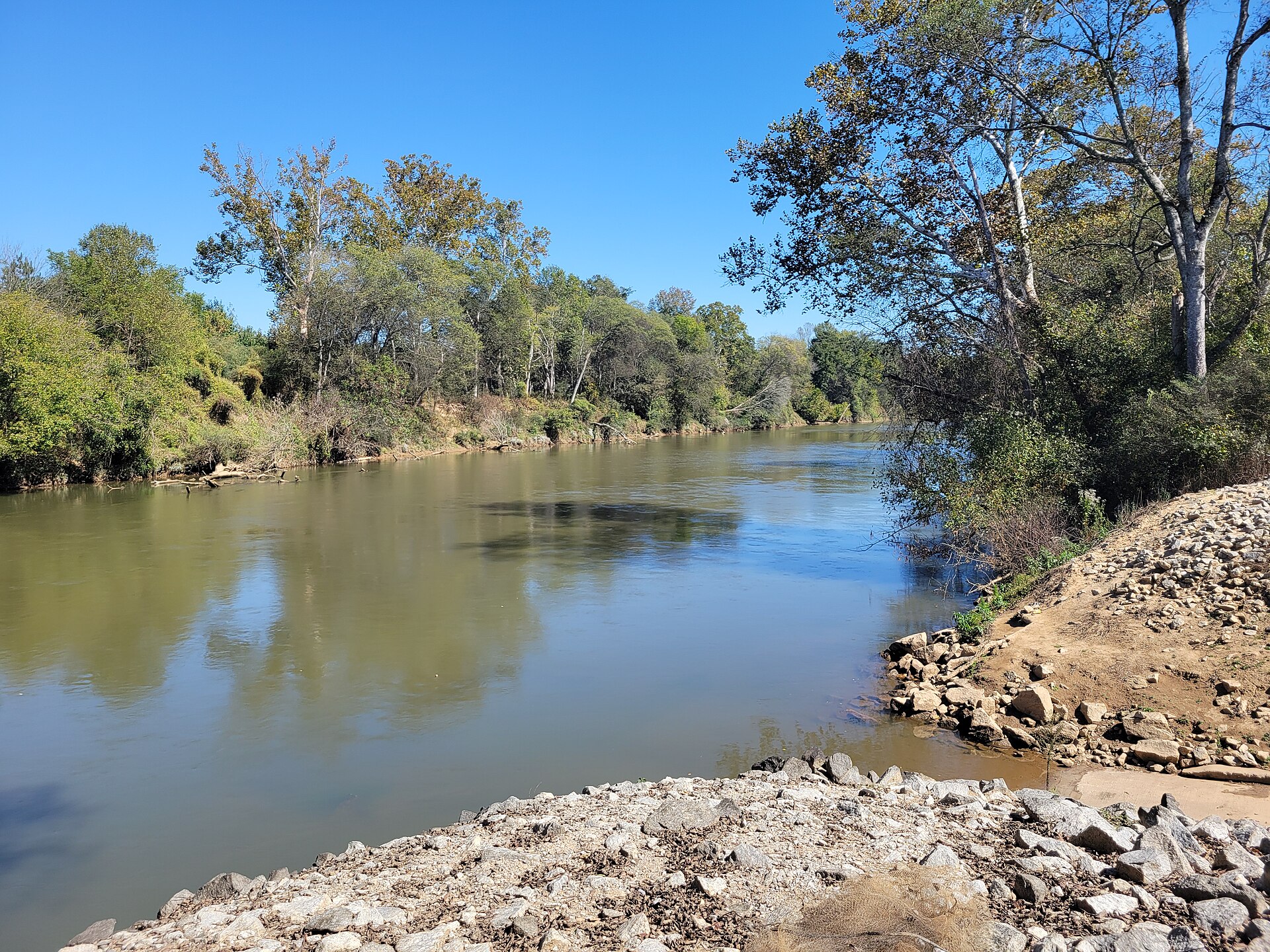
Chattahoochee River below Buford Dam
The Hooch is Georgia's marquee fishery and among the country's most urban trout rivers, flowing cold out of Buford Dam through metro Atlanta. Rainbows and browns dominate the upper tailwater; striped bass, carp, and shoal bass take over the warmer reaches downstream. It fishes year-round — winter and early spring are especially good on stable, cold releases, with midges hatching most of the year, black winter stoneflies and caddis in the cold months, and mixed mayfly and caddis activity in spring. Access is extensive through the Chattahoochee River National Recreation Area, including Cochran Shoals, Sope Creek, and Bull Sluice Lake above Morgan Falls Dam. A Delayed Harvest section in the Atlanta area (around Cochran Shoals to the mouth of Sope Creek) carries seasonal catch-and-release, artificial-only rules. Full Chattahoochee guide
Toccoa River
The Toccoa tailwater below Lake Blue Ridge is North Georgia's other year-round trout fishery, minutes from the town of Blue Ridge. Cold releases keep rainbows and browns active through winter, when nymphs and midges produce quality fish; spring and fall bring prime flows and enough insect activity for dries and streamers. The reliable midge hatch means a Griffith's Gnat works almost any month, with caddis and black winter stoneflies in late winter and mixed mayfly-caddis hatches — plus sculpin for the bigger browns — in spring. The Delayed Harvest section on the upper river off Aska Road is heavily stocked walk-in water under seasonal catch-and-release, artificial-only rules; below the dam, limited wading access means boats fish it best.
Noontootla Creek
Noontootla, northwest of Dahlonega in the Chattahoochee National Forest, is Georgia's benchmark wild-trout freestone — wild rainbows, browns, and brookies, no stocking truck required. Spring and fall are prime, with moderate flows and strong activity from the classic Appalachian mix of mayflies, caddis, and stoneflies; summer fishes in the cool hours and at elevation, with ants and beetles on the menu; winter demands stealthy nymphing in low, clear water. Forest roads and trails provide access, with pull-offs and short hikes to pools and runs. Designated sections carry special wild-trout regulations emphasizing catch-and-release and artificial lures — check current boundaries before fishing.
Dukes Creek
Dukes Creek, inside Smithgall Woods State Park near Helen, is Georgia's premier public trophy trout water — and it's run like one. Access is walk-in only, controlled through the park with designated parking, limited angler quotas, and strict catch-and-release, artificial-only regulations. Fall and winter are the prime windows, when high-water events move big fish, including seasonal runs of large trout from adjacent private waters in fall and spring; spring fishes well on nymphs and streamers at moderate flows, while summer's low, clear water is the hardest test. Mayflies, caddis, and midges are present, but the trophy fish key on sculpin and baitfish — big articulated streamers earn the largest trout. Reserve expectations accordingly: this is technical, managed water, not numbers fishing.
Chattooga River
The Chattooga forms the Georgia–South Carolina border in national forest country near Clayton, and it's the state's best hike-in freestone. Rainbows and browns hold in a big, boulder-strewn river surrounded by public land. Spring is prime for flows and hatches — mayflies, caddis, and stoneflies typical of Southern Appalachian freestones — with shaded upper reaches fishing through cool summer periods and fall offering stable flows and thin crowds. Attractor dries, nymphs, and streamers cover most situations, with terrestrials rising in importance through summer. Access is via forest roads, trailheads, and river trails, mostly on foot. Portions carry delayed harvest and artificial-only rules spanning the border, so check both Georgia and South Carolina regulations.
Rock Creek
Rock Creek, in the Chattahoochee National Forest near Blue Ridge and Suches, is the state's classic starter stream — heavily stocked rainbows and browns, easy roadside access, and forgiving water. Spring and early summer are best, when stocking meets cool flows; fall brings pleasant conditions and lower pressure, and winter can still produce on nymphs in the deeper pools. Caddis, mayflies, and stoneflies come off in season, but stocked fish also eat generic nymphs, woolly buggers, and egg patterns, with beetles and hoppers along wooded banks in summer. National forest land provides pull-offs, campgrounds, and trails to multiple reaches. Standard statewide stocked-trout regulations apply.
Conasauga River
The Conasauga drains the Cohutta Wilderness in northwest Georgia, and its lower valleys hold the state's most overlooked fishery: summer smallmouth, spotted bass, redeye bass, and sunfish in a wilderness setting. Summer is the highlight, when warm water has bass feeding aggressively in riffles and runs; late spring and early fall offer comfortable flows and active fish. Minnows, crayfish, and terrestrials drive the forage, so streamers, poppers, and subsurface baitfish patterns are the tools. Access is via national forest and wilderness trailheads for the remote upper water, with road crossings and public land downstream for conventional wading and floating. General warmwater regulations apply; verify any Cohutta Wilderness-specific rules.
Georgia coastal marshes
From Savannah to Brunswick and St. Simons, Georgia's barrier-island marsh systems hold a distinct saltwater game: flood-tide redfish. Late spring through fall, high tides flood the grass flats and redfish follow, tailing for crabs in water barely deep enough to cover them. The region's characteristically murky water dictates fly choice — dark black-and-purple crab and baitfish patterns like Redfish Crack, Swamp Donkeys, Texas Toads, and Kung Fu Crabs. Spotted seatrout, flounder, and sheepshead round out the inshore mix, and winter brings clear-water chances on lower tides. Access runs through public boat ramps, municipal marinas, and state coastal facilities, with wadeable flats and back creeks reachable from roadside pull-offs; most anglers fish from skiffs or kayaks. Slot limits and seasonal restrictions apply to redfish and seatrout.
Seasons at a glance
Spring and fall are the trout prime: moderate flows, ideal temperatures, and mayfly, caddis, and stonefly activity across the mountains, with Delayed Harvest sections at their best. Winter is stronger here than in most southern states — the Toccoa and Chattahoochee tailwaters keep producing on midges and nymphs, and Dukes Creek's biggest fish move on winter high water.
Summer flips the script: trout fishing retreats to high elevations, shaded water, and early hours, while Conasauga smallmouth, Chattahoochee carp and stripers, and coastal flood-tide redfish hit their peaks. There is no month without a good option; there are only wrong pairings of month and water.
Beyond trout
Georgia's non-trout fishing deserves equal billing. The Conasauga's summer smallmouth, spotted bass, and redeye bass take streamers and poppers in wilderness water most trout anglers drive past. On the coast, flood-tide redfish in the marsh grass are the state's most distinctive fly fishery. And in metro Atlanta, carp in the Chattahoochee's backwaters and creek mouths — around Bull Sluice Lake especially — offer a difficult, overlooked urban target in summer.
Licenses and regulations
The Georgia Department of Natural Resources, Wildlife Resources Division, manages the state's fisheries. Anglers need a valid Georgia fishing license, and a separate trout license is required to fish designated trout waters or to possess trout; nonresidents have their own license options. Special-regulation water is a defining feature here — Delayed Harvest sections on the Chattahoochee, Toccoa, and Chattooga, wild-trout rules on Noontootla, and the controlled-access trophy program on Dukes Creek — all flagged per river above. Regulations change annually; verify current rules with Georgia DNR before fishing.
Where to start
One weekend: base in Blue Ridge. Fish the Toccoa's Delayed Harvest water off Aska Road in the morning, hit Rock Creek or Noontootla in the afternoon depending on whether you want easy stocked fish or a wild-trout challenge, and you'll have sampled the full range of North Georgia in two days. Go in April for hatches or November for solitude and the tailwater's winter form. If you're Atlanta-based with only a morning, the Chattahoochee's Delayed Harvest section around Cochran Shoals is the answer — cold water, managed trout, and no mountain drive required.
Fly Fishing in North Carolina Fly Fishing in South Carolina Fly Fishing in Tennessee