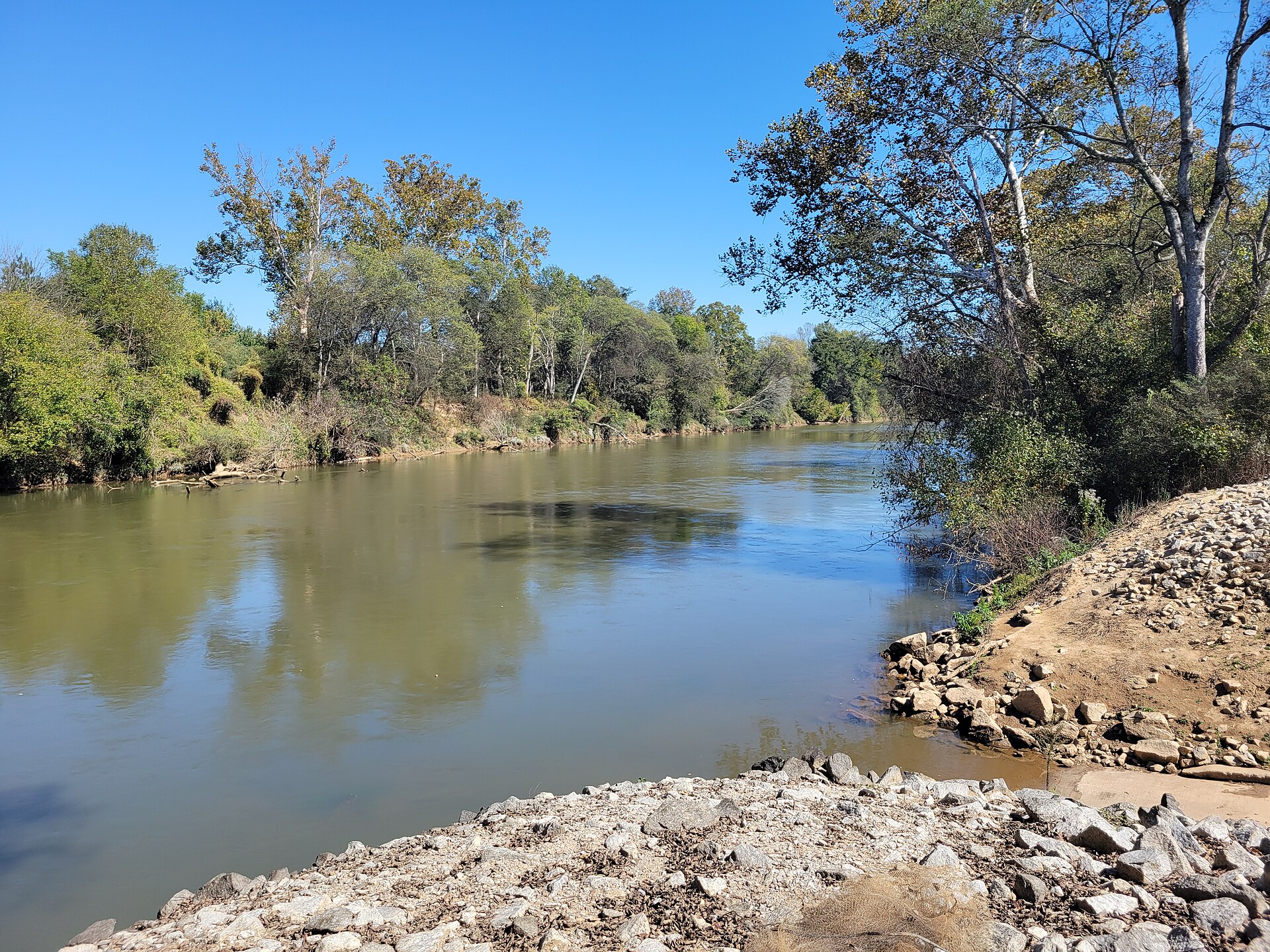
Quick reference
| Field | Value |
|---|---|
| State / region | Georgia, north of Atlanta through the metro corridor |
| Species | Rainbow trout, brown trout; striped bass, carp, and shoal bass in warmer lower reaches |
| Best months | Year-round; winter and early spring are especially productive on stable cold releases |
| Water type | Tailwater (regulated releases from Lake Lanier) |
| Difficulty | Intermediate — selective trout, small flies, and release-driven flow changes |
| Wading | Manageable at moderate flows; technical to unworkable during heavy releases, which can change quickly |
Why fish here
The Chattahoochee below Buford Dam is a cold-water tailwater built on regulated releases from Lake Lanier, and it fishes like a northern tailwater despite sitting in metro Atlanta's orbit. Year-round cold flows keep trout active through the Georgia summer, and the combination of big water, highly managed releases, and a genuine trout fishery within reach of a major city is what draws anglers here — reliable trout water without leaving the metro area.
The fishing itself rewards attention. The river supports consistent midge-driven surface activity that can be targeted with small dries, while nymphing stays effective through most of the year. The trout are selective on this clear, cold water, and different stretches respond to nymphs, eggs, and small streamers depending on flow and season. This is not attractor-dry water most days; it is a fishery where #20–24 midges and precise drifts earn fish.
Access is broad for an urban-adjacent river. The Chattahoochee River National Recreation Area provides public access points through the corridor, and the named road crossings — Highway 20, Abbotts Bridge, Highway 141 — break the trout reach into fishable segments with defined regulations. Farther down the system, the species list widens: striped bass, carp, and shoal bass hold in the warmer reaches toward Atlanta, though the trout water below the dam is the core of the fly fishery and the focus of this guide.
The river, section by section
Buford Dam tailwater
Access: The Buford Dam road end and dam access area; local guide notes say to park near the wooden fences along the road. Character: Cold, regulated water with deeper runs, seams, and flatter walking-speed flats near the dam. Long casts are often needed, and wading gets technical in heavier flows. Species mix: Primarily stocked trout; trout are the clear target here. Crowding: Often busy — this is the signature access below the dam. Best early and during non-peak release windows. Notable hatches: Midges are the key hatch, with small caddis mattering at times. Rising fish are most likely on the shallower flats in early to mid-morning and late evening.
This is where the dry-fly game is strongest and most demanding. The flats near the dam hold midging fish that require small flies, fine tippet, and drifts long enough to fool trout that see pressure daily. Time the releases: the fishing and the wading both hinge on what the dam is doing.
Highway 20 to Abbotts Bridge
Access: Highway 20 and Abbotts Bridge. Character: Broad tailwater with riffles, seams, ledge rock, and runs. Commonly fished from a boat, though bank and wading access exist in spots. Species mix: Trout dominate; this reach is noted for artificial-only trout fishing in the regulated section. Crowding: Popular and frequently pressured, especially on good water and weekends. Notable hatches: Midges are the staple; caddis, sulfur-style dries, and terrestrials can matter, with nymphing the most dependable method.
The middle reach is workmanlike tailwater fishing — cover the seams and ledge-rock buckets with nymph rigs, and keep a dry rod ready for the windows when caddis or sulfur-style bugs bring fish up. The artificial-only designation on this stretch is a specific regulatory line; note that sources indicate natural bait is allowed above Highway 20 but not below it, so know which side of the boundary you are on.
Below Abbotts Bridge to Highway 141
Access: Abbotts Bridge and Highway 141. Character: A mix of runs, deeper holes, seams, and softer water that rewards precise presentations and shorter drifts. Species mix: Trout, with the possibility of larger fish holding in deeper runs and pocketed structure. Crowding: Moderate to heavy near road-access points; some stretches are quieter than the dam area, but this is still a well-known fishery. Notable hatches: Midges dominate. Zebra midges, Griffith's Gnats, Adams-style dries, and small caddis are all documented choices.
The deeper holes and pocketed structure here are where the better fish hold, and short, controlled drifts through defined slots out-produce long blind drifts. This is a good stretch to slow down and fish thoroughly rather than cover miles.
Lower metro reaches (Chattahoochee River National Recreation Area)
Access: CRNRA access points downstream of the dam corridor. Character: More mixed current with riffle-run-pool structure and opportunistic holding water; flows and access determine wading quality. Species mix: Trout remain the focus within the managed trout reach. Crowding: Busy on fair-weather weekends when water levels line up; weekday pressure is usually lighter. Notable hatches: Midges continue to matter most; nymph rigs and small attractors are standard when no hatch is showing.
The recreation area reaches trade the dam's concentrated fishery for variety and elbow room. Structure is more classic riffle-run-pool, and the fishing is opportunistic — a nymph rig worked through likely water produces when nothing is rising.
Hatches and seasons
| Months | Hatches | Flies |
|---|---|---|
| Jan–Feb | Primarily midges; cold-weather windows also favor eggs and small nymphs | Zebra Midge (#20–24), Matt's Midge, Griffith's Gnat, small eggs (#16–18), Pheasant Tail (#16–18) |
| Mar–Apr | Midges remain important; caddis, sulfur-style dries, and small mayflies build as water warms | Parachute Adams (#14–20), Elk Hair Caddis (#14–18), Griffith's Gnat (#18–24), Zebra Midge (#18–24), Hare's Ear (#14–18) |
| May–Jun | Midges, caddis, and opportunistic terrestrials; surface action strongest on shallow flats and soft seams | Elk Hair Caddis (#14–18), Parachute Adams (#16–20), Stimulator (#12–14), Zebra Midge (#18–24), Pat's Rubber Legs (#10–14) |
| Jul–Aug | Midges are the most reliable hatch; low, clear water makes small presentations essential | Griffith's Gnat (#20–24), Zebra Midge (#20–24), Adams variants (#20–24), small caddis (#16–20) |
| Sep–Oct | Midges continue; caddis and terrestrial-style offerings still relevant in warm periods | Parachute Adams (#16–20), Elk Hair Caddis (#14–18), small streamers, Zebra Midge (#18–24) |
| Nov–Dec | Cooler water favors midges, eggs, and small subsurface patterns; streamer windows improve | Zebra Midge (#18–24), egg patterns (#16–18), Woolly Bugger (#6–10), sculpin-style streamers (#4–8) |
Recommended flies (by season)
| Season | Top patterns | Why |
|---|---|---|
| Spring | Parachute Adams, Elk Hair Caddis, Zebra Midge, Pheasant Tail Nymph, Hare's Ear Nymph, small eggs | Midge fishing stays strong while caddis and broader mayfly-style presentations become more useful as insect activity increases |
| Summer | Griffith's Gnat, Zebra Midge, small Adams variants, Elk Hair Caddis, Pat's Rubber Legs | Low, clear water and selective trout make small, subtle flies the best bet, especially on flat water during active midging |
| Fall | Egg patterns, Zebra Midge, Woolly Bugger, sculpin/Muddler types, Adams | Cooling water improves streamer and egg fishing while midges remain dependable |
| Winter | Zebra Midge, Matt's Midge, Griffith's Gnat, egg patterns, Pheasant Tail Nymph | Cold water concentrates trout and makes small midges and simple subsurface offerings the most consistent producers |
Gear notes
A 9-foot 5-weight is the standard all-around rod, with a 6-weight worth considering for heavier nymph rigs or streamers. Fish a floating line for dries and nymphs and a sink-tip for streamers in deeper water. Leaders commonly run 9 to 12 feet — 5X for most dry-fly work, stretching to 6X or 7X for the small flies these selective trout often demand. Prioritize traction in wading gear and treat the water with caution: releases are regulated and flows can change quickly below the dam.
Logistics
- Regulations: Georgia DNR manages the trout fishery, with the Chattahoochee River National Recreation Area governing access on its sections. Sources document the Highway 20 to Abbotts Bridge reach as artificial-only, with natural bait permitted above Highway 20 but not below it — but the research does not confidently document current bag limits, catch-and-release boundaries, or permit details. Verify everything against current Georgia DNR regulations and CRNRA rules before fishing; regulations change annually.
- Access points:
- Buford Dam — primary access at the dam road end; park near the wooden fences along the road
- Highway 20 — access and regulatory reference point for the trout reach
- Abbotts Bridge — named reach and access point below Highway 20
- Highway 141 — downstream boundary reference in the trout reach
- Closest fly shop: Georgia Wild Trout (Buford); Alpharetta Outfitters (Alpharetta)
- Nearest towns: Buford, Cumming, Alpharetta, Suwanee, Duluth, Roswell
- Closest gauge: USGS 02334430 — Chattahoochee River at Buford Dam, near Buford, GA
When NOT to fish here
Avoid high-release periods if the plan depends on wading — regulated flows can make the river fast and difficult to cover effectively, and conditions can change quickly. Summer heat makes the low, clear water more technical and the fishing more demanding, and weekends during good flows draw crowds, especially near the dam and the major access points. If the release schedule and a weekend line up badly, a weekday morning is worth the schedule juggling.
Where to fish next
- Fly Fishing in Georgia — the full state guide
- Soque River — a private-access North Georgia trout stream known for large fish
- Toccoa River below Blue Ridge Dam — Georgia's other significant trout tailwater, a natural pairing for a North Georgia trip