The water
Sugar Creek
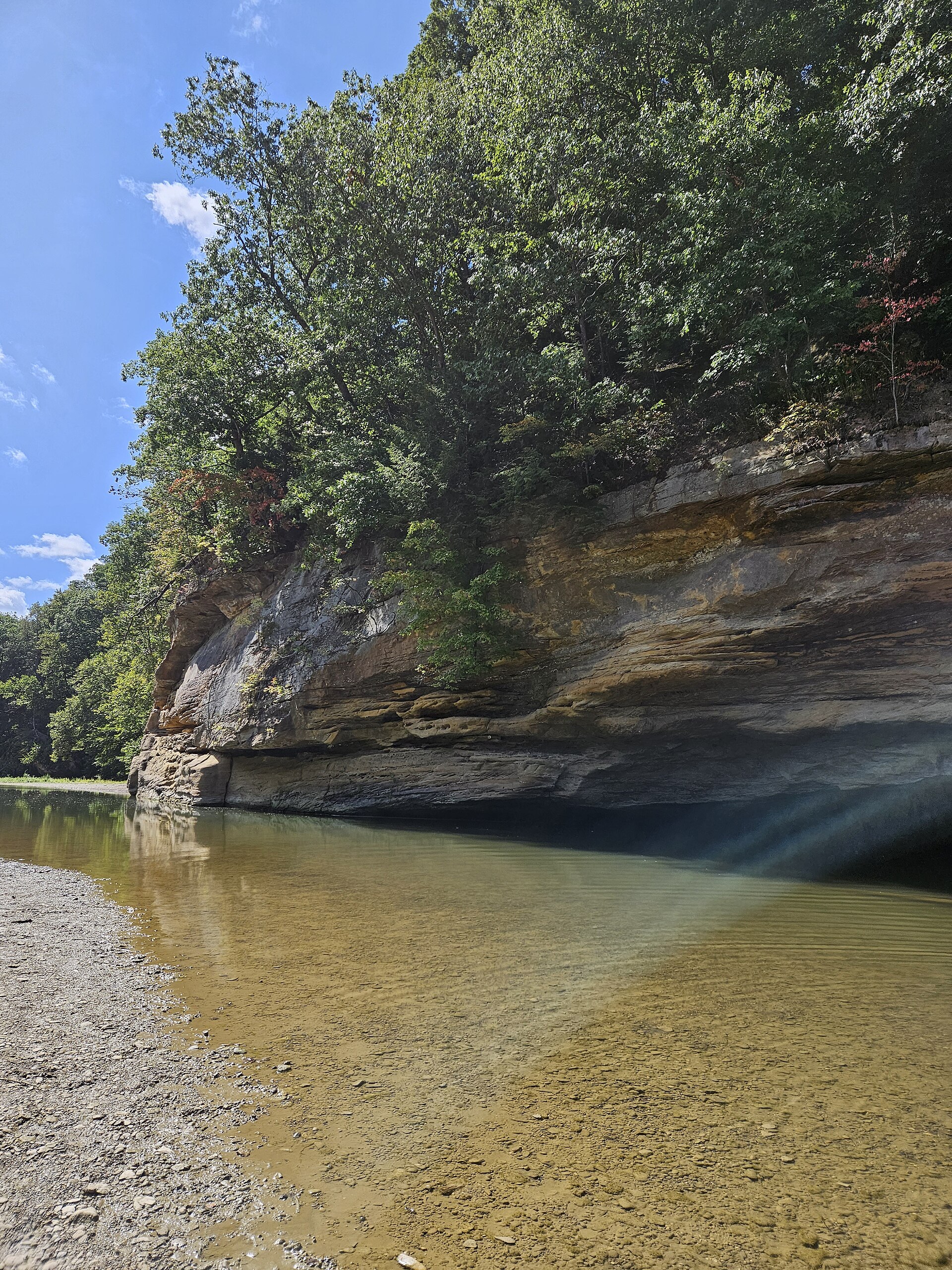
Sugar Creek is Indiana's best-known fly water, cutting through the sandstone canyon country of Turkey Run and Shades on its way to the Wabash. Smallmouth are the draw, with rock bass, sunfish, and carp alongside. The season is long — March through mid-November — with the best action late spring through early fall when flows are moderate and the water runs clear; mid-morning to late afternoon is often the productive stretch. Minnows and crayfish around boulders and riffles drive the fishing, so streamers, crawdad patterns, and surface bass flies worked along current seams are the standard approach, with mayflies, caddis, and terrestrials along the wooded banks. Access is excellent: state parks and public recreation areas along the canyon sections, canoe liveries for floats, and several public road crossings for wading. Statewide warmwater rules apply.
Brookville Tailwater
The East Fork Whitewater below Brookville Lake is Indiana's flagship trout water — stocked rainbows and browns in cold dam-released flows, with smallmouth and walleye mixed in. Spring through early summer is prime, riding a genuine hatch calendar: BWOs and caddis April through September, sulphurs May–June, tricos June–August, terrestrials July–September, and sowbugs April through October. Nymphs, scuds, midges, and small streamers produce consistently, and fall brings good nymph and streamer fishing as flows stabilize. Access is concentrated below the dam, with designated angler parking and trails plus pull-offs and bridge access downstream — most anglers fish it on foot. Special trout regulations, including size and daily limit rules, apply on certain sections, and a trout and salmon stamp is typically required.
St. Joseph River
The St. Joseph through South Bend may be the most varied single fishery in the state: smallmouth, pike, muskie, gar, and brown trout, plus steelhead and salmon running up from Lake Michigan. Late May through October covers the warmwater season — summer for topwater, fall for larger fish on structure — while steelhead and salmon are targeted in the colder months on Lake Michigan tributary timing. Baitfish, juvenile salmonids, and crayfish drive the forage, so fish streamers, crawdad imitations, and poppers for bass, and larger streamers and nymphs for migratory fish. Urban access is good: public parks, bridges, boat ramps, and municipal water along the South Bend–Mishawaka corridor. Lake Michigan tributary regulations apply to the migratory species, including seasonal closures and specific limits.
White River
The White River main stem runs through the heart of the state — Indianapolis included — carrying smallmouth, largemouth, carp, catfish, and sunfish. April through early June and September through October are the prime smallmouth and carp windows, when flows and temperatures moderate; summer fishes well early and late in the day. Shad, baitfish, crayfish, and riffle insects make up the menu, and bass and carp respond to streamers, crayfish patterns, nymphs, and surface flies around structure. Access is broad: city and county parks, greenways, and boat ramps along the Indianapolis corridor, with much of the river floatable via canoe liveries and informal put-ins. Standard statewide warmwater rules apply; some urban stretches carry consumption advisories.
Tippecanoe River
The Tippecanoe meanders 182 miles across northern Indiana to the Wabash, holding smallmouth, largemouth, northern pike, walleye, and panfish. Late spring through early fall is the season, with May–June and September–October the best windows for smallmouth and pike in stable flows. It fishes as a classic baitfish-and-crayfish river: Clousers, woolly buggers, and crayfish patterns most days, surface flies in the low-light hours of summer. Multiple public access sites and boat ramps line its course, including the stretch below Oakdale Dam, and much of the river is float-friendly through mixed private and public land. Standard warmwater regulations apply — verify current size and creel limits for pike, bass, and walleye.
Blue River
The Blue River in southern Indiana is the state's most overlooked smallmouth stream — spring-influenced, limestone-flavored water winding through wooded hills toward the Ohio. Smallmouth headline, with largemouth, sunfish, and catfish present. May–June and September–October offer prime smallmouth fishing at moderate flows, and shaded reaches keep topwater fishing alive through summer. Minnows, crayfish, and typical limestone-creek insect life drive fly choice: streamers, crayfish patterns, and surface flies around ledges and woody cover. Access comes via county road crossings, informal pull-offs, and the canoe liveries serving the popular float sections, with public lands scattered along the scenic southern corridor. Standard statewide limits for bass and catfish apply.
Lake Michigan tributaries
Indiana's short piece of Lake Michigan shoreline gives it a Great Lakes fishery out of proportion to its size. Tributaries such as Salt Creek and the creeks of the Kankakee-area lakeshore run steelhead, coho, chinook, and brown trout, with the strongest action November through March and additional runs tied to stocking and migration timing — including Skamania steelhead in Salt Creek. Eggs and baitfish dominate the forage, so egg patterns, nymphs, and streamers are the core flies, fished at bridge pools and tailouts. Access runs through public road crossings, municipal parks, and designated tributary fishing areas, with some water threading private and industrial corridors. These streams carry special seasons, tackle rules, and limits; read Indiana's Lake Michigan trout and salmon regulations before fishing.
Pigeon River
The Pigeon River, near the Michigan border in the northeast, is a quieter mixed fishery: smallmouth and sunfish through most of its length, with stocked trout in select cooler, spring-influenced reaches. Late spring through early fall covers the warmwater fishing, with spring and fall best at moderate flows; the trout sections fish best in spring and early summer. Baitfish and crayfish drive most of the fly selection, while the colder stretches support nymph and dry-fly fishing over Midwestern mayflies, caddis, and terrestrials. Access comes at public road crossings and state and county recreation areas along the corridor, and parts are popular float water. Confirm current trout management designations before targeting trout — stocked sections carry their own rules.
Seasons at a glance
The river year has two peaks. April through early June brings moderate flows, active smallmouth, prime carp fishing, and the best of Brookville's spring hatches; September through October repeats the trick with cooler water, aggressive pre-winter bass, and stabilizing tailwater flows. Summer between them is far from dead — topwater smallmouth early and late, shaded creeks like the Blue fishing through the heat.
Winter belongs to the northwest corner. November through March is the heart of the steelhead, coho, and brown trout season on the Lake Michigan tributaries, giving Indiana fly anglers a legitimate cold-weather fishery while the smallmouth rivers wait for spring.
Beyond trout
Warmwater is the backbone here, not the afterthought. The White River, Sugar Creek, and Tippecanoe are the marquee smallmouth systems, joined by bass-rich reservoirs like Patoka and Monroe. Smallmouth, carp, northern pike, and panfish all run strong through the warm months on streamers, crayfish patterns, and surface flies — for most Indiana fly anglers, this is the everyday fishing.
Licenses and regulations
Resident and nonresident anglers need a valid fishing license from the Indiana Department of Natural Resources, Division of Fish & Wildlife. A trout and salmon stamp is generally required on top of it to fish for or keep trout and salmon in designated waters — Brookville Tailwater and the Lake Michigan tributaries being the two that matter most here. Special-regulation sections are flagged per river above, and the Lake Michigan tributary rules (seasons, tackle, limits) deserve a careful read. Regulations change annually; check the current Indiana DNR rulebook before fishing.
Where to start
With one Indiana weekend, go west-central in late May or early June: float or wade Sugar Creek through the Turkey Run canyon country with crawdad patterns and poppers for smallmouth. It's the state's signature trip — clear water, sandstone bluffs, and bass that hit like they're twice their size. If the calendar says winter instead, drive to the northwest corner and swing streamers through the Salt Creek bridge pools for steelhead; November through March is when that fishery earns its reputation.
Neighboring states worth the drive:
Fly Fishing in Michigan Fly Fishing in Illinois Fly Fishing in Ohio