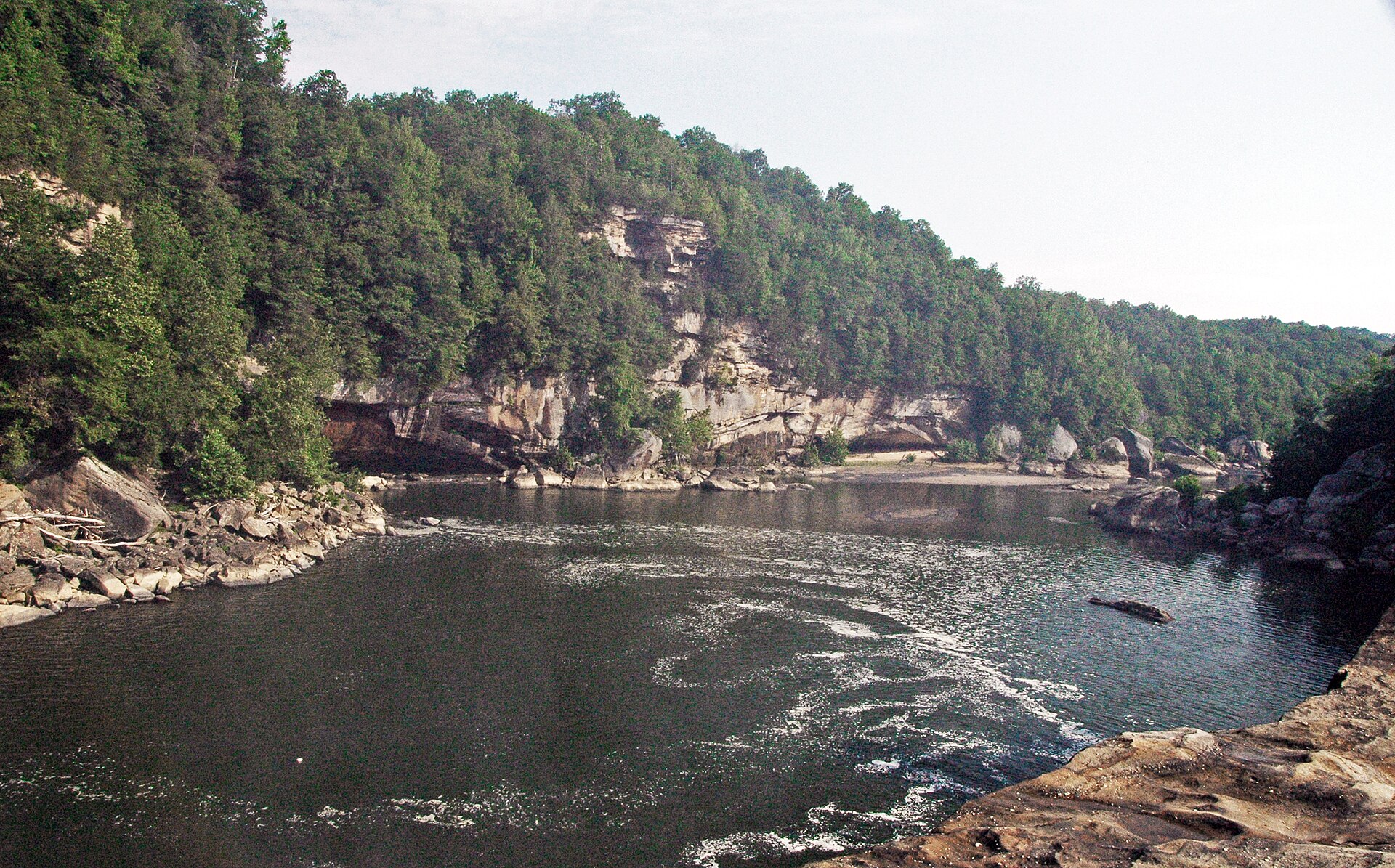
The water
Cumberland River (below Wolf Creek Dam)
The Cumberland tailwater in south-central Kentucky, below Lake Cumberland near Jamestown, is the state's headline fishery: rainbow and brown trout with smallmouth in the mix, fishable year-round on consistent midge nymphing. Spring through fall brings the best conditions and insect activity — midges all year, with seasonal caddis and blue-winged olive hatches opening dry-fly windows. Hare's Ears, Copper Johns, and zebra midges are the staples. Access centers on the tailwater area immediately below the dam, with multiple boat ramps and wade-in areas run in conjunction with Lake Cumberland facilities; guided drift boats cover the water that waders cannot. Designated stretches carry special trout regulations, so check current KDFWR rules on size, creel, and gear before fishing. Full Cumberland River guide
Hatchery Creek
Hatchery Creek sits immediately below Wolf Creek National Fish Hatchery near Jamestown — a constructed, walk-in trout stream fed by cold tailwater releases, with public trails and pools laid out below the hatchery complex. Rainbows and browns key on midges, small mayflies, and caddis, much like the Cumberland itself, and the fishing skews technical: small nymphs and emergers. It fishes year-round, but fall through spring brings cooler water, lower pressure, and the strongest nymph and midge fishing; summer mornings and evenings still produce. Portions are managed under special trout rules that may include catch-and-release or tackle restrictions, so consult current regulations before you go.
Otter Creek
Otter Creek, south of Louisville near Fort Knox, is a stocked freestone with rainbows, browns, and a solid smallmouth population. Spring and fall are best for the trout, when flows run cool and fish are active; late spring through summer belongs to the smallmouth. The trout respond to generic nymphs, small streamers, and attractor dries rather than technical hatch-matching, and warm-month fish feed heavily on baitfish and terrestrials. Otter Creek Outdoor Recreation Area and associated public lands provide established access points, parking, and trails for extensive wade fishing. The creek is stocked by the state and local clubs, and some sections may carry special trout regulations or seasonal restrictions.
Elkhorn Creek
Elkhorn Creek near Frankfort is the state's best-known creek smallmouth fishery and its most underrated water overall — high-quality bass fishing that sees far less attention than the Cumberland. Smallmouth lead, with largemouth, rock bass, and sunfish behind them. May through September is prime, with stable summer flows and active topwater and streamer fishing; spring offers pre-spawn action as the water warms. Forage is minnows, crayfish, and terrestrials — small streamers, Clousers, crawfish patterns, and poppers cover it. Public access points dot the North Fork, South Fork, and main stem, and Pfeiffer Fish Hatchery is a noted access area where anglers can park outside the gates and wade all day. Standard statewide black bass rules apply unless posted.
Floyds Fork
Floyds Fork gives Louisville a legitimate smallmouth fishery inside the metro area. The Parklands of Floyds Fork — a chain of parks including Beckley Creek Park — puts nearly 20 miles of accessible water within reach, with multiple walk-in and paddling access points. Smallmouth, largemouth, spotted bass, and sunfish share the creek. Spring through early summer is the best window, as bass move shallow and feed aggressively; summer and early fall mornings and evenings stay productive, especially on topwater. Poppers, Clousers, and small streamers are the standard patterns. There are no fly-only or catch-and-release sections of note — statewide black bass and panfish regulations apply.
Green River
The Green flows through south-central Kentucky around Green River Lake and downstream past Campbellsville, Greensburg, and Munfordville, holding smallmouth, largemouth, panfish, and catfish. Spring and early summer are prime as the water warms and fish move shallow; summer brings stable flows with good fishing early and late in the day. It is a classic warmwater forage system — baitfish, crayfish, insects — fished with small streamers, poppers, and crayfish patterns for mixed-species days. Access runs through public areas tied to Green River Lake and downstream public lands and parks, with boat ramps and shoreline access to both river and reservoir water. Statewide warmwater regulations apply; check current black bass limits.
Big South Fork of the Cumberland
The Big South Fork runs the Kentucky–Tennessee border through the Cumberland Plateau — rugged canyon water suited to wading and floating, with smallmouth as the draw and muskellunge as the wildcard. May through September is the highlighted window for smallmouth; fall brings good conditions and better odds at the big predators. Baitfish and crayfish dominate the forage, so fish streamers, crayfish imitations, and topwater. Access comes primarily through the Big South Fork National River and Recreation Area, with designated river access points, trails, and boat launches. Regulations can differ by section, including size and creel limits for bass and muskie, and both Kentucky and federal-area rules can apply — check before you commit to a stretch.
Kentucky River
The Kentucky River crosses the Bluegrass from central Kentucky toward the Ohio, a big warmwater river for anglers who want to swing large flies for large fish: muskellunge, flathead and channel catfish, bass, and panfish. Spring through fall offers the best predator activity. Shad, minnows, and crayfish drive the food chain, so big streamers, baitfish patterns, and subsurface flies are the tools. Access is through public boat ramps, parks, and roadside pull-offs, especially near larger towns and the lock-and-dam structures that create pools. Muskie, catfish, and black bass carry water-specific rules on some stretches, so review the Kentucky River listings in the state regulations.
Seasons at a glance
For a mixed trip, March through June and September through early November hit the best combination of flows, temperatures, and fish activity on both the Cumberland tailwater and the warmwater rivers. Spring brings pre-spawn smallmouth in the creeks and caddis and BWO windows on the Cumberland; fall cools the creeks back into action and puts trout back on the feed.
The Cumberland is the year-round option. Winter and summer fishing there leans on midges and nymphs — subtler, but consistent. The smallmouth waters run roughly May through September at their peak, with summer topwater mornings and evenings the reliable pattern on Elkhorn, Floyds Fork, and the Big South Fork.
Beyond trout
Kentucky's best non-trout fly fishing is creek smallmouth — Elkhorn Creek, Floyds Fork, the Green, and the Big South Fork all produce consistent action on poppers, streamers, and crayfish flies from spring through fall. Bigger waters broaden the menu: Kentucky Lake, Lake Cumberland, Cave Run Lake, and the Kentucky River hold largemouth, stripers, muskellunge, and panfish for anglers willing to fish heavier rods and bigger flies.
Licenses and regulations
The Kentucky Department of Fish and Wildlife Resources manages the state's fisheries. Anglers need a valid Kentucky fishing license, plus a separate trout permit to harvest trout in designated waters. Special trout-stream rules and warmwater size and creel limits are published annually, and several waters above — the Cumberland tailwater, Hatchery Creek, and the Big South Fork in particular — carry their own regulation sections. Regulations change annually; confirm current rules at Kentucky Department of Fish and Wildlife Resources regulations.
Where to start
One weekend, one anchor: Jamestown. Fish the Cumberland tailwater by drift boat or wade the water below Wolf Creek Dam, then walk Hatchery Creek when the releases or the crowds argue for a change — two distinct trout fisheries within minutes of each other. Go spring or fall for the best of both. If bass are the point instead, base in Frankfort or Louisville between May and September and split time between Elkhorn Creek and Floyds Fork; the Pfeiffer Hatchery access on Elkhorn alone can fill a day of wading.
For more water in the region, see Fly Fishing in Tennessee, Fly Fishing in West Virginia, and Fly Fishing in Missouri.