The water
Missouri River — Garrison Dam Tailrace
The tailrace below Garrison Dam near Riverdale is North Dakota's marquee fly water: cold, controlled flows holding rainbow and brown trout plus walleye, northern pike, and smallmouth bass in the same runs. March through June is prime, when post-ice-out conditions concentrate trout, walleye, and pike in the cold water; September through November brings quality trout and walleye again as temperatures drop and releases stabilize. This is a nymph and streamer fishery — midges and mayflies show in the colder months, but baitfish and juvenile perch are the forage that grows big fish. Bank and boat access surrounds the dam complex, with more public shore access and ramps along the Missouri corridor. Size and bag limits for trout and walleye can differ here from statewide rules; check current regulations.
Missouri River (main stem)
Below the tailrace, the Missouri becomes a broad warmwater river running south past Bismarck and Mandan — walleye, northern pike, smallmouth bass, channel catfish, and sauger water. April through June fishes best for walleye and pike on rising flows and spawning movements; September and October turn on the smallmouth and walleye as cooling water triggers heavy feeding. Forage rules everything: minnows, shiners, juvenile rough fish, and crayfish, which means streamers, baitfish patterns, and poppers rather than hatch-matching. Public access is good, with multiple ramps and shore access along the river, including sections near Bismarck-Mandan and Cross Ranch State Park. Statewide river regulations apply, with special size or harvest restrictions on certain stretches.
Lake Sakakawea
Sakakawea, the enormous Missouri River reservoir between Garrison Dam and Williston, is structure fishing on a fly rod: walleye, pike, smallmouth, and perch relating to points, bays, and rock. May and June put walleye and pike shallow around warming points and bays; September and October bring smallmouth and walleye back to structure as baitfish school up. Clouser Minnows, Woolly Buggers, and large streamers cover most situations, with topwater shots at smallmouth in the right conditions. Access is extensive — state parks, recreation areas, and ramps ring the reservoir, and many developed sites allow productive shore fishing. Statewide lake regulations with species-specific limits apply.
Devils Lake
Devils Lake in the northeast is the state's nationally known multi-species destination, and its flooded timber and shoreline structure translate surprisingly well to flies. May and June find walleye and pike feeding actively along shorelines and flooded structure; late September through November brings walleye shallow again as the water cools. The system runs on baitfish, perch, and leeches, so streamer and leech patterns do the work. Public access is significant — ramps, shore-fishing sites, and developed recreation areas around the lake. It's managed as a trophy walleye and pike fishery, so read the current harvest rules carefully before keeping fish.
Red River of the North
The Red forms the eastern border with Minnesota, flowing north through Fargo and Grand Forks, and it's the state's channel catfish headline — big fish in a slow prairie river, plus pike, walleye, and smallmouth. May through September covers catfish, pike, and walleye in stable warm flows; June through August is the smallmouth window along rocky and woody structure. Fly fishing here revolves around large streamers, crawfish patterns, and carp and catfish flies over a forage base of baitfish and suckers. Urban stretches in Fargo and Grand Forks offer public shore access, piers, and parks, with more points listed in the Game and Fish Department's Where to Fish resources. No special fly designations — statewide river rules apply.
Little Missouri River
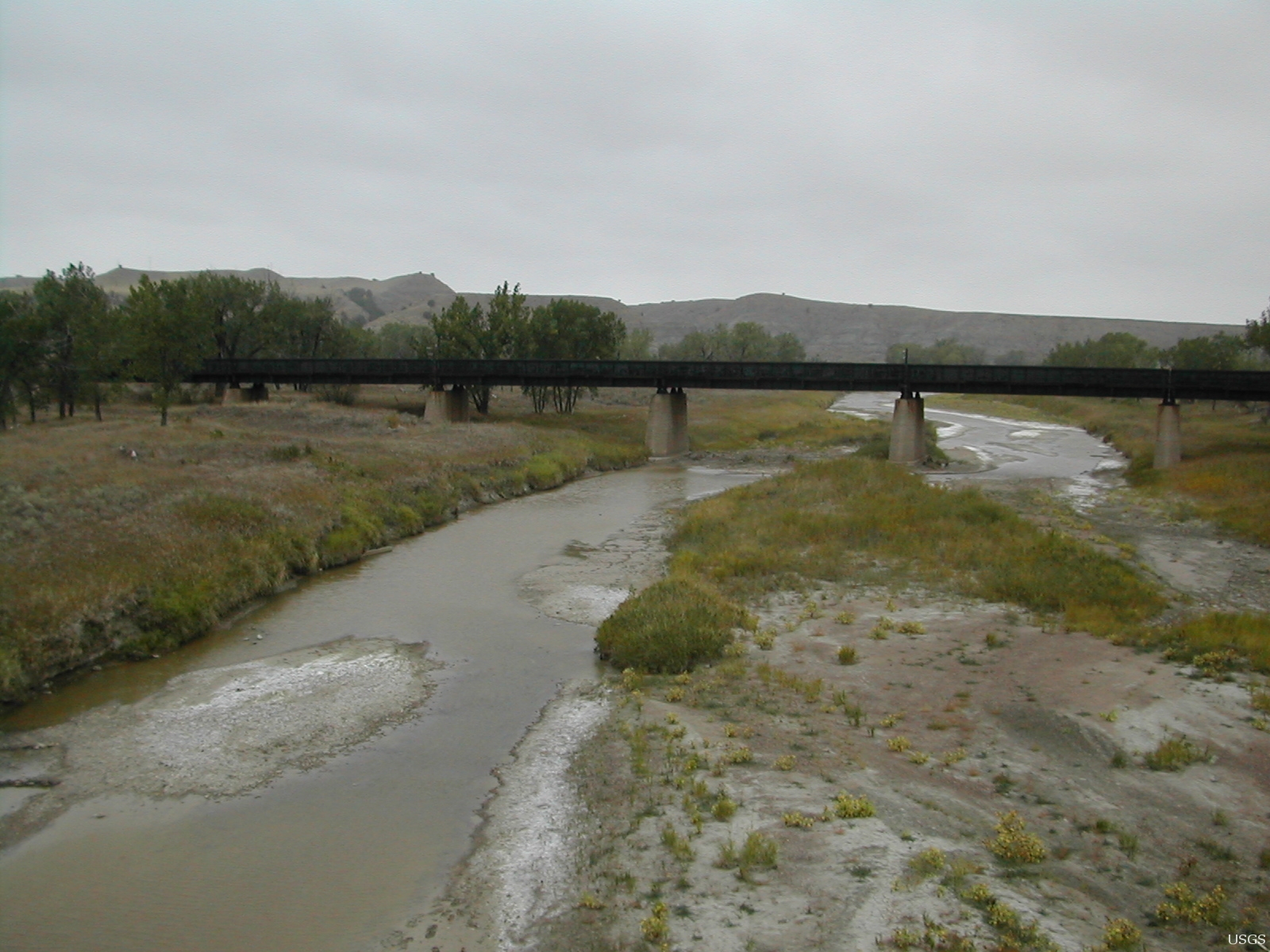
The Little Missouri winds through the badlands of western North Dakota, including Theodore Roosevelt National Park, and it's the state's most underrated trip: smallmouth, channel catfish, and pike — with seasonal trout in colder reaches — in scenery no other prairie fishery can match. Late May–June and September–October offer moderate flows and workable temperatures. Streamers and hopper patterns earn their keep, since minnows, crayfish, and wind-blown terrestrials from the badlands terrain drive the feeding. Access comes through public lands and park units along the corridor, with informal bridge and road-crossing access where allowed. General river regulations cover bass, catfish, and pike harvest.
Fish Creek
Fish Creek is the rare North Dakota answer to a classic question: is there real stream trout fishing here? Spring-fed conditions support rainbow and brown trout plus actual insect life — mayflies, midges, and caddis — making small nymphs and dries like Pheasant Tails, Hare's Ears, Elk Hair Caddis, and Parachute Adams the working patterns. April–June and September–October are the windows, when cool flows and moderate temperatures keep fish feeding. The honest caveat is access: it's limited and localized, so check with North Dakota Game and Fish and regional angling resources for current public stretches before planning around it. As designated trout water, it can carry specific stocking and harvest rules.
Apple Creek
Apple Creek, a Missouri River tributary near Bismarck and the Cross Ranch area, is a convenient add-on for anglers already fishing the Missouri corridor — walleye, northern pike, and other warmwater species, with occasional trout in the vicinity's cooler water. May–June and September–October track the seasonal activity of the broader Missouri system. Streamers, leech patterns, and surface flies handle the pike and bass; small nymphs cover any cooler runs. Public access exists in the broader area through Cross Ranch State Park and other river-corridor sites, but verify legal entry points along the creek itself. Statewide stream regulations apply with no fly-only designations.
Seasons at a glance
The year splits cleanly into two prime windows. May–June is the spring push: walleye and pike feed shallow across the Missouri system, Sakakawea, and Devils Lake, and the Garrison tailrace fishes for everything at once (the trout bite there actually starts earlier, March through June, off the ice-out). September–October is the second peak — smallmouth and walleye on structure, walleye shallow again at Devils Lake, and quality tailrace trout as the water cools. Midsummer stays productive for warmwater species, especially catfish and smallmouth on the Red, but serious trout effort belongs in the shoulder seasons.
Beyond trout
In North Dakota this is the main event, not the sidebar. Walleye, northern pike, smallmouth bass, and channel catfish across the Missouri River, Lake Sakakawea, Devils Lake, and the Red River are the state's fly fishing. Pike and walleye eat large streamers and baitfish patterns; smallmouth and catfish hit topwater and subsurface flies through the warm months. The trout water — the Garrison tailrace and a few spring-fed creeks — is the exception worth knowing, not the rule.
Licenses and regulations
All anglers need a valid North Dakota fishing license from the North Dakota Game and Fish Department, with resident and nonresident annual or shorter-term options. There's no separate trout stamp — trout fall under the standard license — but species and water-specific rules live in the state fishing guide, and the tailrace, Devils Lake, and certain Missouri River stretches carry their own size and bag limits, noted per water above. Regulations change annually; verify current rules with the North Dakota Game and Fish Department before fishing. [ND Game and Fish regulations link — TK official URL]
Where to start
One weekend: drive to Riverdale and fish the Garrison Dam Tailrace, in either late May–June or late September–October. It's the only water in the state where a single day can produce a trout, a pike, a walleye, and a smallmouth, and the access around the dam makes it workable without a boat. If you have a second day and a taste for scenery, run west to the Little Missouri through the badlands and throw hoppers and streamers at smallmouth in country most anglers never see.
Neighboring states worth pairing with a trip: