The water
Rapid Creek
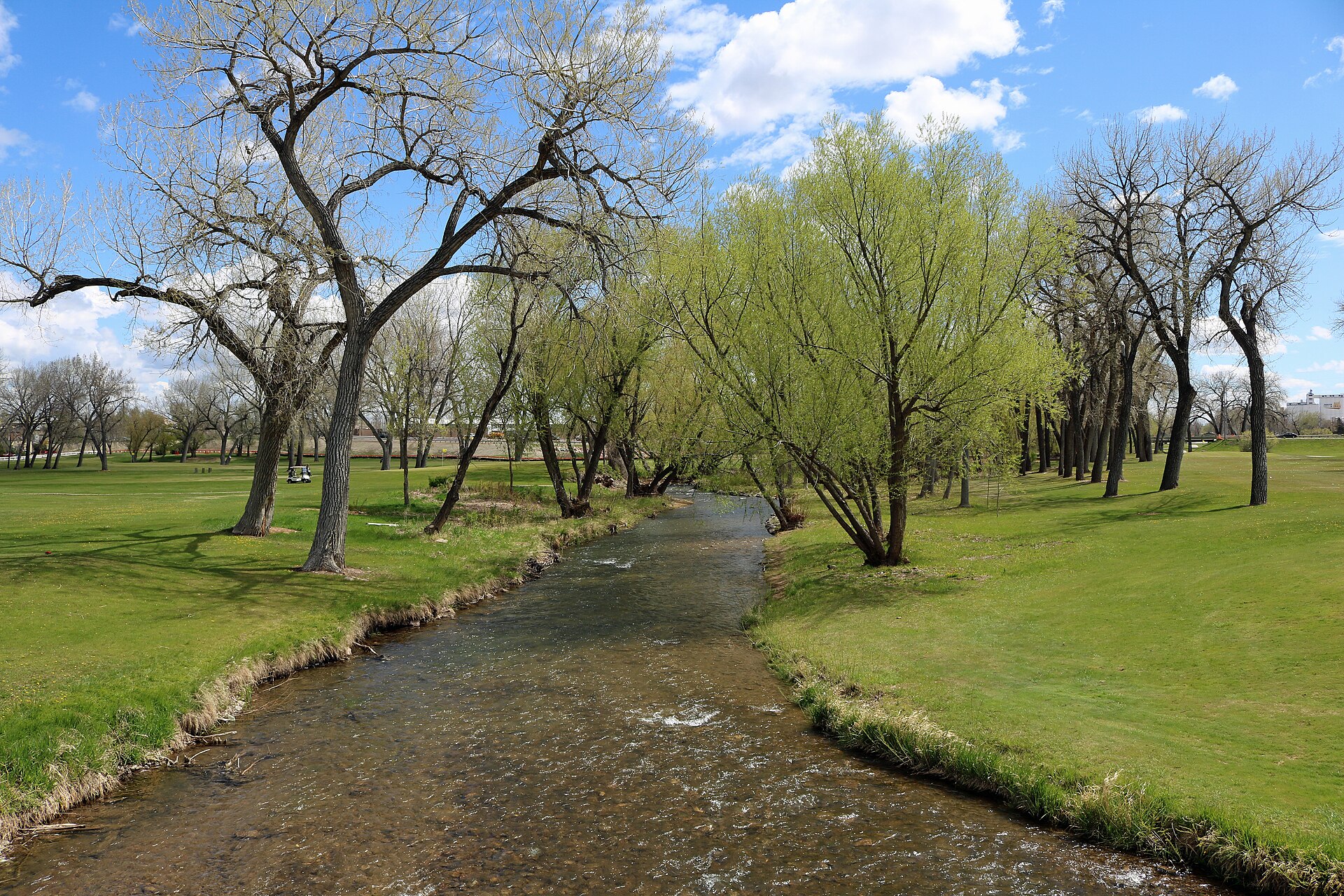
The state's best-known trout stream, a freestone that flows out of the central Black Hills through Rapid City, with the reach above Pactola Reservoir running through National Forest land. Rainbows and browns fish well from April into October; fall is the window for larger browns above Pactola. The hatch calendar is the full Black Hills menu — blue-winged olives in spring and fall, then caddis, PMDs, tricos, little yellow stoneflies, and midges from about April through September, with beetles, ants, and hoppers taking over in mid to late summer. Access is extensive inside the Black Hills Trout Management Area: roadside pullouts and trails near Rapid City, plus public upstream reaches above Pactola. Within the management area the daily trout limit is five, but only one fish may be 14 inches or longer — a partial quality regulation worth knowing. Full Rapid Creek guide
Spearfish Creek
The northern Black Hills counterpart, dropping through Spearfish Canyon and then through the town of Spearfish itself, where the creek runs past parks and greenbelts. Rainbows and browns feed on reliable caddis and mayfly activity from May through October — the same baetis, PMD, little yellow stonefly, trico, and midge sequence as Rapid Creek — with strong hopper, beetle, and ant fishing in mid to late summer. Fall is a highlight: canyon foliage peaks while trout feed heavily before winter. Roadside pullouts and trails run the length of the canyon on public land, so this is easy water to sample in an afternoon. General Black Hills trout regulations apply, and anglers commonly release the larger canyon fish.
Castle Creek
A central Black Hills freestone draining the country around Deerfield Reservoir, with meadow and pocketwater stretches above and below the lake. Browns and rainbows take dry-dropper rigs through summer, and spring and fall are the time to work streamers through the deeper pools for larger trout. Expect mixed mayflies and caddis through the warm months, terrestrials in late summer, and steady year-round nymphing with Pheasant Tails and Hare's Ears. Access comes via forest roads and trailheads on Black Hills National Forest land. Castle Creek carries noticeably less pressure than Rapid or Spearfish, and its wild brown numbers in the meadow water make it a strong second-day choice.
French Creek
The southern Black Hills entry, flowing through Custer State Park with excellent public access along pullouts and trails in both canyon and meadow sections — all on state park land. Browns and rainbows fish consistently on nymphs and dries from May through October, and the grassy meadow banks produce good hopper fishing in late summer and early fall, when attractor dries also earn their keep. The hatch mix is the standard Black Hills spread of baetis, caddis, PMDs, little yellow stoneflies, and midges from spring through early fall. French Creek falls under Custer State Park and statewide trout regulations, so check for park-specific rules before fishing.
Spring Creek
A central Black Hills freestone that flows in and out of Sheridan Lake near Hill City, and the creek locals point to when the hatches get heavy — late spring and summer bring robust mayfly and caddis emergences that set up genuine dry-fly sessions. May through September is prime, when water levels are stable. Meadow stretches fish well with hoppers and ants in late summer. Public access sits near Sheridan Lake and along forest roads and trails inside Black Hills National Forest, with multiple spots where the creek runs close to the road. General Black Hills trout regulations apply; check current state rules for any reach-specific changes.
The small Black Hills meadow creeks
Beyond the named waters, dozens of small meadow and forested-valley creeks thread the Black Hills National Forest, holding browns, rainbows, and brook trout in some headwaters. The pattern repeats — baetis, PMDs, caddis, tricos, little yellow stoneflies, and midges through the growing season — with two additions: scuds and shrimp in spring-influenced reaches, and dense terrestrial falls in late summer when fish cruise the undercut banks. Walk-in access is generally good via Forest Service roads, pullouts, and informal trails, and the meadow stretches wade easily, though levels swing with rainfall. Verify whether a given stream sits inside the Black Hills Trout Management Area, where the five-trout limit with one fish over 14 inches applies.
Missouri River system
Central South Dakota's big water is a warmwater fishery: the Missouri main stem and reservoirs such as Lake Oahe hold walleye, smallmouth bass, northern pike, carp, and catfish. This is streamer and baitfish-pattern fishing around structure, flats, and current seams rather than hatch-matching, with carp flies earning a place on the shallow flats. May through October is the productive window, with prime walleye and smallmouth action in the warm months and good tailrace fishing below the dams when flows and temperatures line up. Access is extensive — state recreation areas, boat ramps, and shore sites run the length of the reservoir system around Pierre, Fort Pierre, and Mobridge. Warmwater size and bag limits vary by reservoir and species, so read the current rules.
Seasons at a glance
| Window | What's happening |
|---|---|
| April–May | Baetis and midges open the Black Hills season; streamer fishing on Castle Creek for larger browns |
| May–August | Peak hatch season — caddis, PMDs, tricos, little yellow stoneflies; Spring Creek's heaviest dry-fly water; Missouri River walleye and smallmouth turn on |
| Mid-July–September | Terrestrial time: hoppers, beetles, and ants on every meadow stretch |
| September–November | Fall baetis, aggressive pre-winter browns above Pactola and in Spearfish Canyon; some creeks fish well into November |
| Winter | Midges for the dedicated; the glacial lakes shift to ice fishing |
Beyond trout
The best non-trout fly fishing centers on the Missouri River system — walleye, smallmouth, carp, catfish, and pike on streamers and baitfish patterns. In the northeast, the Glacial Lakes Region offers something few states can: legitimate fly fishing for yellow perch and northern pike on lakes like Waubay, Bitter, and Poinsett, worked along weedlines and shallow flats from public ramps, piers, and shorelines. Late spring through fall is the window; the same lakes become ice-fishing destinations in winter.
Licenses and regulations
Fishing in South Dakota is managed by the South Dakota Department of Game, Fish and Parks. Residents and nonresidents both need a state fishing license for inland waters, and trout are covered under the standard license — there is no separate trout stamp. The regulation that matters most to fly anglers is the Black Hills Trout Management Area rule noted above: five trout daily, only one 14 inches or longer. Special-regulation notes are listed per river in the sections above, and Custer State Park may carry its own rules. Regulations change annually — check the current South Dakota Game, Fish and Parks regulations booklet before your trip. [SD GFP regulations link — add official URL]
Where to start
If you get one weekend in South Dakota, base in Rapid City or Spearfish in September or early October. Fish Rapid Creek above Pactola Reservoir the first day for pre-winter browns, then spend the second in Spearfish Canyon, working dries through the pullout water while the foliage peaks. If either creek feels crowded — and they draw most of the state's pressure — Castle Creek's meadow water near Deerfield Reservoir is the quiet alternative, and it fishes best exactly when you'd want it to.
Planning a broader trip through the region? See the neighboring guides:
Fly Fishing in Wyoming Fly Fishing in Montana Fly Fishing in Nebraska