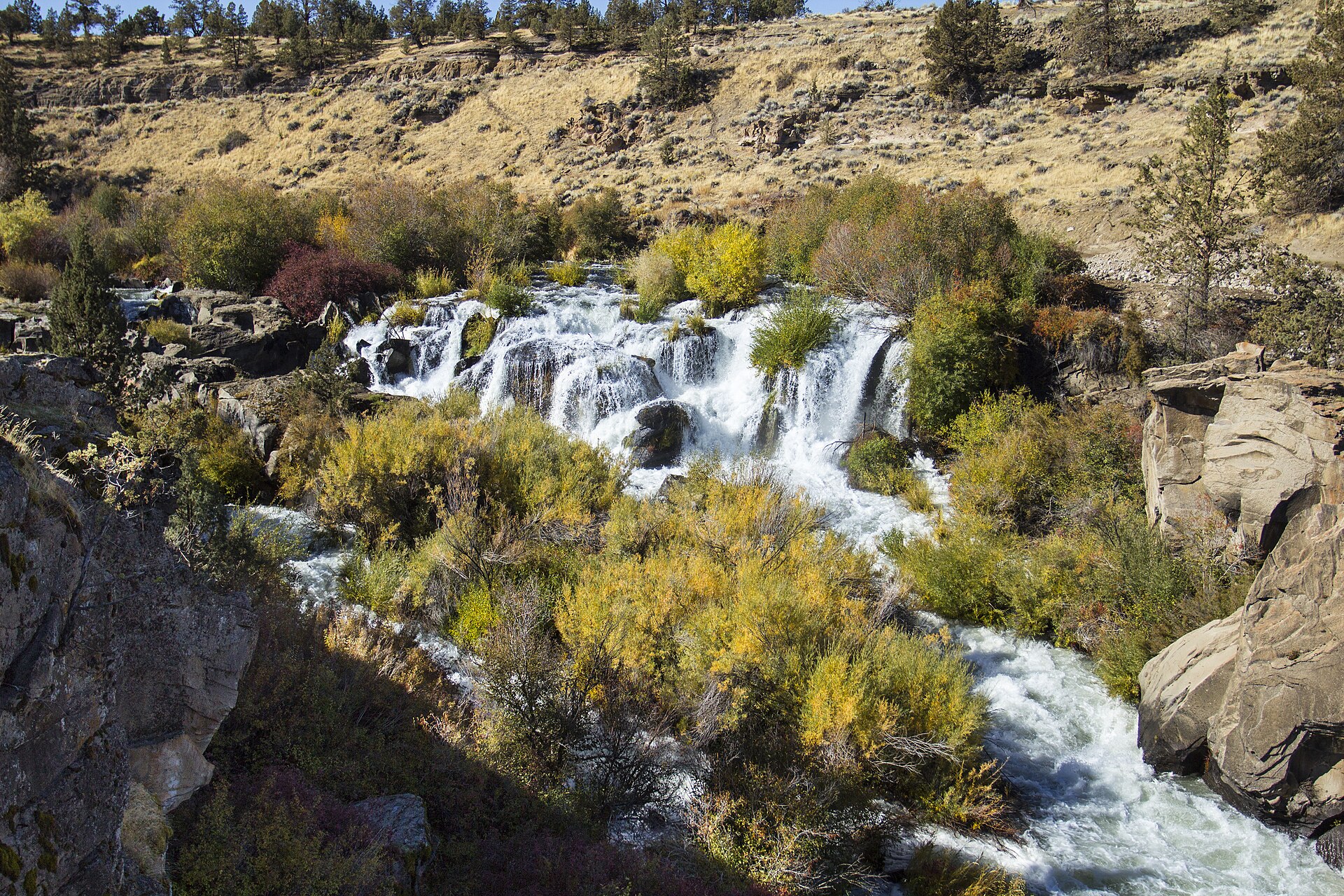
The water
Deschutes River (Lower)
From Pelton Dam to the Columbia, the Lower Deschutes is Oregon's signature fishery: a big, brawling desert canyon river full of native redband rainbows, with summer steelhead entering from the Columbia in fall. April through June is prime trout fishing, headlined by the salmonfly and golden stone hatch in May and early June, with strong caddis all summer and PMDs and Blue-Winged Olives in spring and fall. July through September is dry-fly season for redbands; September through November belongs to steelhead. Public access is extensive along the Lower Deschutes Scenic Waterway through BLM and state sites, though much of the river is boat-access only — drive-in points come off Highway 197 and the Deschutes River Road. Expect gear restrictions in some reaches, wild trout release, and seasonal steelhead rules.
Metolius River
The Metolius may be the most beautiful trout stream in the state — a true spring creek emerging near Camp Sherman, running gin-clear beneath the pines east of the Cascades. Wild rainbows, bull trout, browns, and whitefish live here, and none of them are easy. April through June brings the strongest mayfly hatches, including green drakes in late spring; summer is technical dry-fly water on Blue-Winged Olives, PMDs, and caddis; October and November are the months for bull trout, which key on the river's sculpin and whitefish forage. Walk-in access is excellent through Deschutes National Forest, with trails paralleling much of the river. Regulations are strict: catch-and-release for wild trout, gear restrictions, and closed spawning sections.
McKenzie River
The McKenzie, east of Eugene in the western Cascades, is the classic Oregon drift-boat trout river — the water the McKenzie-style dory was built for. Wild rainbows and cutthroat mix with stocked fish in designated reaches, and hatchery steelhead run the lower river winter into spring. The March Brown hatch in early spring is the famous event; caddis carry the fishing through late spring and summer, with PMDs and other mayflies adding reliable dry-fly windows. Highway 126 parallels the river, and boat ramps, Forest Service sites, and parks provide steady bank and drift access. Several reaches carry fly-only or artificial-only rules and catch-and-release protection for wild trout, and the mix varies by section, so read the ODFW synopsis closely.
Crooked River (below Bowman Dam)
The Crooked is central Oregon's volume fishery: roughly ten miles of tailwater below Bowman Dam, thick with rainbows and whitefish, flowing through a basalt canyon with road access nearly the whole way. March through June fishes well as winter releases moderate, with Blue-Winged Olives and midges the staple hatches; September through November brings comfortable flows, good mayfly and caddis activity, and less weed growth than summer. Scuds and sowbugs round out the food base, which is why small subsurface patterns produce all year. BLM land and developed access points line the Crooked River Highway. Special trout regulations apply in the tailwater, including size limits and gear restrictions that shift with water conditions. Often overshadowed by the Deschutes, it is the better bet for a short, consistent day.
Owyhee River (below Owyhee Dam)
Far southeastern Oregon, on the Idaho border near Nyssa, the Owyhee tailwater has quietly become one of the West's best brown trout fisheries. Browns and rainbows hold through roughly ten miles of canyon water below the dam, and the road runs alongside most of it, with informal pullouts throughout. March through May and September through November are the prime windows, when moderate flows and temperatures line up with midges, Blue-Winged Olives, PMDs, and caddis; mid-summer can still fish with nymphs and terrestrials, though flows drop and warm. It is a long drive from everywhere, which is exactly why pressure stays low relative to the fishing. Special trout regulations cover tackle and harvest — check current ODFW limits.
Rogue River (middle and lower)
The Rogue runs from the Crater Lake country to the Pacific at Gold Beach, and its fly fishing is built on migration, not hatches. Summer and fall steelhead and fall Chinook peak July through October, coastal Chinook stack near the mouth in late summer and fall, and winter steelhead run the lower and middle river in winter. Fishing is keyed to water conditions and run timing, with egg patterns and baitfish flies doing most of the work; resident cutthroat pick up caddis and mayflies. Access is broad — state parks, BLM land, and ramps along Highways 62, 234, and 99 upstream, Highway 101 near the coast. The regulations are among Oregon's most complex: wild fish release in many reaches, seasonal closures, and gear restrictions that change by season.
North Umpqua River
The North Umpqua east of Roseburg is the most storied steelhead water in Oregon: thirty-some miles of emerald pools and ledgerock runs, with a famous fly-only section that has defined the sport since the 1920s. Summer steelhead are the draw from July through October; winter steelhead run the lower sections December through March; trout fish well in cooler headwater reaches from late spring through summer on caddis and mayflies. Steelheading here is about reading water, not matching hatches — flows, clarity, and temperature drive everything. Highway 138 parallels the fly water through Umpqua National Forest, with turnouts and trails throughout. Strict gear and seasonal regulations protect wild fish; know the reach-specific rules before stepping in.
Fall River
The Fall is the quiet counterpoint to central Oregon's big water: a small spring creek south of Bend, tributary to the Deschutes, with stable spring-fed flows that keep it fishable year-round. Rainbows and browns feed on consistent small mayflies and midges, caddis in the warmer months, and terrestrials in summer, all in slow, clear water that rewards light tippet and careful approaches. Winter and the shoulder seasons are underrated here precisely because the flows never blow out. About eight miles of public water lie within Deschutes National Forest, with trails and designated day-use areas. Most of its length is fly-fishing-only with catch-and-release and gear restrictions.
Seasons at a glance
| Window | What's fishing |
|---|---|
| March–June | McKenzie March Browns, Crooked and Owyhee mayfly windows, Deschutes salmonflies in May–early June, Metolius spring hatches |
| July–September | Dry-fly redbands on the Deschutes, technical Metolius fishing, summer steelhead arriving on the North Umpqua and Rogue |
| September–November | Best overall month-range: fall steelhead, fall Chinook, October bull trout on the Metolius, strong tailwater fishing |
| December–February | Winter steelhead on the Rogue and lower North Umpqua; year-round trout on the Fall River and Crooked tailwater |
Beyond trout
Oregon's warmwater fly fishing centers on the Columbia and Willamette rivers, where smallmouth bass, panfish, and seasonal walleye feed in slower, warmer sections from late spring through summer. Lakes and reservoirs near the population centers — Fern Ridge Reservoir among them — add accessible bass and panfish water when the trout rivers run high or hot.
Licenses and regulations
The Oregon Department of Fish and Wildlife (ODFW) requires a fishing license for anglers 12 and older, plus a Combined Angling Tag for salmon, steelhead, sturgeon, and halibut. There is no separate trout stamp, though some species and areas require specific validations or harvest tags. Special-regulation water is the norm rather than the exception on the rivers above — fly-only reaches, wild fish release, seasonal closures — and the details are listed per river in the annual synopsis. Regulations change annually; confirm current rules at ODFW regulations.
What's changing
The four Klamath River dams were fully removed by summer 2024, reopening roughly 400 miles of historic salmon and steelhead habitat — long-term gains are expected rather than immediate. Summer steelhead returns on the Deschutes and John Day have stayed persistently low, prompting calls for tighter wild-fish rules, and drought-driven low flows have produced earlier closures on several eastern Oregon rivers. No major statewide regulation changes had been posted for 2025–26 at the time of research; 2024 rules, including steelhead bag limits and wild-fish restrictions, remain the baseline.
Where to start
One weekend, first trip: base in Maupin in late May or early June and fish the Lower Deschutes. If the salmonfly hatch is on, you will see why the river anchors the state's reputation; if it is not, the redbands still eat caddis and the canyon is still the canyon. With a second day, drive over to the Metolius or the Crooked for a completely different problem — technical spring-creek fish or numbers in the tailwater. Steelhead-minded anglers should aim instead for the North Umpqua fly water in September or October and accept that the fishing is measured in days, not fish.
Neighboring states worth pairing with a trip: Fly Fishing in Washington, Fly Fishing in Idaho, and Fly Fishing in California.