The water
Guadalupe River
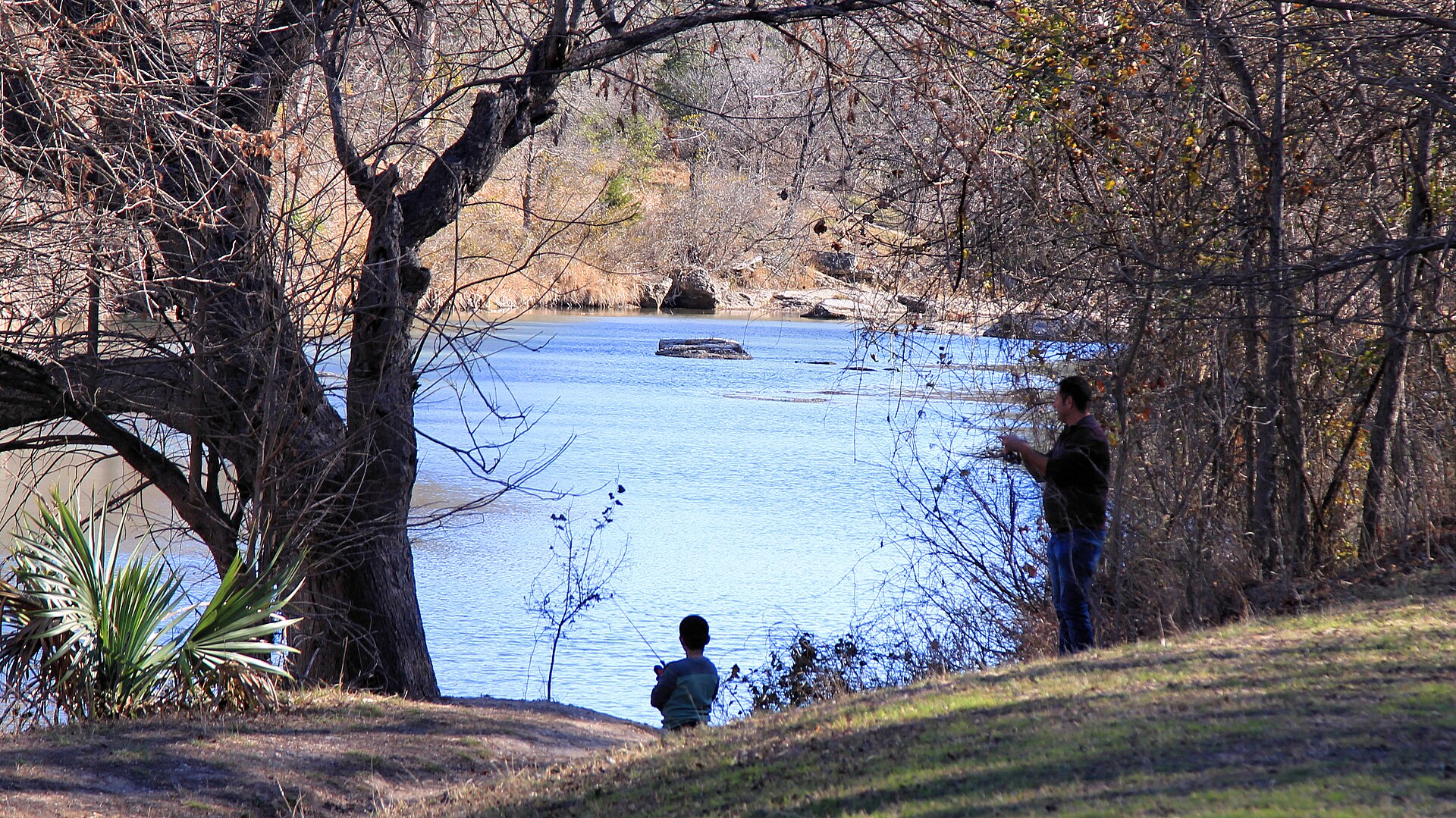
The southernmost regularly managed trout fishery of its kind, a tailwater below Canyon Dam in the Hill Country near New Braunfels. From late November through February, cold releases support stocked rainbows and browns; anglers fish midges and mayflies in winter conditions, along with egg patterns and San Juan worms in colder flows. The rest of the year the river reverts to a bass fishery — largemouth, smallmouth, and Guadalupe bass — strongest in spring and fall. Access is bank and wade fishing through public parks and access points around the Canyon Lake corridor rather than continuous public banks. Trout water carries special harvest and length rules that vary by management section; check current TPWD regulations. Full Guadalupe River guide
Llano River
One of the better public-access rivers in Texas and a core Guadalupe bass fishery, running through the Hill Country between Mason and Llano. Smallmouth, largemouth, sunfish, and channel catfish fill out the mix. This is forage-driven fishing — hoppers, ants, beetles, and streamers over classic trout hatches — and it's best in spring and early fall when flows are up and temperatures moderate. Summer fishes early and late if flows hold. Wadeable stretches, town parks, river crossings, and float access along the Mason-to-Llano corridor make it one of the easiest Texas rivers to actually get on. Some stretches carry special Guadalupe bass regulations; verify local TPWD rules.
South Llano River
The underrated pick. A spring creek near Junction with the clarity for real sight fishing, holding Guadalupe bass, smallmouth, sunfish, and catfish. Small subsurface patterns and beadhead nymphs work in the clear water, with grasshoppers and other terrestrials important through the warm months. Spring and fall are strongest; in summer, work the deeper pools and shaded reaches early and late. The key access hub is South Llano River State Park, which offers extensive walk-in wade fishing inside the park — a rarity in a state where most riverbank is private. The river is managed with quality warmwater fishing in mind, and catch-and-release-minded angling is the norm; park rules and waterbody-specific limits apply.
San Marcos River
A spring creek flowing out of San Marcos with year-round fishable water — the spring flow keeps it going even in summer, though crowds and pressure climb with the temperature. Guadalupe bass, largemouth, sunfish, and carp all hold in the clear water, which rewards sight fishing with small nymphs, terrestrials, and baitfish imitations rather than waiting on a hatch window. Spring and fall are the most comfortable seasons. Public access is strongest around city parks and river corridors in town, with wadeable sections depending on flow. Note that local access rules and city or park restrictions can matter as much as state regulations here — check site-specific guidance before you go.
Devils River
The expedition. Southwest Texas canyon country on the edge of the Trans-Pecos, famously clear, and home to smallmouth, largemouth, and Guadalupe bass plus gar and carp. Fishing is baitfish patterns, terrestrials, and streamers in water clear enough to punish sloppy presentations. Spring and fall are the seasons — the desert is punishing in summer, when only early morning and late evening produce comfortably. Access is the real constraint: limited, remote, and dependent on public river sections, permitted launches or hikes, and wilderness-style logistics. This fragile watershed carries strict access and conservation rules, so verify all current TPWD and park-area requirements before planning a trip.
Blanco River
A spring-fed Hill Country river through the Blanco and Wimberley corridor holding Guadalupe bass, smallmouth, sunfish, and catfish. Clear water supports terrestrial fishing and small subsurface patterns, but conditions swing fast with runoff or drought, and summer fishing depends heavily on flow. Spring and fall are typically best. Access is patchwork — towns, parks, and crossings — and quality varies by flow and entry point, so this is a river to pair with a flexible plan rather than build a trip around. Check for local access restrictions and waterbody-specific rules.
Brazos River
The big warmwater river of North and Central Texas, fishing for largemouth, smallmouth, catfish, sunfish, and carp near Waco, Granbury, and Wichita Falls. Approach it with streamers, poppers, and baitfish imitations — this is pattern-and-forage fishing, not hatch-matching. Spring and fall are strongest; summer produces in deeper runs and shaded structure. Access varies widely by stretch: public crossings, river parks, and float sections on some reaches, boat- or kayak-only water on others. Rules vary by segment and impoundment influence, including local size and bag limits for bass and catfish.
Red River and Lake Texoma
North Texas striper water on the Oklahoma border. Lake Texoma and the Red River below it hold striped bass, white bass, catfish, and largemouth, and the fly game here is entirely about baitfish — shad movements and wind-driven current dictate everything. Spring through early summer is prime for stripers and whites, with additional action during cool-weather bait movement. Public access centers on lake parks, reservoir shorelines, and river access below Texoma, but the best striper water usually requires a boat. Border-water regulations are specific, including striped and white bass size and bag limits that differ between river and lake — verify both.
Seasons at a glance
The Texas calendar inverts the usual trout-state rhythm. Late November through February is trout season on the Guadalupe tailwater and other cold-water releases — the one window when cold is the point. Spring is the broadest prime time: Hill Country flows are healthy, Guadalupe bass are aggressive, and Texoma stripers run through early summer.
Summer pushes fishing to the margins — dawn and dusk on the bass rivers, deep pools on the South Llano, spring-fed reliability on the San Marcos — while the coast stays productive for those who beat the heat. Fall is spring's mirror: moderate temperatures, reliable bass fishing, and active coastal fish without peak-season crowds.
Beyond trout — the main event
Texas is one of the best warmwater fly states in the country. Guadalupe bass, smallmouth, largemouth, carp, sunfish, and catfish spread across the Hill Country and the larger rivers, and most of the water above is warmwater fishing at its core. The coast is the other headline: redfish and speckled trout on shallow flats, with especially strong fisheries around the Laguna Madre, Rockport, Port O'Connor, and the bays near Corpus Christi and South Padre Island. A saltwater trip built around tailing redfish belongs on any Texas itinerary.
Licenses and regulations
The Texas Parks and Wildlife Department (TPWD) manages both sides of the state's fishing. You'll need a freshwater or saltwater license depending on where you fish — and both if your trip spans the Hill Country and the coast. Texas does not use a general trout stamp for most inland trout fishing, though limited endorsements apply in specific cases. Special regulations — the Guadalupe trout sections, Guadalupe bass rules on certain stretches, border-water limits on Texoma — are noted per river above and change annually. Check the current TPWD regulations for your specific water. [TPWD regulations link — add official URL]
What's changing
Through early 2025, the story on Hill Country tailwaters has been drought: persistent low flows and warm water on the Guadalupe and Colorado have pushed anglers toward early-morning and night fishing. TPWD's 2024–2025 regulations carried forward without new bag or size limits for bass, trout, or redfish, apart from a minor adjustment to the existing 12-inch minimum for rainbow trout in the Guadalupe's special regulation area below Canyon Dam. On the coast, fluctuating salinity from recent rains has kept redfish movements less predictable along the middle and lower coast.
Where to start
One weekend in Texas depends on the month. December through February: base in New Braunfels or Canyon Lake and fish the Guadalupe tailwater for trout. April, May, October, or November: make it the Hill Country instead — a day on the Llano for Guadalupe bass, then a day sight-fishing the South Llano inside the state park. If you can stretch to a long weekend in fall, add the coast and hunt redfish out of Rockport or Port O'Connor.
Planning around the region? See the neighboring guides:
Fly Fishing in Oklahoma Fly Fishing in New Mexico Fly Fishing in Louisiana