The water
Lower Mountain Fork River
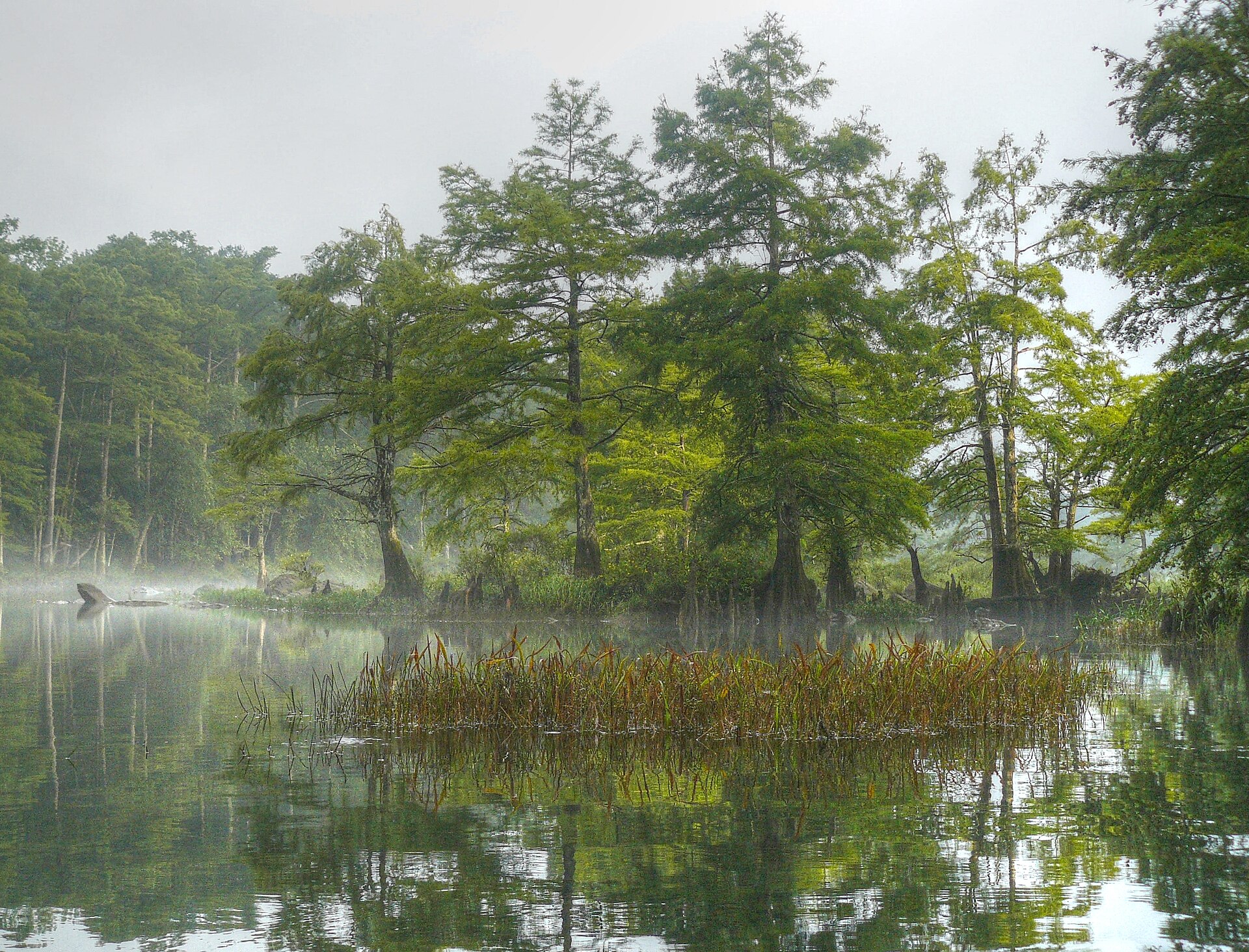
The state's flagship trout fishery is a cold tailwater in the Ouachita Mountains near Broken Bow, flowing through Beavers Bend State Park. Rainbows dominate, with some browns, plus smallmouth and sunfish in the mix. It fishes year-round — cold releases keep summer viable, though recreational pressure climbs — but the strongest trout fishing runs fall through early spring, when temperatures and flows are most stable. Midges and small mayflies matter all year; Woolly Buggers, Adams, and Griffith's Gnats are staples, with terrestrials and streamers producing around grassy banks and structure. Access is excellent and almost entirely walk-in, via park roads, campgrounds, and signed fishing zones, including the popular Spillway Creek section. Designated zones carry special regulations on tackle and harvest, so check ODWC's zone-specific rules before you rig up. Full Lower Mountain Fork River guide
Lower Illinois River
Below Tenkiller Ferry Dam in northeastern Oklahoma, the Lower Illinois is the state's other year-round trout stream — and its most mixed bag. Rainbows are the mainstay, browns show up periodically, and striped bass push in from the warmwater side, along with catfish and other bass. Prime trout fishing runs fall through spring; stripers get most of the attention in warmer months. The forage is classic tailwater: midges, small mayflies, and baitfish, so nymphing small patterns is standard and streamers move the larger trout and stripers. Public access comes at several tailwater recreation areas below the dam plus city and county parks downstream, mostly walk-in from parking areas and ramps. It is a designated year-round trout stream with harvest limits and zone-specific rules.
Blue River
The Blue River near Tishomingo is south-central Oklahoma's winter trout tradition. From November through March, ODWC stocks rainbows regularly through the Blue River Public Fishing and Hunting Area, and the fishing tracks the stocking schedule more than any hatch chart — Woolly Buggers, Adams, and small midge patterns cover most situations. Outside winter it reverts to a warmwater stream, with smallmouth and sunfish taking crayfish, baitfish, and terrestrial patterns in spring and early fall. Access is one of its strengths: the public fishing area offers ODWC-managed parking, trails, and wadeable water throughout the corridor. The trout season has defined boundaries and harvest regulations, with special rules in portions of the area.
Medicine Creek
Medicine Creek gives southwestern Oklahoma its winter trout fix. Flowing through urban park settings in the Lawton area near the Wichita Mountains, it receives rainbow stockings roughly November through March, with the best fishing in mid-winter when the water runs cold and clear. These are stocked fish, and they respond to nymphs, Woolly Buggers, and egg or worm patterns rather than any particular hatch. Bank access through city parks and walkways is easy, with limited wading. Once the trout season closes, small streamers and poppers pick up resident sunfish and bass. Observe the posted seasonal dates and harvest rules.
Fourche Maline Creek (Robbers Cave)
At Robbers Cave State Park in the Sans Bois Mountains, Fourche Maline Creek and its associated impoundments get regular trout stockings from November through mid-March, making late fall through early spring the window for rainbows. Like most of Oklahoma's seasonal waters, it is stocking-driven fishing: generic nymphs, Woolly Buggers, and attractor dries do the work. The park provides generous access along the creek via roads, campgrounds, and trails. From spring into early fall the same water produces largemouth, spotted bass, channel catfish, and bluegill on streamers and surface flies around cover. Confirm current length and creel limits with ODWC before keeping trout.
Perry CCC Lake
This small lake near Perry in north-central Oklahoma is a convenient winter option for Stillwater and points north. Trout fishing runs roughly November through March, with the best action shortly after stocking events. There are no stream hatches to match — nymphs, midges, and Woolly Buggers cover the trout, while bass and panfish along the shorelines eat baitfish and terrestrial patterns in late spring and early fall. Bank fishing is the norm, with public access around the shoreline and some small-craft options. The trout season has defined dates and daily creel limits.
Glover River
The Glover is the pick for anglers who would rather hike than queue. A free-flowing tributary of the Little River in the Ouachita Mountains, it holds smallmouth, spotted bass, and sunfish in clear pools and riffles, fishing best from late spring through early fall — mid-summer wading can be excellent in stable low flows. Forage is baitfish, crayfish, and terrestrials, so streamers, crayfish patterns, and topwater bugs along current seams and rocky structure are the program. Access is remote: county road bridges and informal pull-offs, with walk-in wading where roads meet the river and little development in between. Standard statewide bass regulations apply.
Baron Fork Creek
A clear Ozark-type tributary of the Illinois River in northeastern Oklahoma, Baron Fork Creek offers the same appeal as the Glover with a different accent: smallmouth, spotted bass, and sunfish feeding on minnows, crayfish, and terrestrials among boulders and woody cover. Late spring through early fall is the window, when moderate, clear flows make wade fishing effective. Small streamers, crayfish patterns, and foam terrestrials are the flies to carry. Access comes at road crossings and informal pull-offs, plus water near the Illinois River confluence; most anglers wade from bridge access points. General warmwater regulations and standard bass limits apply — no special trout or fly-only rules here.
Seasons at a glance
| Window | What's fishing |
|---|---|
| November–March | Peak trout statewide: seasonal stockings on the Blue, Medicine Creek, Robbers Cave, and Perry CCC Lake; strongest conditions on both year-round tailwaters |
| April–May | Seasonal trout areas close; smallmouth streams warm up; tailwater trout still solid |
| June–September | Smallmouth on the Glover and Baron Fork, stripers and sunfish; tailwater trout early and late, with more recreational traffic |
| October | Transition month — warmwater still active, tailwaters improving as temperatures drop |
The practical takeaway: there is no bad month, but there is a wrong species for each month.
Beyond trout
Warmwater is arguably Oklahoma's stronger suit. Lake Texoma is nationally known as the "Striper Capital of the World," with fly fishing for striped and hybrid striped bass along points, current seams, and dam tailwaters. Clear streams like the Glover and Baron Fork give wading anglers quality smallmouth fishing, and largemouth and sunfish are everywhere in the state's lakes and rivers. If you fly fish Oklahoma between April and October, this is the game.
Licenses and regulations
Anglers need a valid Oklahoma fishing license from the Oklahoma Department of Wildlife Conservation, with additional requirements for certain non-resident categories. There is no separate trout stamp, but the designated trout areas carry their own defined seasons, creel limits, and zone-specific special regulations — the tailwaters and each seasonal area are listed individually in ODWC's trout area regulations, and several waters covered above have tackle or harvest restrictions in specific zones. Regulations change annually; verify current rules at Oklahoma Department of Wildlife Conservation regulations.
What's changing
ODWC made no major statewide regulation changes for 2025, and trout stocking continues on both the Lower Illinois and Lower Mountain Fork, with minor release-schedule adjustments tied to hydropower demands. Persistent low flows and warm-water releases on the Lower Illinois have reduced trout survival recently, pushing more anglers toward the Mountain Fork — and adding pressure to its catch-and-release sections during winter stocking peaks. Access expansion has been limited to small streambank easements on the Illinois.
Where to start
If you get one weekend in Oklahoma between November and March, drive to Broken Bow and fish the Lower Mountain Fork through Beavers Bend State Park — it is the state's most complete trout fishery, with the access, special-regulation water, and fly-shop support to match. If your weekend falls in summer, skip the trout question entirely and wade the Glover River for smallmouth; it is the kind of undeveloped, clear-water bass fishing most states would advertise loudly, and Oklahoma barely mentions it.
From here, the obvious road trips cross state lines: Fly Fishing in Arkansas, Fly Fishing in Texas, and Fly Fishing in Missouri.