Matching the hatch is the kind of phrase that gets used badly. It implies a puzzle — find the right pattern, unlock the fish — when the actual process is more about elimination than discovery. Fish rise to a specific food source during a hatch because that food source is everywhere and the probability of catching the next one is higher than chasing anything else in the water. Your job is to put something in that drift lane that they will take without breaking from their rhythm.
Start with observation, not the fly box.
Read the surface before opening the box
Give any rising fish 60 seconds of observation before casting. Count the rises: are there three risers, thirty, or three hundred? Multiple fish rising across the full width of the pool indicates a hatch in progress; one fish rising steadily in a specific lane suggests a single concentrated food source. The two situations call for different approaches.
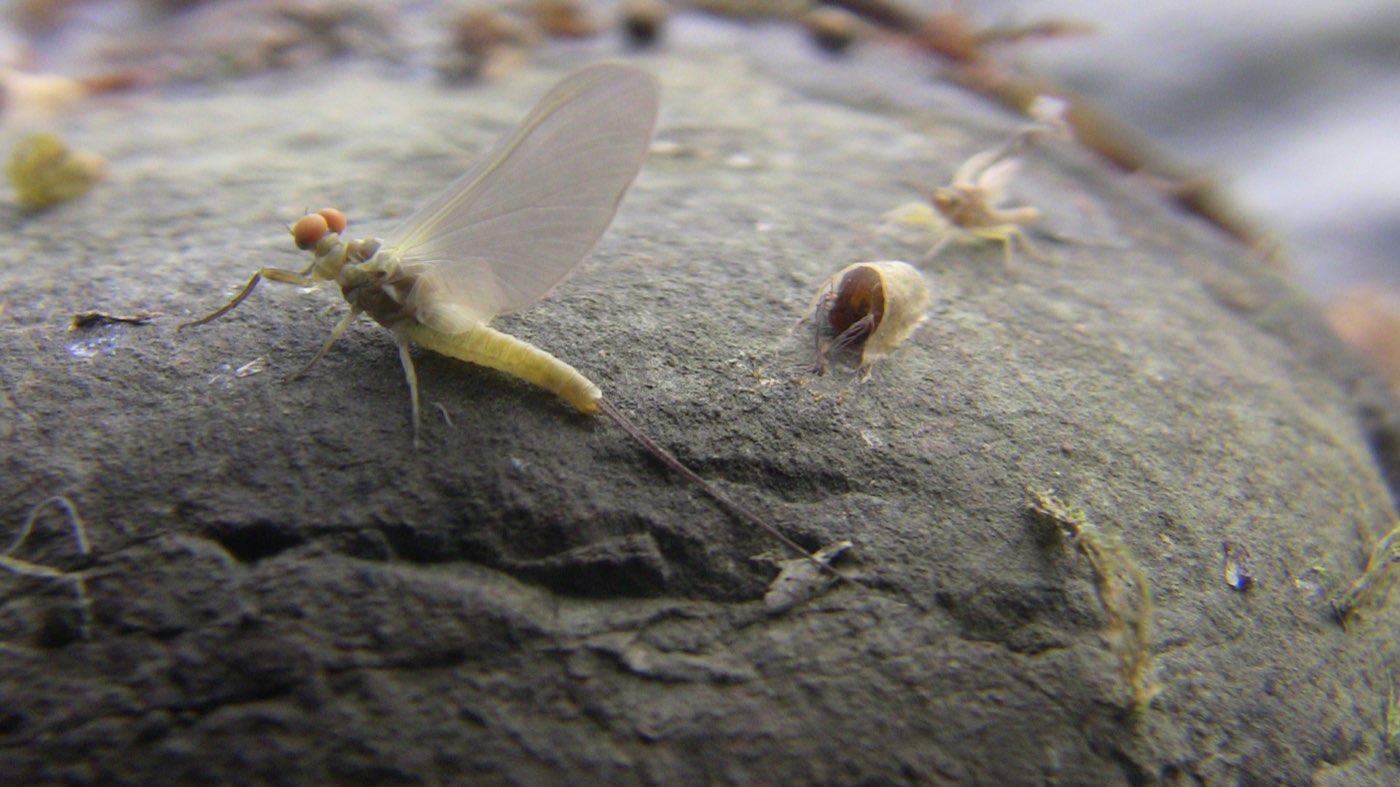
Look at what is on the water. Insects skating across the film are caddis adults. Insects resting with upright wings are mayfly duns. Insects struggling in the surface film with wings flat are emergers or cripples — and in a heavy hatch, cripples often outnumber healthy duns because they are easier to catch. The angler who identifies form first (whether the bug rides high, flush in, or below the film) narrows the selection faster than the one who starts by counting wings.
Look in the air above the pool. Spinner falls happen above the water before they happen on it. A cloud of small insects hovering and dipping repeatedly toward the surface means the mating flight is in progress and spinners are about to fall. Fish feeding on spent spinners show a different rise form than fish on duns — a head-to-tail roll with no spray rather than a quick tip-and-sip. If your dun pattern draws refusal and you see that roll, switch to a spinner.
The order of matching: form, size, color
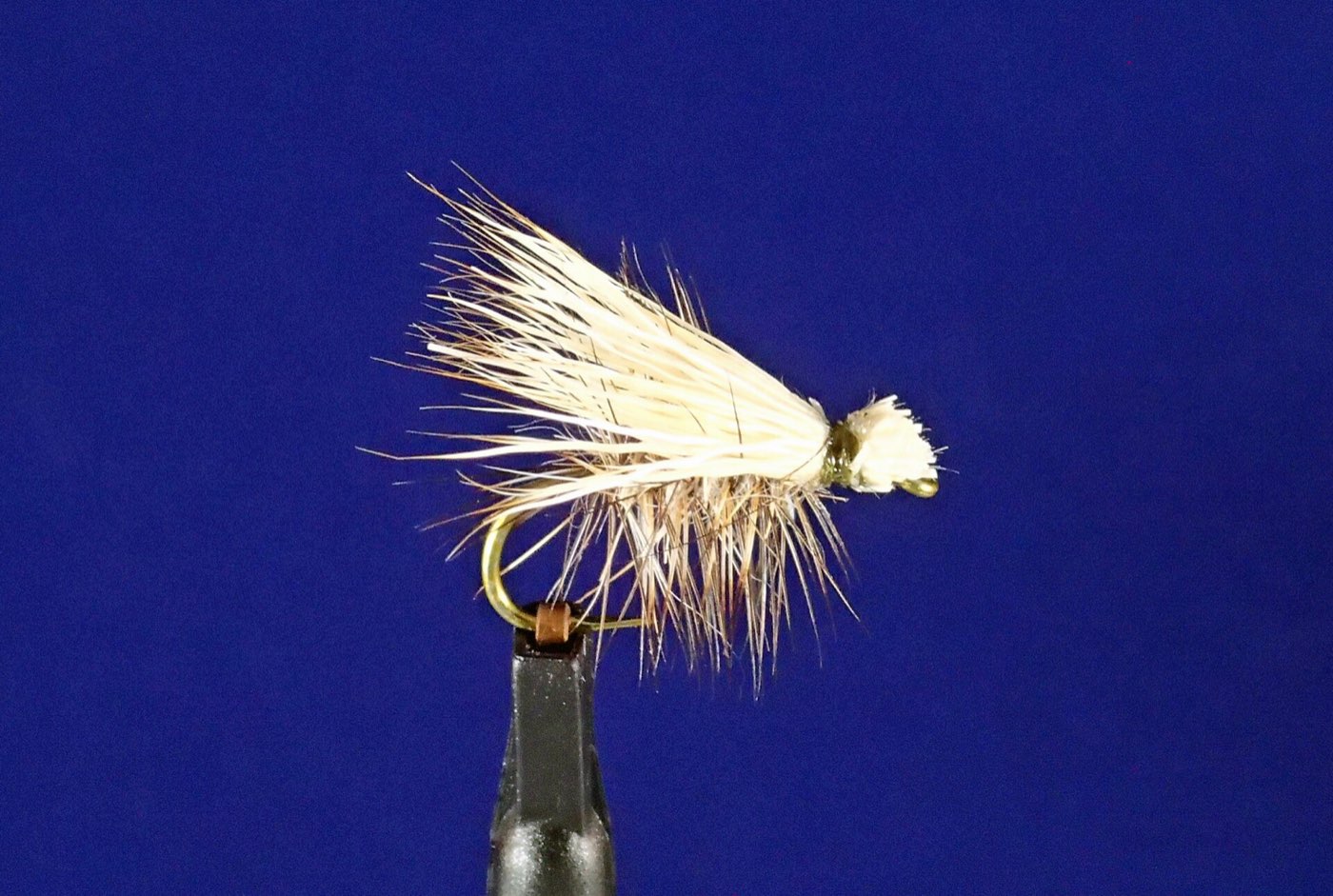
Form first. Does the insect sit on top of the film, in the film, or below it? An Elk Hair Caddis rides high on its elk hair wing and palmered hackle. A parachute rides flush with the wing post visible above water. A sparkle dun rides low in the film with the shuck still attached. Getting the silhouette wrong produces refusal before they register size or color. Emergers often outfish adult dun patterns during an active hatch because fish are keyed to the insects trapped in the film, not the ones that have already escaped.
Size second. Most anglers fish too large. Match the hook gap width to the natural. If you net a natural from the surface — use a seine, cupped hands, or a net sweep through the riffle — hold it beside your hook point. The gap of the hook should approximate the body width of the natural. A size 16 does the work that a size 12 gets refused on most mayfly hatches.
Color last. Color matters less than form or size in most situations. During a sulphur hatch, a tan Comparadun and a cream Comparadun will both take fish. A gray Comparadun will take fewer. The difference is real but smaller than most fly selection arguments suggest.
Common hatches and what they require
Blue-winged olives (Baetis): Sizes 16–22, gray-olive body, gray wing. Fish best during overcast, rainy, or low-light conditions — BWOs emerge most heavily when the sky closes in. A Comparadun or CDC biot emerger in the right size produces on any tailwater that holds them. Size is everything here; oversized BWO imitations draw consistent refusals.
Pale morning duns (PMD): Sizes 16–18, yellow-olive body on the dun, rusty-cream body on the spinner. The primary summer hatch on western freestone and tailwater rivers. The spinner fall (tails and rusty body, spent wings) often produces better fishing than the dun emergence; look for the fall in the hour before dark on calm evenings. Fish show subtle sipping rises to spinners that look like nothing from a distance.
Tricorythodes (Trico): Sizes 20–24. Spinner fall, mid-morning, slow flat water. This hatch demands small hooks, fine tippet (6X), and precise placement. A size 22 Trico spinner with a white poly wing in 6X produces; the same fly in 4X does not float correctly and draws refusals. The window is 45–90 minutes of furious spinner fall activity, then nothing for the rest of the day.
Caddis: Adults skitter and run on the surface, which means movement triggers strikes that a dead-drifted dry fly misses. Swing an Elk Hair Caddis or X-Caddis downstream through a rise zone, or skitter it upstream across the current. Swing a wet fly through the same zone when fish are splashing subsurface — they may be eating the pupa just beneath the film, not the adult riding above it.
Midges: Present year-round on tailwaters, year-round to varying degrees on freestone rivers. Sizes 18–24. A Zebra Midge fished under a small indicator or tight-line in the top 12 inches of water produces when nothing adult is visible. On tailwaters like the Bighorn or the Green, midges are the dominant food source for much of the year regardless of what else hatches.
When there is nothing hatching
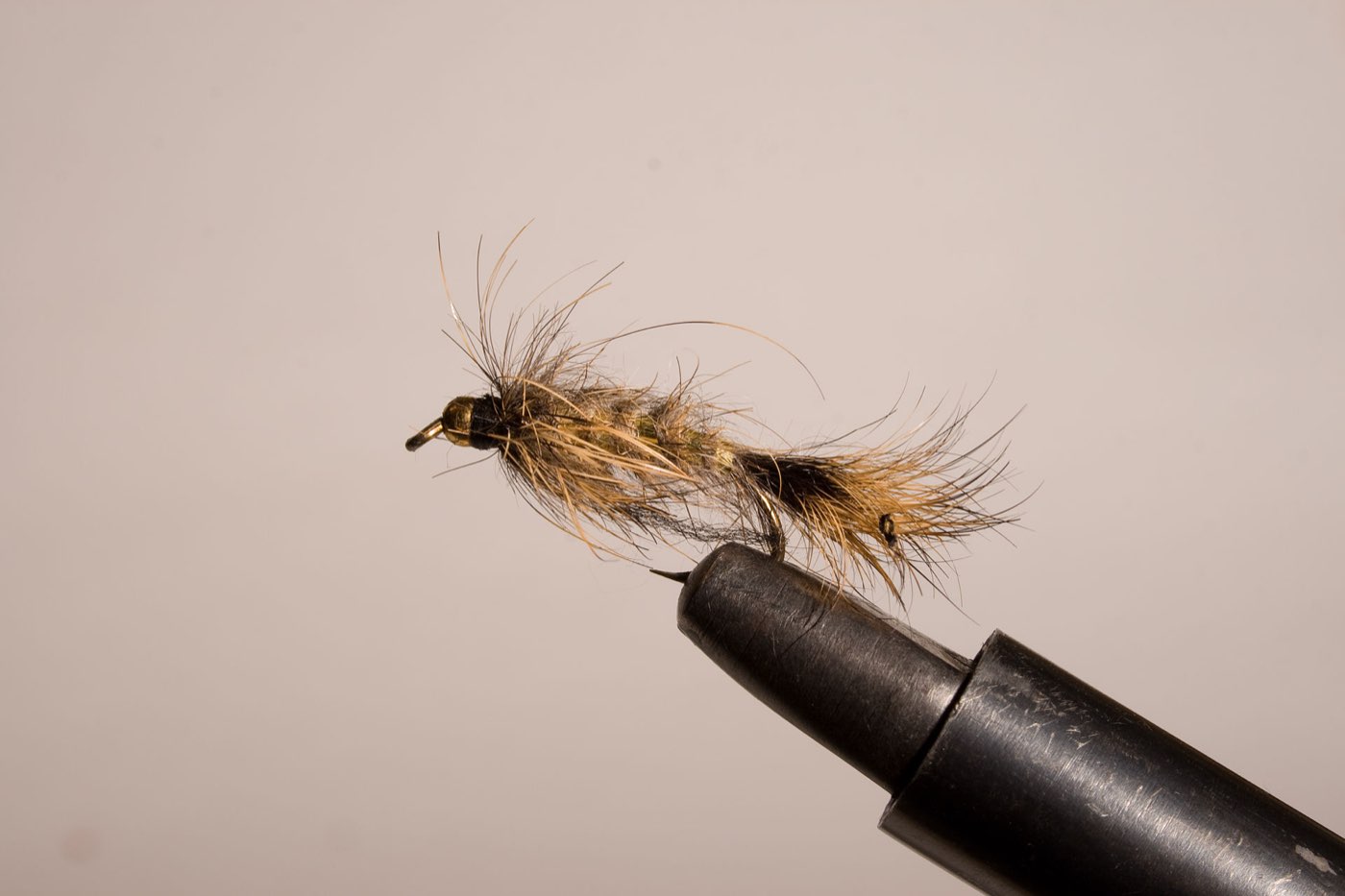
Observe for five minutes before switching to a subsurface approach. If there are no rises and no visible insects, the fish are nymphing. A size-14 Hare's Ear Nymph or Pheasant Tail fished at 80% of the water depth on a dead drift covers the water that dry-fly fishing cannot. Subsurface food is available every hour of every day on a healthy trout stream; surface food is not. The fish do not stop eating because you stopped seeing them eat.
If you are unsure whether a hatch is about to occur, turn over streambed rocks in the riffle and look at the nymphs attached to them. Mature caddis pupae with visible wing pads and mayfly nymphs with darkened wing cases are close to emergence. The rocks tell you what is about to happen on the surface 15–30 minutes before it does.