Hare's Ear Nymph
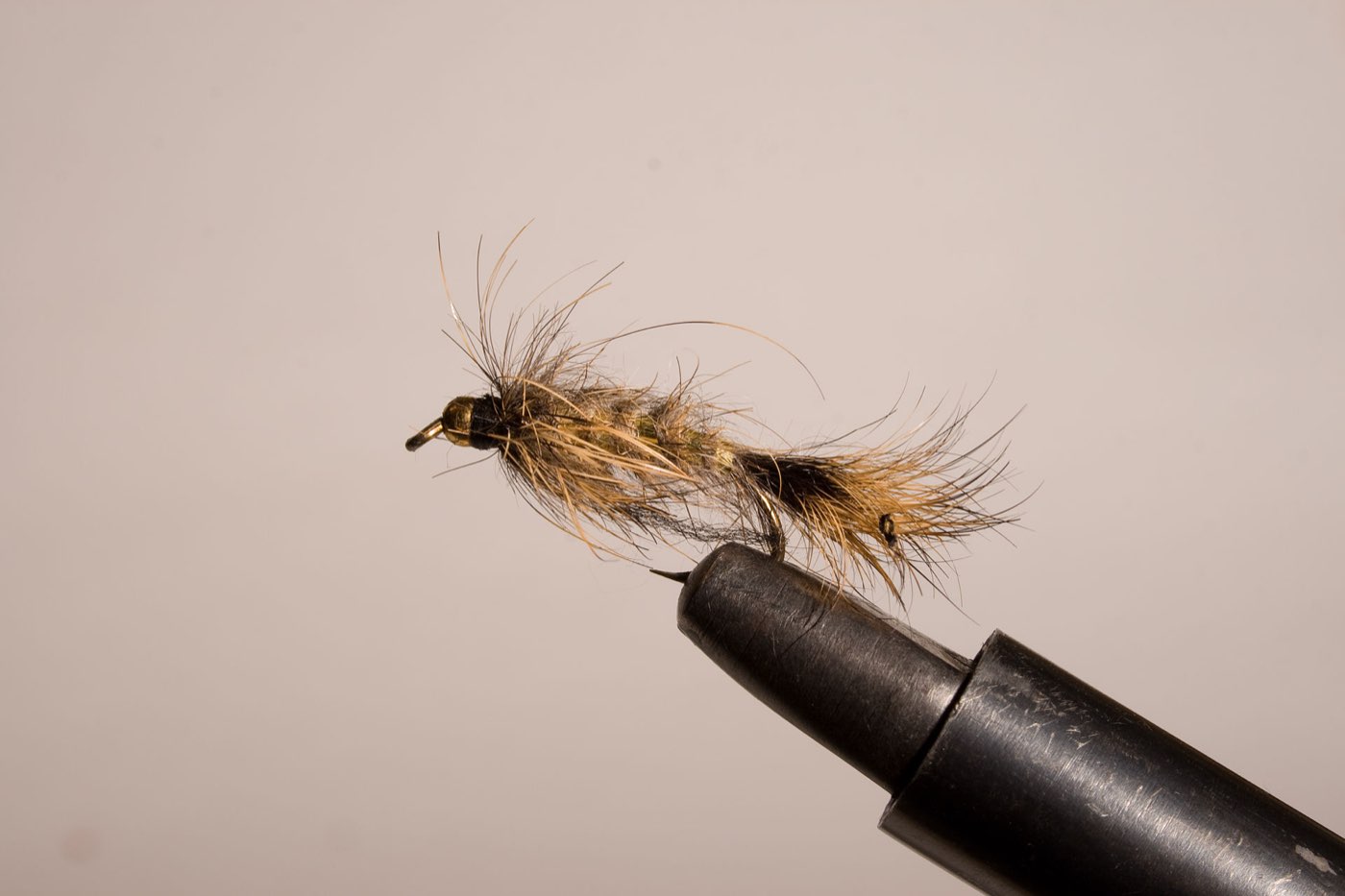
Materials
- Hook: Nymph or jig hook, sizes 12–16
- Thread: 8/0, brown or tan
- Bead: Gold or copper tungsten bead (optional)
- Tail: Hare mask guard hairs or ringneck pheasant tail fibers
- Rib: Fine gold or copper wire
- Abdomen: Hare ear dubbing, rough and spiky
- Wing case: Pheasant tail fibers or dark turkey quill
- Thorax: Hare ear dubbing, picked out to simulate legs
Tying steps
-
Slide bead onto hook and mount in vise. Start thread behind the bead and wrap a smooth base to the bend.
-
Tie in 8–10 guard hairs from a hare mask for the tail; length equal to the hook shank.
-
Tie in fine copper or gold wire at the bend for the rib.
-
Dub a rough, spiky rope of hare ear dubbing. Apply loosely to leave fibers projecting outward. Wrap forward from the bend to the 60% point.
-
Counter-wind the wire rib forward in 5 even turns over the abdomen. Tie off, twist to break.
-
Tie in a section of pheasant tail fibers or dark turkey quill at the 60% point, extending toward the eye, for the wing case.
-
Dub a fuller, rougher thorax of hare ear from the 60% point to just behind the bead or eye, leaving it deliberately shaggy.
-
Pull the wing case material straight over the top of the thorax and tie down firmly. Trim excess.
-
Use a dubbing needle to pick out fibers along both sides of the thorax, simulating legs.
-
Build a small thread head or finish directly behind the bead. Whip finish and apply a drop of UV resin or head cement.
Notes
The most broadly versatile subsurface fly for trout. The hare ear dubbing creates a naturally buggy silhouette that imitates mayfly nymphs, caddis larvae, and scuds simultaneously. Fish it with a tungsten bead in fast water and pocket water; fish the unweighted version in slow pools and spring creeks where a lighter presentation drops more naturally.
Where this fly works
- Sipsey Fork
- Farmington River
- White Clay Creek
- Chattahoochee River (Buford Dam)
- Upper Iowa River
- South Fork of the Snake River
- St. Joseph River
- Arkansas River
- Big Hunting Creek
- Au Sable River
- Root River
- Bighorn River
- Gallatin River
- Madison River
- Yellowstone River
- Davidson River
- Missouri River (Garrison Dam Tailrace)
- Niobrara River
- Upper Connecticut River (Trophy Stretch)
- South Branch Raritan River
- Truckee River
- Upper Delaware River
- Mad River
- Lower Mountain Fork River
- Deschutes River (Lower)
- Penns Creek
- Wood River
- Chattooga River
- Rapid Creek
- Guadalupe River
- Mossy Creek
- Yakima River
- Bois Brule River
- Elk River