Elk Hair Caddis
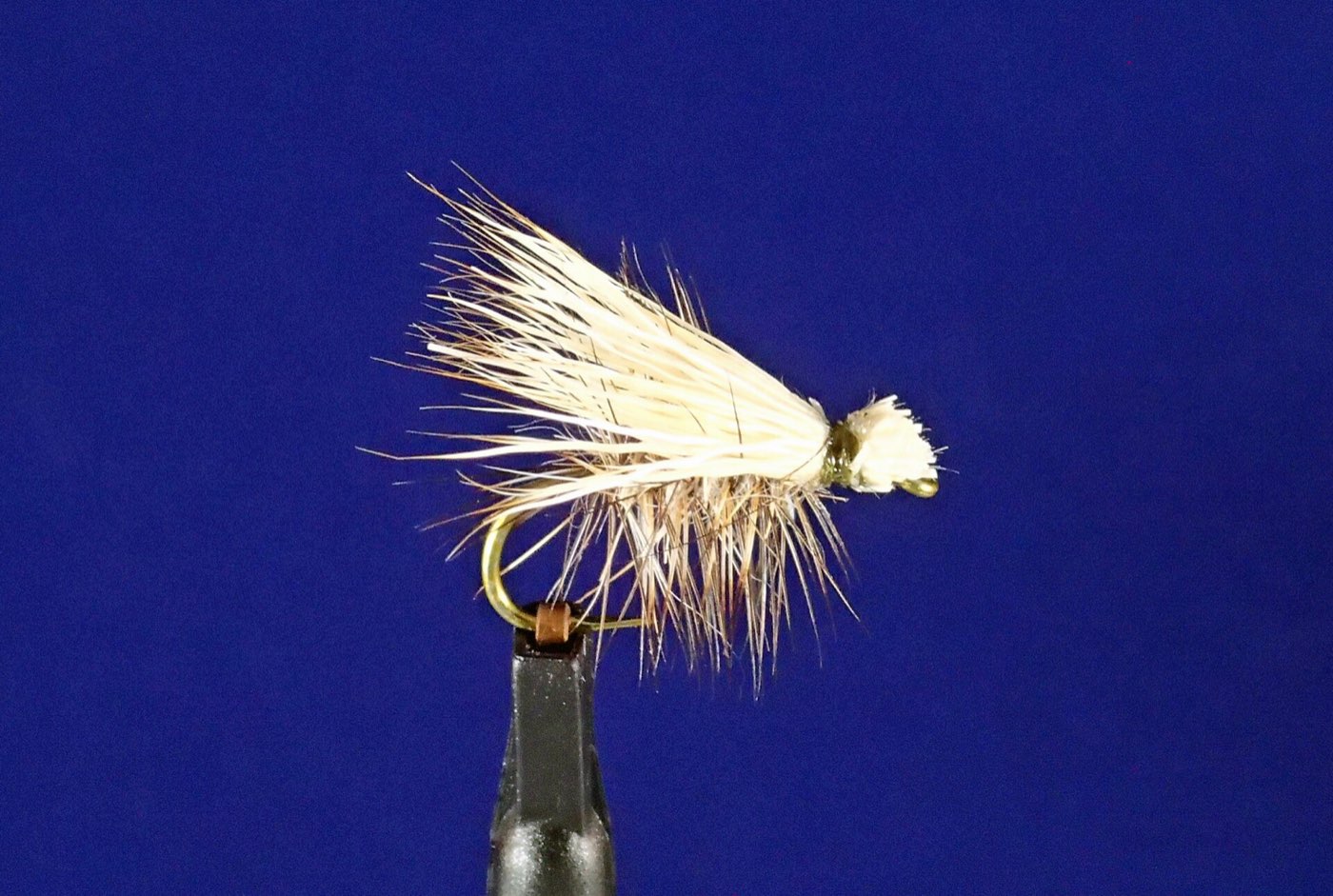
Materials
- Hook: Tiemco TMC 100, sizes 14–18
- Thread: 8/0, tan or gray
- Rib: Fine gold wire
- Body: Tan or olive dry-fly dubbing
- Hackle: Brown or ginger dry-fly hackle, palmered
- Wing: Elk body hair, stacked
Tying steps
-
Start thread behind the eye and lay a base to the bend. Tie in fine gold wire at the bend for the rib.
-
Apply a sparse rope of tan or olive dubbing. Wrap forward in tight touching turns from the bend to the 65% point, building a slight taper.
-
Tie in a brown or ginger dry-fly hackle by the stem at the 65% point.
-
Palmer the hackle backward over the body in 5–6 evenly spaced turns ending at the bend.
-
Counter-wind the gold wire rib forward over the palmered hackle in 4–5 turns, locking the hackle stem. Tie off the wire at the 65% point, twist to break.
-
Trim all hackle fibers from the flat underside of the fly so it lands flush on the water surface.
-
Cut a small bunch of elk body hair (20–25 fibers). Stack in a hair stacker until tips are aligned.
-
Measure the wing: tips should extend to the hook bend, approximately one shank length. Pinch hair at the tie-in point.
-
Tie in the stacked elk hair at the 65% point with 3 firm pinch wraps, then 4–5 more while maintaining wing angle. Do not let hair roll around the shank.
-
Trim elk hair butts at a 45-degree angle. Wrap a smooth tapered thread head over the cut ends to the eye. Whip finish, apply head cement.
Notes
The most useful caddis dry pattern in a trout angler's box. The elk hair wing is buoyant, visible, and durable; the palmered hackle creates the skating action that triggers caddis-keyed trout. Tie it in tan for most situations, olive for green caddis populations on spring creeks and tailwaters. Fish it dead-drift or skitter it upstream through a rise zone — both presentations produce.
Where this fly works
- Kenai River
- Sipsey Fork
- Lower Sacramento River
- South Platte River (Cheesman, Deckers, Dream Stream)
- Farmington River
- White Clay Creek
- Chattahoochee River (Buford Dam)
- Henry's Fork
- South Fork of the Snake River
- St. Joseph River
- Big Hunting Creek
- Gunpowder Falls
- Savage River
- West Branch Penobscot River
- Au Sable River
- Beaverhead River
- Gallatin River
- Madison River
- Smith River
- Yellowstone River
- Davidson River
- Niobrara River
- Upper Connecticut River (Trophy Stretch)
- South Branch Raritan River
- Truckee River
- Upper Delaware River
- West Branch Delaware River
- Mad River
- Lower Mountain Fork River
- Deschutes River (Lower)
- Penns Creek
- Wood River
- Chattooga River
- Rapid Creek
- Guadalupe River
- Green River (below Flaming Gorge Dam)
- Mossy Creek
- Battenkill River
- Yakima River
- Bois Brule River
- Elk River