Prince Nymph
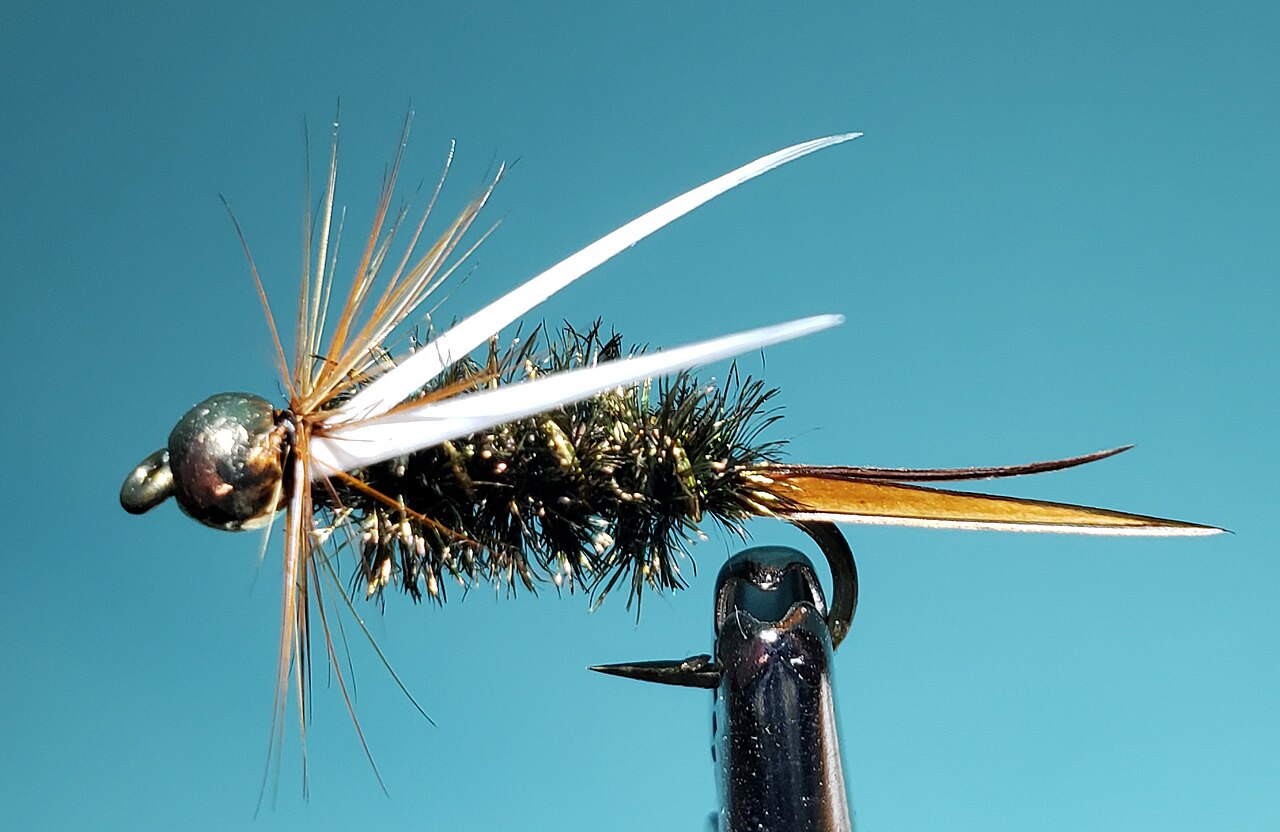
Materials
- Hook — 2XL nymph hook (Mustad 9671, Daiichi 1560, or equivalent), sizes 8-16
- Thread — Black 8/0 (70 denier)
- Bead (optional) — Gold tungsten, 2.8-3.3mm for 12-14, for the beadhead variant
- Weight (optional) — 8-10 wraps of .020-.025 lead or lead-free wire behind the bead
- Tail — Brown goose biots, tied in a split V
- Rib — Small gold oval tinsel or fine gold wire is the standard; fine copper wire is a common, slightly darker substitute
- Body — 3-4 strands of peacock herl
- Hackle — Brown hen, 1-2 turns, swept back
- Wing — White goose biots, tied flat over the back in a V
Tying steps
-
Debarb the hook and slide on the bead if tying the beadhead version. Wrap 8-10 turns of lead wire and push it into the back of the bead, then start thread behind it and build a smooth base to the bend.
-
Tie in two brown goose biots at the bend, curves facing out, to form a split V tail about half a shank length long. Use two loose wraps first, then tighten while pinching: biots are slippery and will roll under hard thread pressure.
-
Tie in the gold rib at the bend and leave it hanging.
-
Tie in 3-4 peacock herls by their tips, advance the thread to just behind the bead, and wrap the herl forward in touching turns to form a full body. Tie off and trim.
-
Counter-wrap the rib forward in 4-5 open spirals; wrapping against the herl's direction protects the fragile quills from teeth. Tie off and helicopter the tag end.
-
Tie in a brown hen hackle, take one to two turns, sweep the fibers back and down, and lock them with a few thread wraps so they angle rearward as legs.
-
Tie in two white goose biots flat over the back, curves down, forming a V that reaches to about the hook bend. Angle each biot in one at a time; trimming the butt so it braces against the bead helps set the angle.
-
Build a small thread head, whip finish, and cement generously: the wing tie-in point takes the most abuse.
Notes
The Prince is an attractor, not an imitation: the peacock body and white biot wings suggest a stonefly or dark mayfly nymph without copying either. The biot tails and wings make it slightly fussier to tie than a Hare's Ear, but nothing about it is hard. The beadhead version has largely replaced the original in most boxes, and for good reason on fast water.