Sparkle Dun
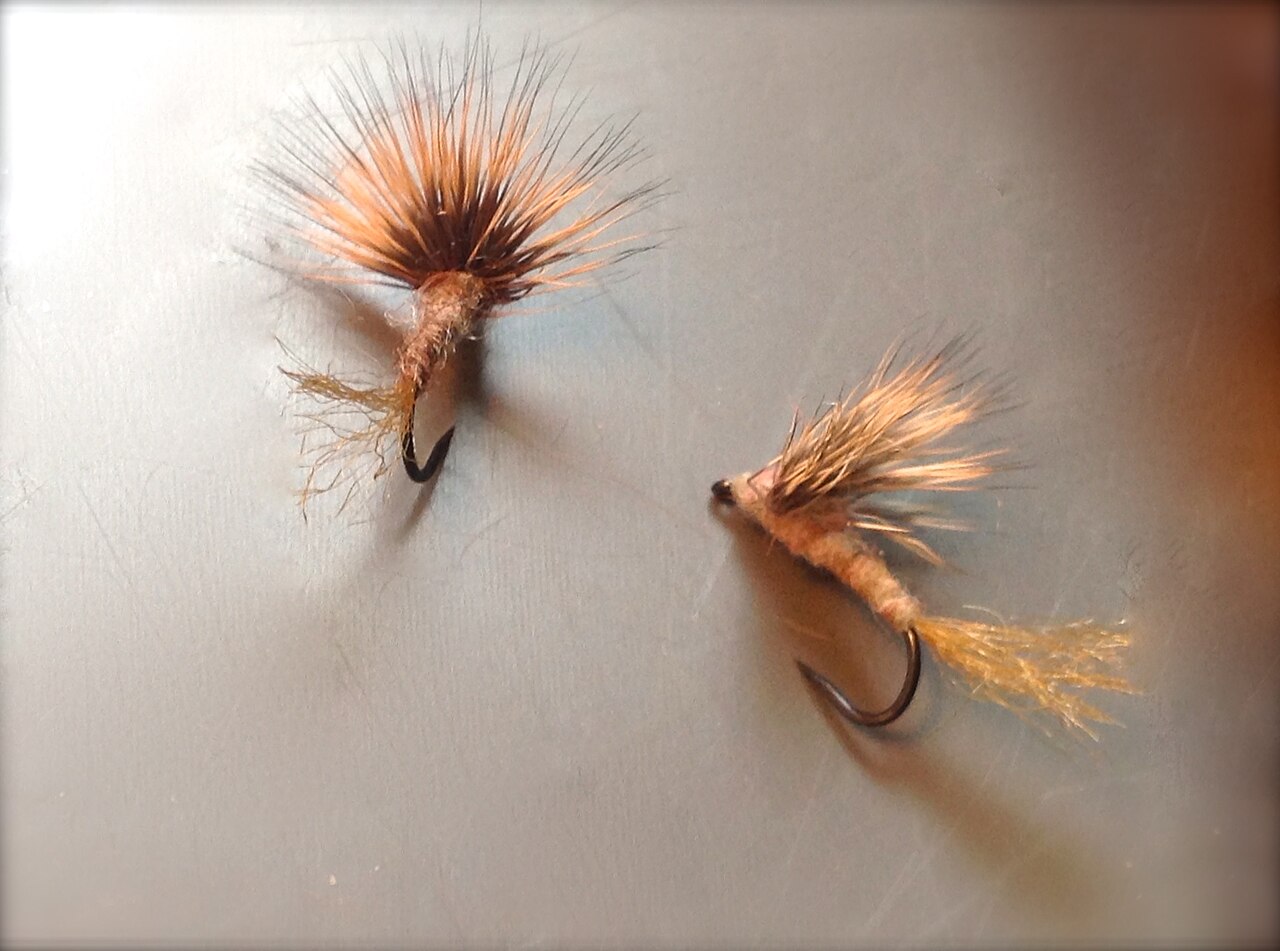
Materials
- Hook — TMC 100, sizes 14-22
- Thread — UNI 8/0, color to match body (Light Cahill for Sulphurs/PMDs, olive for BWOs)
- Shuck — Z-lon (or Darlon), rusty brown or amber, sparse
- Wing — Coastal (comparadun) deer hair, short blunt tips, fine texture
- Body — Superfine dubbing matched to the natural (pale yellow, olive, rusty tan)
Tying steps
-
Debarb the hook and lay a thread base from the eye to the bend. Return the thread to a point about one-third of the shank behind the eye; the wing goes here.
-
Cut a pencil-thick clump of coastal deer hair. Strip out underfur and short hairs with a comb, then even the tips in a hair stacker. Ragged tips make a ragged wing.
-
Measure the wing one shank-length long, tips over the eye. Take two loose gathering wraps, then pull straight down hard to flare the hair on top of the shank, not spun around it. Add several tight locking wraps.
-
Trim the butt ends at a shallow angle behind the wing and bind them down to form a smooth tapered underbody back to the bend.
-
At the bend, tie in a sparse strand of Z-lon for the shuck: half to a full shank length, thinner than looks right. A fat shuck ruins the effect.
-
Dub a slender, tapered abdomen forward to the rear of the wing.
-
Pull the wing upright and build a firm dam of bare thread or dubbing tight against its front base so it stands vertical.
-
Dub the thorax around and in front of the wing base, finishing with a small clean head behind the eye. Whip finish.
-
Push the wing fibers apart with your thumbnail so the hair fans roughly 180 degrees, tip to tip, across the top of the fly. That fan is the outrigger that floats and orients the fly.
Notes
A no-hackle mayfly dun that sits flush in the film with a flared deer-hair fan wing and a Z-lon trailing shuck imitating the nymphal husk of an emerging or crippled dun. On flat water it out-fishes hackled duns because selective fish see a clean body-in-film silhouette plus the emergence trigger. The cost: with no hackle it drowns quickly in fast broken water and needs frequent drying.