Quick reference
| Field | Value |
|---|---|
| State / region | Idaho, eastern Idaho (Island Park to Ashton and St. Anthony corridor) |
| Species | Rainbow trout, brown trout, cutthroat trout |
| Best months | Mid-May through October |
| Water type | Spring creek character on the famous reaches, with canyon and tailwater sections |
| Difficulty | Advanced on the Railroad Ranch flats — long leaders, 6X–7X, selective fish; more forgiving in Box Canyon and the tailwater |
| Wading | Generally manageable; slick tailwater and meadow bottoms warrant sticky-rubber or felt boots and a staff |
Why fish here
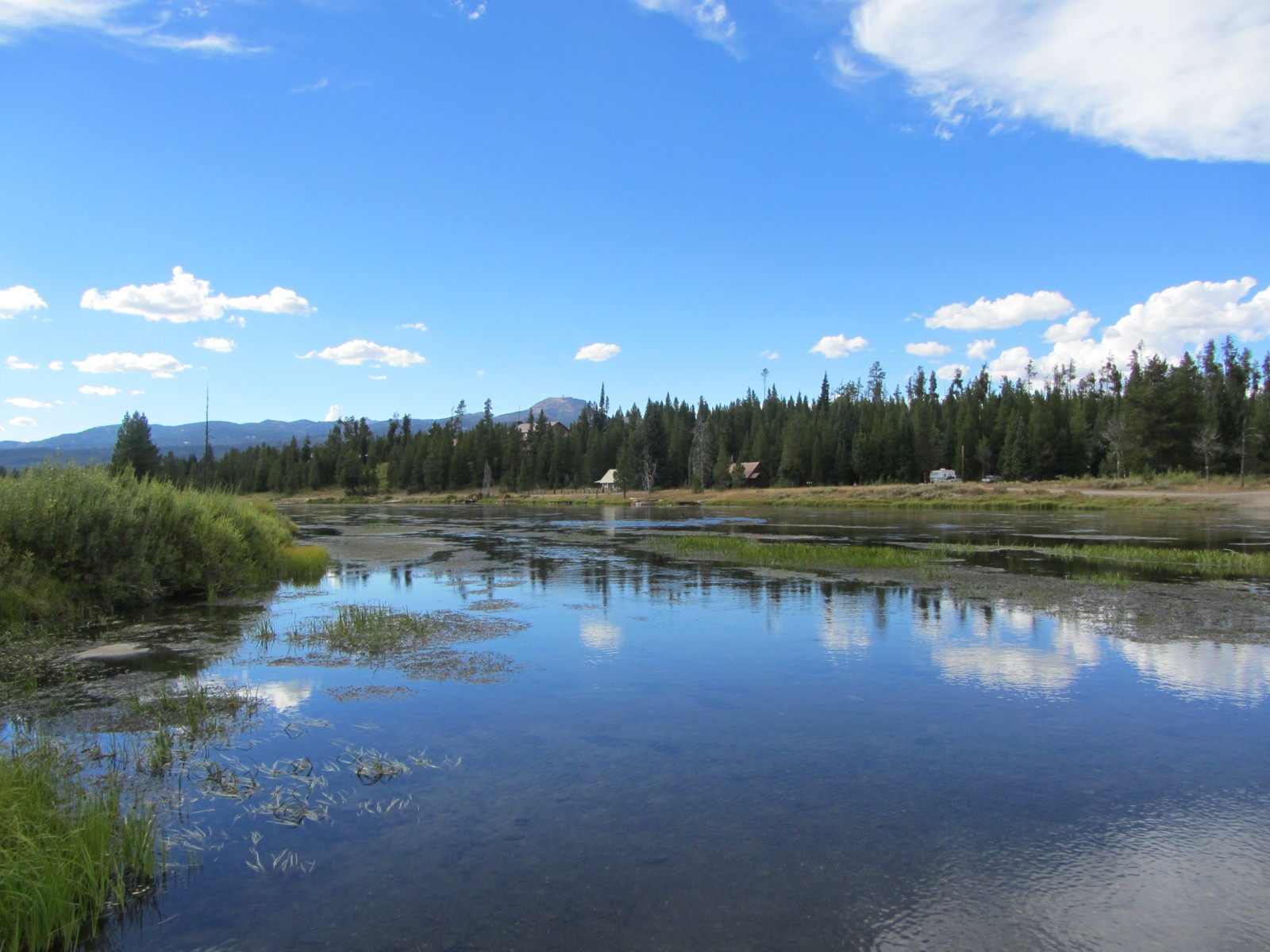
Henry's Fork begins near the Yellowstone border and flows south through a remarkable sequence of water types: spring-creek flats, ranch meadow water, canyon pocket water, and tailwater reaches below Ashton Dam. It is best known for exceptionally technical dry-fly fishing — long-leader presentations over clear, slow water to wild trout feeding in dense, selective patterns — and it is regularly described as one of the premier dry-fly fisheries in the West.
The draw is sight-fishing. On the Railroad Ranch and the river's other slow, glassy reaches, trout can be watched feeding in shallow water, and the game becomes reading an individual fish's rhythm and putting a small mayfly into its lane without drag. Few rivers anywhere offer that experience with this density of insects and fish. The hatch progression is the engine: salmonflies from mid-May to mid-June, PMDs and Green Drakes through early summer, caddis and terrestrials through August, and reliable BWO and Mahogany Dun activity in fall.
The river's variety is the other half of the case. Anglers who get humbled on the Ranch — most do — can drive fifteen minutes and fish weighted nymphs through Box Canyon's broken water, or drop down to the Ashton tailwater for deeper runs, streamers, and strong fish in more forgiving currents. One river supports several distinct fisheries.
The river, section by section
Upper river — Big Springs to Mack's Inn
Access: Big Springs, the Henrys Lake outlet, and the Mack's Inn area. Character: Cold, clear spring-fed headwaters — gentle gradient, moderate width, a mix of glides, riffles, and small runs. Wading is usually manageable but the clarity demands stealth. Species mix: Wild rainbows, browns, and cutthroat; fish run smaller than in the lower reaches. Crowding: Busy in summer and during prime hatches; lighter weekdays and early mornings. Notable hatches: BWOs, caddis, PMDs, midges, with terrestrials later in summer.
The headwaters fish like a classic spring creek in miniature — calm conditions produce strong dry-fly opportunities, and the clear, even flows reward careful approaches over long casts. A good place to find rising fish without the Ranch's degree of difficulty or its crowds.
Box Canyon
Access: Box Canyon road access and pullouts near Island Park. Character: Steeper, faster, confined canyon water with deeper slots and broken current — better suited to weighted nymphs and streamers than delicate dries. Species mix: Rainbows and browns, with larger fish possible in the heavier water. Crowding: Less crowded than the Ranch but still popular; weekends and the easy pullouts fill first. Notable hatches: Caddis, stoneflies, PMDs, BWOs, and midges; subsurface fishing is usually strongest in the fast flows.
Box Canyon is the counterpoint to everything the Henry's Fork is famous for: instead of 7X and a size 20 emerger, it fishes big stonefly nymphs and streamers through slots and seams. When the meadow water is flat and picky, this is where numbers and larger fish come easier.
Harriman State Park — Railroad Ranch / Last Chance
Access: Harriman State Park, Last Chance, and the Railroad Ranch. Character: Very low-gradient meadow water — broad, shallow flats, soft edges, aquatic vegetation, and defined spring-creek feeding lanes. Demands stealth, long casts, and precise drifts. Species mix: High-density rainbows, with browns and cutthroat present; this is the river's best-known sight-fishing water. Crowding: One of the most crowded reaches in Idaho during summer and major hatches. Weekday mornings beat weekends decisively. Notable hatches: PMDs, caddis, BWOs, callibaetis, tricos, drakes, and terrestrials — famous for technical dry-fly feeding.
The Ranch is the reach that made the river's reputation, and it is a special management area: it commonly opens to angling on June 15, and reach-specific rules protect the wild trout. Expect fish that have seen every standard pattern, refuse anything with drag, and feed on a specific stage of a specific insect. Fishing very early and very late in the day, midweek, is the standard advice for late June through August — the fish are the same, but the pressure and the wind are not.
Ashton tailwater
Access: Ashton Dam, Ashton-area access points, and downstream reaches toward St. Anthony. Character: Tailwater with more consistent flows — deeper runs, riffles, and long seams. Good water for drifting nymphs, emergers, and streamers, with dry-fly windows. Species mix: Rainbows and browns dominate; fish size can be strong here. Crowding: Moderate to heavy near the well-known access, especially during stable flows and summer weekends. Notable hatches: BWOs, midges, caddis, PMDs, and stoneflies depending on season and flow.
The tailwater's stable flows make it the river's most reliable year-round water — winter subsurface fishing here can stay productive when the upper river is locked into midges and sparse BWOs on mild days only.
St. Anthony and the lower river
Access: St. Anthony-area public access. Character: Broader lower-river water — mixed riffle-run structure, agricultural edges, more variable depth than the Ranch. Fishes well when flows are stable. Species mix: Rainbows, browns, and some cutthroat depending on reach. Crowding: Less famous than the Ranch and used mostly by locals; pressure rises during hatch windows and low water. Notable hatches: BWOs, caddis, midges, PMDs, and terrestrials in warm months.
The lower reaches are the quiet end of the river — worth the drive when the upper sections are crowded, particularly during stable-flow periods.
Hatches and seasons
| Months | Hatches | Flies |
|---|---|---|
| Mar–Apr | Blue-winged olives, midges, early caddis | Zebra Midge #18–22; RS2 #18–22; BWO emerger/cripple #18–22; small CDC caddis #16–18 |
| May | PMDs, BWOs, caddis, early drakes in some years | Comparadun #16–18; Sparkle Dun #16–18; Pheasant Tail #14–18; Elk Hair Caddis #14–16 |
| Jun | Brown drakes, caddis, PMDs, stoneflies in faster water | Brown Drake patterns #10–12; Chubby Chernobyl #6–10; salmonfly/stonefly patterns #4–8; PMD cripple #16–18 |
| Jul–Aug | Tricos, callibaetis, caddis, terrestrials, midges | Trico spinner #20–24; callibaetis spinner #14–16; foam beetle #14–16; parachute ant #16–18; Elk Hair Caddis #14–16 |
| Sep–Oct | BWOs, midges, caddis, lingering terrestrials | BWO cripple/emerger #18–22; CDC caddis #14–18; Zebra Midge #18–22; October caddis-style patterns where relevant |
| Nov–Feb | Midges and sparse BWOs on mild days; winter subsurface fishing stays productive on the tailwater | Midge larva/pupa #18–22; small streamers; BWO nymphs #18–22 |
Recommended flies (by season)
| Season | Top patterns | Why |
|---|---|---|
| Spring | Pheasant Tail #14–18, Zebra Midge #18–22, RS2 #18–22, Comparadun #16–18, Sparkle Dun #16–18 | Spring water favors small mayfly and midge imitations, with PMD and BWO dry-fly windows opening on calmer days |
| Summer | Trico spinner #20–24, PMD patterns #16–18, Elk Hair Caddis #14–16, foam beetle #14–16, parachute ant #16–18 | Prime technical dry-fly season on the Ranch, with realistic terrestrial presentations producing through warm, bright periods |
| Fall | BWO emerger #18–22, CDC caddis #14–18, Zebra Midge #18–22, small streamers | Cooling water brings back reliable BWO and caddis activity, and streamers become more effective |
| Winter | Midge pupa #18–22, Zebra Midge #18–22, small olive streamers | Winter fishing is mostly subsurface and best on the stable tailwater below Ashton Dam |
Gear notes
A 9-foot 4- or 5-weight is the most versatile rod for dries and general fishing; a 6-weight earns its place for heavier nymph rigs, streamers, and wind. Fish a floating line with long tapered leaders of 9–12 feet and tippet from 4X to 6X for most dry-fly work — 6X to 7X is often necessary on the most technical fish. Bring wading boots with felt or sticky-rubber traction and a staff for the slick tailwater and meadow bottoms, plus layers for cold mornings and strong afternoon sun.
Logistics
- Regulations: Managed by the Idaho Department of Fish and Game with reach-specific rules. A commonly cited general framework: trout are catch-and-release from December 1 through the Friday before Memorial Day weekend (except brook trout), with the statewide season opening to a six-trout limit from the Saturday of Memorial Day weekend through November 30 on many waters — but Henry's Fork carries special section rules. The Harriman State Park / Railroad Ranch reach is a special management area with seasonal opening dates, commonly June 15, and some reaches carry artificial-flies-only or catch-and-release restrictions. Check the current Idaho regulations booklet for each reach; rules change annually. A valid Idaho license is required.
- Access points:
- Big Springs — headwaters access and the starting point for the upper river
- Mack's Inn — common upper-river access near Island Park
- Harriman State Park — primary access for the Railroad Ranch / Last Chance reach
- Ashton Dam — key reference point for the tailwater
- Ashton — town and public access hub for the tailwater reach
- Closest fly shop: Henry's Fork Anglers, Island Park
- Nearest towns: Island Park, West Yellowstone, Ashton, St. Anthony, Rexburg
- Closest gauge: USGS 13042500 — Henrys Fork near Island Park, ID
When NOT to fish here
Avoid peak spring runoff and any short-term high, muddy, or blown-out flows after warm storms — the fast canyon water in particular becomes difficult when discharge spikes. The busiest window is late June through early September, especially around the PMD, trico, and callibaetis hatches on the Railroad Ranch; if crowds ruin the experience for you, fish weekdays or pick a different reach. Summer afternoons can be poor in bright wind, and the technical dry-fly fishing is at its hardest when flows are low and clear and pressure is high — exactly the conditions that peak-season weekends deliver.
Where to fish next
- Fly Fishing in Idaho — the full state guide
- South Fork of the Snake River — the other half of Idaho's famous Snake River trout water, with big cottonwood-lined riffle water near Swan Valley
- Madison River — a short drive over the Montana line for faster freestone fishing when the Fork's flats demand a break