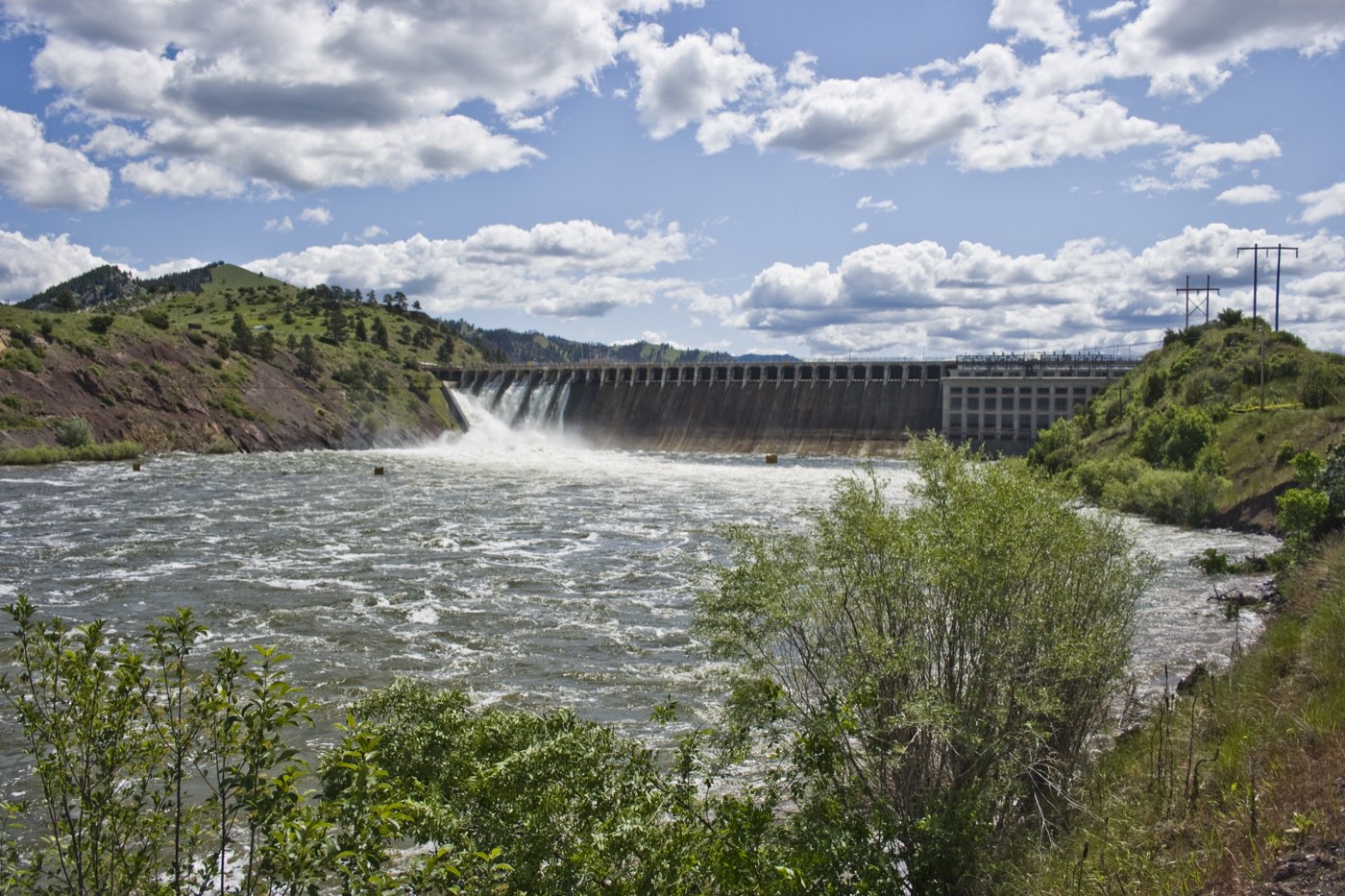
The Missouri River drops out of Holter Dam cold and clear, running 30 miles of catch-and-release water south to Cascade before the regulations shift and the crowds thin. That dam-controlled section—known to anglers as "the Missouri below Craig"—is one of the most productive wild trout fisheries in the country by fish density.
Montana Fish, Wildlife & Parks electroshocking surveys have recorded 3,000–5,000 wild trout per mile in the core C&R section, split between brown and rainbow trout. Browns run larger on average; rainbows fight harder. A typical day of competent fishing lands 15–25 fish. The trade-off: the Missouri's trout are educated. Consistent flows and heavy pressure have produced fish with specific preferences—fly size, drift angle, tippet diameter. An angler who fishes this water for the first time may struggle. One who fishes it across multiple seasons starts running repeating patterns.
When to fish
March – April: Blue-winged olive hatches (Baetis, size 18–22) come off on overcast afternoons throughout the season but concentrate in spring and fall. Higher, colder flows slow the action but also thin the crowds. Nymphing under an indicator produces before the surface turns on.
May – June: The Pale Morning Dun hatch starts building in late May and peaks through June. The Missouri's PMD hatch is the benchmark against which other PMD hatches in Montana get measured. Fish size 16–18 PMD dries and cripples in the evenings; nymph with a Frenchie or Hot Spot Pheasant Tail through the day.
July – August: Trico spinner falls start before 8am on calm mornings and are often finished by 10. Be on the water at first light with size 20–22 Trico spinners. Afternoon fishing gets progressively harder as air temps climb; focus on early mornings and evenings. Caddis (size 14–16) are active through summer into September.
September – October: The best streamer fishing of the year. Brown trout pre-spawn aggression peaks in October; a heavily-weighted articulated streamer swung through a deep run produces the biggest fish available on this water. Fall BWOs also return—overcast afternoons, size 20–22, fish visibly rising in the flat runs.
Winter (November – February): Open year-round. Midges (size 22–26) fished as a dry-dropper or two-nymph rig carry the slow months. Fewer anglers, colder hands, the occasional surprisingly willing fish.
What to fish
The Missouri rewards matching the hatch more consistently than any other fishery in Montana. Carry these in the listed sizes:
- PMD dries (16–18): Sparkle Dun, Harrop's PMD Cripple, Dornan's PMD — June main event
- Trico (20–22): spinner patterns in black-and-white; size is more important than pattern
- BWO (18–22): Comparadun, CDC Dun, Parachute BWO — spring and fall, overcast afternoons
- Caddis (14–16): Elk Hair Caddis, X-Caddis — summer evenings
- PMD nymphs (16–18): Frenchie, Hot Spot Pheasant Tail, Hare's Ear
- Baetis nymphs (18–22): RS2, Mole Fly, Barr's Emerger
- Streamers (4–6): articulated patterns in white/olive, Double Bunny, Kreelex — October
Tippet: 5X for standard dry flies, 6X for Tricos and BWOs on calm water. The Missouri's fish will refuse a size-20 BWO on 4X on a flat, sunny afternoon. Don't test it.
How to fish it
Float fishing. The majority of angling on the C&R section is done from drift boats or rafts. Floating allows coverage of the long, consistent runs and access to both banks without repeated repositioning. The standard float is Craig (Dearborn FAS) to Hardy or Mid-Canon for a full day; Craig to Cascade is a two-day float at fishing pace. Most outfitters in Craig run the Craig-to-Hardy stretch.
Wade fishing. Less water covered per hour than floating, but productive at FAS sites with good adjacent runs. The Dearborn FAS at Craig has the most wade access near town. Hardy FAS and Pelican FAS offer wade fishing farther downstream with lighter pressure. During PMD and Trico hatches, wade anglers targeting visibly rising fish in front of FAS sites do as well as or better than floating anglers covering the same water quickly.
Reading the water. The Missouri doesn't look like technical water—long, uniform runs, 3–5 feet deep, few obvious structural features. The fish hold in feeding lanes along current seams. In summer, work the banks; in spring and fall, the middle of the river produces more consistently. Euro-nymphing works well for wade anglers covering FAS-site water systematically.
Access
The C&R section runs from Holter Dam to just above Cascade, managed by Montana FWP. Primary fishing access sites, upstream to downstream:
- Dearborn FAS (Craig) — 47.018°N, 111.619°W — primary put-in; concrete ramp, good parking, the best adjacent wade water in the C&R section
- Mid-Canon FAS — 47.073°N, 111.590°W — mid-section float stop; limited wade access, useful as a short-float take-out
- Hardy FAS — 47.167°N, 111.645°W — lower-section float stop; better wade water than Mid-Canon
- Pelican FAS (near Cascade) — 47.264°N, 111.710°W — standard take-out for a full Craig-to-Cascade float
Confirm current FAS status and access hours with Montana FWP before any trip—site conditions change year to year. Pull the official FAS layer from onX Maps or the Montana FWP Fish & Wildlife website.
Montana's stream access law (76-13-101 et seq.) allows wade fishing below the ordinary high-water mark through private land. Between FAS sites, you can wade the river but cannot cross private bank to reach it without permission. Drift boat anglers can fish from the boat through private sections.
Regulations
Read the current Montana FWP regulation booklet before fishing. The Missouri has zone-specific rules.
Fixed elements in the C&R section (Holter Dam to Cascade):
- Catch-and-release only. No harvest of any trout.
- Artificial lures and flies only. No bait, no scented lures.
- Single barbless hook throughout the C&R section.
- Non-resident license required — Montana fishing license plus conservation license, sold on the Montana FWP website or at Craig fly shops.
- Hoot Owl restrictions apply in drought years — no fishing 2pm–midnight when water temps exceed 73°F for three consecutive days. Check the FWP drought-response page before driving out for an afternoon session.
Below Cascade, regulations shift to standard Montana trout regs with harvest allowed on some species. Verify before fishing any section downstream of the C&R boundary.
Where to base
- Craig, MT — no lodging in the town itself (population ~30), but fishing lodges operate along the river corridor. Missouri River Trout Lodge is the closest full-service option.
- Helena, MT — 30 miles south on I-15; full hotel and restaurant options. The practical base for multi-day trips without a lodge booking.
- Great Falls, MT — 40 miles north; larger city with more options, but farther from the prime water.
Most anglers fly into Helena and drive to Craig each morning—30–40 minutes on I-15 and US-287.
Guides and shops
Both Craig shops are serious operations with daily hatch reports and full guide benches:
- Headhunters Fly Shop (Craig) — the anchor shop on the Missouri; guide booking, gear, flies, and hatch reports updated daily on their website. The Headhunters report is the best free real-time intel available for this river.
- Missouri River Trout Shop (Craig) — competitive option with slightly less foot traffic; good for walk-in float booking.
Guide rates: $650–800 for a full-day float for two anglers in 2026, plus tip and lunch. Book 60+ days out for peak PMD weeks in June—that window fills by April.
What to bring
- Stockingfoot waders + studded boots: Missouri cobble is slick. Simms G3 Guide Stockingfoot Waders handles the tailwater temperatures that stay cold well into summer.
- A 9ft 5wt handles most situations. A 9ft 4wt sharpens your presentation on technical Trico and BWO days when 6X tippet and size-22 flies are the menu.
- Two pre-rigged rods or a spare spool. Switching from a Trico spinner rig to streamers at 10am without retying saves the best fishing hour of the morning.
- A rubber-basket landing net — the C&R section's barbless requirement makes landing fish without one a fish-losing exercise. Fishpond Nomad Mid-Length Net.
- A stream thermometer. Hoot Owl closures are real here in drought summers; water temp at 2pm is the number that matters.
- Full sun protection. The Missouri Valley has no tree cover on the river corridor.
Closest gauge
USGS 06099500 — Missouri River at Craig, MT — the number to watch before any trip. Ideal wade-fishing flows run 3,000–6,000 cfs; above 8,000 cfs, wade access becomes limited and float fishing is the practical option.
Where to fish next
- Madison River, Montana — freestone counterpart to the Missouri's tailwater character; the comparison teaches you something about both fisheries
- Yellowstone River, Montana — bigger water, more variety, less technical
Last updated: May 2026. Affiliate disclosure: Cast & Tie earns a commission on purchases made through links on this page at no additional cost to you.