If you already tie and want the vise to stop being the weakest tool on the bench, buy the Renzetti Apprentise: $149.99 with a C-clamp or $164.99 on a pedestal as of September 2026, made in the USA, with jaws rated for hooks from size 28 to size 2. The value pick is the Griffin Odyssey Spider at $150.15, which gives you Griffin's true-rotating head and a jaw that opens to 4/0 for bass and streamer hooks. Spend $274.99 on the Renzetti Traveler 2200 only if you tie a few hundred flies a year or more; its cam jaw and anodized build are the upgrade, not the rotary function you already get for $110 less.
The variable that decides this category is the jaw: how it closes, what wire diameters it clamps without slipping or crushing, and whether it places the hook shank on the axis the head spins around. Two vises from the old version of this guide have priced themselves out of the bracket. The Anvil Atlas is now sold as the Rambler Co. Atlas at $399.99, and the Dyna-King Kingfisher lists at $345.
The picks at a glance
| Pick | Best for | Price (September 2026) | Distinguishing spec |
|---|---|---|---|
| Renzetti Apprentise | Trout and smallmouth tyers under $200 | $149.99 C-clamp, $164.99 pedestal | Hooks #28 to #2, rotary head with tension screw, made in USA |
| Griffin Odyssey Spider | Value pick, and the widest jaw | $150.15 with C-clamp | Jaw capacity 28 to 4/0, true-rotating head |
| Peak Non-Rotary Vise | Tyers who never spin the fly | $139.95 street, pedestal only | Peak Rotary Vise jaws on a fixed head, limited lifetime warranty |
| Renzetti Traveler 2200 | The step-up | $274.99 | Cam jaws, #28 to 4/0, anodized, ordered right- or left-hand |
How to choose a fly tying vise
Jaw geometry and hook range
A vise jaw is two hardened steel faces that close on the bend of the hook. Three things about those faces matter. The first is how they close: a knurled screw or collet nut (Apprentise, Odyssey Spider, Peak), a lever cam that snaps shut with a preset gap (Traveler 2200, Griffin Montana Mongoose), or a spring you lever open and let close (Regal). Screw jaws are slower to change but adjust to any wire diameter. Cam jaws are fast once set for a hook size and want a small readjustment when you jump from a size 18 nymph to a size 4 streamer. Spring jaws are the fastest and the least adjustable.
The second is the taper of the jaw tips. A jaw rated "28 to 4/0" holds a size 28 midge hook somewhere in its tips and a 4/0 hook deep in its throat. The fine tips that reach a size 24 bend are also the part that chips if you close a cam on a 2/0 hook shank instead of the bend. The third is the steel. Peak specifies hardened and tempered tool steel; Renzetti coats its Apprentise jaws in black oxide and fits the Traveler's cam jaws with a polyurethane O-ring to slow wear. A jaw that holds a size 20 hook so you can crank a tungsten bead against it without the hook rocking is the whole point of paying more than $100.
True rotary vs stem rotation
Every vise here spins 360 degrees. That is not the same as true rotary. In a true rotary vise the hook shank sits on the axis the head rotates around, so when you turn the handle the shank stays put and the material you are holding wraps around it. In a stem-rotation vise the shank swings in a circle around the axis, which is fine for looking at the far side of a fly and useless for wrapping.
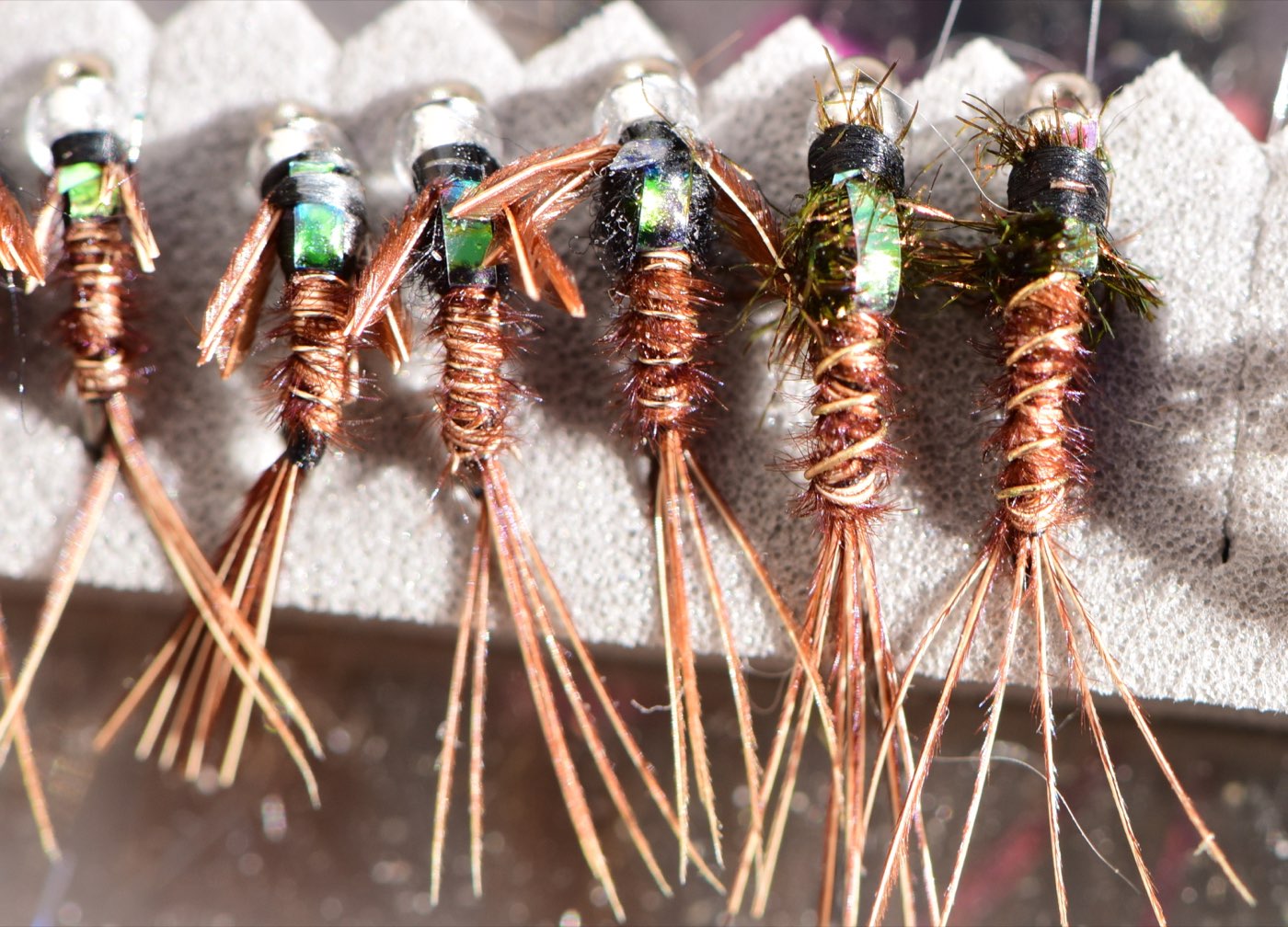
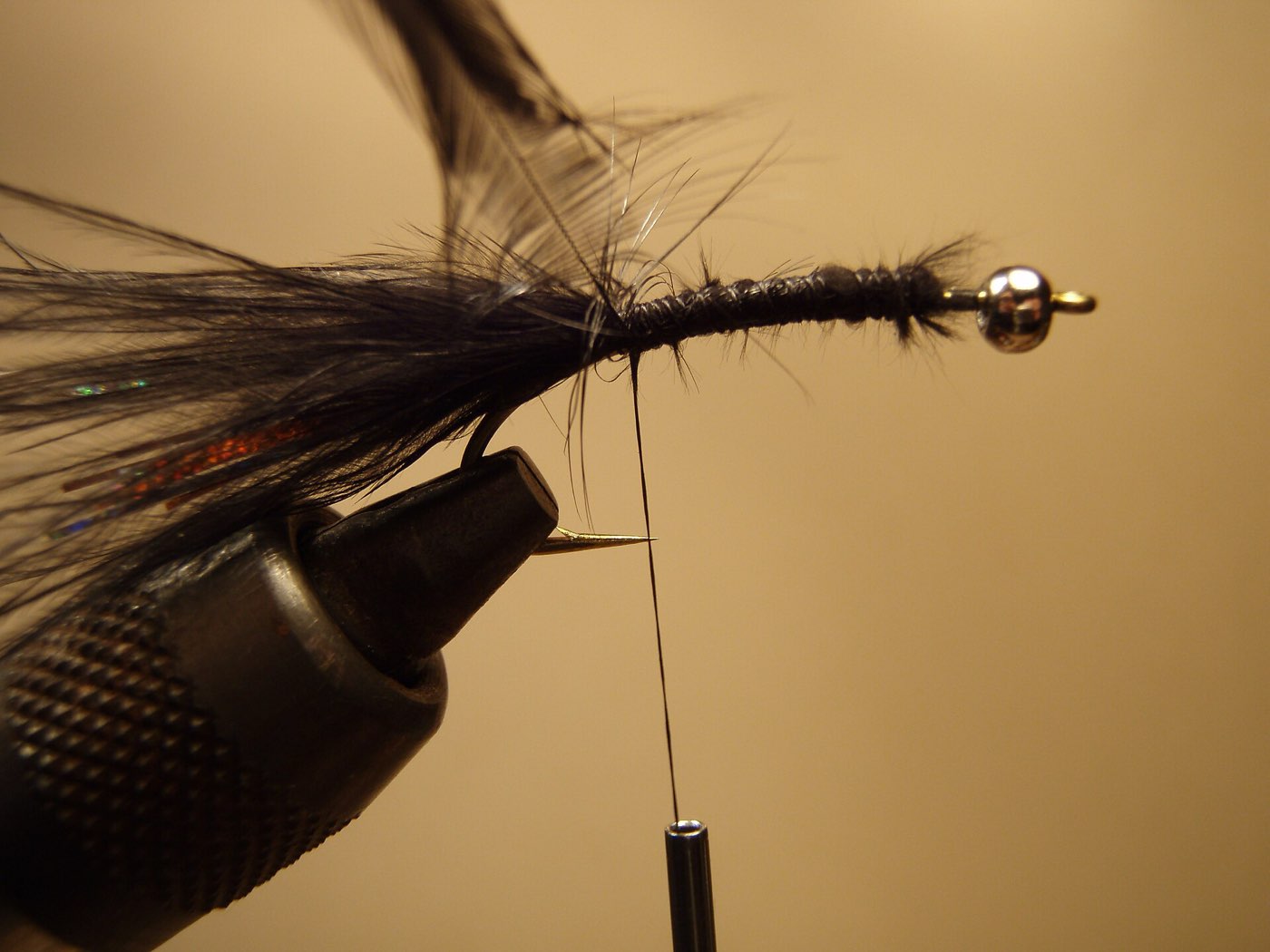
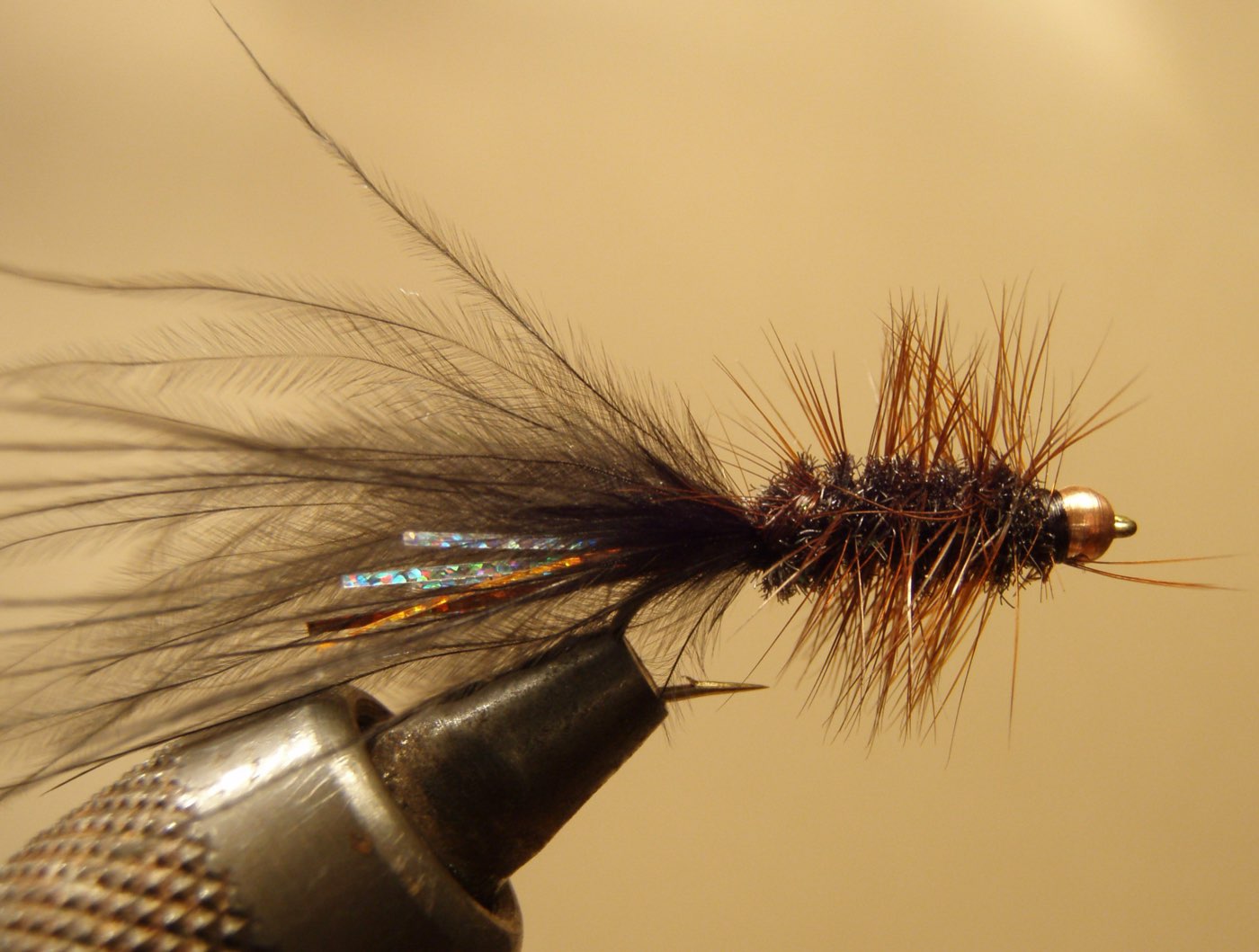
At the bench this decides one thing: whether you wrap wire ribbing, palmered hackle, and thread bodies by turning the vise or by passing the bobbin around the hook. Turning the vise gives even spacing on a Woolly Bugger's hackle and a tight, level wire rib on a Pheasant Tail. Renzetti sells the Apprentise and Traveler within its true rotary line, and Griffin describes the Odyssey Spider as the entry to its true-rotating family. Regal's own vise-selection quiz says all its vises turn 360 degrees but only the Revolution series is a full rotary; the Medallion rotates around the stem. Peak's Non-Rotary Vise does not rotate at all, which is the honest version of what many tyers actually do with a rotary vise.
C-clamp vs pedestal
A C-clamp bolts to the table edge and puts all the load into the wood. It is lighter, cheaper (the Apprentise clamp saves $15 over the pedestal), and rigid under hard thread tension. It also fails on kitchen tables with an apron, desks with a lip, and any surface thicker than the clamp opens; the Rambler Atlas clamp, for example, tops out at 1.75 inches. A pedestal sits anywhere and travels flat. It needs mass to stay put: Griffin's steel pedestal weighs about 4 pounds and costs $58.40 on its own, Renzetti's Apprentise base is 5 by 5 inches with an 8-inch stem, and Peak powder-coats its steel base white so beads and hooks show against it. If you tie in one place, buy the clamp. If you tie at the kitchen table and put the vise away after, buy the pedestal.
Material arm, bobbin cradle, and the small parts
The bobbin cradle is the arm that holds your bobbin out to the side while you spin the vise. Without it, rotary tying means holding the bobbin in one hand and turning with the other, which is most of the benefit lost. Peak supplies a height- and length-adjustable cradle with the Rotary Vise; Renzetti's Traveler comes with one; the Apprentise page lists no cradle or material clip, so budget for both. Also check for a rotation tension screw (Apprentise, Traveler, Peak Rotary), because a head that spins freely when you let go of the handle unwinds thread. Hinged or adjustable stems (Apprentise, Traveler) let you set the jaw at eye level without a taller base.
Renzetti Apprentise: the vise to buy under $200
Specs:
- Jaws: screw-adjusted, black oxide coated jaws and housing
- Hook range: #28 to #2
- Rotation: rotary head with aluminum tension knob
- Base: C-clamp with 8-inch stem (A6001, $149.99) or 5 by 5 inch black powder-coated pedestal with 8-inch stem (A6002, $164.99)
- Body: glass-beaded aluminum, hinged stem
- Made in USA
- Price: as of September 2026 at renzetti.com
The Apprentise is the entry to Renzetti's line and shares the design that has made the Traveler the default recommendation since 1988: a head that puts the hook on the rotation axis and a tension knob that lets you set how freely it spins. The jaws are a screw type, so you dial the gap for the hook in front of you rather than trusting a cam preset. For a tyer who moves between a size 20 Zebra Midge and a size 8 Woolly Bugger in the same session, that adjustability is worth more than cam speed.
The limit is the top of the hook range. Renzetti rates the Apprentise to size 2, where the Odyssey Spider and Traveler go to 4/0. Trout and smallmouth tyers will never touch that ceiling; anyone tying 2/0 deceivers or musky flies should look at the Spider or spend up. The C-clamp version was listed sold out at renzetti.com on September 4, 2026, so the pedestal at $164.99 may be the one you can get.
Buy if: You tie trout and smallmouth patterns from size 24 to size 2 and want a US-made rotary head under $170.
Skip if: You need hooks above size 2 or want cam-speed hook changes.
Griffin Odyssey Spider: the value pick with the widest jaw
Specs:
- Jaw capacity: 28 to 4/0
- Rotation: true-rotating head (Griffin's entry model in that family)
- Base: C-clamp included; Griffin steel pedestal sold separately at $58.40 (about 4 pounds, fits any 3/8-inch stem)
- Cam-lever version: Odyssey Spider Cam, $193.10
- Price: $150.15 at griffinenterprisesinc.com; $142.95 at J. Stockard, September 2026
The Spider's jaw range is the reason to pick it over the Apprentise. A 4/0 top end covers Clouser Minnows on 1/0 hooks, bass poppers, and anything you would throw on the Susquehanna, and the same jaw still closes on a size 28. Griffin builds the head as a true-rotating design, and owners at J. Stockard describe the rotation as smooth. It ships with a C-clamp and some assembly.
The limits are the ones you would expect at the price. Owner reviews mention plastic fittings among the metal parts, and the tools bundled in the travel-kit version are not the ones you will keep. There is no pedestal in the box, so a bench setup runs $208.55 with Griffin's base. If you want a cam lever, the Odyssey Spider Cam at $193.10 is the same vise with a faster jaw, and no other maker checked for this guide lists a cam-jaw true-rotary vise under $200.
Buy if: You tie streamers and bass flies on hooks above size 2 or want the cheapest true-rotating head from a US maker.
Skip if: You will not tolerate plastic fittings or you need a pedestal in the box.
Peak Non-Rotary Vise: for the tyer who never spins the fly
Specs:
- Head: fixed, non-rotary
- Jaws: the same clamping system as the Peak Rotary Vise, hardened and tempered tool steel; the Rotary Vise is rated from 2/0 down to the smallest hooks sold
- Base: pedestal only, powder-coated white, smaller and lighter than the Rotary Vise base, packs flat; fits Peak's C-clamp option
- Optional jaws: midge and saltwater (not interchangeable with Rotary Vise jaws)
- Warranty: limited lifetime against defects
- Built in Loveland, Colorado
- Price: $139.95 at Dakota Angler, September 2026 (Peak sells through dealers and publishes no price)
Most tyers who own a rotary vise use the rotation to look at the far side of the fly and then wrap by hand. If that is you, Peak's Non-Rotary Vise puts the money into the two parts that hold a fly still: tool steel jaws and a steel base. The jaw is the one from Peak's $239.95 Rotary Vise, so you are buying the best clamp in this bracket with the rotation removed.
The failure mode is obvious and permanent: no rotation means no rotary ribbing or palmering, ever, and no upgrade path except a new vise. Peak also sells this vise only with the pedestal, and its accessories fit except the material clip. If you have any interest in learning rotary technique, this is the wrong pick.
Buy if: You wrap by hand, want tool steel jaws and a heavy base for the least money, and value a lifetime warranty.
Skip if: You want to learn rotary tying or need a C-clamp in the box.
Renzetti Traveler 2200: the step-up
Specs:
- Hook range: #28 to 4/0
- Rotation: true rotary with rotary tension screw
- Jaws: cam lever, black oxide, polyurethane O-ring for wear
- Body: anodized aluminum
- Base: C2203 pedestal (5 by 5 inch powder-coated base, 7-inch stem) or C2202 C-clamp (8-inch stem); ordered right- or left-hand
- Bobbin cradle included
- Made in USA
- Price: $274.99 at renzetti.com, September 2026
The Traveler is over the $200 line and it is here anyway, because it is the vise most readers of the old guide bought once they outgrew the entry models. The cam jaw is the reason: set it once for the hook you are tying a dozen of and every hook seats with one flick. The anodized finish and O-ring address the two wear points on the older 2000 series. MidCurrent's Rick Mikesell has tied on one for 18 years, with a chipped jaw, and it still holds.
The limit is cost against benefit. You pay $110 over the Apprentise for a cam, anodizing, a cradle, and a handedness option. The rotary function is the same idea at both prices. If you tie 50 flies a year, the Apprentise gives you 90 percent of this vise.
Buy if: You tie a few hundred flies a year, change hooks constantly, and want one vise for the next two decades.
Skip if: This is your first vise or you tie in small batches; read the full Renzetti Traveler 2200 review before spending the extra.
Where to buy: Renzetti Traveler 2200 Vise
Which one to buy
Start with the jaw, because it is the part you cannot upgrade. If your hooks live between size 24 and size 2, the Apprentise jaw does everything you need and the rotation axis is the same as the Traveler's. If you tie above size 2, the Odyssey Spider's 4/0 jaw wins, and the Spider Cam at $193.10 adds the lever. If you know you will never spin a fly, the Peak Non-Rotary buys tool steel jaws and a 4-pound base for $139.95 and stops pretending.
Above $200 the field opens up. The Traveler 2200 at $274.99 is the cam-jaw true-rotary standard. Peak's Rotary Vise PRV-G2 at $239.95 street is the other one worth a look, with the same jaws as the Non-Rotary plus a cradle and a bead pocket in the base. The Regal Medallion Vise starts at $220 and is the spring-jaw answer: fastest hook changes of anything here, but by Regal's own description it rotates around the stem, not the hook, so it is not the vise for rotary wrapping.
For the typical reader of this site, a Mid-Atlantic trout angler who fishes 20 to 40 days a year and ties the flies that fishing uses up, the pick is the Renzetti Apprentise on the pedestal at $164.99. Add a bobbin cradle and a material clip, and spend the $110 you saved on hooks and thread.
Questions people ask
Is a true rotary vise worth it under $200?
Yes, if you will use the rotation to wrap. Ribbing wire on nymphs and palmering hackle on Woolly Buggers are faster and more even when the hook spins on its axis. If you only turn the fly to check the far side, the Peak Non-Rotary at $139.95 gets you better jaws for less money.
What happened to the Anvil Atlas and Dyna-King Kingfisher?
Anvil's vise line passed to Wolff Industries, which has rebranded the fly tying business as Rambler Angler and Blade Co. The Atlas is now the Rambler Co. Atlas at $399.99 and was on pre-order in September 2026. The Kingfisher lists at $345 through Dyna-King's parent, Mayfly Outdoors, and is not a true rotary vise. Neither belongs in an under-$200 guide anymore.
Should I get a C-clamp or a pedestal?
Clamp if you have a dedicated bench with a plain edge under 1.75 inches thick. Pedestal if you tie at a table you also eat at. The Apprentise pedestal costs $15 more than the clamp; Griffin's pedestal is a $58.40 add-on for the Spider.
What hook sizes will these vises hold?
Apprentise: 28 to 2. Odyssey Spider and Traveler 2200: 28 to 4/0. Peak rates its Rotary Vise from 2/0 down to the smallest hooks made, and the Non-Rotary shares that jaw. For Mid-Atlantic trout, sizes 24 to 6 cover nearly every pattern you will tie.
Related reading
- Full review of the step-up pick: Renzetti Traveler 2200 review
- Buying your first vise instead: best beginner fly tying vise
- The pattern that tests a jaw on small hooks: Zebra Midge
- The pattern that shows what rotary ribbing is for: Pheasant Tail Nymph
- The pattern that shows what rotary palmering is for: Woolly Bugger
Updated September 23, 2026.