Pheasant Tail Nymph
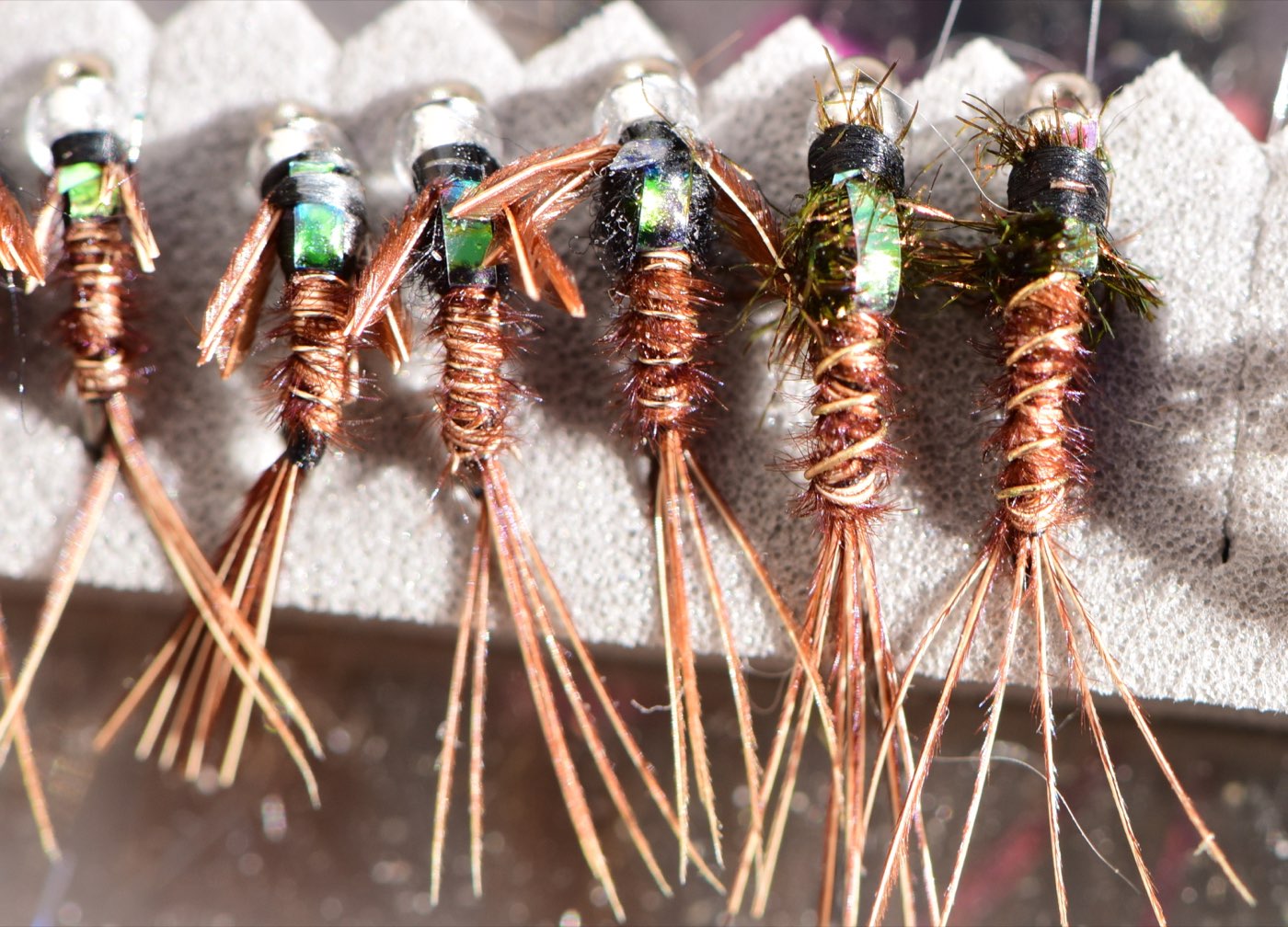
Materials
- Hook: Standard nymph hook, sizes 14–18 (TMC 3761 or equivalent)
- Thread: UTC 70-Denier, rusty brown or tan
- Tail: 6 pheasant tail fibers, shank length
- Rib: Fine copper wire
- Abdomen: Pheasant tail fibers wound forward
- Wing case: 6–8 pheasant tail fibers
- Thorax: 2–3 strands peacock herl
- Legs: Tips of wing case fibers, divided
Tying steps
-
Mount hook in vise. Lay a smooth thread base from eye to bend.
-
Tie in 6 pheasant tail fibers at the bend for the tail; length equal to the hook shank.
-
Tie in a length of fine copper wire at the bend for the rib.
-
Tie in 6 pheasant tail fibers by the tips at the bend for the abdomen, tips pointing toward the bend.
-
Wind the pheasant tail fibers forward in tight touching turns to the 65% point of the shank. Tie off and trim excess.
-
Counter-wind the copper wire rib forward over the body in 5 even turns. Tie off, twist to break the wire cleanly.
-
Tie in 8 pheasant tail fibers by the tips at the 65% point, extending toward the eye, for the wing case.
-
Tie in 2–3 strands of peacock herl at the 65% point. Wind herl forward in touching wraps to build the thorax. Tie off behind the eye.
-
Pull the wing case fibers straight over the thorax and tie down firmly behind the eye. Trim excess.
-
Divide the remaining fiber tips into two equal groups. Sweep each group back as legs, secure with thread wraps, build a small head, whip finish, apply head cement.
Notes
The foundational subsurface trout fly. Sawyer's original tied with copper wire as both thread and rib; the American version adds peacock herl thorax and divided leg tips. Effective year-round wherever mayfly nymphs are present — which is everywhere trout live. A Pheasant Tail with a tungsten bead sinks faster and fishes the lower column in pocket water and fast riffles.
Where this fly works
- Kenai River
- Sipsey Fork
- Lower Sacramento River
- Farmington River
- White Clay Creek
- Chattahoochee River (Buford Dam)
- Henry's Fork
- South Fork of the Snake River
- St. Joseph River
- Cumberland River (Wolf Creek Dam)
- Swift River
- Big Hunting Creek
- Au Sable River
- Root River
- Beaverhead River
- Bighorn River
- Madison River
- Missouri River
- Yellowstone River
- Davidson River
- Missouri River (Garrison Dam Tailrace)
- Niobrara River
- Upper Connecticut River (Trophy Stretch)
- South Branch Raritan River
- Truckee River
- Upper Delaware River
- West Branch Delaware River
- Mad River
- Lower Mountain Fork River
- Deschutes River (Lower)
- Penns Creek
- Wood River
- Chattooga River
- Rapid Creek
- South Holston River
- Guadalupe River
- Green River (below Flaming Gorge Dam)
- Mossy Creek
- Yakima River
- Bois Brule River
- Elk River
- North Platte River — Grey Reef