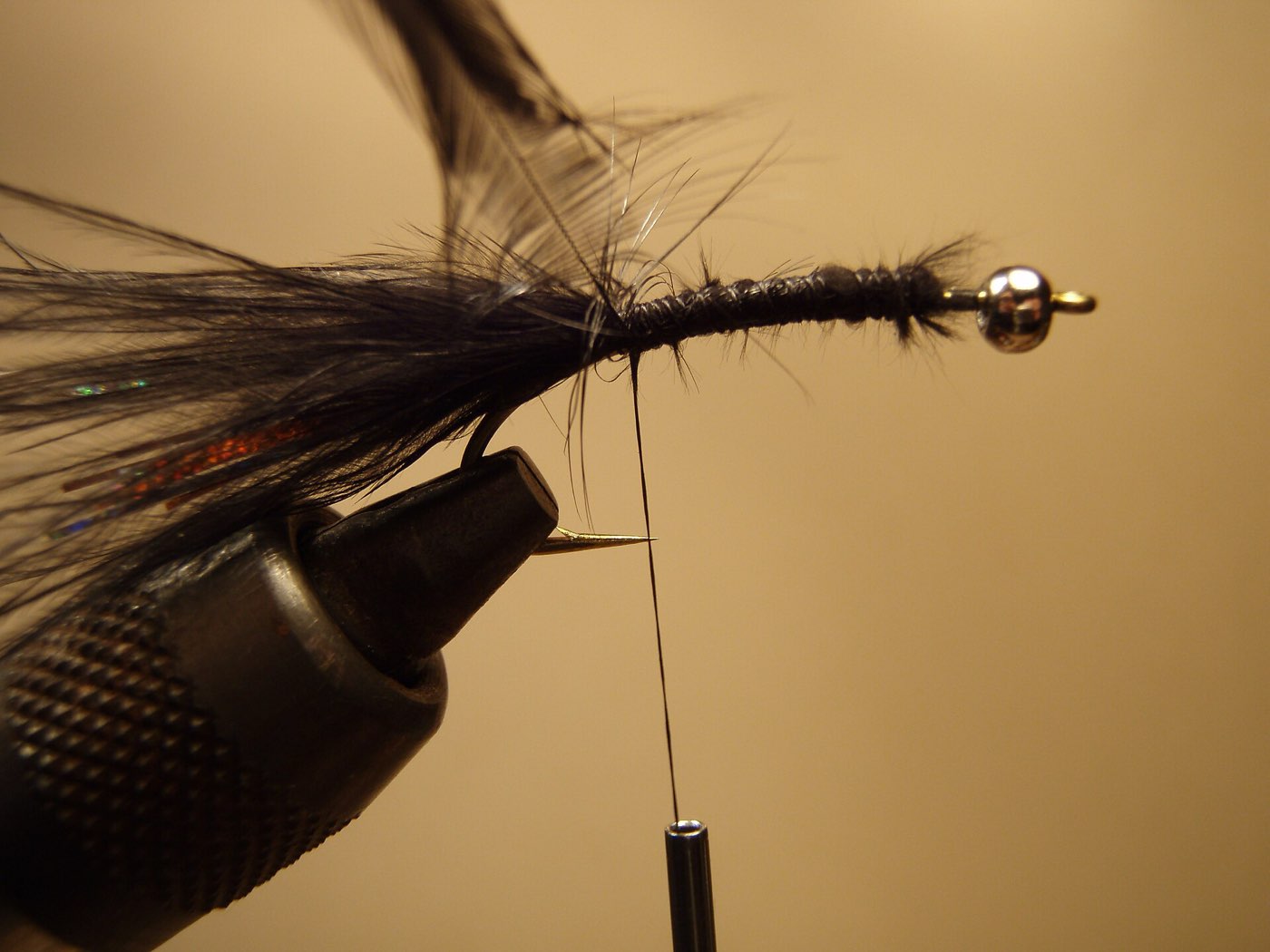
The Renzetti Traveler 2200 costs $274.99 at renzetti.com, or $249.99 street at Mossy Creek Fly Fishing for the same pedestal or C-clamp base, in either hand. It earns that price with a cam lever jaw on a true rotary head that holds one hook range, size 28 to 4/0, without swapping jaws. Buy it once you tie enough flies in enough different hook sizes that a screw jaw's fumbling, and a size 2 ceiling, have started to cost you time. Skip it if you tie occasionally or mostly in one size range: the Renzetti Apprentise or the Regal Medallion get you most of the function for $100 to $125 less.
Spec sheet
- Series: Traveler 2200, Renzetti's true rotary line above the Apprentise
- Jaw mechanism: cam lever with a polyurethane O-ring for wear
- Hook range: size 28 dry fly hooks through 4/0 saltwater hooks, one jaw
- Rotation: true rotary, 360 degrees, hook shank stays on the rotation axis
- Base: C2203 pedestal, 7 inch stem, larger footprint for balance
- Base, alternate: C2202 C-clamp, sold as a separate model
- Handedness: ordered right hand or left hand at purchase
- Body: anodized aluminum, all aluminum parts finished the same way
- Made in Titusville, Florida
- Warranty: lifetime against material and workmanship defects, regardless of original owner
- Warranty service fee: $10 for a covered repair, $15 plus parts and return shipping for a repair outside warranty
- Price: $274.99 at renzetti.com, $249.99 street at Mossy Creek Fly Fishing, September 2026
The cam jaw and small hooks
The Traveler's jaw closes on a cam lever, not a screw or a spring. Lift the lever, set the hook in the jaw, drop the lever, and the cam clamps at whatever gap you left between the jaw faces. That gap is the part you set by hand for the hook in front of you: wide for a size 4 streamer hook, narrow for a size 20 nymph. Once it is set for a size, every hook of that size seats the same way with one motion of the lever.
The failure mode sits at the edge of the range and at the moment you change sizes. A cam preset for a 4/0 streamer hook will not grip a size 26 midge hook correctly, and a cam preset for a size 26 hook will not accept a 4/0 shank at all: you reset the gap by hand every time the hook size changes enough to matter. That is slower than a spring jaw like the Regal Medallion's, which self-adjusts within its rated range and needs no reset between sizes. It is also more precise at the extremes: a correctly set cam holds a size 28 hook with less risk of chipping the jaw tips than forcing an oversized hook into a jaw rated for something smaller, which Regal's own warranty language calls out as a jaw-damaging mistake on its spring vises.
The Apprentise, Renzetti's own entry vise, uses a screw jaw instead of a cam: you turn a screw to widen or narrow the gap, which is slower per adjustment than flipping a lever but does not require Renzetti's cam-specific service parts if the mechanism wears. The Apprentise jaw also stops at size 2, where the Traveler's cam jaw continues to 4/0.
True rotary and what changes at the bench
True rotary means the hook shank sits on the axis the head spins around. Turn the Traveler's rotation knob and the hook stays in place while the vise turns under it, so thread, wire, and material already on the hook wrap evenly without you compensating for the shank swinging off-center. That is the specific thing a wire rib on a Pheasant Tail Nymph and a palmered hackle on a Woolly Bugger need: consistent spacing that does not open up or bunch as the material goes around.
A vise that only rotates around its own stem, the way the Regal Medallion does, moves the whole head through an arc while the hook travels with it off-axis. Regal's own literature reserves true rotary function for its separate Revolution line and describes the Medallion's 360-degree turn as useful for viewing the far side of a fly, not for wrapping material by spinning the vise. The distinction only matters if you actually use the rotation to wrap. A tyer who turns the vise once per fly to check the far side and then wraps by hand gets no benefit from paying for true rotary at all, on the Traveler or anything else.
The base, stem, and travel
The Traveler ships on a C2203 pedestal with a 7 inch stem and a base sized larger than the Apprentise's for balance under load, or as a separate C2202 C-clamp model. Renzetti sells the two as different SKUs rather than one vise with an interchangeable base, so you choose at purchase, not later. The name comes from the arm folding down for a compact travel profile, a detail that matters if the vise leaves the house in a tying kit rather than sitting on one bench.
A C-clamp is lighter and puts the load into the table edge instead of a weighted foot, which makes it the better choice on a dedicated bench with a clean edge. A pedestal sits on any flat surface without clamping to anything, the better choice for a kitchen table or a shared desk. Renzetti asks you to pick a hand, right or left, at the time you order either base, since the jaw and lever position are built for one side.
Finish and wear
The Traveler's aluminum parts are anodized, and the jaws carry a polyurethane O-ring fitted to slow wear at the point where the jaw faces meet. Renzetti backs the vise with a lifetime warranty against material and workmanship defects for whoever owns it, registered or not, with a $10 service fee for a covered repair and a $15 fee plus parts and return shipping for anything outside warranty. That warranty structure, and the fact that Renzetti sells replacement cam jaws as a standalone part, both point at the jaw as the component the company expects to eventually need service, not the anodized body or the pedestal base.
What the manufacturer does not publish is a rotation bearing spec or a rated service interval for the rotary mechanism, so there is nothing here to compare against a stated number the way the jaw's hook range or the warranty fee can be compared. Renzetti's warranty explicitly excludes damage from improper hook placement and from anyone other than an authorized technician opening the vise, which is standard across cam and spring vises alike.
Who should buy the Apprentise or the Regal instead
The Apprentise is the right buy if your hooks stay between size 28 and size 2, since it shares the Traveler's true rotary axis at $110 to $125 less and its screw jaw needs no lever reset between sizes you tie often. It is the wrong buy the moment you need a hook above size 2, since Renzetti caps the Apprentise jaw there and does not sell a wider jaw for that body.
The Regal Medallion is the right buy if you change hook sizes constantly within a single tying session and want the fastest possible hook change, since its spring jaw self-adjusts within its rated range with no lever or screw to reset. It is the wrong buy if wrapping ribbing or hackle by spinning the vise is the reason you are shopping, since Regal's own materials reserve true rotary function for the separate Revolution line and describe the Medallion's rotation as a viewing feature, not a wrapping one.
Compared with
| Vise | Price | What separates it from the Traveler 2200 |
|---|---|---|
| Renzetti Apprentise | $149.99 C-clamp, $164.99 pedestal | Screw jaw instead of cam, hooks size 28 to 2 only, same true rotary axis |
| Griffin Odyssey Spider | $150.15 with C-clamp | True rotating head at 28 to 4/0, screw jaw instead of cam, no anodized finish |
| Regal Medallion | From $220 | Spring lever jaw, fastest hook changes, rotates around the stem, not true rotary |
| Peak Rotary Vise PRV-G2 | $239.95 street | Tool steel jaw, 2/0 down to the smallest hooks made, screw jaw instead of cam |
Verdict
Buy if: you tie enough volume and enough hook sizes that a cam-set jaw and true rotary earn their premium over the Apprentise, or you need a hook range above size 2 in a true rotary vise.
Skip if: you tie occasionally, mostly one hook size, or want the fastest possible hook changes over rotary wrapping. Buy the Apprentise in the first case and the Regal Medallion in the second.
Where to buy: Renzetti Traveler 2200 Vise
Questions people ask
Is the Renzetti Traveler 2200 true rotary?
Yes. The hook shank sits on the axis the head rotates around, so material already wound on the hook stays evenly spaced through a full turn. That is the feature Renzetti's Presentation and Master lines share with the Traveler, and the one the Regal Medallion's stem rotation does not offer.
What hook sizes does the Traveler 2200 hold?
Size 28 dry fly hooks through 4/0 saltwater hooks in one jaw, according to Renzetti's own product page. That is a wider range than the Apprentise, which stops at size 2, and matches the Griffin Odyssey Spider's 28 to 4/0 range.
Should I buy the pedestal or the C-clamp Traveler 2200?
Buy the C2202 C-clamp if you have a dedicated bench with a clean edge to bolt against. Buy the C2203 pedestal if you tie at a table you also use for other things, since it sits on any flat surface without clamping to it. Both are ordered right hand or left hand.
Renzetti Traveler 2200 vs Apprentise, which should I buy?
Buy the Apprentise if your hooks stay between size 28 and size 2 and you want the same true rotary axis for $110 to $125 less. Buy the Traveler if you need hooks above size 2 or tie enough that the cam jaw's speed, once set for a size, outweighs the screw jaw's slower per-hook adjustment.
Related reading
- Best fly tying vise for how the Traveler compares against four other picks under and around $275.
- Best beginner fly tying vise if the Traveler's price is more than you want to spend on a first vise.
- Best fly tying scissors for the other tool that decides how clean your heads and hackle tips come out.
- Zebra Midge pattern for the small-hook tying that tests a jaw's floor.
- Woolly Bugger pattern for the palmered hackle technique that shows what true rotary wrapping is for.
Updated September 16, 2026.

