Buy the Dr. Slick 4 inch All-Purpose scissors first: $19.95 at J. Stockard or $20.00 direct from Fly Fish Food as of September 2026, a 410 stainless blade at Rockwell hardness 45 that covers trout and smallmouth patterns from about size 18 up through a 2/0 streamer. Add the Dr. Slick Razor Arrow at $36.95 once you tie size 20 and smaller with any regularity; its 440 J2 steel runs harder (Rockwell 55) and the arrow tip gets into a whip finish that a 4 inch blade cannot reach cleanly. Left handed tyers should look at the Loon Ergo All-Purpose at $21.00, the only pair here sold with a mirrored left hand version at the same price, and anyone who wants a hand fitted pair that will outlast the vise should look at the Renomed FS1 at $35.00.
The variable that decides this category is pivot tension, not price. A blade gap you can see when you hold the scissors up to a light and close them slowly means the edges are pushing material sideways instead of shearing it, and that gap opens faster on wire ribbing and synthetic fiber than it does on thread or natural feather. Steel hardness and a pivot that holds its setting are the two things that keep that gap closed longest, and every pick below earns its spot on one of those two points.
The picks at a glance
| Pick | Best for | Price (September 2026) | Distinguishing spec |
|---|---|---|---|
| Dr. Slick 4" All-Purpose | The pair to own first | $19.95 to $20.00 | 410 stainless, Rockwell 45, straight or curved tip |
| Dr. Slick Razor Arrow | Fine work below size 18 | $36.95 | 440 J2 stainless, Rockwell 55, 3.75" arrow tip |
| Loon Ergo All-Purpose | Left handed tyers, larger hands | $21.00 | Enlarged loops, mirrored left hand version at the same price |
| Renomed FS1 | Hand fitted premium pair | $35.00 (regular $39.00) | Hand bent stainless bar stock, not die-forged, made in Poland |
How to choose fly tying scissors
Blade alignment and pivot tension
Two hardened edges have to ride flush against each other through the entire stroke, not just at the tips. Hold a pair up to a light source and close the blades slowly: any daylight visible between the edges at any point in that stroke means the scissors are pushing material out of the way instead of cutting it. That gap comes from the screw or rivet at the pivot working loose, and it is the single most common reason a tyer thinks a blade has gone dull when the steel is still sharp.
Dr. Slick builds both the All-Purpose and the Razor around a screw pivot a small flathead can retighten in the field; the Razor's product listing states outright that the tension "allows for loosening or tightening as materials warrant." Renomed takes a different approach: its scissors are not die-forged and then ground to fit, but bent and hand-worked from bar stock into a matched pair, which starts the blades closer to true. Renomed's product pages do not describe a field tension screw, so the alignment you get out of the box is closer to the alignment you keep.
Steel hardness and serration
Dr. Slick publishes the numbers that matter here. The All-Purpose line runs 410 Japanese stainless at Rockwell hardness 45. The Razor line steps up to 440 J2 stainless at Rockwell 55, a harder steel that holds an edge longer under the same cutting load but is also thinner and more prone to chip if you lever it sideways against a heavy hook shank. Both lines carry one serrated blade edge, which grips thread and slick synthetic fiber instead of letting the material slide away from the cutting zone before the blades close on it.
Loon describes the Ergo's blades only as "surgical quality stainless steel," and Renomed's own copy says "the highest quality Stainless steel." Neither publishes a grade or a Rockwell number. That is not a defect, but it means the mechanism you can verify and compare on paper is the Dr. Slick pair, not the other two.
Blade length and tip fineness
A 4 inch blade, the length of the Dr. Slick All-Purpose and the Loon Ergo, gives enough leverage to cut deer hair, bucktail, and foam without the blade becoming unwieldy near a hook eye. Dr. Slick's own description of the All-Purpose calls it "medium length with blades designed for small, medium and large flies," which is accurate for sizes down to about 18. Below that, the tip radius of a 4 inch blade is often too wide to get between the hook shank and a half-finished thread head without the blade body brushing material you want to keep.
That is the reason the Razor line comes in three lengths: 3.75 inches with an arrow tip (SR37G), 4 inches (SR4G), and 4.5 inches for hair work (SR45G). The Arrow is the one to buy for small hooks; its narrower point trims a tag end at the base of a whip finish on a size 22 without touching the head cement. Renomed's FS1 is built to the same idea: a small-profile, straight-blade pair "ideal for small and medium wet or dry flies," where the sibling FS3 (11 cm overall, a 2 cm blade) is sized up for deer and reindeer hair. Longer is not better here; it is a trade against what the tip can reach.
What wire and synthetics do to an edge
Thread and natural feather are the easiest materials in the box. Wire ribbing (0.15 to 0.25 mm copper or lead) and synthetic fiber like Krystal Flash or rubber leg material dull a blade fastest, because wire work-hardens the edge with every closed cut and synthetic fiber tends to skate rather than shear unless the serration bites first. A harder steel (the Razor's Rockwell 55 over the All-Purpose's Rockwell 45) resists that wear longer, which is the practical argument for a second, dedicated pair rather than running one blade through everything on the bench. Cutting wire with a fine-tip scissors instead of the all-purpose pair is the fastest way to chip a $37 blade.
Left-hand models
Loon is the only maker here that sells a mirrored left-handed scissor at the same price as the right-handed version: the Ergo Left Handed All-Purpose Scissors, $21.00, described on Loon's own product page as "the first pair of scissors designed for left-handed fly tyers," with the blades reversed rather than just the handle. Dr. Slick's current scissors catalog, which runs from the Arrow through the Preparation model, lists no left-handed option in either the All-Purpose or Razor lines. Renomed's fly tying page does not list one either. If you tie left handed and have been working around a right-handed pivot, the Loon Ergo is the one pair on this list built to solve that specific problem rather than just being ambidextrous enough to tolerate.
Dr. Slick 4" All-Purpose Scissors: the pair to buy first
Specs:
- Blade length: 4 inches (SAP4G straight, SAPC4G curved)
- Steel: 410 Japanese stainless, Rockwell hardness 45
- Blade: one edge serrated, gold loops
- Pivot: screw joint, field adjustable
- Tip style: straight or curved, sold separately
- Left hand: not offered
- Price: $19.95 at J. Stockard, $20.00 at Fly Fish Food, September 2026
This is the scissors most fly tyers reach for on every fly, more than the bobbin and more than the vise. The 410 stainless blade at Rockwell 45 is soft enough to resharpen easily and hard enough to hold an edge through a session of deer hair, bucktail, and fine wire ribbing without the blade alignment opening up. Dr. Slick sells no consumer price on its own site (the company runs a dealer network, not direct retail), so the $19.95 to $20.00 range above comes from two retailers rather than the manufacturer, the one place in this article where that substitution applies.
The limit is the blade length against small hooks. A 4 inch blade puts real width behind the tip, and that width starts to get in the way once you are trimming a tag end against a size 20 hook eye or working a whip finish under a bead. Nothing on a standard trout fly outruns the blade's capacity to cut; the capacity to fit into a tight space is a separate question, and the answer below size 18 is usually no.
Buy if: This is your first pair, you tie sizes 18 and larger, or you want one scissors that handles most of what crosses a trout and smallmouth bench.
Skip if: You tie size 20 and smaller regularly and already know the tip is too wide for that work.
Where to buy: Dr. Slick 4in All-Purpose Scissors
Dr. Slick Razor Arrow Scissors: fine work below size 18
Specs:
- Blade length: 3.75 inches (SR37G Arrow); also sold at 4 inches (SR4G) and 4.5 inches (SR45G, Hair)
- Steel: 440 J2 stainless, Rockwell hardness 55
- Blade: one edge serrated, gold loops, straight blade only
- Pivot: adjustable tension screw
- Tip style: Arrow (fine point)
- Left hand: not offered
- Price: $36.95 at J. Stockard, September 2026
Dr. Slick's own copy calls the Razor line "possibly the sharpest fly tying scissors ever created," and the 440 J2 steel at Rockwell 55 backs that up: it is a full 10 points harder than the All-Purpose's 410 stainless, meaning a longer working edge between sharpenings and a thinner grind that reaches places the All-Purpose cannot. The Arrow profile is built for that; at 3.75 inches with a narrow point, it clears a hook eye and a half-finished thread head on a size 22 without the blade body touching material you want to keep.
The tradeoff is the same hardness that holds the edge. A 440 J2 blade is more brittle than 410 stainless, and the thin Arrow tip is the wrong tool for cutting deer hair heads, foam sheets, or anything that loads the blade sideways rather than straight through. Dr. Slick sells no curved option in the Razor line, straight blade only, so tyers who prefer a curved tip for spun-hair trimming need to look elsewhere for that specific cut.
Buy if: You tie size 20 and smaller with any regularity and want a dedicated pair for thread cuts and fine trims that will not chip on wire.
Skip if: You cut deer hair, foam, or heavy synthetics with the same pair; that load belongs on the All-Purpose blade.
Loon Ergo All-Purpose Scissors: the left hand and big hand pick
Specs:
- Blade length: 4 inches
- Steel: surgical quality stainless (grade and hardness not published)
- Handle: enlarged ergonomic finger and thumb holes, powder coated grip
- Build: hand tuned in the USA
- Left hand: yes, Ergo Left Handed All-Purpose Scissors, same price, blades reversed
- Price: $21.00 at loonoutdoors.com, September 2026
Loon's real differentiator is the loops, not the blade. The enlarged finger and thumb holes are built for hands the standard Dr. Slick loop size pinches during a long session, and the powder-coated grip stays put when fingers are damp from head cement or floatant. At $21.00 it sits a dollar above the Dr. Slick All-Purpose and covers the same range of work: Loon markets it as a "quiver-of-one" pair for everything from stripping a hide to trimming one stray fiber.
What Loon does not publish is the number that would let you compare it against the Dr. Slick pairs directly: no steel grade, no Rockwell hardness, no confirmation of a field-adjustable pivot. That is not disqualifying, but it means the case for the Ergo rests on fit and the left-handed option, not a steel spec. The left-handed version is real and rare: Loon calls it the first scissors built specifically for left-handed tyers, with the blades reversed rather than the handle alone, at the identical $21.00 price.
Buy if: You tie left handed, your hands are larger than the standard loop size fits, or you want a US hand-tuned pair without spending Razor money.
Skip if: You want a published steel hardness number to compare against the Dr. Slick line before you buy.
Renomed FS1: the hand-fitted premium pair
Specs:
- Blade length: small profile (sibling FS3 measures 11 cm overall with a 2 cm blade)
- Steel: stainless, hand tempered, polished, and sharpened; grade not published
- Build: hand bent from bar stock, not die-forged; family factory in Poland, in operation about 40 years by the company's own account
- Blade type: straight, razor edge
- Left hand: not listed
- Price: $35.00 sale ($39.00 regular) at renomedusa.com, September 2026
Renomed's pitch is the manufacturing process, and it holds up on inspection. The company states plainly that it does not forge its scissors: each pair starts as a bar of stainless steel that is bent, worked, and hand-fitted by a craftsman rather than stamped and ground on a line. That starts the two blades closer to true alignment than a mass-produced pivot does, without a field tension screw to compensate. The FS1 is sized for small and medium wet and dry fly work, the same range the Dr. Slick All-Purpose covers at roughly half the price.
The tradeoff is what you are paying for and what you are not. Renomed publishes no steel grade or Rockwell number, no adjustable pivot, and the FS1's own blade length is described only as "small profile" rather than a stated measurement, unlike the sibling FS3, which does carry a spec table. You are buying hand fit and finish, not a documented spec sheet, and a scissors that will need a professional sharpening rather than a home stone once the edge finally goes.
Buy if: You want a hand-fitted pair from a maker that has built scissors the same way for decades and you tie small to medium patterns.
Skip if: You want a published steel hardness figure or a field-adjustable pivot at this price.
Which one to buy
Start with the steel, because it is the number you can actually compare. Dr. Slick publishes Rockwell hardness for both of its lines: 45 for the All-Purpose, 55 for the Razor. Loon and Renomed do not publish a figure for the Ergo or the FS1, which does not mean their steel is worse, only that you cannot check it against a number before you buy. For a Mid-Atlantic trout angler tying two hundred flies a year across sizes 24 to 6, the Dr. Slick All-Purpose at $19.95 to $20.00 covers the range without a spec you have to take on faith.
The second purchase depends on which limit you actually hit. If the All-Purpose tip is too wide once you are under size 20, the Razor Arrow's 3.75 inch point and Rockwell 55 edge solve that specific problem for $36.95. If you tie left handed, nothing else here matches the Loon Ergo's mirrored left-hand build at $21.00. If you want a hand-fitted pair that starts true without a tension screw and you are willing to skip a published hardness number, the Renomed FS1 at $35.00 is the one built that way.
For the typical reader of this site, the Dr. Slick 4 inch All-Purpose is the first and, for most tying, the only pair you need. Buy the Razor Arrow the day a size 20 midge makes you fight the tip instead of the thread; that is the actual signal, not a calendar date or a fly count.
Questions people ask
Do I need two pairs of fly tying scissors?
Most tyers eventually own two: an all-purpose pair for deer hair, foam, and wire, and a fine-tip pair for hooks size 20 and smaller. Cutting wire and heavy synthetics with a fine-tip blade is the fastest way to chip it, so keeping the two jobs on separate steel protects the expensive edge.
What is the difference between Rockwell hardness numbers on scissors?
Rockwell hardness measures how much a steel resists a small indenter; a higher number holds an edge longer under the same cutting load but chips more easily under sideways stress. Dr. Slick's Razor line at Rockwell 55 outlasts the All-Purpose line's Rockwell 45 on synthetic fiber and thread, but the All-Purpose is the tougher choice for deer hair and foam.
How do I know my scissors need the pivot tightened instead of sharpened?
Hold the scissors to a light source and close them slowly. If you see daylight between the blades anywhere in the stroke, the pivot has worked loose, not the edge gone dull. A small flathead screwdriver and a quarter turn on the pivot screw, where the model has one, usually fixes it.
Are left-handed fly tying scissors actually different from just using scissors backward?
Yes. A true left-handed pair like the Loon Ergo Left Handed All-Purpose has the blades themselves reversed, not just a mirrored handle, so the cutting geometry matches how a left-handed tyer's fingers actually close the loops. Using a right-handed pair left handed works but fights the blade angle on every cut.
Related reading
- The vise that decides what you can tie before the scissors matter: best fly tying vise
- The step-up vise most readers of this site actually buy: Renzetti Traveler 2200 review
- The pattern that tests a fine-tip scissors on small hooks: Zebra Midge
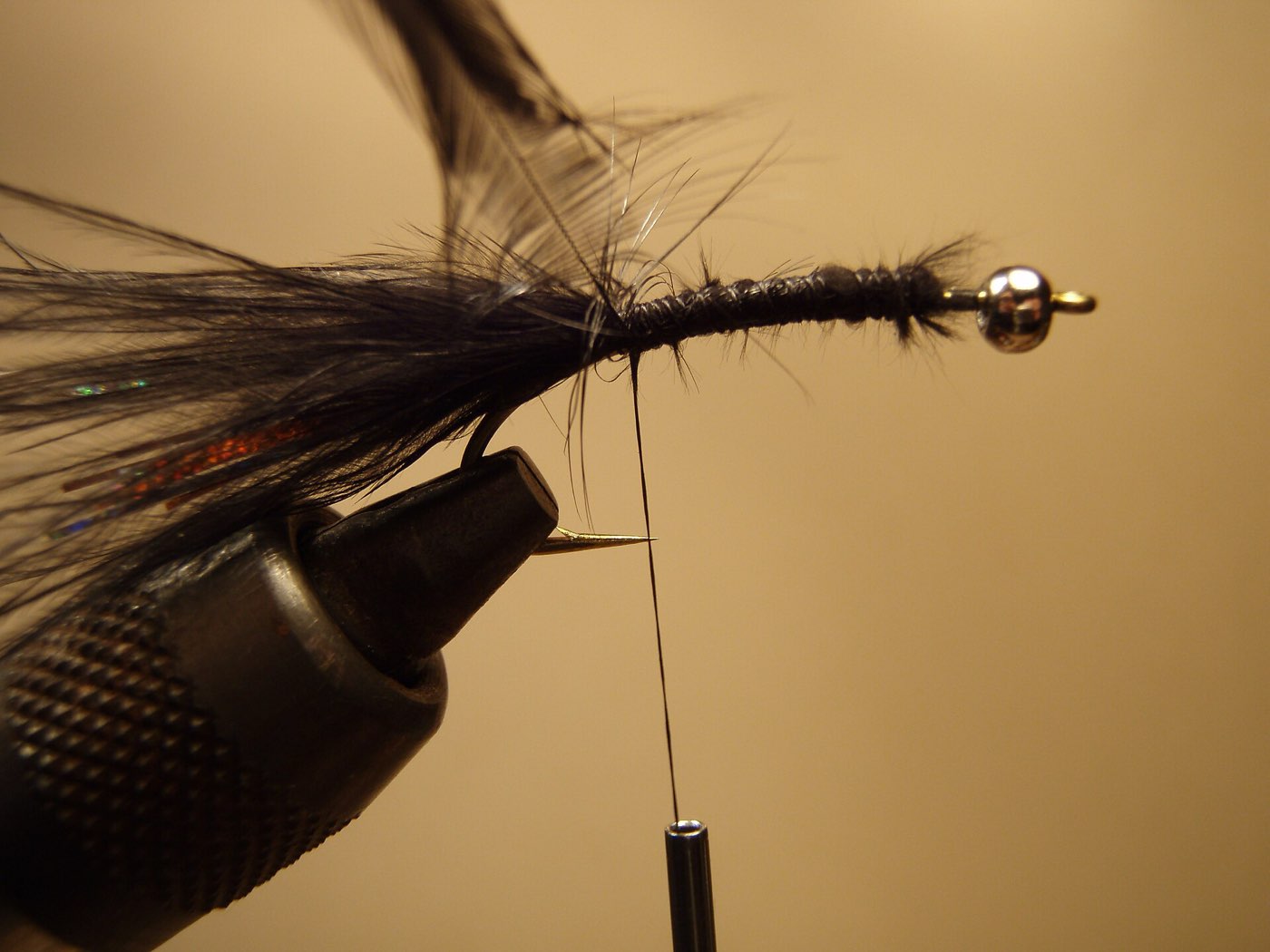
- The pattern that puts a wire rib and heavy hackle through the same pair: Woolly Bugger
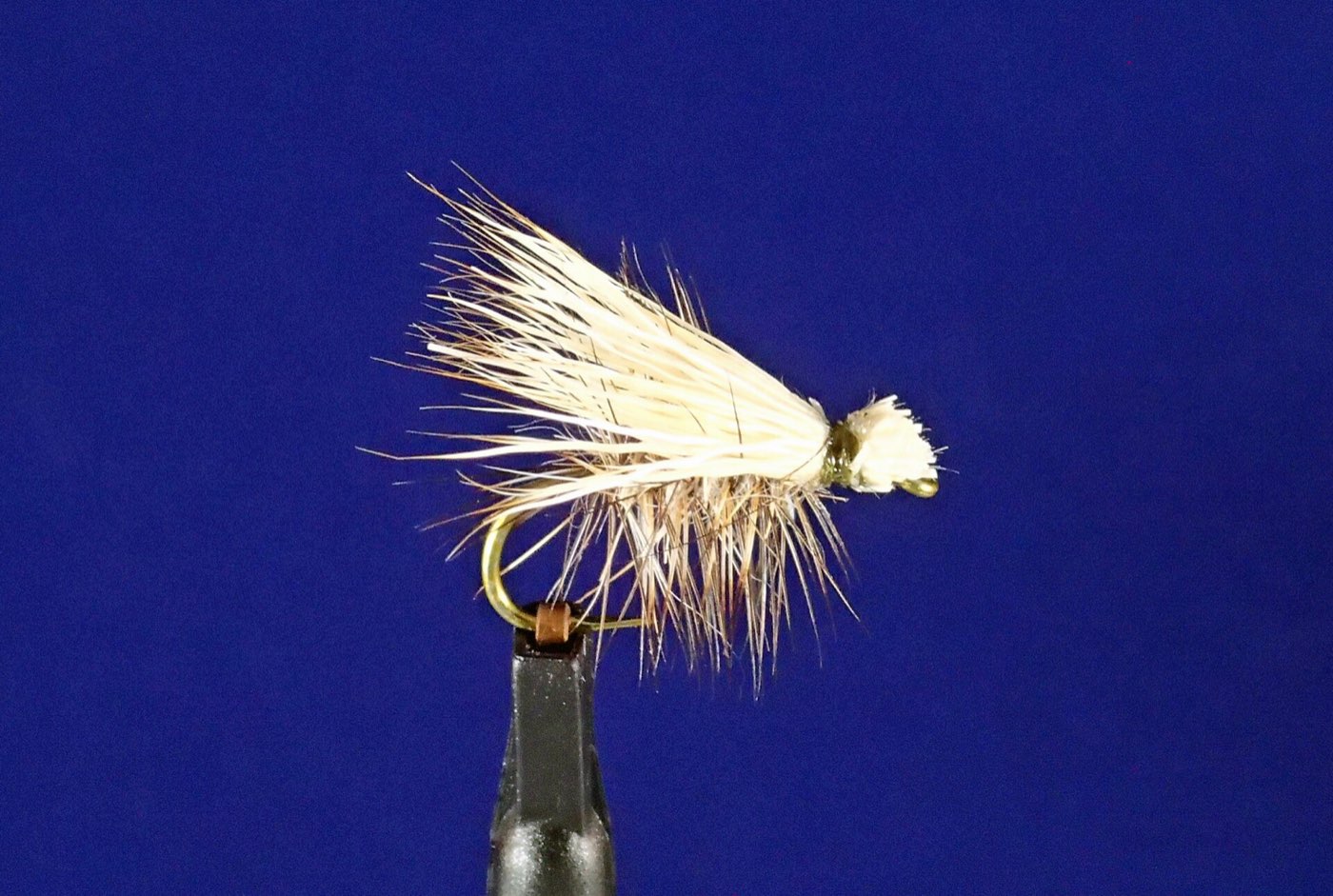
- The pattern where a curved or fine tip trims a spun deer hair head: Elk Hair Caddis
Updated September 25, 2026.