Quick reference
| Field | Value |
|---|---|
| State / region | Montana, southwest Montana near Dillon |
| Species | Brown trout, rainbow trout (some brook trout in the system) |
| Best months | June–August; late June through early July for the best dry-fly windows |
| Water type | Tailwater below Clark Canyon Reservoir |
| Difficulty | Advanced — narrow, brushy, technical water where exact drift, depth, and lane selection decide the day |
| Wading | Possible but deliberate; slick, channelized water rewards strong-traction boots and a staff |
Why fish here
The Beaverhead is a cold, regulated tailwater flowing north out of Clark Canyon Reservoir toward Dillon, and it has built its reputation on a specific promise: big, educated trout in a river that punishes casual fishing. Controlled discharge and heavy subsurface insect life — midges, small mayflies, caddis, and sowbug-type crustaceans — grow large browns and rainbows, and the consistent flows mean the fishery does not blow out the way Montana's freestone rivers do during runoff. The trade-off is that the fish see a great deal and forgive very little.
This is a nymph-first river. Small midge, mayfly, caddis, and sowbug-style patterns produce most of the year, fished with exact depth control in narrow lanes between weed beds and brushy banks. When conditions line up — overcast skies, a strong PMD or caddis emergence, yellow sallies in midsummer — the Beaverhead offers real surface feeding, but the dry-fly windows are brief and the fish stay selective inside them. Success here usually depends on precise drift, depth, and lane selection rather than covering lots of water, which is the opposite of how most anglers fish the state's bigger, freer-flowing rivers.
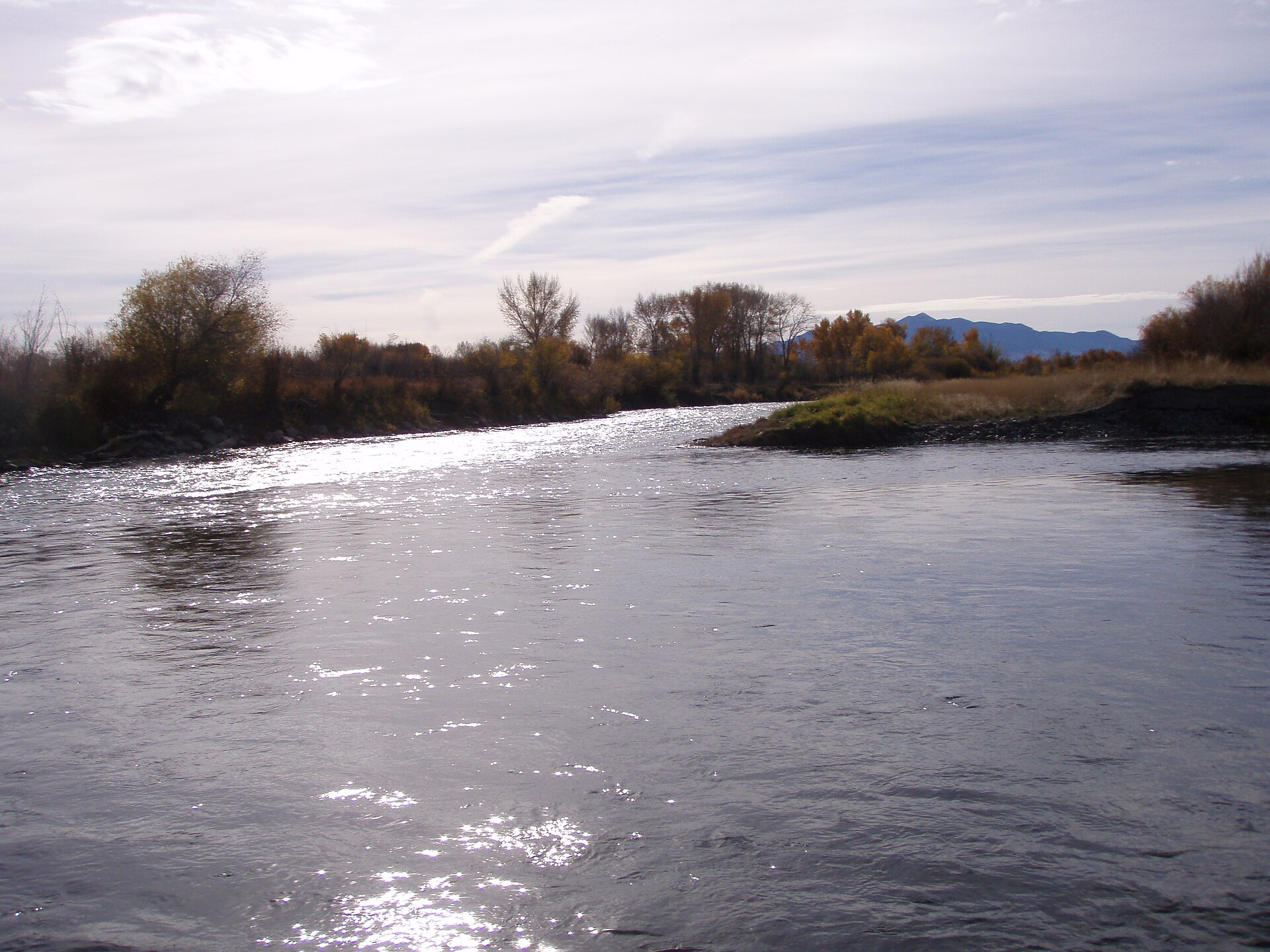
That narrow, brushy, technical character is exactly what distinguishes the Beaverhead. Anglers who want open casting room and eager fish have better options nearby; anglers who want a chess match with heavy trout come here.
The river, section by section
Clark Canyon Dam to High Bridge
Access: Clark Canyon Dam via the Exit 44 access, and the High Bridge area at the reach's lower end. Character: The upper tailwater — coldest, most regulated flows, generally narrower water with riffle-run seams and productive edges along softer inside water and banks. Heavy subsurface structure; wading is possible but deliberate and technical. Species mix: Brown and rainbow trout, with some brook trout in the system; a trout-focused fishery throughout. Crowding: The easy access makes this the busiest water — weekends and hatch periods draw crowds, weekdays run lighter. Notable hatches: Early-season midges, BWOs, and small mayflies. Nymphing dominates most days; dry-fly chances come with overcast weather and hatch windows.
The water closest to the dam is where the tailwater character is strongest: stable temperatures, dense small-bug biomass, and fish that hold in defined seams and eat with precision. The practical approach is to pick a seam, get the weight and depth right, and work it thoroughly — the soft inside edges and bank lines hold more fish than the obvious mid-river current. This reach fishes through the cold months of the open season better than anywhere downstream because of the regulated flows.
High Bridge to Barretts
Access: High Bridge at the top, Barretts at the bottom. Character: Classic mid-river Beaverhead — brushy banks, riffles, runs, weed beds, and deeper holding slots. Still relatively narrow and technical; strong lane-fishing, with pocket-by-pocket presentation usually the best approach. Species mix: Good numbers of brown and rainbow trout. Crowding: One of the most popular stretches because it blends dependable nymphing with the river's better dry-fly potential; weekends and prime hatch times are busiest. Notable hatches: PMDs, caddis, crane flies, hoppers, and yellow sallies gain importance here from late spring through summer.
If the trip allows one stretch, this is the one. The research sources point to High Bridge–Barretts as the best combination of insect variety and surface potential on the river, particularly during the late-June-through-early-July PMD and caddis period. The brushy banks that make casting awkward are also why the fish are there — undercut, shaded, food-rich edges that reward an angler willing to fish tight to cover and accept some lost flies.
Barretts to Dillon
Access: Dillon-area access points and the Interstate 15 exits near Dillon. Character: The lower-town reach — mixed riffles and runs, softer glides, and pockets holding fish along weed lines and banks. Wading is good at moderate flows. Species mix: Brown and rainbow trout dominate. Crowding: Easily reached and steadily fished; proximity to town means evening sessions and hatch periods draw extra anglers. Notable hatches: Caddis and PMDs, BWOs in the shoulder seasons, terrestrials and yellow sallies later in summer.
Convenience defines this water. It is minutes from Dillon, which makes it the natural choice for a short session — an evening caddis window after a travel day, or a few hours of hopper-dropper work along the weed lines in August. The steady local use means the fish are no less educated than upstream, so the same standards apply: tight lanes, correct depth, and drifts without drag.
Private-water lower Beaverhead reaches
Access: Private parcels only — access depends on guides or landowners. Character: Varies by parcel but generally the same narrow, technical tailwater profile: deep seams, weed beds, and bank structure. Species mix: Primarily trout. Crowding: Typically light where access is controlled, though guide traffic can be significant on the productive parcels. Notable hatches: The standard Beaverhead profile — midges, BWOs, PMDs, caddis, and summer sallies.
The lower river's private water is worth knowing about mainly as context: some highly productive reaches are reachable only through guided arrangements or landowner permission. For a do-it-yourself trip, the public framework of Clark Canyon Dam, High Bridge, Barretts, and the Dillon-area accesses defines the fishable map, and floating between legal put-ins is the standard way to cover water between them.
Hatches and seasons
| Months | Hatches | Flies |
|---|---|---|
| Mar–Apr | Midges and Blue-Winged Olives are the main dry-fly chances; subsurface midge and small mayfly nymphs remain the core | Zebra Midge #18–22, Pheasant Tail #16–20, Copper John #16–20, BWO emergers and duns #18–22 |
| May–Jun | Caddis build through late spring; Pale Morning Duns become a major hatch by late June; crane flies matter in some reaches | PMD Sparkle Dun #16–20, CDC PMD Dun #16–20, Elk Hair Caddis #14–18, X-Caddis #14–18, crane fly patterns |
| Jul–Aug | Yellow sallies, caddis, terrestrials, and opportunistic dry-fly windows; nymphing still delivers the most consistency | Yellow Sally patterns #14–18, hoppers #8–12, caddis dries #14–18, small nymphs and midges |
| Sep–Oct | Late-season caddis, BWOs as weather cools, persistent midges; quality often holds up before closures | BWO duns and emergers #18–22, midge patterns #20–24, small caddis #16–18 |
Recommended flies (by season)
| Season | Top patterns | Why |
|---|---|---|
| Spring | Zebra Midge, Pheasant Tail, Copper John, BWO nymphs and emergers, small streamers where legal and conditions favor them | Spring is predominantly a subsurface game — cold tailwater conditions and selective fish make small, precise patterns the productive choice |
| Summer | PMD Sparkle Dun, CDC PMD Dun, Elk Hair Caddis, X-Caddis, Yellow Sally patterns, hopper-dropper rigs | The best window for meaningful dry-fly fishing, built on PMDs and caddis with yellow sallies and terrestrials adding topwater action late in the season |
| Fall | Midges, BWOs, small caddis, Pheasant Tail variants, sowbug/scud-style nymphs | Cooling water often improves daytime fishing as trout return to dependable tailwater food sources after summer heat and pressure |
Gear notes
A 9-foot 5-weight is the all-around choice for dries and lighter nymphing; a 9-foot 6-weight earns its keep with larger nymph rigs, streamers, and stronger current. Fish a floating line with a roughly 9-foot tapered leader, and size tippet to the job: 5X–6X for selective dry-fly fish, 3X–4X for heavier nymph rigs. The river can be slick, technical, and channelized, so wading boots with strong traction and a wading staff are worth carrying even for anglers who normally skip them.
Logistics
- Regulations: Montana Fish, Wildlife & Parks manages the river, and the reach-specific rules demand a current FWP booklet — sources conflict on details, citing both an October 1–March 31 closure on much of the river and an April 1–September 30 season, along with possible catch-and-release segments. Two sections also run weekend rotational closures for boats and out-of-area float anglers, while walk-in fishing may remain open during those closures — verify whether a given section is open to floating or bank fishing on the day. A Montana license is required (nonresident licenses available through FWP). No specific slot or bag limits are stated here because the research could not confirm them; regulations change annually, so check FWP before the trip.
- Access points:
- Clark Canyon Dam — upper-river access below the reservoir outlet; the standard tailwater reference point
- High Bridge — named access dividing the upper and middle river
- Barretts — commonly referenced mid-river access and reach boundary
- Dillon — town-area accesses tied to nearby highway exits on the lower river
- Nearest towns: Dillon, Twin Bridges, Divide, Wisdom
- Closest gauge: USGS 06018500 — Beaverhead River near Twin Bridges, MT
When NOT to fish here
The seasonal closure is the first check: sources cite closure of much of the river outside April 1–September 30, so confirm the current FWP dates for the specific reach before planning anything in the shoulder months. In summer, afternoon heat can bring hoot-owl restrictions or outright heat-related closures, and high water temperatures degrade the fishing well before any formal restriction lands — mornings are the play in hot spells. Runoff matters less here than on freestone rivers because the discharge is regulated, but crowding is a legitimate reason to adjust plans: weekends during the PMD and caddis windows put a lot of boats and anglers on a narrow river.
Where to fish next
- Fly Fishing in Montana — the full state guide
- Big Hole River — the freewheeling freestone counterpart just over the divide, at its best when the Beaverhead crowds up
- Ruby River — a smaller nearby valley river offering quieter technical fishing in the same corner of southwest Montana