Quick reference
| Field | Value |
|---|---|
| State / region | Maine, north-central Maine below Ripogenus Dam, west of Baxter State Park |
| Species | Wild landlocked Atlantic salmon, wild brook trout |
| Best months | May–June, September–October |
| Water type | Tailwater |
| Difficulty | Intermediate to advanced — big, powerful water with limited safe wading |
| Wading | Hazardous and limited; much of the river is boat water with Class IV–V rapids |
Why fish here
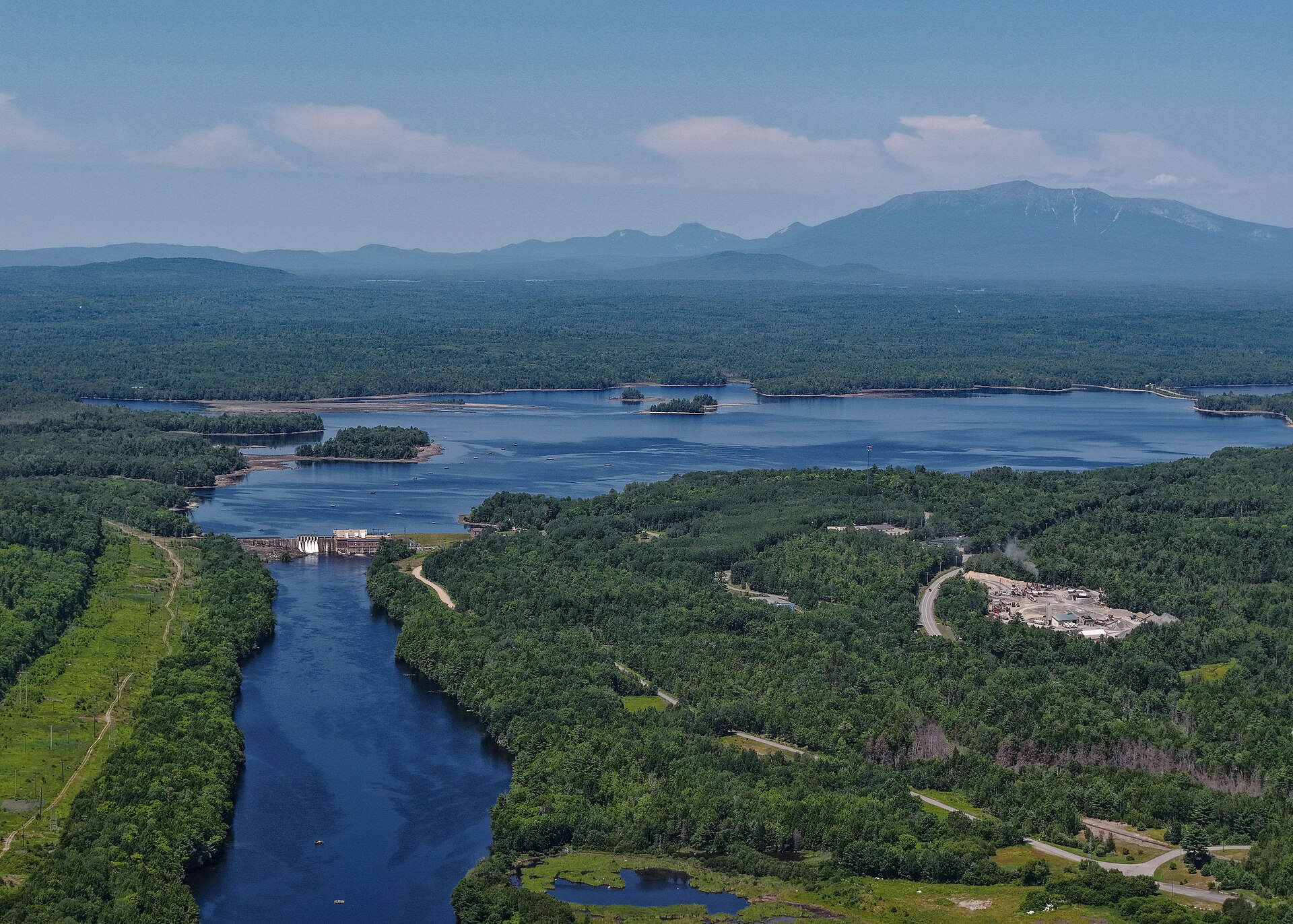
The West Branch Penobscot below Ripogenus Dam is a large, heavily regulated North Woods river that fishes like a cold tailwater, with dam releases holding water temperatures down through the season. It is one of Maine's premier wild landlocked Atlantic salmon and brook trout fisheries, with roughly 11 miles of big-river water running from the dam down to Abol Bridge under the Penobscot River Corridor and views of Katahdin. Anglers drive many hours to reach it, and the reason is simple: strong, wild salmon that can approach or exceed the mid-20-inch class, plus native brook trout, in water that stays cold and productive from ice-out through fall.
What sets the West Branch apart from more heavily stocked regional rivers is the combination of a largely wild fish population and strict regulations — fly-fishing-only and catch-and-release rules on key reaches maintain both fish quality and a traditional Maine salmon experience. The forage base does the rest. Cold releases support a prolific smelt population, and the insect calendar layers Hendricksons, a famous extended caddis hatch, and season-long stonefly activity on top of the baitfish bite. The result is consistently good fishing from ice-out through early summer and again in fall, when salmon stage ahead of spawning.
This is not, however, forgiving water. Powerful flows, deep pools, and long riffles define the river, and much of the reach carries Class IV–V whitewater. The famous wade spots — Big Eddy above all — concentrate both fish and anglers precisely because safe shore positions are scarce.
The river, section by section
Ripogenus Dam to Big Eddy
Access: Golden Road, with carry-in access off gravel spurs noted by Maine IFW and the Penobscot River Corridor; put-ins and take-outs for guided floats center on Ripogenus Dam and established Corridor access points reached by logging roads rather than developed ramps. Character: Ripogenus Gorge and Class V rapids through narrow canyon water with deep pools; heavy gradient, strong currents, big runs and pool tailouts. Species mix: Wild landlocked salmon are the primary fishery, with wild brook trout in softer edges and eddies. Crowding: Guide and private-boat traffic during the smelt run and peak hatches; weekdays and shoulder seasons stay relatively quiet. Notable hatches: Smelt run from late April or early May; Hendricksons in May into June; strong caddis from June onward; stoneflies through the season.
Wading is extremely limited in this reach and effectively impossible in many sections — the gorge is boat water, fished from inflatable rafts or drift boats working seams, pocket water, and pool edges where salmon hold. Salmon concentrate in pool tailouts, heavy riffles, and current seams; brook trout favor the softer margins. The early-season smelt run is the defining event here, driving aggressive streamer eats before the mayfly progression starts. If you want to fish this reach properly, a guided float is the practical answer.
Big Eddy Area
Access: Trails from logging roads off the Golden Road, or by floating down from Ripogenus Dam; some sections are managed as walk-in only under Penobscot River Corridor rules. Character: A large, classic tailout and eddy below fast water — long drift lanes, seams, and depth changes, with strong but more manageable currents than the gorge above. Species mix: A signature holding area for landlocked salmon, which stack in the eddy and tailout to feed on smelt, emergers, and drifting insects; brook trout hold in softer seams and along the margins. Crowding: The most popular named spot on the river — busy during the smelt run, June hatches, and the fall salmon period, especially on weekends. Notable hatches: Hendricksons in late May and early June; the river's famous caddis hatch starting around the first week of June and running well into July.
Big Eddy is where the West Branch becomes accessible to the shore angler, within limits. There are established wade positions, but the flow is powerful and the substrate uneven, so caution and a staff are warranted even here. The caddis hatch is the headline: size 14–16 pupae early in June giving way to size 18 darker caddis later in the month, with emergers fished just under the surface producing during evening rises. During the Hendrickson window, salmon feed selectively on duns and spinners — comparaduns and spent-wing patterns earn their place. Early mornings, evenings, and mid-week visits buy elbow room; in prime conditions, expect company.
Big Eddy to Abol Bridge
Access: Golden Road corridor, with carry-in points off gravel roads and designated Penobscot River Corridor access sites; Abol Bridge, where the Appalachian Trail crosses the river, marks the lower end of the famous reach. Character: Long, broad riffles and runs with interspersed pools; gradient moderates but flows stay powerful, so wading is limited to edge water and select bars. Species mix: Wild landlocked salmon remain the primary target, moving with seasonal forage and spawning; brook trout can be a significant part of the catch in riffle and pocket water. Crowding: Pressure concentrates at known access points and pools during the peak June–July caddis hatches and fall; mid-river spots see moderate pressure, especially weekdays. Notable hatches: Hendricksons in May–June, then a mayfly progression and caddis hatches that can carry into fall; stonefly activity throughout the season.
This is the West Branch at its most classic — big-river dry fly and nymph water during mayfly and caddis emergences, with enough width and structure that fish spread out through runs and pools. Many anglers still choose to float it, but the moderated gradient opens more edge wading than the gorge allows. Stoneflies matter here: they hatch throughout the season and can pull the river's biggest fish to the surface or into fast runs for a large meal. Evening caddis and mixed mayfly activity provide the most consistent dry-fly fishing in the riffles when flows are stable.
Hatches and seasons
| Months | Hatches | Flies |
|---|---|---|
| Apr–May | Smelt run; early mayflies including Hendricksons; mixed early caddis | Smelt streamers (Grey Ghost, Black Ghost, Nine-Three, Woolly Bugger #2–8); Hendrickson Comparadun #12–14; beadhead nymphs (Prince, tungsten generics) #12–16 |
| Jun–Jul | Major caddis (light tan early, darker black later); continuing mayflies; stoneflies | Caddis pupa/emerger #14–18; Elk Hair Caddis #14–18; golden-brown caddis wets; stonefly nymphs and dries #8–12; leeches and streamers for deep slots |
| Aug–Sep | Smaller caddis, mixed small mayflies, residual stoneflies, terrestrials | Darker caddis dries/emergers #16–18; parachute and comparadun mayflies #16–18; Stimulator #10–16; hoppers and beetles #10–14 |
| Oct | Fall caddis and mayflies; spawning-season streamer bite | Large streamers (Grey Ghost, Black Ghost, Woolly Bugger, leeches) #2–8; caddis and mayfly emergers #14–16 on warm spells; heavy tungsten nymphs |
Recommended flies (by season)
| Season | Top patterns | Why |
|---|---|---|
| Spring | Grey Ghost, Black Ghost, Nine-Three, Woolly Bugger, Golden Retriever, stonefly nymphs, Hendrickson Comparadun, beadhead Prince Nymph, Stimulator with nymph dropper | Salmon key heavily on smelt during and after ice-out — traditional Maine streamers and modern buggers, stripped or swung through pools and runs, are the early game. As May warms, Hendricksons and early caddis start selective feeding that calls for accurate duns, emergers, and nymphs fished under an attractor dry. |
| Summer | Elk Hair Caddis, caddis pupa/emerger, small black caddis dries, stonefly dries, generic nymphs, attractor dry/dropper rigs | The June–July caddis hatch can be intense, and fish often respond best to pupae and emergers just under the surface, backed by high-floating caddis dries in the right size and shade. Stoneflies and mixed mayflies keep larger fish looking up, and dry/dropper rigs cover varied riffle-and-run water. |
| Fall | Large smelt-style streamers, heavy beaded leeches, stonefly nymphs, caddis wets and emergers | Pre-spawn salmon turn aggressive, and big, flashy streamers probing deep pools and strong seams usually produce the largest fish. Stonefly nymphs and caddis emergers still take fish when insects are active. |
Gear notes
A 9-foot 6-weight is the right tool for this river — big water, wind, and strong salmon — with a 5-weight reserved for calmer dry-fly conditions. Carry a weight-forward floating line plus a sink-tip or sinking leaders for streamer work in deep pools and heavy runs. Leaders run about 9 feet to 4X for nymphs and streamers, 5X for dries, stretching to 9–12 feet for deep presentations from shore at spots like Big Eddy. Where wading is possible at all, sturdy boots, a wading staff, and breathable waders are essential; in the more hazardous reaches, plan on fishing from a raft or drift boat rather than testing the current on foot.
Logistics
- Regulations: Managed by the Maine Department of Inland Fisheries and Wildlife (MDIFW). Special rules apply from Ripogenus Dam to Abol Bridge, including fly-fishing-only sections and strict catch-and-release for landlocked salmon on parts of the upper river. Lead-free sinkers and jigs are required within the Penobscot River Corridor, and some sections are walk-in or carry-in only. The Golden Road is a private logging road with daily access fees collected at checkpoints — confirm road-use requirements before the drive. Regulations change annually; check current MDIFW rules before fishing.
- Access points:
- Ripogenus Dam access — primary upper-river put-in used by guides, reached via the Golden Road within the Penobscot River Corridor
- Big Eddy — shore and boat access via trails from logging roads off the Golden Road, or by floating down from the dam
- Abol Bridge — lower boundary of the classic reach, where the Appalachian Trail crosses the river
- Closest fly shop: Katahdin Fly & Trail Guides, Millinocket
- Nearest towns: Millinocket, Greenville, Medway
- Flows: No active USGS gauge reports the West Branch — flows are set by Ripogenus Dam releases. Check Brookfield Renewable's Ripogenus release schedule before a trip; guides in Millinocket track it daily.
When NOT to fish here
Skip the West Branch during peak spring runoff and immediately after ice-out, when flows run very high and the water is extremely cold — the gorge and heavy rapids are impractical to wade at any flow, and high water makes them worse. Dam-release-driven high water can also make shore fishing at Big Eddy dangerous; the current there is strong enough to sweep an angler off their feet. The tailwater influence moderates summer temperatures, but unusually hot spells, low flows, or heavy weekend pressure during the peak June–July hatches are all reasons to pick a quieter window or a less-pressured reach.
Where to fish next
- Fly Fishing in Maine — the full state guide
- East Branch Penobscot River — brook trout water above Grand Lake Matagamon, without the West Branch's crowds
- Mainstem Penobscot River — additional salmon and trout reaches downstream of the famous tailwater