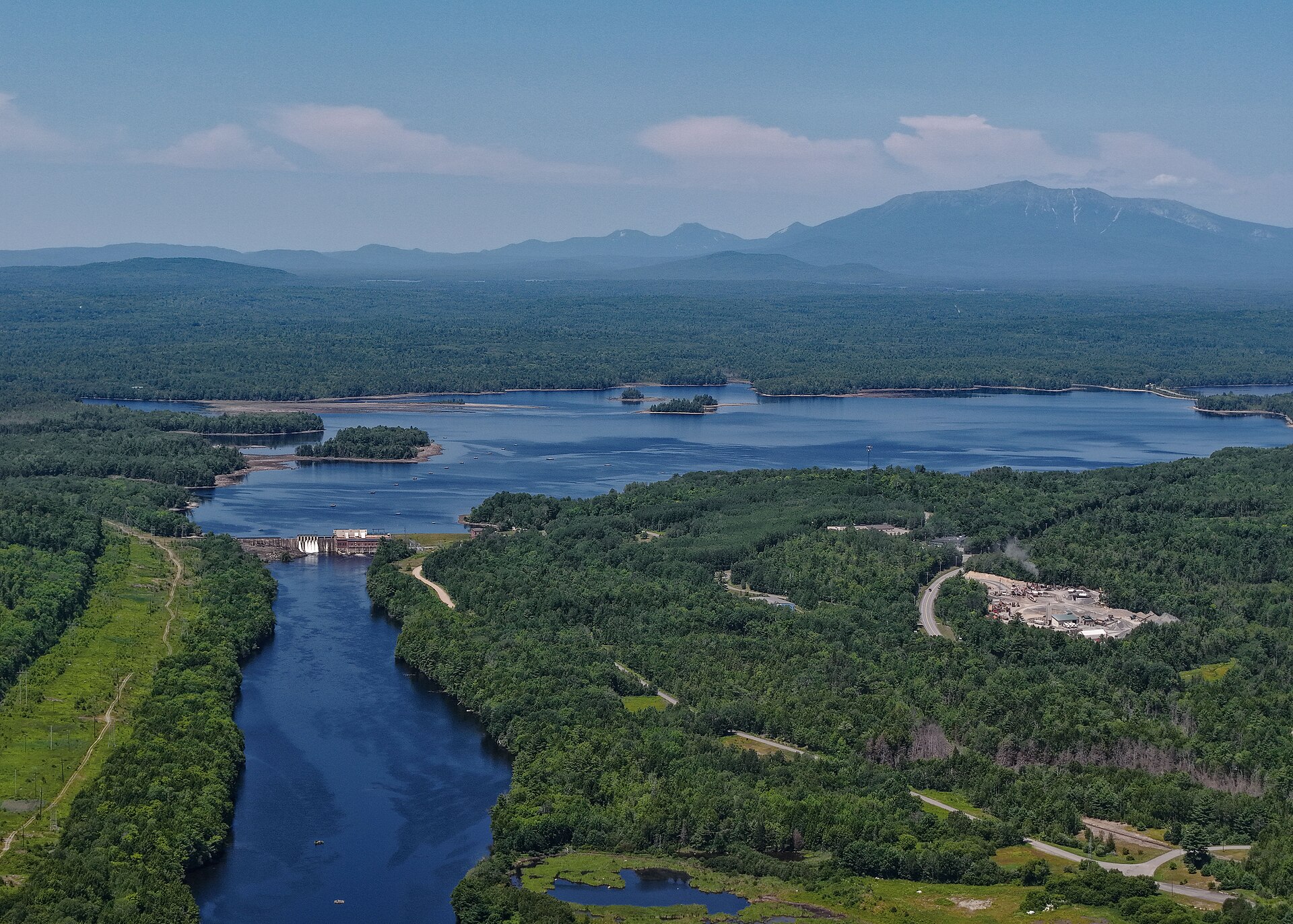
The water
West Branch Penobscot River
The West Branch below Ripogenus Dam, west of Baxter State Park, is Maine's signature big water — a tailwater where landlocked salmon and wild brook trout share cold, heavy flows. May and June fish strongly as flows stabilize after ice-out, and September and October bring fall runs of salmon and brook trout in spawning colors. Mayfly and caddis hatches carry late spring and early summer, but classic Maine streamers and smelt patterns take the biggest fish during the spring and fall runs. Access is extensive through North Maine Woods logging roads and designated sites, with popular wading and boating water around the Big Eddy. Sections carry coldwater-conservation regulations, including gear restrictions and harvest limits. Full West Branch Penobscot guide
Kennebec River (upper river and East Outlet)
The Kennebec is the state's most versatile river system, from the East Outlet at Moosehead Lake down through The Forks. April and May bring landlocked salmon on the smelt run; June is the best brook trout and dry-fly window before summer warming; September and October deliver a strong second season for trout and salmon. Brown trout and smallmouth add variety, with baitfish and crayfish patterns effective for bass in the warmer lower reaches. Public access is good throughout — roadside pull-offs, walk-in spots, and boat access through the Kennebec Valley, with outfitter support around The Forks. Upper sections include catch-and-release and fly-fishing-only water, so check regulations by segment.
Rapid River
The Rapid, tumbling between Lower Richardson Lake and the Umbagog country in the western lakes region, is one of the premier wild brook trout fisheries in the eastern U.S., with landlocked salmon alongside. May and June, right after ice-out, bring heavy feeding from large fish; September and October offer fall colors and strong streamer and dry-fly fishing. Classic mayfly and caddis hatches carry the late spring, and smelt imitations produce in both shoulder seasons. This is remote water — logging roads and trails, walk-in fishing, or boat approaches from the surrounding lakes, most of it timberland and semi-wilderness open to public recreation. Restrictive harvest rules protect the fishery; confirm current special regulations before going.
Grand Lake Stream
Grand Lake Stream, connecting West Grand Lake to Big Lake in Downeast Maine, is the state's classic landlocked salmon stream, with a village of the same name built around the fishery. April and May bring spring salmon dropping out of West Grand Lake; June mixes trout and salmon on dry flies; September and October deliver the fall run and big brook trout. Smelt and baitfish imitations rule spring and fall, with mayfly and caddis hatches supporting dries and nymphs through early summer. Access is excellent — walk-in fishing from roads, pull-offs, and trails along much of the corridor, in a region with a long public sporting tradition. Special regulations, including seasonal closures and gear restrictions, protect the salmon and trout.
Kennebago River and Kennebago Lake
The Kennebago watershed, in the western highlands north of Rangeley, pairs a wild brook trout and salmon river with one of Maine's major fly-fishing-only lakes. May and June around ice-out bring strong fishing in both river and lake; September and October ride the fall spawning activity with dries and streamers. The river fishes mayfly and caddis hatches from late spring into early summer, while smelt and baitfish patterns take salmon and large trout in the lake; traditional Maine streamers stay in the rotation all season. Lake access runs through established roads and boat launches; the river crosses private and timber-company lands with longstanding sporting access, plus camps and lodges. Kennebago Lake is fly-only, and connected waters carry restrictive wild-fish regulations.
Crooked River
The Crooked, in southwestern Maine flowing into Sebago Lake, is the accessible option — brown trout, brook trout, and smallmouth within reach of the Portland area. April through June is prime for trout as flows, temperatures, and insect activity line up; September and October bring browns and brookies back on the feed, and summer belongs to smallmouth in the warmer sections. Stonefly and caddis hatches plus mixed mayflies support nymphs and attractor dries, and Grey Ghosts and Muddler Minnows move the larger trout. Roadside crossings and informal pull-offs provide walk-in access along much of the river, through a mix of private land with a history of respectful public access and nearby conservation parcels. It is heavily managed as a stocked fishery with specific limits near Sebago.
Allagash River system
The Allagash country of the North Maine Woods is wilderness pond-and-river fishing for brook trout and lake trout (togue). The windows are short and specific: May to early June, just after ice-out, when fish concentrate in the shallows, and mid-to-late October for a second shallow-water bite before freeze-up. These cold, infertile waters carry only moderate hatches, so small streamers and baitfish patterns are primary — especially for togue and the larger brookies — with evenings and overcast days favoring shoreline fish. Access is truly remote: the North Maine Woods gated road system and canoe routes, with undeveloped shorelines open to public recreation. Conservative harvest rules typical of remote trout water apply.
Casco Bay and the southern coast
From June through October, southern Maine's coast becomes a striped bass fishery — beaches, marshes, and rocky shorelines around Portland, Bath, Freeport, and Biddeford, including the lower Kennebec and Saco estuaries. Migratory stripers are the target, with schooling mackerel and occasional bluefish in summer. Forage is juvenile alewives, sand eels, other baitfish, and crabs; tidal currents, rips, and flats drive the feeding, and dawn, dusk, and moving tides fish best. Access is unusually good for saltwater: municipal parks, public piers, beaches, and boat ramps throughout Casco Bay, plus widely walkable marshes and sand beaches. Striped bass rules apply coastwide, including size limits, mandatory release of certain size classes, and circle-hook requirements with bait.
Seasons at a glance
The Maine season is two peaks with a valley between. April through June is the first and biggest: smelt runs pull landlocked salmon into the rivers, brook trout feed hard after ice-out, and hatches build through June. July and August are the tradeoff months — summer warming pushes trout and salmon toward cold water, while smallmouth and the striper coast take over. September and October form the second peak, with trout and salmon feeding aggressively in cooling water and fall-run fish in full color. Remote waters like the Allagash compress this further: fish the shallows just after ice-out or just before freeze-up.
Beyond trout and salmon
Smallmouth bass are Maine's warmwater headliner, with strong fishing in the Kennebec and Penobscot rivers and the Belgrade and Sebago lake regions. The June-to-fall striped bass run along the southern coast — Casco Bay, the Kennebec estuary, the Saco — is a fishery worth planning a trip around in its own right, with mackerel and bluefish as bonus fish. Parts of the Androscoggin and the Belgrade Lakes are also emerging pike-on-the-fly water.
Licenses and regulations
The Maine Department of Inland Fisheries & Wildlife manages inland fishing. All anglers on inland waters need a valid Maine license, with resident and nonresident daily, season, and combination options; no separate trout stamp is required, though some waters carry additional endorsements or permits. Marine species, including striped bass, fall under separate saltwater rules. Maine leans heavily on water-specific regulations — fly-only water, catch-and-release sections, gear restrictions — flagged per river above, and they change annually, so check the current Maine IF&W rulebook by water before fishing.
Where to start
If you get one weekend, take the classic trip: May or June in the North Woods. Base near Millinocket or Greenville and fish the West Branch Penobscot around the Big Eddy for salmon and brook trout, with the Kennebec's East Outlet an easy second act. In the fall, Grand Lake Stream or the Rapid River put you on fall-run salmon and brook trout at their best. And if the crowds on the marquee names wear thin, the Dead River and Flagstaff Lake outlets offer wild brook trout and salmon with rustic campsites and walk-in access — the kind of water Maine still has more of than anywhere else in the East.
For nearby water, see Fly Fishing in New Hampshire, Fly Fishing in Vermont, and Fly Fishing in Massachusetts.