The water
Kaneohe Bay flats
The flats around Kaneohe Bay on Windward Oahu are Hawaii's best-known bonefish water, with trevally, jacks, and mullet mixed in. The fishery runs year-round, but spring and fall get cited most often for consistent bonefish, and the real driver is conditions: calm weather, clean water, and a moving tide beat any month on the calendar. This is not hatch fishing — shrimp, crab, and small minnow patterns fished on tidal movement do the work. Public shoreline and flat-adjacent access exists around the Kaneohe area, but legality varies by shoreline segment and by tide, so sort out where you can legally stand before you commit to a flat. Kaneohe, Kailua, and Honolulu are all close.
Anini Flats
On Kauai's North Shore, the Anini flats hold bonefish, trevally, jacks, and triggerfish along a long stretch of reef-protected shoreline. Spring through fall is generally the better window — steadier weather and clearer water for sight-fishing — though the honest answer is that calm swell matters more than the date. Winter's north swells can make the whole area difficult. Fish shrimp, crab, and small baitfish imitations keyed to tide, clarity, and wind. Access comes from public beach areas, with the usual obligations: respect the reef, watch the tide, and mind local access etiquette. Princeville, Hanalei, and Kilauea are the nearby bases.
Kiholo Bay flats
The Kona Coast of the Big Island offers a different flavor of flats fishing — sand pockets and reef edges set against lava shoreline. Kiholo Bay holds bonefish, bluefin trevally, giant trevally, and papio (juvenile trevally), and it fishes year-round. Low tides, early mornings, and calm seas improve the sight-fishing odds considerably. Target the sandy flats with shrimp and crab patterns; bring small baitfish flies for the trevally. Shoreline access is from public coastal areas, but be careful around lava, surf, and private land boundaries — the footing and the property lines both demand attention. Kailua-Kona, Waikoloa, and Kawaihae are the closest towns.
Waimea River
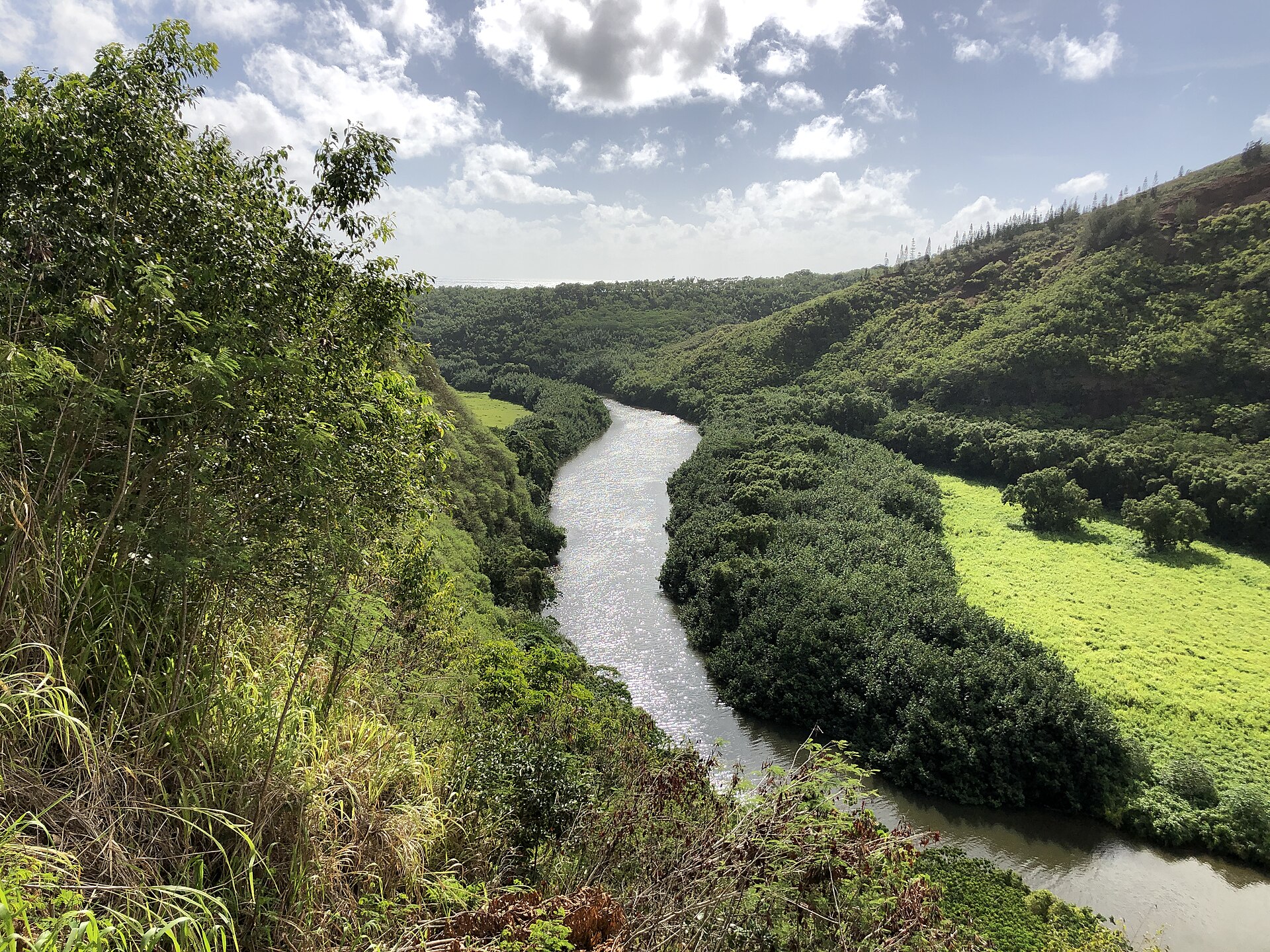
The Waimea River, draining Waimea Canyon on southwest Kauai, is the state's best-known trout-adjacent freshwater. Rainbow trout hold in the cooler, higher-elevation water, with bass and tilapia lower down. Cooler months and post-rain flow bumps can improve trout activity in the canyon; warmer periods favor the lower warmwater reaches. If you're after the trout, small mayfly and caddis imitations have a place; otherwise, subsurface attractors and small streamers cover it. Access ties to canyon roads, pullouts, and public recreation areas — use only clearly legal public entry points, and check trout seasons and gear rules before you go. Waimea, Kekaha, and Hanapepe are nearby.
Wailua River
The Wailua on Kauai's east side runs from the interior to the coast near Lihue and Kapaa, holding tilapia, smallmouth bass, largemouth bass, and a mixed bag of other freshwater species. It fishes year-round — freshwater here is far less seasonal than mainland trout water — with drier periods generally making access easier. There's no hatch program to match; small baitfish, shrimp, and attractor patterns fit the lowland conditions. Public access is limited and patchy, so work from public bridges, parks, and shoreline-adjacent areas rather than assuming you can walk the bank.
Hanalei River
The Hanalei drains Kauai's North Shore and carries bass, tilapia, and other warmwater species through one of the wetter valleys in the state. It's a year-round fishery; winter swells complicate nearby coastal access, and calmer summer conditions make exploration easier. Skip the dry-fly box — small streamers, subsurface nymph-style flies, and terrestrials around calmer edges are the play. As with most of Kauai's freshwater, expect a mixed bag rather than a single target species. Access runs mainly through public road crossings and surrounding public-facing areas, and the private-land boundaries here deserve real respect; freshwater rules can also change by waterbody, so confirm current regulations. Hanalei, Princeville, and Wainiha are the nearby towns.
Puʻu Lua Reservoir
In Kauai's interior highlands, Puʻu Lua Reservoir is a stillwater option for bass, tilapia, and other warmwater fish. Sheltered from the wind relative to the coast, it can fish year-round, with stable weather improving conditions. Bass flies, small baitfish patterns, and terrestrials around shoreline cover are the standard approach. Anglers discuss it regularly as a reservoir fishery, but confirm legal access and shoreline entry locally before building a day around it — reservoir-specific access and use restrictions may apply. Lihue, Kapaa, and Koloa are the closest towns, and the drive into the highlands makes this a deliberate outing rather than a quick stop.
Lake Wilson (Wahiawa Reservoir)
Central Oahu's Lake Wilson is the state's most interesting inland fishery on paper: tucanare (peacock bass), largemouth bass, perch, catfish, and tilapia in one reservoir near Wahiawa. Warm months are generally best for active fish, though it produces year-round. Fish baitfish patterns, frogs, and streamers near cover, points, and structure — peacock bass in particular respond to a stripped streamer. The catch is access: public shoreline is limited and uneven around the reservoir, so use designated public areas only and confirm current conditions before making the drive. Wahiawa sits right on the water, with Mililani and Pearl City close behind.
Seasons at a glance
Hawaii doesn't have a runoff window or a winter shutdown — it has weather windows. For the flats, spring and fall are the most consistent stretches, with steadier trade winds and better sight-fishing clarity; winter brings the big north swells that can shut down north-facing flats on Kauai and Oahu, and summer fishes fine when the wind cooperates. On any given week, tide and swell forecasts matter more than the month.
Freshwater is even less seasonal. Kauai's rivers and reservoirs fish year-round, with drier periods easing access and post-rain flows occasionally waking up the Waimea Canyon trout. Early morning and late afternoon are the productive (and comfortable) hours on Oahu's reservoirs.
Beyond trout
This section is the main event in Hawaii rather than the footnote. The state's defining fly fishing is saltwater: bonefish, bluefin trevally, giant trevally, jacks, and triggerfish on the flats and reef edges of Oahu, Kauai, and the Big Island. Inland, Oahu and Kauai add peacock bass, largemouth and smallmouth bass, tilapia, and catfish in reservoirs and lowland rivers. If you fly here with an 8-weight and a box of shrimp and crab patterns, you've packed correctly.
Licenses and regulations
Hawaii is unusual: the Hawaii Division of Aquatic Resources does not require a general recreational fishing license for residents or nonresidents in most marine waters. Freshwater is a different matter — freshwater fishing and some special areas carry their own rules, seasons, and gear limits, and reservoir fisheries can have site-specific access conditions. Marine protected areas and species rules also apply on the salt side. Special notes for individual waters are flagged in the sections above; regulations change, so check the current Hawaii Division of Aquatic Resources rules before fishing.
Where to start
One weekend, one island: make it Oahu, and plan your two days around the tides at Kaneohe Bay. Walk the flats on a rising tide in the morning with shrimp and crab patterns, keep an eye out for cruising bonefish and the occasional trevally, and if the wind blows out the afternoon, Lake Wilson's peacock bass are 30 minutes inland. Spring or fall gives you the best odds of calm, clear water. With more time — or a Kauai itinerary already booked — split days between the Anini flats and the Waimea Canyon freshwater for the strangest one-two combination in American fly fishing: bonefish in the morning, rainbow trout in a tropical canyon by afternoon.
Heading to the mainland next? Start with the Pacific states:
Fly Fishing in California Fly Fishing in Oregon Fly Fishing in Washington