The water
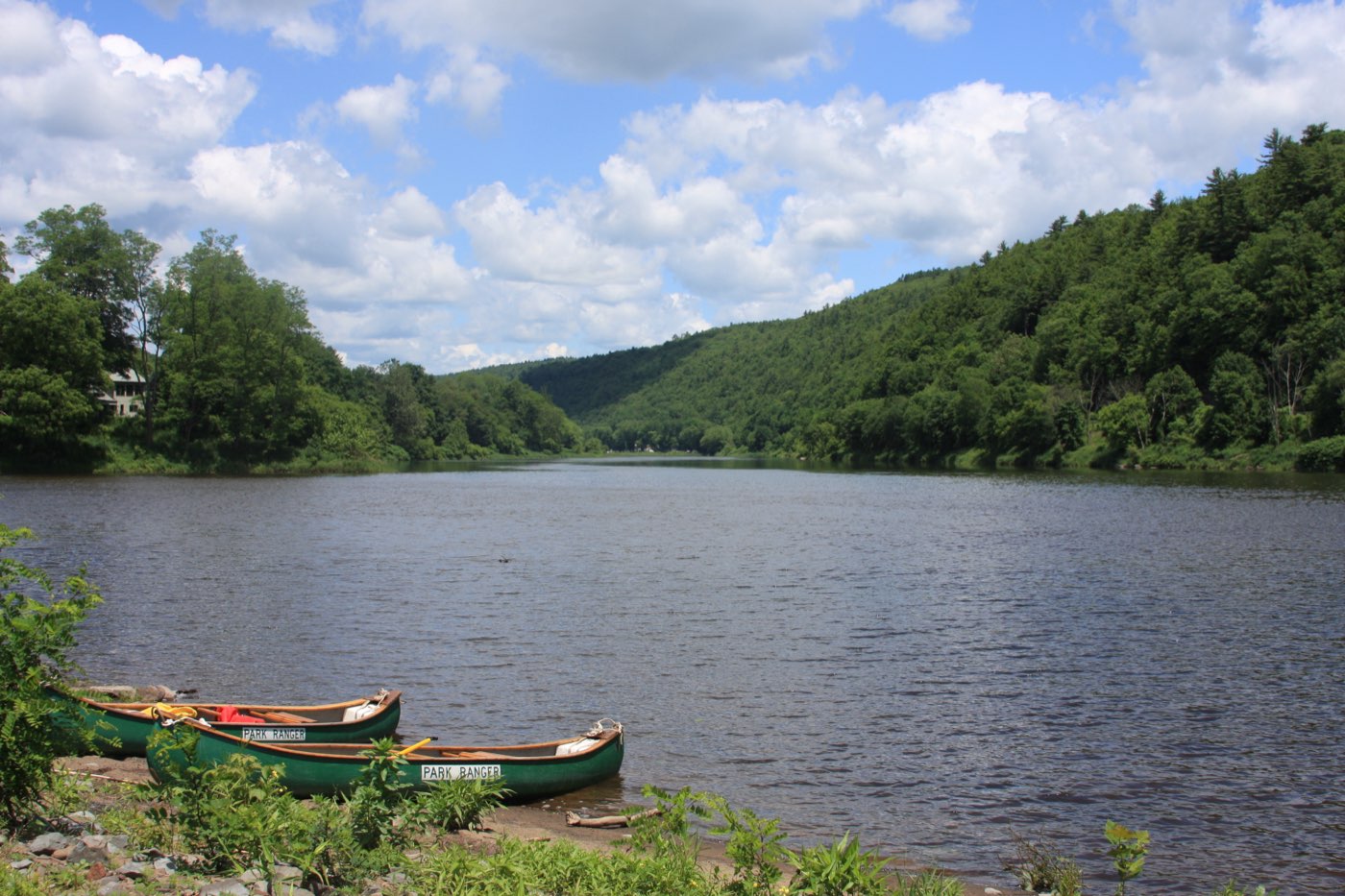
West Branch Delaware River
The West Branch is New York's premier wild-trout tailwater, running along the NY–PA border near Deposit and Hancock. Its wild browns and rainbows see everything, which makes the May–June hatch window — Quill Gordons, Hendricksons, Blue Quills, Slate Drakes, then caddis and sulphurs — as technical as it is productive. Stable tailwater flows keep evening dry-fly fishing going July through September, October brings streamer fishing to pre-spawn browns, and winter nymphing continues in the catch-and-release water. Access is extensive via NYSDEC Public Fishing Rights easements, road pull-offs, and boat launches along NY-30. Several no-kill, artificials-only reaches carry year-round catch-and-release rules; standard stocked-trout regulations apply elsewhere. Full West Branch Delaware guide
Beaverkill River
The Beaverkill is the historic heart of Catskill fly fishing, flowing through Roscoe past Junction Pool, where it meets the Willowemoc. April through June is the classic window — Quill Gordons and Hendricksons early, then Blue Quills, Slate Drakes, caddis, and the occasional Green Drake into early summer — with terrestrials carrying midsummer. September and October bring cooler water, thinner crowds, and streamer fishing. Public access is well developed around Roscoe, with PFR easements and roadside pull-offs through Catskill Park, and the no-kill artificials-only sections stay open to catch-and-release fishing year-round. Browns dominate, with rainbows mixed in.
Willowemoc Creek
The Willowemoc runs through Livingston Manor and Roscoe to its junction with the Beaverkill, and fishes like its twin: Hendricksons, Quill Gordons, Blue Quills, Slate Drakes, and caddis in spring, Green Drakes and mixed caddis in early summer, ants and beetles after that. May and June offer the strongest hatches and the easiest wading; evenings carry the dry-fly fishing through summer, and fall drops the water for streamer work. The designated no-kill, artificials-only section near Anderson — riffle-pool water — fishes through winter for anglers willing to nymph. Access comes at Junction Pool, roadside spots, and PFR stretches through Catskill Forest Preserve lands.
Ausable River (West Branch and mainstem)
The Ausable is the Adirondacks' signature trout river, tumbling past Wilmington near Lake Placid with browns, brookies, and rainbows in fast pocket water. Early May through late June is prime, with black caddis, Blue Quills, Quill Gordons, Hendricksons, BWOs, and Slate Drakes on the menu and midges as the searching pattern between hatches. July and August fish best mornings and evenings with terrestrials; September and October turn to streamers for pre-spawn browns. Access is easy — roadside pull-offs along NY-86 and other corridors through Adirondack Park, plus state land and designated NYSDEC fishing areas, almost all of it wade fishing. Regulations mix general trout rules with special reaches, so check current NYSDEC listings.
Neversink River
The Neversink drains the southeastern Catskills above and below Neversink Reservoir, and it trades crowds for solitude — anglers favor the upper sections for exactly that. Spring (April–June) fishes nymphs and small dries over browns and rainbows; summer brings technical dry-fly work in the cooler tailwater-influenced reaches below the reservoir; fall is streamer season for the larger browns. Hatches run the familiar Catskill roster — Hendricksons, Slate Drakes, BWOs, caddis — thinning to midges and terrestrials in low summer flows. Access comes via roads and trails with NYSDEC-managed sections; parts of the upper river carry catch-and-release, artificials-only rules.
Salmon River
The Salmon River at Pulaski is the East's most famous Great Lakes tributary. September through November brings the Chinook and coho runs plus fall steelhead; steelhead fishing continues through winter in the designated fly zones and picks back up in spring with drop-back fish. This is migratory fishing — egg patterns, nymphs, and streamers, not hatch-matching — and it rewards anglers comfortable swinging flies in cold water. NYSDEC maintains extensive public access, with multiple named access areas and parking lots along the river. The Upper Fly Zone and other sections carry artificials-only and catch-and-release rules, plus specific seasons and tackle requirements; read the special Salmon River regulations before fishing.
Oak Orchard Creek
Oak Orchard is western New York's counterpart to the Salmon River — a Lake Ontario tributary near Waterport that runs Chinook salmon and lake-run browns from September through November, then steelhead from late fall into early spring. Migrating fish stack below Waterport Dam, which concentrates both fish and anglers; additional public access areas and road crossings spread the pressure along the creek. Egg imitations, nymphs, and larger streamers do the work for aggressive salmon and feeding steelhead. Great Lakes tributary special regulations apply, including tackle restrictions and seasonal rules — check the current NYSDEC listings for Oak Orchard specifically.
Fall Creek
Fall Creek runs through Ithaca, and it's two fisheries in one. Below Ithaca Falls, spring and fall bring lake-run trout and salmon out of Cayuga Lake — egg and baitfish patterns during the runs. Above the falls, resident browns and rainbows feed on standard central New York fare — mayflies, caddis, midges — and fish year-round. It's genuine on-foot, urban-adjacent fishing: access sits within Ithaca itself, with more points scattered toward the lake. Lake-run sections fall under Finger Lakes tributary regulations with their own seasons and tackle rules; resident-trout water follows general regulations. Of the state's overlooked options, the Cayuga tributaries are the strongest.
Seasons at a glance
April through June is the heart of the trout year — the Catskill hatch progression on the Beaverkill, Willowemoc, and Delaware system, and spring hatches on the Ausable. July and August push the fishing to mornings, evenings, and terrestrials, with the tailwaters holding up best. September and October split the state: streamer fishing for big resident browns inland, while Chinook, coho, and fall steelhead pour into the Salmon River, Oak Orchard, and other Great Lakes tributaries. From November through March, steelhead carry the flag on the tributaries while year-round catch-and-release sections in the Catskills reward patient nymphing.
Beyond trout
The Great Lakes tributary fishery is the headline — Salmon River and Oak Orchard salmon and steelhead draw spey and streamer anglers from across the country. Inland, New York's lakes and larger rivers hold panfish, walleye, catfish, and landlocked salmon, all takeable on flies for anglers who want variety between trout trips.
Licenses and regulations
Anglers 16 and older need a New York State freshwater fishing license, purchased online or from licensed agents through the New York State Department of Environmental Conservation (NYSDEC). There is no separate trout stamp — the standard license covers trout, salmon, and most inland species. What demands attention instead is the patchwork of special regulations: no-kill sections in the Catskills, fly zones and tackle rules on the Salmon River, and Finger Lakes tributary seasons, all noted per river above. Regulations change annually; verify current rules at NYSDEC regulations.
What's changing
The 2025–26 NYSDEC regulations kept statewide trout seasons, creel limits, and gear rules unchanged from 2024, and the stocking plan holds steady at roughly 1.9 million fish statewide. The notable recent access news: new public access parcels on the East Branch of the Delaware announced in July 2024. Anglers should also note didymo and other invasives spreading in the Ausable — clean boots at access points — and DEC bank-stabilization work completed on Schoharie Creek in 2023 that improved holding water on a lightly pressured wild-brown stream.
Where to start
For a first weekend, base in Roscoe between April and June. You can fish the Beaverkill and Willowemoc from town, reach the West Branch Delaware in under an hour, and hit the classic Catskill hatches at their peak — it's the highest concentration of storied, accessible trout water in the state. If your window is October instead, drive to Pulaski: the Salmon River's fall runs are the best big-fish odds in New York, and the access infrastructure makes it manageable for a first-timer.
Neighboring states worth pairing with a trip: