The water
Battenkill River
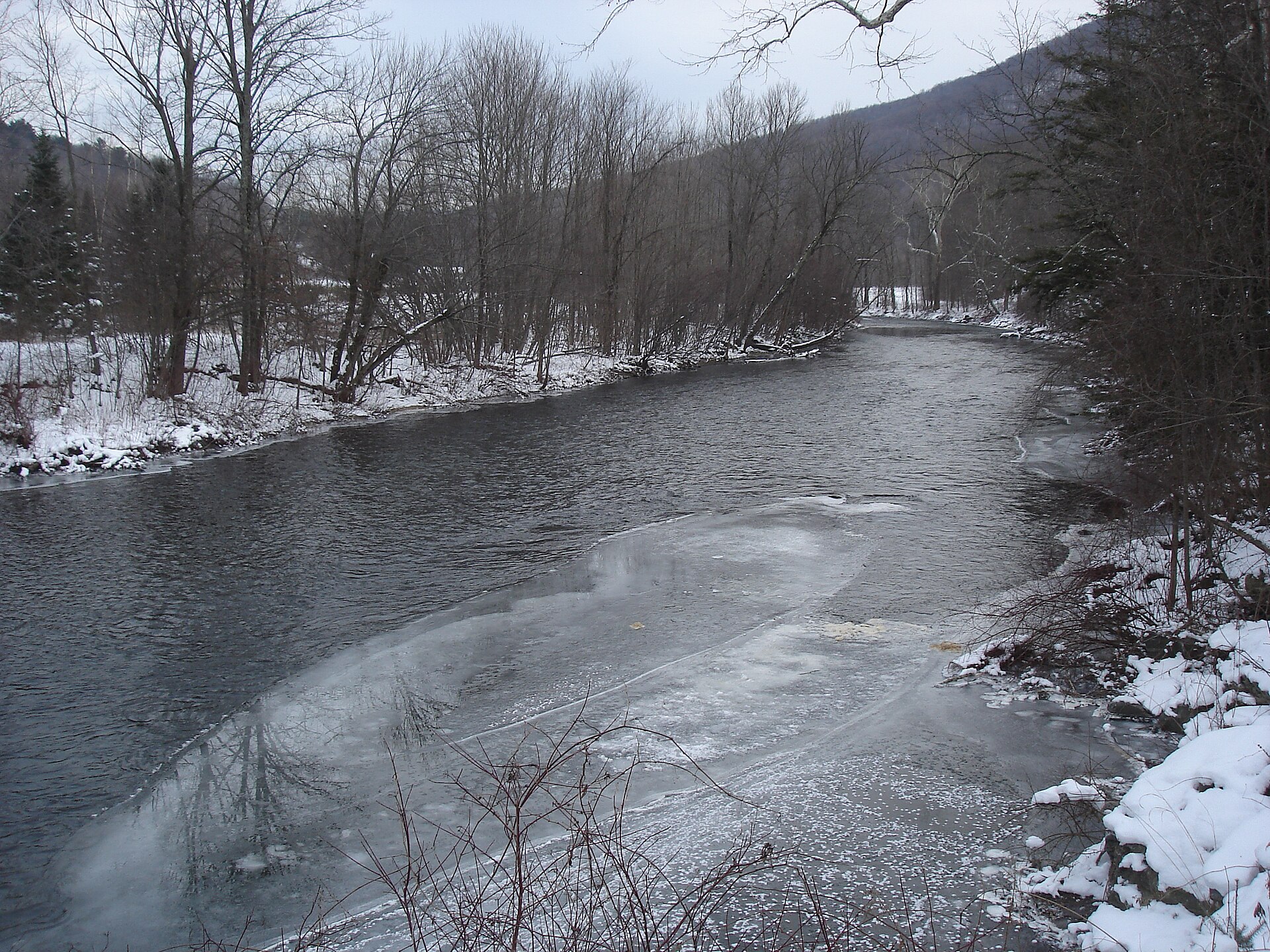
Vermont's most famous trout river, running through Bennington County toward the New York line, and a fishery that rewards patience: wild browns and brook trout in clear, flat water that punishes bad drifts. The season runs mid-April through October, with late April–June and fall the prime windows; mid-May through mid-July is peak dry-fly time. Hendricksons come off late April to mid-May, followed by caddis, sulfurs, and Isonychia into early summer, with BWOs and midges important in fall. Access is roadside pull-offs and bridges along VT Route 313 and local roads, plus town parcels and state fishing access sites. A catch-and-release-only section on the Vermont side is managed as one of the state's classic dry-fly trophy trout waters, with rules that differ from general regulations. Full Battenkill guide
White River
Central Vermont's workhorse freestone, draining the Green Mountains to the Connecticut and holding rainbows, browns, and brook trout. Late April through October is the season — around 200–500 cfs is ideal wading water, 500–1,200 cfs floats well — and spring into early summer is the most productive stretch as Hendricksons, caddis, and sulfurs intensify. Summer brings terrestrial fishing; fall brings BWOs and midges. Access is extensive along Route 14, state fishing accesses, and town bridges, and a designated fly-fishing-only section runs between Cleveland Brook in Bethel and Linnieville Brook, with convenient walk-in wading. Portions are trophy trout waters with special seasons and reduced limits; the fly-only section carries gear restrictions.
Lamoille River
A north-central freestone flowing toward Lake Champlain with a true two-species profile: browns, rainbows, and brook trout through the middle river, and strong smallmouth fishing in the warmer lower reaches from late spring through summer. Trout fishing runs April through October, best in late spring and early summer during the major Hendrickson and caddis hatches; downstream, forage shifts to baitfish and crayfish, and so should your fly box. Access comes via bridge crossings and pull-offs along VT Route 15 and secondary roads, state fishing access areas near towns, and informal walk-ins through agricultural corridors around Johnson and Cambridge. Some stretches fall under statewide trophy trout designations with shorter seasons and lower creel limits.
Winooski River
The river of the Montpelier–Burlington corridor, flowing from the Green Mountains to Lake Champlain with browns, rainbows, and brook trout in its upper and middle water and smallmouth moving into riffles and pools from late spring through summer. Trout fish best in spring through early summer and again in fall. Expect the standard Green Mountain sequence — spring mayflies and caddis, then summer terrestrials — with baitfish and crayfish driving the lower river. Access is good near Waterbury via bridges, parks, and state fishing access areas, and the urban stretches near Montpelier and Burlington add walk-in spots along bike paths and public riverfronts. Mostly general regulations, though selected sections carry trophy trout or special management rules.
Clyde River
The Northeast Kingdom's mixed bag, flowing from Island Pond through Newport toward Lake Memphremagog with brook, brown, and rainbow trout plus landlocked salmon. Mid-May to late June is the highlighted window, when cooler flows and smelt movements have both trout and salmon active; spring and fall shoulder seasons also produce as fish move between lake and river. Trout hatches include Quill Gordons, Little Black Caddis, Hendricksons, March Browns, and Golden Drakes; for salmon, smelt-imitating streamers do the work. Access is via town bridges, roadside pull-offs, and public river corridors near Island Pond and Newport. Water near Lake Memphremagog and Clyde Pond carries specific salmon size and harvest regulations.
Otter Creek
A long west-side river through Rutland and Middlebury toward Lake Champlain, fishing for browns, rainbows, and brook trout in spring through early summer — especially productive shortly after stocking — and for smallmouth in the lower, warmer sections from late spring through summer. Hatches follow the standard Vermont freestone script: mayflies and caddis in spring and early summer, terrestrials in midsummer, baitfish and crayfish below. Access includes numerous bridge crossings and roadside areas, noted water near Dog Team Road south of Middlebury, and state fishing access sites around Middlebury and Rutland. Mostly statewide regulations, with stocked sections offering enhanced creel opportunities and some overlap with trophy trout designations.
Passumpsic River
The underrated pick, near St. Johnsbury and Danville in the northeast. The Passumpsic holds native brook trout alongside stocked trophy fish, and May is the standout month — trophy trout stocking coincides with moderate flows and spring mayfly and caddis hatches. Early summer stays productive in the cooler headwater stretches, and the stocked fish respond well to nymphs and attractor dries. Access is convenient: bridges and pull-offs near St. Johnsbury and Danville, public riverfront areas, and well-known walk-in spots under the local bridges. Sections near St. Johnsbury are managed as trophy trout waters with special stocking and possible catch-and-release or reduced-creel rules, which makes them popular right after stocking periods.
Lake Champlain
The warmwater headline. Champlain's bays, tributaries, and shorelines hold smallmouth, largemouth, northern pike, bowfin, longnose gar, freshwater drum, and carp — a species list no trout river can match. Spring means pike in flooded meadows around spawning time and sight fishing for gar and bowfin on warming flats; summer is peak for bass, carp, and drum, with topwater and sight-fishing presentations in stable warm conditions. This is streamer and specialty-pattern fishing around weedlines, mud flats, and rocky points. Access runs through public boat launches and fishing access areas around Missisquoi Bay, the southern lake, and river mouths like the Winooski and Lamoille. Champlain has its own rules — including catch-and-release bass seasons December 1–June 10 — distinct from inland waters.
Seasons at a glance
Trout season opens in earnest with the Hendricksons in late April and runs strong through early July — the best combination of cool water, hatches, and flows on the Battenkill, White, and Lamoille. Summer splits the state: valley rivers warm and attention shifts to Champlain's bass, carp, and drum, to lower-river smallmouth, and to cold headwater brooks where wild brook trout keep eating dries.
Fall brings the second trout window, late September through October, with BWOs, midges, and browns turning aggressive ahead of the spawn. Mid-May to late June is the Clyde's moment for landlocked salmon. Winter is the off-season on the rivers, though Champlain's trout and salmon remain open year-round under lake rules.
Beyond trout
Lake Champlain is the reason warmwater anglers travel to Vermont: smallmouth and largemouth on topwater, northern pike in the spring meadows, and legitimate sight fishing for carp, bowfin, gar, and freshwater drum across shallow bays and mud flats. June through August is prime, and the lower Winooski, Lamoille, and Otter Creek extend the bass fishing into wadeable river water.
Licenses and regulations
The Vermont Fish & Wildlife Department manages the state's fisheries, and every angler needs a valid Vermont license, resident or nonresident. There is no separate trout stamp. The complexity lives in the special waters: trophy trout sections with distinct seasons and limits, the Battenkill's catch-and-release water, the White's fly-fishing-only section, Clyde River salmon rules, and Lake Champlain's own regulation set. Those are flagged per river above, and they change annually — review the current Vermont Fish & Wildlife regulations before fishing: Vermont Fish & Wildlife fishing opportunities.
What's changing
Vermont's 2025 regulations (effective January 1, 2025) brought no major statewide shifts: the daily limit remains 12 trout with only two over 12 inches on most streams, the upper Connecticut keeps its 2-trout limit, and stocking holds steady at roughly 300,000 catchable trout. The on-the-water story has been high, turbid flows persisting into early summer through 2024–25, pushing anglers onto smaller headwater brooks earlier than usual — while the Battenkill and White have produced strong holdover browns, with reports of fish to 18–20 inches.
Where to start
One weekend in Vermont: come the last week of May or first week of June and base in the White River valley around Bethel. Fish the fly-only section between Cleveland Brook and Linnieville Brook one day, then either chase the hatch upstream or drive south to test yourself against the Battenkill's flat water near Arlington. If you'd rather trade difficulty for variety, spend the second day on Champlain's flats hunting carp and bowfin — no other New England trip pairs those two days so easily.
Planning a broader New England trip? See the neighboring guides:
Fly Fishing in New Hampshire Fly Fishing in New York Fly Fishing in Maine