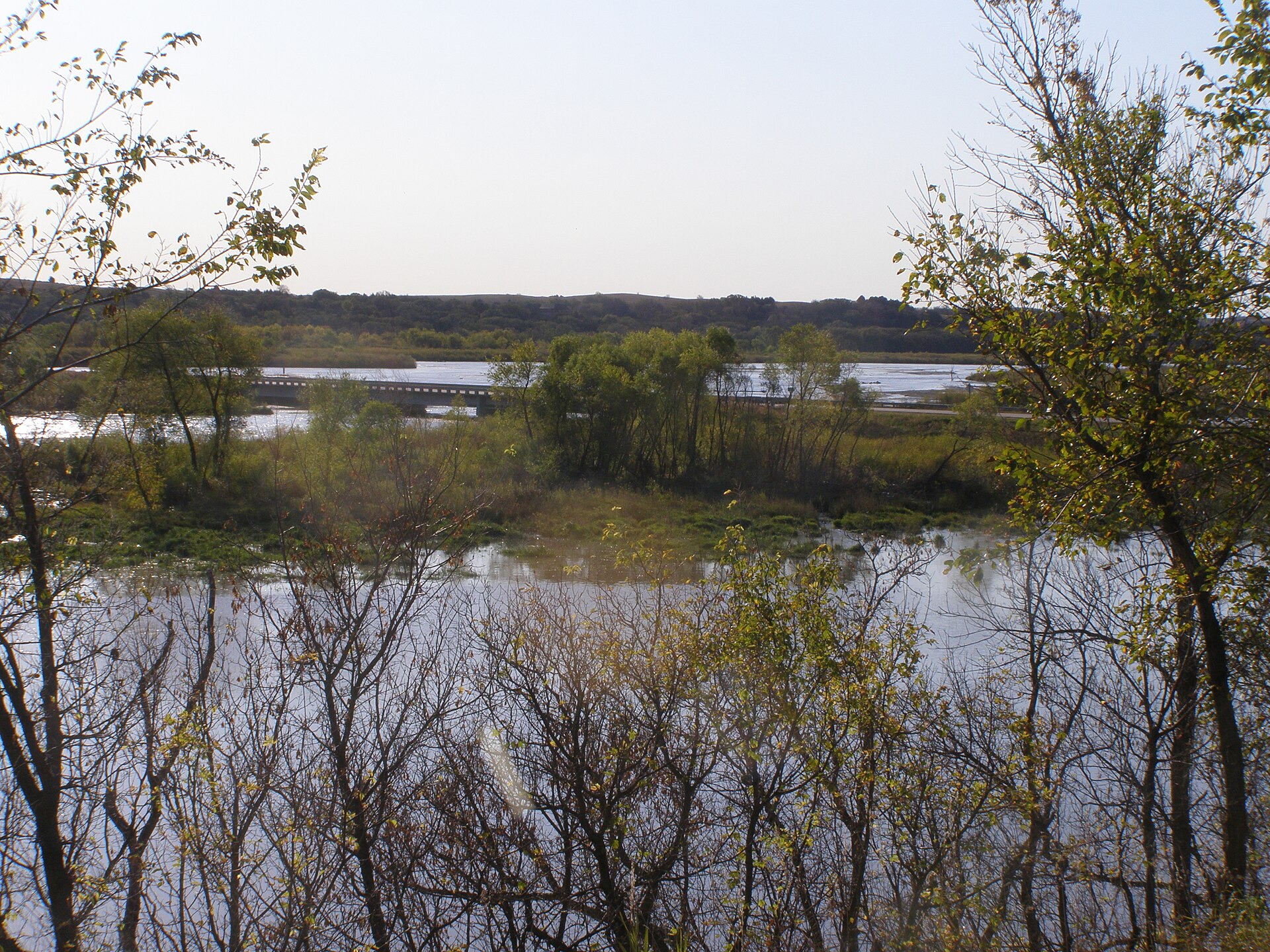
The water
Lake Ogallala (tailwater below Lake McConaughy)
Nebraska's premier trout water sits just east of the town of Ogallala, where releases from Lake McConaughy feed Lake Ogallala and its downstream tailwater. Rainbows, browns, and tiger trout share the water with walleye and catfish. Summer irrigation releases create cool, oxygenated flows and productive fishing; fall and winter fish well too once irrigation season ends and flows stabilize. The invertebrate life is strong for the region — scuds, midges, baetis, caddis, and tricos, with hoppers and ants along the banks in late summer and fall. Shore and wade access is good through the state recreation area's parking lots, campgrounds, and designated fishing areas. The water is managed as a premier trout fishery, so check current regulations for special trout limits or gear restrictions, particularly around tiger trout management.
Long Pine Creek
Long Pine Creek is the state's best case for classic small-stream trout fishing: a spring creek in the north-central Sandhills near the town of Long Pine, holding browns and rainbows in quiet ranchland. March through June brings consistent cool flows and active fish, with another good window in early fall. Hatches run spring-creek style — midges, Blue-winged Olives, caddis, and tricos — supplemented by hoppers and ants in summer. Nymphs and small dries do most of the work. Public access comes at designated points along the creek, including state recreation lands in the Long Pine area, and wading is the standard approach. Verify any special length or bait restrictions on particular reaches before fishing.
Verdigre Creek
Verdigre Creek and its East Verdigre branch drain spring-fed country in northeastern Nebraska near the town of Verdigre, holding browns and rainbows. Prime time is March through June, when trout hold in the deeper pools and runs before summer heat; early fall produces again as temperatures drop. Expect typical coldwater-creek insects — midges, mayflies, caddis — with strong terrestrial activity from hoppers, ants, and beetles. Dead-drifted nymphs and small streamers work well through the deeper slack water and cutbanks. Access runs through public parcels and road crossings near Verdigre, plus state wildlife lands where posted. Check current rules for reach-specific trout limits or gear restrictions.
Niobrara River
The Niobrara runs east across the Sandhills of northern Nebraska toward the Missouri, and it's a mixed bag in the best sense: smallmouth bass, browns and rainbows in cooler reaches, plus pike, largemouth, and panfish. Fish it March through June for trout before summer heat, then switch to smallmouth and the rest of the warmwater cast in July and August, when fish concentrate in deeper runs and around structure. This is forage water more than hatch water — crayfish patterns, streamers, poppers, and foam terrestrials cover it, and the grasshopper supply from surrounding prairie is abundant. Public access comes at state recreation and wildlife management areas along the corridor; anglers wade or float between bridge crossings and signed public parcels.
White River at Fort Robinson State Park
In the state's far northwest corner near Crawford, the White River gives Nebraska a small freestone trout stream in Pine Ridge country. Rainbows and browns take caddis, mayflies, and stoneflies, plus prairie terrestrials in summer; nymphs, attractor dries, and small streamers are the standard tools. Spring and early summer offer cool flows and active fish, with a second window in early fall before flows drop toward winter. Fort Robinson State Park structures the access — trails, bridges, and designated fishing areas along the river corridor make this one of the easier waters in the state to wade without an access puzzle. General trout regulations apply within the park framework; confirm park-specific rules in the current book.
North Platte River (Nebraska reaches)
The North Platte enters Nebraska near the Wyoming border and flows east toward central Nebraska, changing character as it goes. Around the tailwater and reservoir areas near Lake McConaughy, spring and fall fish best for trout and walleye; slower reaches turn into good warmwater fishing through summer for white bass and catfish. Below dams and in cooler stretches, midges, mayflies, and caddis matter; in warmer water, baitfish, crayfish, and terrestrials dominate and streamers earn their keep. Access centers on public recreation areas and bridge crossings near the major reservoirs, wading or boating where allowed. Some tailwater and special-management stretches carry their own size and bag limits, so check the current regulations.
Platte River (central and eastern reaches)
The Platte near Omaha, Lincoln, and Louisville is Nebraska's urban-adjacent fishery and one of its most underappreciated fly rod opportunities. Spring brings white bass spawning runs and walleye; summer is catfish and wiper season; fall keeps walleye and bass active in cooling water. This is turbid, forage-driven water — shad and baitfish imitations, larger streamers, and patience with the drift. Smallmouth and both channel and flathead catfish round out the species list. Access is broad for an eastern-Nebraska river: multiple public boat ramps, parks, and bridge rights-of-way, with boat fishing common and wade fishing possible where flows allow. Certain stretches carry special limits for walleye and paddlefish; consult current regulations.
Merritt Reservoir
Merritt Reservoir, southwest of Valentine in the Sandhills, is the stillwater centerpiece for fly anglers chasing something big. Walleye, largemouth, white bass, and muskellunge live over a forage base of shad and crayfish, which means streamers, large baitfish patterns, and topwater flies. Spring and fall are peak for walleye and bass; summer fishes well for warmwater species and muskie if you work the early and late hours. Public access is well developed through state recreation facilities — boat ramps, campgrounds, and shoreline areas for bank fishing. The reservoir is managed for both walleye and trophy-class muskie with special size and bag limits, so review current regulations before targeting either.
Seasons at a glance
March through June is the state's best all-around window: cool flows keep trout active on Long Pine, Verdigre, the Niobrara, and the White River, while white bass run in the Platte and walleye feed in the reservoirs. Summer heat pushes the trout game to the Lake Ogallala tailwater, where irrigation releases keep the water cold, and hands the rivers over to smallmouth, catfish, and wipers.
September and October bring a second act — creek temperatures drop, trout feed again, and reservoir walleye and bass stay active in cooling water. Winter is quiet but not dead: the Ogallala tailwater keeps fishing once flows stabilize after irrigation season.
Beyond trout
The warmwater fishing isn't a footnote here — it's most of the book. Lake McConaughy, Merritt Reservoir, and the Platte system offer year-round fly opportunity for walleye, largemouth and smallmouth bass, channel and flathead catfish, and wipers, with spring and fall favored for walleye and bass and summer for catfish and wipers. The Platte's spring white bass and wiper runs, within easy reach of Omaha and Lincoln, are among the state's most overlooked fly fishing.
Licenses and regulations
The Nebraska Game and Parks Commission manages the state's fisheries. A valid Nebraska fishing license is required on all public waters and can be purchased online, by phone, or from authorized vendors. Review the current regulations for any additional stamps or endorsements tied to specific species or areas, especially when targeting trout or special-managed waters — several of the fisheries above carry their own limits, as noted per water. Regulations change annually — check the current Nebraska Game and Parks Commission fishing guide before your trip. The Cornhusker Fly Fishers club in Lincoln is the state's hub for fly fishing resources and events, including the Nebraska Trout Slam.
Where to start
One weekend in Nebraska: go in May, base in Valentine, and split your time between Long Pine Creek's browns and the Niobrara's mixed water, with Merritt Reservoir as the evening option for something that pulls harder. If you'd rather bet on numbers and cold water, head west instead and fish the Lake Ogallala tailwater, which is the state's most reliable trout fishery in any season.
Neighboring states widen the options:
Fly Fishing in South Dakota Fly Fishing in Colorado Fly Fishing in Kansas