The water
Mossy Creek
Virginia's best-known spring creek winds through farmland in the Shenandoah Valley near Bridgewater and Mount Solon. It is a brown trout fishery, managed by Virginia DWR as a walk-in water with designated parking and angler easements across private land — stay inside the signed corridors. The creek fishes like classic spring-creek water: midges and Blue-winged Olives in late winter and early spring, caddis and mayflies through spring, then strong terrestrial fishing with ants, beetles, and hoppers from late spring into summer. Spring-fed flows keep summer mornings and evenings productive. March through June and October through early December are the prime windows. It is a special-regulation, fly-fishing-only water with size and harvest restrictions, so check current DWR rules before you go. Full Mossy Creek guide
Jackson River
Below Gathright Dam in Alleghany and Bath counties, the Jackson runs cold year-round and holds rainbows, browns, and brook trout in some reaches, with smallmouth in the lower river. Spring brings Hendricksons, Blue Quills, and Blue-winged Olives, followed by sulphurs and caddis into early summer; midges keep the nymphing going the rest of the year. March through November is the strongest stretch, and fall turns on aggressive pre-spawn browns. Access is a mix of DWR sites, road crossings, and boat-accessible water, with posted private land interspersed — wade only where access is clearly allowed. Several reaches carry special regulations, including catch-and-release and tackle restrictions.
Smith River
The Smith below Philpott Dam, near Martinsville, is a cold tailwater fishable twelve months a year, and many locals prefer December through May for consistent flows and active browns and rainbows. The signature hatch is the spring sulphur, peaking with caddis in May and June; midges and small mayflies fill the calendar between events. Public access runs along roughly 31 miles from Philpott Dam to Route 636, with multiple DWR access points and bridge crossings for wading anglers. Watch the generation schedule — flows fluctuate with releases from Philpott. Special-regulation sections protect the wild brown trout population with tackle and harvest restrictions.
Shenandoah National Park brook trout streams
The Skyline Drive corridor holds dozens of small freestone streams — the Rapidan, Rose, and Hughes among the best known — where native brook trout are the only trout. April through June and September through October offer stable flows and cool water; in summer, fish early and late at higher elevations and lean on terrestrials in low, clear water. Hatches are typical Appalachian fare: Blue-winged Olives and stoneflies early, caddis and lighter mayflies later, with ants and beetles mattering more as the season wears on. Access is excellent via park trailheads and Skyline Drive pullouts, though most streams require hiking. Many are managed for wild brook trout under gear and harvest restrictions that vary by stream.
James River
From the Alleghany Highlands through the Piedmont above Richmond's fall line, the upper and middle James is one of the better smallmouth rivers anywhere in the country. May through October is bass season, with topwater and streamer fishing peaking June through September on crayfish, baitfish, and surface bugs — cicadas, beetles, and hoppers all draw fish. Musky anglers work the same water in the cold months, late fall through early spring, throwing large baitfish imitations. Public boat ramps, county parks, and landings support long float stretches, with wadable water near many access sites. Statewide warmwater regulations cover most reaches, with localized bass and musky limits in places.
New River
The New crosses southwestern Virginia near the North Carolina and West Virginia borders, and its ledgy runs hold smallmouth, muskellunge, walleye, and sunfish. Smallmouth fishing runs May through October, strongest in late spring and early fall; musky can be caught year-round, though cooler months tend to produce larger fish and better daytime activity. This is forage-matching water — crayfish and baitfish patterns do the work, not hatch charts. Boat ramps and public landings support floats that cover the long ledge water where fish hold, and some sections wade well near access points. Most of the river falls under statewide warmwater rules, with special size or creel limits on certain sections.
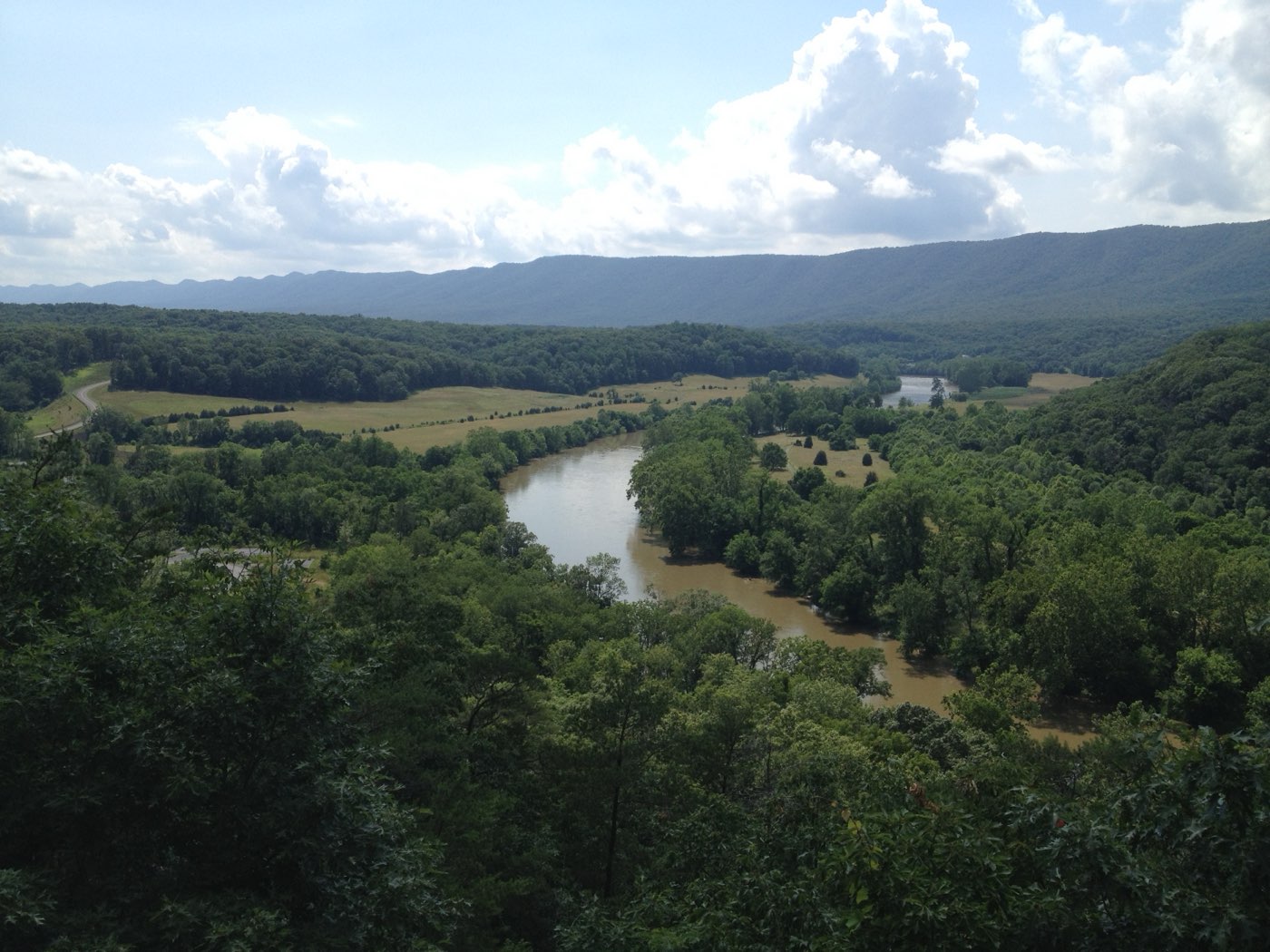
South Fork Shenandoah River
Running the northern Shenandoah Valley between the Blue Ridge and Massanutten Mountain, the South Fork is a floatable smallmouth river with largemouth, sunfish, and carp mixed in. May through October is the season, and stable warm conditions in summer and early fall bring the best topwater fishing. Smallmouth key on minnows, crayfish, and terrestrials; poppers and baitfish patterns are the standard program, and water level and clarity matter more than any insect. Public boat ramps and access points line the valley, with popular floats between towns and bridges and wading possible at lower flows near gravel bars. General warmwater regulations apply on most reaches.
Dry River
West of Harrisonburg along George Washington National Forest, the Dry is a freestone trout stream that stays off most itineraries despite one of Virginia's better hatch calendars. Caddis and sulphurs come off in April and May, and the river hosts one of the state's largest Green Drake hatches, typically around late May near Memorial Day. April through June and September through October are the reliable windows; attractor dries and nymphs cover the gaps between hatches. Forest roads and pullouts provide roadside and hike-in access along the upper and middle river, though flows are rain-dependent and can drop hard in midsummer. The stream holds a mix of stocked and wild rainbows and brook trout, with some special-regulation sections.
Seasons at a glance
Spring is the headline. April through June lines up mountain-stream hatches, sulphurs on the Smith, Hendricksons and sulphurs on the Jackson, the Dry River's Green Drakes, and the first strong smallmouth fishing on the big rivers. Summer shifts the emphasis: terrestrials on Mossy Creek and the park streams early and late in the day, and peak topwater smallmouth on the James, New, and South Fork Shenandoah through the warm months.
Fall is the second prime window — September and October bring cool water, active trout, pre-spawn browns on the tailwaters, and continued bass fishing. Winter belongs to the tailwaters and the musky anglers: the Smith and Jackson fish through the cold on midges and nymphs, and late fall through early spring is the best stretch for musky on the James and New.
Beyond trout
Virginia's warmwater fly fishing is not a consolation prize — the James, New, and Shenandoah smallmouth fisheries rank among the best in North America, with aggressive fish that eat streamers and topwater flies through the warm months. The same rivers support genuine musky fisheries, best worked from rafts or drift boats with large articulated patterns, particularly on the James and New. Carp and sunfish round out the options on slower water.
Licenses and regulations
The Virginia Department of Wildlife Resources (DWR) manages the state's fisheries. Anglers need a valid Virginia freshwater fishing license, and most designated trout waters require an additional trout license on top of it. Some national forest waters also require a separate National Forest permit. Special-regulation sections — fly-fishing-only on Mossy Creek, catch-and-release reaches on the Jackson and Smith, wild brook trout rules in Shenandoah National Park — are noted per river above. Regulations change annually; verify current rules at Virginia DWR regulations.
Where to start
With one weekend, base in the Shenandoah Valley around Harrisonburg or Staunton in May. Fish Mossy Creek's spring hatches and terrestrials one day, then either hike into a Shenandoah National Park brook trout stream or hit the Dry River's late-May Green Drakes the next. If the weekend falls in July or August, change the plan entirely: float the South Fork Shenandoah or upper James for smallmouth and save the trout water for fall.
Neighboring states worth a look: