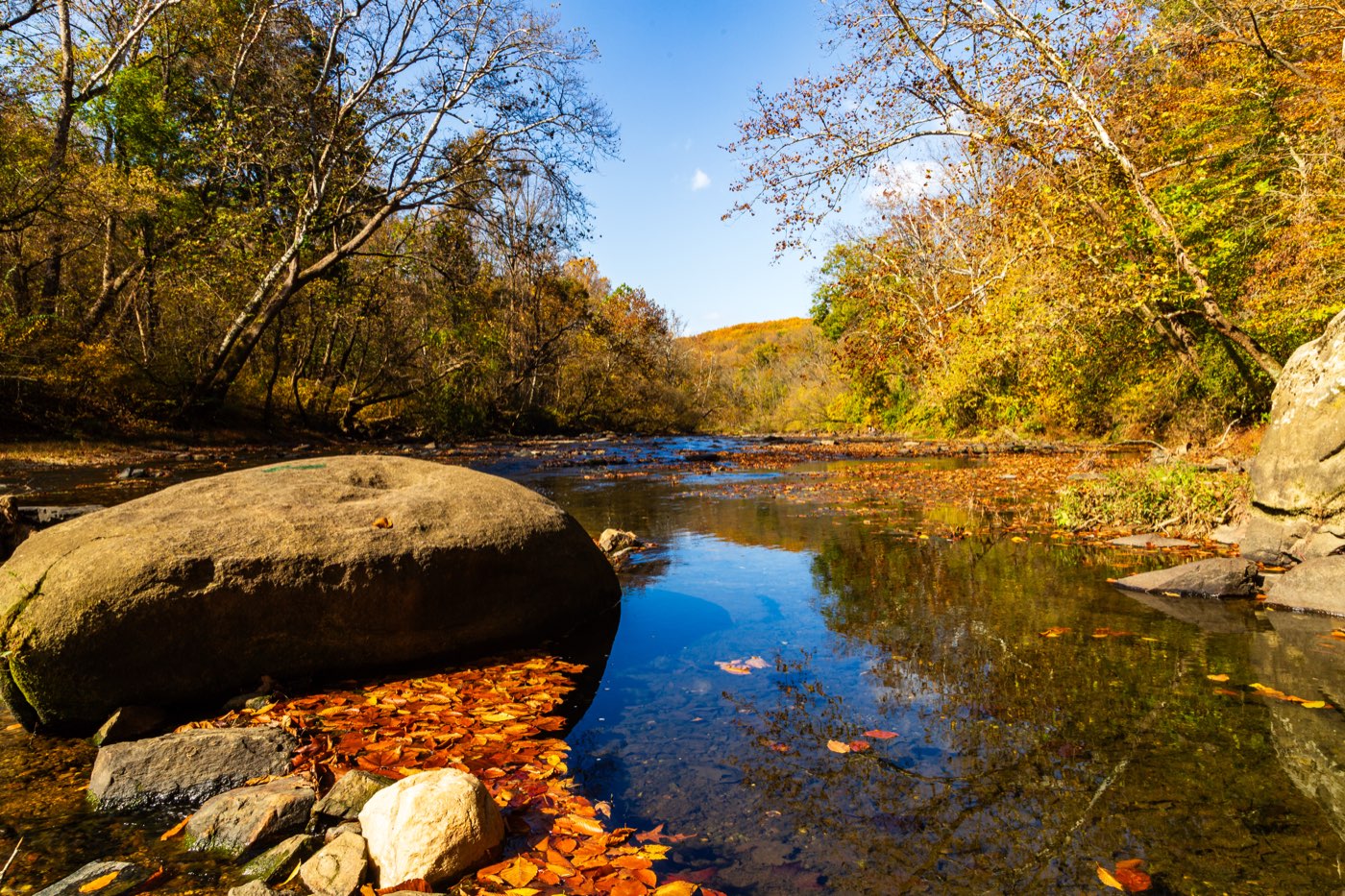
The water
Gunpowder Falls
The Gunpowder, north of Baltimore near Hereford and Monkton, is Maryland's flagship trout stream — a tailwater holding wild browns plus brook and rainbow trout. April through June and September through October are prime, when flows and temperatures line up with the main mayfly and caddis activity; midges and streamers keep it producing year-round. The hatch list runs blue-winged olives, midges, caddis, and assorted mayflies through spring and fall, with ants and beetles taking over in summer. Access is a strength: Gunpowder Falls State Park wraps the river with multiple parking areas and trails for walk-in wading. Sections carry special regulations, including catch-and-release and tackle rules — check current Maryland DNR listings. Full Gunpowder Falls guide
Savage River
The Savage, in Garrett and Allegany counties in far western Maryland, is the state's premier wild-trout freestone — native brook trout and wild browns, with rainbows in the mix. April through mid-June is the prime dry-fly window on blue quills, sulphurs, and caddis; mid-summer low water makes for good wading on the Lower Savage, and fall fishes well on nymphs and streamers with stoneflies and terrestrials in play late. Savage River State Forest and nearby state lands provide access via multiple pull-offs and trails. Special management areas emphasize wild trout, and some reaches are catch-and-release with tackle restrictions. It also draws lighter pressure than the Gunpowder — a fair trade for the drive. Full Savage River guide
North Branch Potomac River
The North Branch forms the western border with West Virginia near Cumberland and Westernport, and it fishes as two rivers in one: trout water from late March through early June and again September to mid-October, and smallmouth water from May through September as it warms. The trout see typical Appalachian hatches — blue quills, sulphurs, caddis — while baitfish and crayfish drive the warmwater reaches. Multiple public access points sit along the border corridor in state forests and DNR fishing areas, with both drive-to and walk-in wading. Several stretches carry special trout regulations and stocking programs; the DNR's maps mark the designated trout management segments.
Big Hunting Creek
Big Hunting Creek drains the Catoctin Mountain country near Thurmont, a small mountain stream with browns, brookies, and rainbows in pocket water and shaded pools. Spring and fall are best, with moderate flows and cool temperatures; summer mornings still fish in the shaded canyon sections. The bugs are a classic mountain-stream mix — mayflies, caddis, and midges through spring and early summer, then terrestrials in late summer. Cunningham Falls State Park and Catoctin Mountain Park make access easy, with trails and roadside pull-offs reaching pools and riffles. The stream is known for special trout regulations on portions, including catch-and-release water, so check the current rules before keeping anything.
Beaver Creek
Beaver Creek, near Hagerstown and Boonsboro, is Maryland's spring creek — stable, limestone-influenced flows that keep browns and rainbows feeding year-round. Spring and fall peak, when insect activity is high and weed growth stays manageable, but the fishery never really closes. Expect consistent midge, caddis, and mayfly activity plus scuds and aquatic worms; small nymphs and emergers are the staples, and the fishing skews technical. Access comes at designated DNR trout fishing areas and select public easements, and the corridor is narrow, walk-in water that demands careful wading. Parts are managed as special-regulation trout water. For anglers who like difficult fish on light tippet, this is the state's most overlooked stream.
Morgan Run
Morgan Run, in Carroll County near Westminster and Sykesville, is central Maryland's convenient trout option — rainbows and browns, best in spring and fall around scheduled stockings and cooler water, with productive early mornings in late spring. The bug life is a Piedmont freestone mix of mayflies, caddis, and stoneflies, and the stocked fish respond well to nymphs and streamers. The Morgan Run Natural Environment Area and other county lands provide trails and parking along multiple miles of stream. Management is split: designated trout management areas with special regulations sit alongside put-and-take stretches, so know which section you are standing in.
Potomac River
The main-stem Potomac along Maryland's border — near Brunswick, Harpers Ferry, Williamsport, and Poolesville — is nationally recognized smallmouth water, with largemouth, sunfish, carp, and catfish rounding out the fishery. The season runs late April through October, peaking May through September when water temperatures hold in the mid-60s to mid-70s and flows are moderate. Baitfish, crayfish, and aquatic insects drive the feeding; Clouser Minnows, Deceivers, poppers, and Woolly Buggers cover the ledges, seams, and pools. Access is extensive through national and state parks, boat ramps, and trailheads on the Maryland shore, for both wading and floating. Black bass regulations and seasonal considerations apply by reach.
Chesapeake Bay and the Susquehanna Flats
The upper bay around Havre de Grace and Perryville is Maryland's saltwater fly fishery, headlined by striped bass on the Susquehanna Flats. April and May bring big pre-spawn stripers onto the shallow flats; October and November see fish return to the bay tributaries, and bluefish, red drum, and speckled trout fill the warm months. Forage runs bay anchovies, menhaden, shad, and grass shrimp — streamers, Deceivers, and surface flies fished over grassy shoals and along current seams. State parks, public ramps, and shoreline areas around the upper bay provide access. Striped bass seasons, size limits, and closed areas are tightly regulated and adjusted frequently; verify the current rules before every trip.
Seasons at a glance
Trout fishing runs on two windows: late March through early June, then September to mid-October, when cool water and heavy insect activity overlap. Between them, summer shifts the trout game to terrestrials on the Gunpowder and shaded mountain water like Big Hunting Creek, while Beaver Creek's spring-fed flows fish all year. The warmwater and saltwater calendar fills the gap — Potomac smallmouth from late April through October with a May-to-September peak, and stripers on the flats in April–May and again in October–November. There is no dead month in Maryland; there is only a question of which rod to rig.
Beyond trout
The Potomac's smallmouth fishery is the state's standout warmwater draw, with a season that stretches from late April into October. The Chesapeake and Susquehanna Flats give fly anglers spring and fall runs of big striped bass in shallow water, and Maryland's lakes and reservoirs add largemouth, pike, and other warmwater targets listed in the DNR's hotspot guides.
Licenses and regulations
Maryland fisheries are managed by the Department of Natural Resources, Fishing and Boating Services. A Maryland fishing license is required for public waters, with additional requirements for tidal areas, and a trout stamp is typically required to fish designated trout waters or harvest trout. Special-regulation sections — catch-and-release, tackle restrictions, delayed harvest — are noted per river above and change annually; confirm current rules at Maryland DNR regulations.
Where to start
With one weekend, split the difference by season. Spring or fall, drive west: fish the Savage's dry-fly water and the North Branch Potomac's trout reaches from a base in the Frostburg–Cumberland area. In summer, stay central — mornings on the Gunpowder's terrestrial water out of the Hereford area, afternoons floating or wading Potomac smallmouth near Brunswick or Williamsport. Fly shops in Monkton and Sparks sit minutes from the Gunpowder. And if you want the state's hardest, least-crowded fishing, give Beaver Creek a full technical morning.
For nearby water, see Fly Fishing in Pennsylvania, Fly Fishing in Virginia, and Fly Fishing in West Virginia.