Quick reference
| Field | Value |
|---|---|
| State / region | West Virginia, Allegheny Mountains around Slatyfork and Webster Springs |
| Species | Brown trout, rainbow trout, brook trout (smallmouth in the lower river) |
| Best months | April–June, September–November |
| Water type | Spring creek (limestone-influenced) |
| Difficulty | Intermediate (clear water and educated fish in the special-reg sections) |
| Wading | Moderate — cobble and slick limestone; careful footing, trickier at high water |
Why fish here
The Elk forms where Big Spring Fork and Old Field Fork merge near Slatyfork in the Allegheny Mountains, and from that confluence down it fishes like something rare in the East: a cold, limestone-influenced spring creek with mountain scenery around it. Locals call it "the Lady." The consistent cold water and prolific insect life support very high trout densities — native brook trout, wild browns and rainbows, and stocked fish on top — and reports document high numbers of large rainbows and browns, with rainbows to 22 inches and the occasional golden trout. For public Eastern water, the trophy potential is real.
The hatch list reads like a Pennsylvania limestoner's: little black stoneflies in early spring, blue-winged olives from late March into summer, blue quills, sulphurs, March browns, and Eastern green drakes in late spring. Dry-fly fishing is a major draw, and the late May–early June window, when sulphurs, March browns, caddis, and often green drakes overlap, is the single best stretch of the year.
Access seals the case. A county road parallels the upper river, special-regulation water keeps quality fish in place, and the whole upper fishery in Pocahontas and Randolph Counties is practical, repeatable wade water — no boat, no long approach, no guesswork.
The river, section by section
Headwaters and Slatyfork catch-and-release water
Access: From the Big Spring Fork/Old Field Fork confluence near Slatyfork off WV Route 219, via County Route 49 just past Elk Springs Resort; a county road parallels the section with multiple informal pull-offs Character: Narrow, clear, cold spring-fed water at moderate gradient — broken pocket water, long riffle-runs, occasional deep pools over cobble and slick limestone Species mix: Native brook trout, wild browns and rainbows, and stocked fish, including some large rainbows and browns Crowding: The most popular fly reach — notable pressure on spring and early summer weekends near Elk Springs Resort; steadier but lighter on weekdays Notable hatches: Little black stoneflies (early March–mid-April), BWOs (late March into summer), blue quills (mid-April–early May), little black caddis, sulphurs (mid-May–late June), March browns, Eastern green drakes in late spring
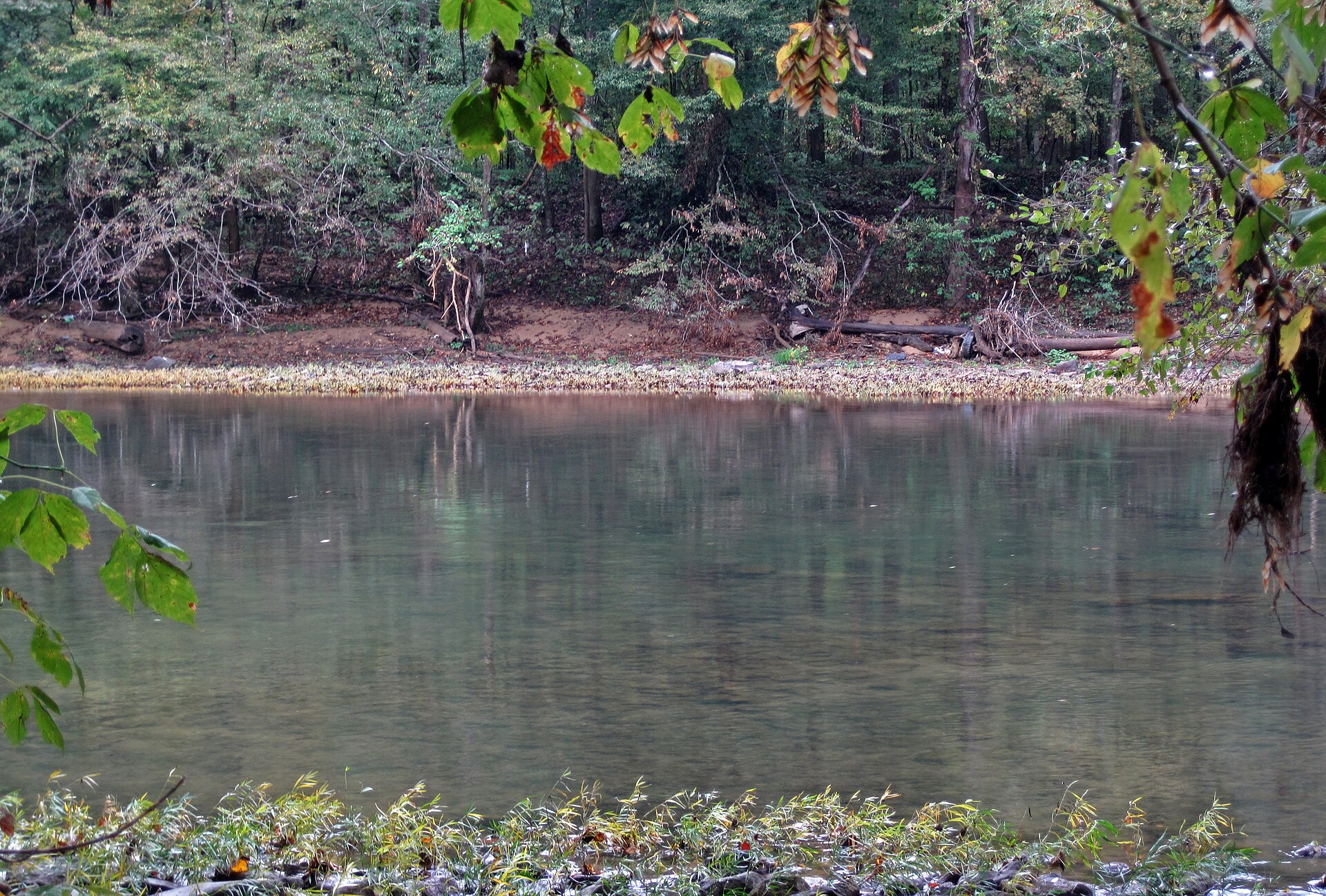
This is the signature water: spring-creek clarity in a mountain setting, with wild fish that reward accurate casts and clean drifts. Wading is generally moderate — gentle enough flows for careful wading at normal levels, trickier when the river comes up.
One quirk worth knowing before you plan a day: below the headwaters catch-and-release reach, the channel disappears underground. The reliable flow, and therefore the fishing, is concentrated above that sink, which is part of why this compact upper section carries so much of the river's reputation.
Elk Springs public catch-and-release section
Access: Public fly-fishing-only water begins immediately below Elk Springs Resort near Monterville, with road access along County Route 49 and pull-offs for roughly two miles downstream Character: Medium-width spring creek, moderate gradient, classic riffle-run sequences feeding deeper pools; gravel and cobble with limestone ledges Species mix: Large rainbows and browns — including fish over 20 inches — stocked and holdover trout, native brookies, and the occasional golden rainbow Crowding: Regular pressure year-round; spring and fall weekends and peak hatch evenings get busy, and the section rarely feels secluded Notable hatches: BWOs, sulphurs, March browns, green caddis, little yellow stoneflies, Eastern green drakes; strong terrestrial fishing (ants, beetles, hoppers) in summer and early fall
This is highly managed, trophy-style water, and it fishes like it: structure that concentrates larger trout, regular insect activity, and fish that have seen plenty of flies. The easy roadside access that makes it convenient also makes it visible, so manage expectations about solitude — weekdays and off-peak seasons are the workaround.
The reward for the company is the fish. This two-mile reach holds the river's largest documented trout, and evening hatch fishing here — sulphurs and drakes in late spring, terrestrials later — is the Elk at its best.
Lower trout Elk (near Beverly)
Access: Documented access along WV Route 92, plus some private land where permission is granted; roadside pull-offs and bridge crossings reach the wider, slower reaches Character: Wider and slower than the upper spring-creek water — long glides, gentle runs, and deeper pools rather than tight pocket water Species mix: Stocked and holdover rainbows and browns, some wild fish, with warmwater species (smallmouth and others) increasing downstream Crowding: Moderate — local use during stocking periods and nice-weather weekends, light traffic on weekdays Notable hatches: The regional profile at lower intensity — BWOs, sulphurs, March browns, caddis, stoneflies, strong summer terrestrials
The lower trout water is the beginner-friendly counterpoint to the technical upper river. Easier wading, slower currents, and stocked fish that respond to Adams, BWO, and Sulphur-type patterns make it a sensible place to learn the river or to bring a newer angler while the special-reg water absorbs the crowds upstream.
Middle-lower Elk (Braxton, Clay, and Kanawha Counties)
Access: Established public ramps and bridge crossings for float trips; these reaches are documented for floating rather than walk-in trout access Character: A much wider, lower-gradient river — long pools, extended runs, gentle riffles — best fished from canoe, kayak, or raft; plan floats at roughly one river mile per hour Species mix: Primarily smallmouth bass and other warmwater species; trout influence fades downstream of the cold headwaters Crowding: Driven by general recreation more than fly anglers; summer weekends and holidays see float traffic, shoulder seasons are quiet Notable hatches: Standard Appalachian fauna, but most fly anglers here throw streamers, baitfish patterns, and bass bugs
Included for completeness: this is a different fishery that happens to share the name. If the trout water is blown out or crowded, a smallmouth float down here is the Elk's plan B.
Hatches and seasons
| Months | Hatches | Flies |
|---|---|---|
| Mar–Apr | Little black stoneflies, early BWOs, little black caddis, blue quills | Little Black Stonefly nymphs 14–18, BWO parachute 18–20, Blue Quill dun 18–20, black Elk Hair Caddis 16–18 |
| May–Jun | Sulphurs, March browns, green caddis, Eastern green drakes, continued BWOs | Sulphur comparadun 16–18, March Brown parachute 12–14, green Elk Hair Caddis 14–16, Eastern Green Drake patterns 8–10, Pheasant Tail and Hare's Ear nymphs 14–16 |
| Jul–Sep | Mixed caddis, residual mayflies, strong terrestrial season | Adams 14–18, tan/olive caddis 14–16, ants 18–22, beetles 14–18, hoppers 10–14, BWO emergers 18–20 |
| Oct–Feb | BWOs, midges, little winter stoneflies | BWO parachute 18–22, midge pupa 20–24, Little Winter Stonefly nymphs 16–18, small dark Hare's Ear/Pheasant Tail 16–20 |
Recommended flies (by season)
| Season | Top patterns | Why |
|---|---|---|
| Spring | BWO parachutes 18–20, Blue Quills 18–20, Sulphur emergers 16–18, March Browns 12–14, Pheasant Tail and Hare's Ear nymphs 14–16, Green Drake patterns 8–10 | Spring brings the most diverse hatches of the year; matching the mayfly progression covers the primary food, while drakes and larger nymphs move the trophy fish |
| Summer | Elk Hair Caddis 14–16, Adams 14–18, ants and beetles 14–20, hoppers 10–14, Hare's Ear and Prince attractor nymphs 14–16 | Caddis, leftover mayflies, and abundant terrestrials dominate; buoyant dries work the surface while attractor nymphs cover deep pools midday |
| Fall | BWOs 18–22, small caddis 16–18, midge pupa 20–24, Woolly Bugger and sculpin streamers 4–8 | Cooling water puts trout on BWOs and small insects, and larger browns and rainbows turn aggressive toward streamers — a good window for the biggest fish |
| Winter | Tiny BWOs 20–22, midge pupa and larva 20–24, little winter stonefly nymphs 16–18, small dark nymphs 16–20 | Activity narrows to small mayflies, midges, and winter stones; subtle small-nymph presentations in slow winter lies find fish consistently |
Gear notes
An 8½-foot 5-weight with a weight-forward floating line, 9-foot leader, and 4X–5X tippet covers nymphs, dries, and small streamers across the spring-creek water. A 4-weight is pleasant for the technical dry-fly work in the headwaters; a 6-weight helps with bigger streamers or wind on the wider lower reaches. Studded boots matter more here than on most Appalachian streams — the limestone is slick — and chest waders, polarized glasses, and a rain jacket round out the standard kit.
Logistics
- Regulations: The upper Elk carries special trout regulations — catch-and-release and artificial-lures-only sections from the headwaters downstream, including a fly-fishing-only, catch-and-release reach below Elk Springs Resort. General statewide rules apply in Braxton, Clay, and Kanawha Counties. Anglers 15 and older need a West Virginia license plus a trout stamp for trout. Administered by the West Virginia Division of Natural Resources; boundaries and bag limits change, so confirm current WVDNR regulations and the exact special-reg section limits before fishing.
- Access points:
- Elk Springs Resort area public C&R water — fly-only, catch-and-release water immediately downstream of the resort along County Route 49, with multiple roadside pull-offs
- Slatyfork headwaters — where Big Spring Fork and Old Field Fork join, off WV Route 219
- Lower Elk near Beverly — WV Route 92 access to wider, slower beginner-friendly water
- Closest fly shop: Elk Springs Resort fly-fishing operation, Monterville
- Nearest towns: Slatyfork, Monterville, Beverly, Elkins
- Closest gauge: USGS 03194700 — Elk River below Webster Springs, WV
When NOT to fish here
Stay off it during high runoff and after major rain — the river runs high and discolored, wading gets unsafe, and insect activity goes unreliable; spring snowmelt spikes do the same. In mid-summer heat waves, afternoon water temperatures climb in the lower trout reaches, so fish the cooler headwaters or go early and late instead. And if solitude is the point, skip holiday weekends and the marquee hatch windows around Elk Springs, when the prime pools are claimed early.
Where to fish next
- Fly Fishing in West Virginia — the full state guide
- Shavers Fork of the Cheat River — high-elevation trout water within easy reach of the same Elkins base
- Cranberry River — a backcountry alternative when the Elk Springs water feels too public