Quick reference
| Field | Value |
|---|---|
| State / region | Washington, central Washington between Cle Elum and the Columbia River |
| Species | Wild rainbow trout, cutthroat trout, mountain whitefish; smallmouth bass in the lower river |
| Best months | March–June and September–October; open year-round from Keechelus Dam to Roza Dam |
| Water type | Tailwater (fishes with a freestone feel) |
| Difficulty | Intermediate — approachable hatches, but irrigation flows dictate everything |
| Wading | Good at non-irrigation flows; hazardous above roughly 1,000 cfs in the canyon, where summer releases of 4,000–6,000 cfs make it a boat fishery |
Why fish here
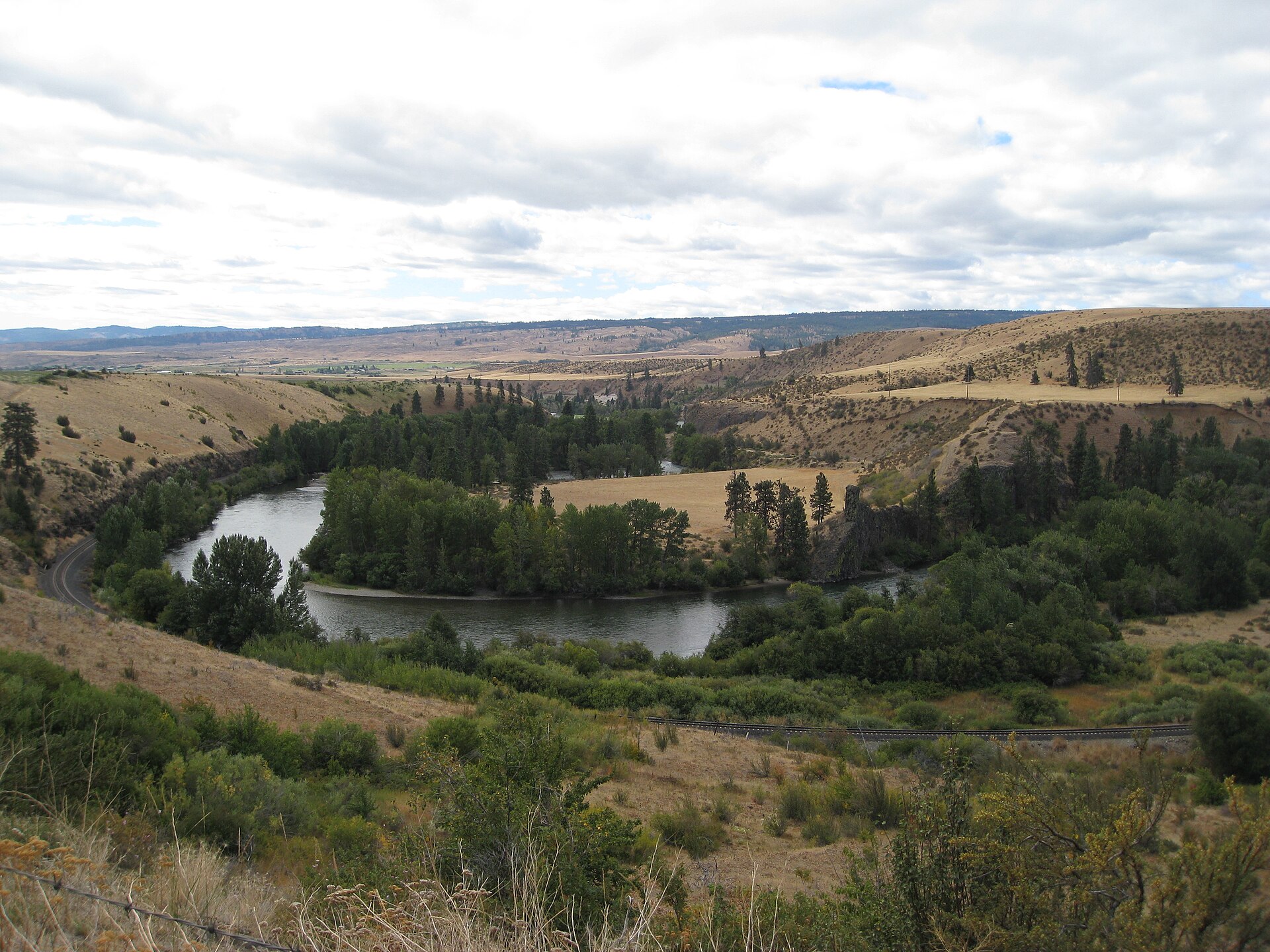
The Yakima is Washington's only designated blue ribbon trout stream — a reservoir-fed, regulated river flowing east out of the Cascades and through the basalt-walled Yakima Canyon before joining the Columbia. From Keechelus Dam to Roza Dam it is managed as a selective-gear, catch-and-release trout fishery, and the management shows: strong wild rainbow and cutthroat populations, with commonly cited densities approaching or exceeding 1,000 trout per mile in key canyon reaches, and figures around 1,500 catchable-size fish per mile cited for parts of the lower canyon.
It is technically a tailwater system fed by multiple reservoirs, but gradient, cobble substrate, and tributary influence give it a big-western-freestone character in many reaches. Insect production is high — Skwala stoneflies in late winter, March Browns and BWOs in spring, prolific evening caddis, PMDs, a full summer terrestrial game along the grass banks, and October Caddis in fall — supporting dry-fly fishing through much of the year.
The river's defining variable is irrigation. Managed releases keep the blue-ribbon reach fishable year-round, but summer irrigation season transforms it: flows of 4,000–6,000 cfs turn the canyon into boat water, and the wading angler's river reappears when the reservoirs stop feeding the valley in fall. Learn the flow calendar and the Yakima gives you three distinct reaches — upper river, canyon, and farmlands — with options in almost every season.
The river, section by section
Upper Yakima (Keechelus Dam to the Thorp area)
Access: Lake Easton State Park, Easton, access along I-90, the Cle Elum River confluence, and Cle Elum-area road and bridge pull-outs; public access between Lake Easton and the Cle Elum River is limited by summer home development. Character: Higher-gradient managed-flow water with large boulders and a confined channel, opening to broader riffles and braided channels below the Cle Elum confluence; flows average around 350 cfs outside irrigation season. Species mix: Wild rainbows with a noticeable cutthroat component — cutthroat are more prominent here than anywhere else on the river — plus mountain whitefish. Crowding: The lightest pressure of the three reaches; light-to-moderate on weekdays, more boats on spring and fall weekends when flows and hatches align. Notable hatches: Skwalas and March Browns in March–April; BWOs early spring and fall; tan and olive caddis late spring into summer; terrestrials mid-to-late summer.
The upper river rewards anglers who like pocket water and clear, quick current. Wading is best at lower non-irrigation flows and demands careful footing in the boulder fields; higher volumes shrink the bank angler's options and spread the pressure out naturally. If cutthroat matter to you, this is the reach to fish.
Yakima Canyon (Thorp to Roza Dam)
Access: Umtanum Recreation Area, Lmuma Creek, Big Pines, Ringer Loop, Bighorn, Roza Recreation Area, plus canyon pull-outs along State Route 821. Character: A high-desert corridor — a sinuous single channel cut into basalt with cobble-gravel substrate, broad riffles, long runs, deeper pools, and undercut banks; clear water at base flows with strong current. Species mix: Dominated by wild rainbows with some cutthroat and whitefish; parts of the lower canyon carry roughly 1,500 catchable trout per mile. Steelhead and spring Chinook use the canyon for spawning and rearing rather than as a sport fishery under the trout rules. Crowding: The most popular reach — noticeable guide and private boat traffic in prime spring and fall windows and during summer hopper season; weekends crowd the major ramps. Winter is quietest. Notable hatches: Skwala and March Brown from February–April; BWOs on cool, overcast days; caddis and PMDs/PEDs from late April with prolific dusk caddis; hoppers, ants, and beetles in summer; strong BWO and October Caddis in fall.
The canyon is the Yakima's signature water and it behaves like a large western freestone: read the riffle-run structure, work the banks, and be ready for the evening caddis blitz. The flow threshold is the key planning number — wading is good below roughly 1,000 cfs on the canyon gauges and becomes limited and potentially hazardous above that, while typical summer irrigation flows of 4,000–6,000 cfs make this a float-only proposition. Summer floats throwing hoppers at the grass lines are their own season; the wade angler's canyon is a spring, fall, and winter fishery.
Farmlands (Ellensburg area within the blue-ribbon reach)
Access: Ringer Loop, Bighorn, and other established access points and boat launches in the Ellensburg farmlands corridor, plus county road bridges and pull-outs. Character: Big sweeping bends, broad runs, multiple islands, and braided channels through agricultural valley bottom; moderate gradient with side channels, back-eddies, and long riffle-run sequences. Species mix: A strong wild rainbow population with some cutthroat and whitefish — this section is described as some of the river's best water for trout food production and spawning habitat. Crowding: Steady guide and local use, especially April–June and September–October; peak-season weekends run busy, winter and shoulder periods lighter. Notable hatches: Skwala, March Brown, and BWO in early spring; prolific tan/olive caddis and PMDs through late spring and early summer; intense hopper fishing along the grass banks and islands in mid-to-late summer; renewed BWO and caddis in fall.
The Farmlands reach is the dry-fly angler's stretch. The braided structure creates more wadeable water than the canyon at comparable flows, and the long grass banks make it the river's best terrestrial water — hoppers drifted tight to the edges in August pull fish that ignore everything else. Side channels and islands let wading anglers find their own water even on busier days.
Hatches and seasons
| Months | Hatches | Flies |
|---|---|---|
| Feb–Mar | Skwala stoneflies; early BWOs; midday March Browns on overcast days | Skwala-style dries (Chubby Chernobyl #8–12), BWO parachutes #16–20, March Brown parachutes/emergers #12–14 |
| Apr–May | March Browns tapering; PMDs and PEDs; strong evening caddis (tan and olive) | Parachute Adams and PMD parachutes #14–18, CDC mayfly emergers, Elk Hair Caddis and X-Caddis #14–18 tan/olive |
| Jun–Aug | Caddis, summer mayflies, stonefly remnants, heavy terrestrials | Hoppers (Morrish Hopper #6–10), foam beetles and ants #12–16, attractors (Stimulator, Royal Wulff) #10–16, tan/olive caddis #14–18 |
| Sep–Oct | Fall BWOs; October Caddis; residual terrestrials on warm days | BWO parachutes and cripples #16–20, orange Stimulator #8–10 for October Caddis, smaller attractors and terrestrials #10–16 |
| Nov–Jan | Sparse but consistent small BWOs and midges in favorable weather | Tiny BWO dries/emergers #18–22, Griffith's Gnat and midge clusters #18–22, small nymphs (Pheasant Tail, Zebra Midge) #18–20 |
Recommended flies (by season)
| Season | Top patterns | Why |
|---|---|---|
| Spring | Skwala dries and nymphs, March Brown and BWO parachutes, PMD emergers, tan/olive caddis dries, beadhead Pheasant Tail Nymph and Hare's Ear Nymph | Late-winter flows and temperatures line up with Skwala, March Brown, and BWO activity, so larger stonefly and mayfly imitations earn eats; as water warms, caddis and PMD emergers take over, with standard nymphs covering non-hatch hours. |
| Summer | Hoppers, foam beetles and ants, Elk Hair Caddis, attractors (Stimulator, Purple Haze), Rubber-legs and Prince Nymph | Irrigation-season flows and heat push terrestrials along the grass banks and islands and sustain evening caddis events; attractors and nymphs pick up opportunistic fish between hatches. |
| Fall | BWO and Mahogany dun dries, October Caddis, small CDC emergers, soft-hackle wets swung in riffles | Cooling water triggers renewed BWO hatches and the big fall caddis; soft-hackles cover emergers in the riffle-run water. |
| Winter | Small BWO dries, Griffith's Gnat, Zebra Midge, small stonefly and mayfly nymphs fished deep | On low non-irrigation flows trout focus on small aquatic insects; midges and tiny mayflies cover the surface windows, and dense little nymphs are the consistent play. |
Gear notes
A 9-foot 5-weight is the primary rod, with a 4-weight useful for low-flow dry-fly work and a 6-weight for boat fishing streamers and indicator rigs in heavy water. A floating weight-forward line covers nearly everything; add a sink-tip or poly leader for deeper streamer work in canyon pools. Run 9–12-foot leaders with 3X–5X tippet as the standard, dropping to 5X–6X for small BWOs and midges in low, clear water and beefing up to 2X–3X for hoppers, big stoneflies, and streamers. Studded boots and a wading staff are warranted on the cobble and boulder substrate, and chest waders make sense because depth and flow swing significantly with irrigation releases.
Logistics
- Regulations: Managed by the Washington Department of Fish and Wildlife (WDFW). From Keechelus Dam to Roza Dam the river is open year-round under selective gear rules — artificial lures and flies only, single barbless hooks, up to three flies, no bait — and all trout must be released; mountain whitefish may be retained under statewide rules. Below Roza Dam, rules vary by section and species, including salmon/steelhead regulations. A Washington fishing license is required. Regulations change annually — check current WDFW rules for the reach you plan to fish.
- Access points:
- Umtanum Recreation Area — major canyon access and launch with parking, a footbridge, and trails to both banks
- Roza Recreation Area — downstream canyon access and take-out near Roza Dam; the lower end of the blue-ribbon reach
- Ringer Loop — popular Ellensburg-area Farmlands access with good wading and a boat launch
- Lake Easton State Park — upper-river access near Easton; more limited and flow-dependent for wading
- Closest fly shop: The Evening Hatch, Ellensburg (also Riverdog Outfitters, Ellensburg)
- Nearest towns: Easton, Cle Elum, Ellensburg, Yakima
- Closest gauge: USGS 12484500 — Yakima River at Umtanum, WA. Wading guidance keys off the canyon flows at Umtanum: wading is generally recommended only at or below roughly 1,000 cfs, with boat fishing the norm at irrigation-season volumes of 4,000–6,000 cfs.
When NOT to fish here
From mid-April through much of the irrigation season, runoff and releases can push flows to 1,800–4,500+ cfs, cutting clarity and making wading difficult or unsafe — above roughly 1,000 cfs at Umtanum, stay out of the canyon on foot. During heat waves, parts of the basin have documented temperature and dissolved-oxygen problems; the canyon stays relatively cool, but skipping midday fishing in hot spells is the conservative call. Irrigation return flows also raise turbidity and sediment in the lower agricultural reaches from April through October, which can degrade the fishing there even when the blue-ribbon water is fine.
Where to fish next
- Fly Fishing in Washington — the full state guide
- Naches River — the Yakima's major tributary system, a freestone alternative when the main stem runs high
- Cle Elum River — upper-basin water feeding the Yakima near Cle Elum, worth exploring in the non-irrigation season