The water
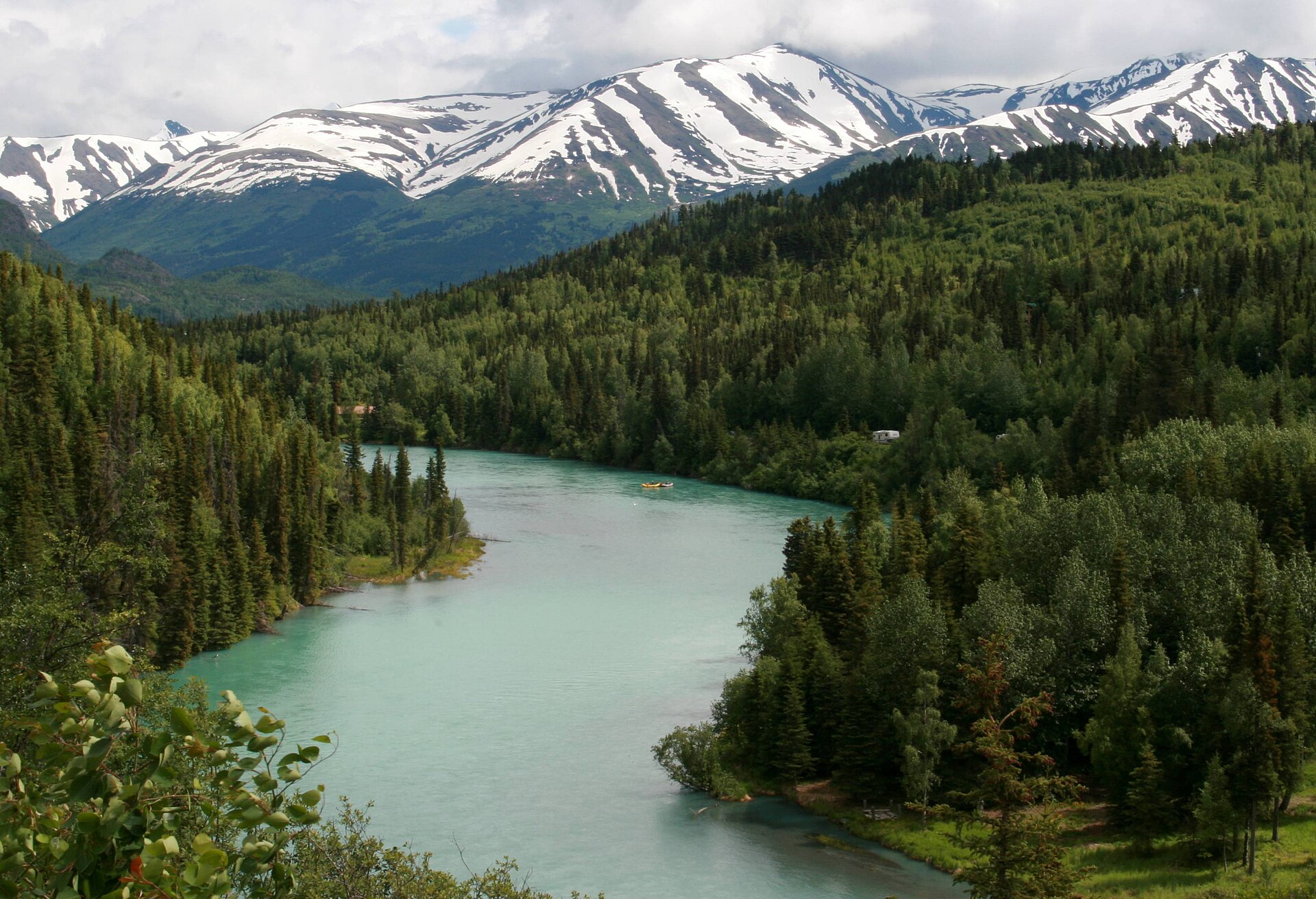
Kenai River
Alaska's most famous river, running glacial blue from Kenai Lake to Cook Inlet through the heart of the Peninsula. Kings and sockeye arrive in late June, followed by chum, coho, and pinks into early fall, and the rainbow and Dolly Varden fishing peaks as those salmon spawn and die off. This is the definitive egg-and-flesh fishery: bead rigs, flesh flies, and leech and sculpin streamers carry the summer and fall. Access is extensive along the Sterling Highway corridor through state recreation sites, city parks, and boat launches near Cooper Landing, Soldotna, and Kenai. Sections carry special king salmon seasons and gear restrictions, plus specific trout and salmon harvest rules — read the ADF&G Southcentral regulations closely before fishing. Full Kenai River guide
Russian River
The Russian, joining the Kenai near Cooper Landing, is the road system's classic trout-style fishery. Sockeye and coho run from late June through August, but what sets it apart is genuine dry-fly and nymph fishing: caddis, Stimulators, and high-floating attractors like Royal Wulffs and Turk's Tarantulas up top, Prince Nymphs, Copper Johns, and Pheasant Tails underneath, with eggs taking over once salmon spawn. Access comes from the Sterling Highway via Forest Service campgrounds and trails, with developed angler paths along the lower river. It is heavily regulated — seasonal sockeye and coho restrictions, gear rules, crowd management, and section-specific trout closures including spawning protections — so check current ADF&G rules.
Willow Creek
Willow Creek, off the Parks Highway about 60 miles north of Anchorage, is the best-known of the freestone creeks in the Susitna drainage. June and July bring king and other salmon runs alongside prime dry-fly conditions for rainbows and grayling on attractors and caddis; later summer shifts to nymphs, eggs, and small streamers as salmon spawn. Chum, pinks, and coho fill out the season into early fall. Access is walk-and-wade from multiple highway pullouts and informal trails — no boat or plane required. Standard Southcentral regulations apply, with salmon-specific seasons and possible king retention or gear restrictions in some stretches; verify the current rules for the Willow subarea.
Ship Creek
Ship Creek is the urban outlier: a tidal salmon stream flowing through downtown Anchorage into Knik Arm. June is king season and late summer brings coho, and when runs are in, it may be the most accessible salmon fishing in America — public fishing areas and walk-in access sit near downtown and the port. There is no hatch-matching here; anglers swing and strip streamers and salmon flies for the migrating fish themselves. As anadromous water inside a city, it carries detailed regulations on seasons, king retention, and gear in the downtown and estuary sections. Check the Ship Creek-specific rules before you string up.
Campbell Creek
Anchorage's other in-town option, running past Far North Bicentennial Park. Rainbows and Dolly Varden fish from July through September, with coho entering in August. The program is nymphs, small streamers, and egg patterns once salmon are present. Trails and designated fishing access points make it an easy after-work or layover fishery for locals and travelers. Like Ship Creek, it is managed as an urban anadromous stream with section-specific seasons and harvest rules under ADF&G's Anchorage area regulations.
Quartz Creek
A small, clear freestone north of Cooper Landing near Kenai Lake, and one of the Peninsula's best Dolly Varden waters. Dollies fish especially well in summer, with grayling and rainbows available through the main May–September season. Feeding is insect-driven, supplemented by eggs when salmon are present downstream, so nymphs, attractor dries, and small streamers cover it. Roadside access off the Seward Highway/Kenai Lake area makes it an easy walk-in wade — a good half-day complement to bigger Kenai water. Standard Kenai Peninsula trout and char regulations apply, with some species- and section-specific rules.
Deep Creek
Deep Creek drains to Cook Inlet near the Sterling Highway between Soldotna and Homer, and it is one of the road system's few steelhead options, alongside a king salmon run. May through July is prime. This is swung-fly water: streamers and egg patterns for anadromous fish, not insect matching. Public access clusters around the highway crossing and the lower reaches. Regulations are specific and restrictive — wild steelhead may be release-only and king harvest is limited — so consult current ADF&G Cook Inlet rules before targeting either species.
American Creek
American Creek is the fly-out entry on this list: a remote, bug-rich Bristol Bay creek reached by floatplane from lodges around King Salmon and Iliamna. In summer it runs low and clear, and the dry-fly fishing for rainbows and Arctic char is exceptional, with streamers and bead/egg setups producing as salmon spawn nearby. Trophy rainbows come out of it consistently every season. Access means aviation logistics — wilderness wading and float options rather than roads. It falls under ADF&G Southwest regulations with the conservative limits and catch-and-release emphasis typical of Bristol Bay trophy trout water.
Seasons at a glance
| Window | What's happening |
|---|---|
| May–early June | Season opens; steelhead and early kings on Peninsula creeks like Deep Creek; pike in weedy lakes |
| Late June–July | Kings and sockeye in; peak dry-fly window for grayling and rainbows on freestone creeks |
| August | Coho, pinks, and chum; trout and Dollies keyed on eggs; peak overlap of runs |
| September | Spawning winds down; big rainbows on flesh and streamers; silvers linger |
| October–April | Effectively off-season for most visiting anglers |
The compressed season is the defining constraint. If you want maximum variety, aim for late June through early September, when salmon runs stack on top of each other and the trout and char are feeding hardest.
Beyond trout and salmon
Northern pike offer a real fly-rod side game in weedy lakes and sloughs of Southcentral and the Interior through the May–September season. On the coast, Kodiak, Cook Inlet, and Southeast Alaska provide saltwater sight-fishing for salmon and other species on the flats — a dimension of Alaska fishing most visitors never touch.
Licenses and regulations
Sport fishing in Alaska is managed by the Alaska Department of Fish and Game (ADF&G). Residents and nonresidents alike need a sport fishing license, and a separate king salmon stamp is required to fish for or retain kings in many waters. Regulations are unusually granular here — seasons, gear, and retention rules change by river section and by emergency order in-season — and the special-regulation notes above are only a starting point. Check the current ADF&G regulations for your region, and check again for emergency orders before you fish.
What's changing
Persistently low king salmon returns remain the big story: ADF&G continues to adjust Kenai and Susitna king limits by emergency order based on run strength, and low returns have prompted voluntary catch-and-release and area closures on the Kenai and Nushagak. On the brighter side, Bristol Bay and Kodiak saw strong sockeye runs in 2024, with reports of earlier run timing linked to warmer rivers. Anglers also report climate-driven low water affecting late-summer access on some western Alaska rivers. No major statewide regulation overhauls or stocking shifts are on the books for 2025–26.
Where to start
For a first trip on one weekend — realistically a long one, given the flying — base in Cooper Landing in July or August. Fish the Kenai for sockeye, rainbows, and Dollies, walk into the Russian for dry-fly trout fishing, and hit Quartz Creek for Dolly Varden if you want quieter water. If you fly into Anchorage with a spare morning, Ship Creek kings in June or Campbell Creek silvers in August are twenty minutes from the airport. Save Bristol Bay and the fly-out rivers for the trip where the fishing is the entire point and the budget matches.
If Alaska is the dream trip, these are the closer training grounds:
Fly Fishing in Washington Fly Fishing in Oregon Fly Fishing in Montana