Quick reference
| Field | Value |
|---|---|
| State / region | Alaska, Kenai Peninsula (Kenai Lake to Cook Inlet) |
| Species | King, sockeye, coho, and pink salmon; rainbow trout; Dolly Varden |
| Best months | Mid-June through September; late spring and early fall for trout with lighter crowds |
| Water type | Glacier-fed freestone, behaving more like a regulated, fisheries-managed river |
| Difficulty | Intermediate to advanced — big, powerful water and dense, section-specific regulations that must be planned around |
| Wading | Limited and situational; broad, powerful runs with shifting substrate. Strong-traction boots essential |
Why fish here
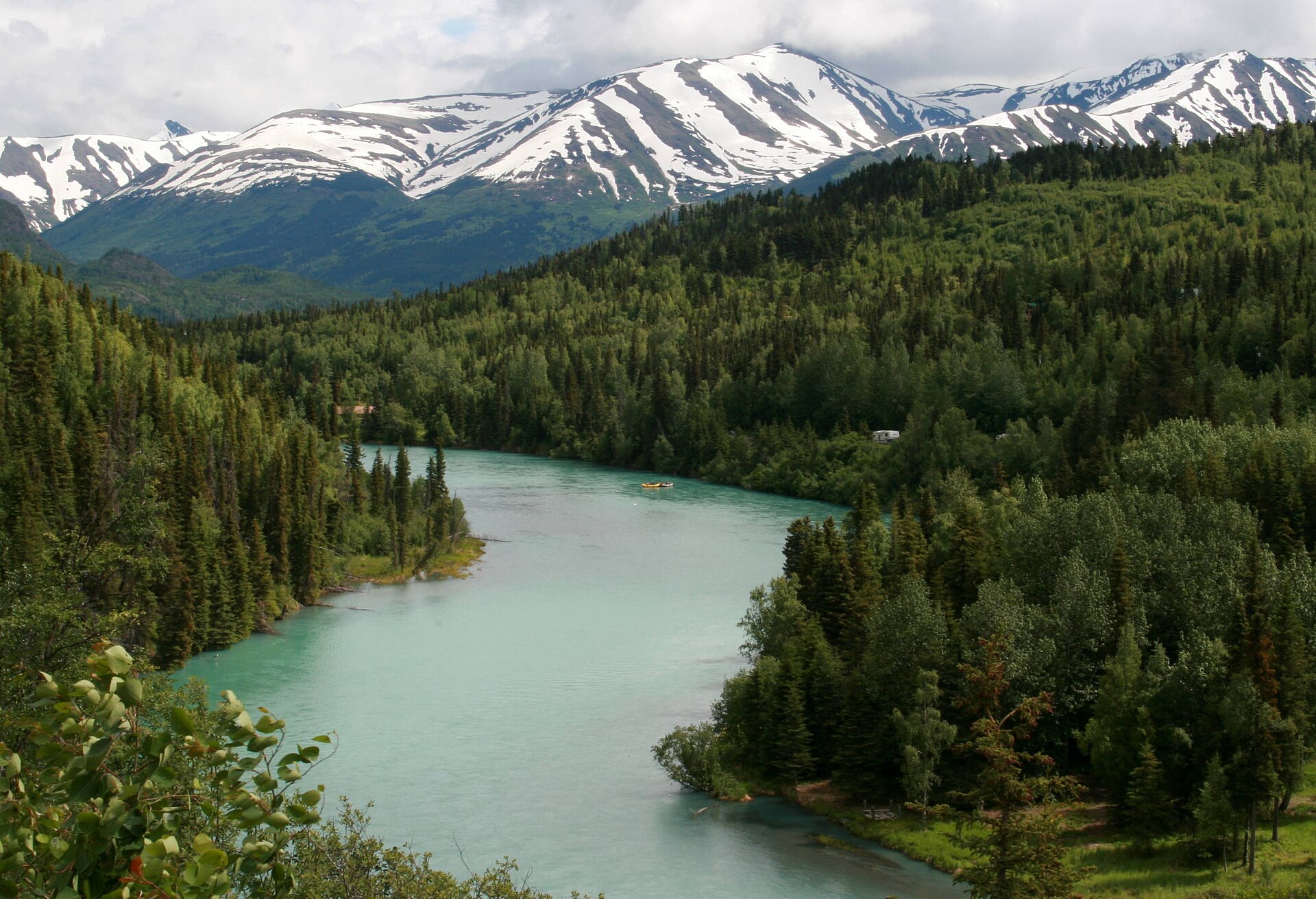
The Kenai is one of Alaska's marquee sport fisheries: a large, glacier-fed river running from Kenai Lake through Skilak Lake to Cook Inlet that consistently produces large salmon and strong rainbow trout fishing. Overlapping runs stack the calendar from mid-June into fall — kings and sockeye beginning in late June, followed by coho and pinks — while the rainbow and Dolly Varden fishing peaks as salmon spawn and die off, feeding trout on eggs and flesh. The river's lake-outlet structure gives it steadier flows and a more managed character than a classic freestone, and it pairs accessible roadside water along the Sterling Highway with boat-dependent runs.
What separates the Kenai from most destination rivers is the management. Stringent seasons, fly-only windows, bait restrictions, no-motor zones, and section-specific rules shape everything about how the river fishes, and they exist precisely because the fishery is worth protecting: management is designed to protect spawning fish and sustain quality angling. This is not a casual fishery. Anglers who plan around the calendar and the specific reach they want to fish are rewarded with big trout, strong fish numbers, and a highly productive system; anglers who show up without reading the regulations may find their target water closed, restricted, or packed.
For fly anglers, the trout game is the quiet headline. The upper river around Cooper Landing offers technical big-river fishing for rainbows and Dolly Varden — long glides, defined seams, selective fish — that stands on its own apart from the salmon crowds.
The river, section by section
Upper Kenai — Kenai Lake outlet to Skilak Lake
Access: Kenai Lake outlet area, the river corridor above Skilak Lake, and state-park/roadside access near Cooper Landing and Bing's Landing. Character: Broad, glacial, lake-outlet water — steady flows, long glides, runs and deeper pools rather than pocketwater. Often best fished from shore or with careful wading on softer edges, especially in higher flow or glacial color. Species mix: Rainbow trout, Dolly Varden, sockeye, and seasonal coho; Chinook are present in the drainage but fishing for them in the upper river is prohibited per cited guidance. Crowding: Among the most popular sections — heavy summer use, especially weekends and peak salmon runs; quieter on weekdays and in shoulder seasons. Notable hatches: Midges, mayflies, caddis, and summer terrestrial fallout; nymphing and dead-drifting small patterns usually matter more than matching a single hatch.
The lake outlet moderates the flows and gives this reach its fishable, glide-and-seam structure. When glacial color rises, presentations shift subsurface, and the soft edges become the wading angler's water.
Skilak Lake transition and middle-river corridor
Access: Lower Skilak Lake Boat Launch and nearby lake/river access are the documented public points; the launch also provides walking access to the river in winter. Character: Alternating lake-influenced water, long runs, and deeper holding water on a broad profile. The game is reading seams, softer edges, and travel lanes near the lake transitions, not picking apart riffles. Species mix: Rainbow trout, Dolly Varden, sockeye, and coho depending on season and regulation window. Crowding: Busy in peak summer and salmon periods, but boat-based access disperses some pressure; weekdays are less congested. Notable hatches: Mayflies and caddis occur, but this reach is more often fished with streamers, eggs where legal, and subsurface presentations keyed to salmon influence.
The lake transitions concentrate traveling and staging fish, which makes this corridor productive for anglers who can cover water — a boat opens far more of it than the bank does.
Lower Kenai River
Access: Roadside and boat access along the lower-river corridor; specific public access varies by section, with regulations clearly defined for the lower river. Character: Larger, slower, and highly managed — wide runs, deep holes, long travel lanes. Wading is often limited by depth, current, and bank restrictions, and bank closures in some months require careful access planning. Species mix: The core salmon corridor in the cited regulations, with rainbow trout and Dolly Varden as well. Crowding: The most crowd-prone water on the river during salmon runs — boats, bank anglers, and pressure at every known pullout, worst on weekends and holidays. Notable hatches: Salmon timing and subsurface food sources matter more than insects; for trout, small mayflies, caddis, and flesh/egg presentations apply where legal and in season.
The lower river is where the Kenai's famous salmon fishery concentrates, and it fishes like it — plan the section, the season, and the access before the trip, not after arriving.
Upper-river trout-focused reaches
Access: Cooper Landing-area access and roadside pullouts near the upper river; public access centers on the upper drainage corridor. Character: The most trout-oriented water in the system — clearer structure, longer glides, and seams that reward precise presentation. Fishes like a technical big river, with better wading than the lower river. Species mix: Rainbows and Dolly Varden are the primary non-salmon targets; salmon influence still shifts trout behavior seasonally. Crowding: Very busy in prime trout and salmon windows; shoulder seasons and midweek trips are materially less pressured. Notable hatches: Mayflies, caddis, and midges are the sensible categories here, with small emergers and nymphs useful when fish turn selective.
For a dedicated trout angler, this is the water to build a trip around: selective rainbows in calmer water, real dry-fly and emerger opportunities, and — outside the peak windows — room to fish.
Hatches and seasons
| Months | Hatches | Flies |
|---|---|---|
| Mar–Apr | Early-season midge activity and the first sparse mayfly/caddis windows on clearer, slower water | Midge pupa, Zebra Midge, small Pheasant Tail, Baetis-style nymphs #18–22 |
| May–Jun | More consistent mayflies and caddis; salmon influence building in parts of the system | Parachute Adams #12–18, Elk Hair Caddis #12–16, Pheasant Tail nymphs #14–18, small emergers |
| Jul–Aug | Summer mayfly and caddis activity continues, but salmon runs dominate and shift trout toward egg and flesh feeding where legal | Smaller dries and emergers, caddis patterns, nymphs, and salmon/trout subsurface flies appropriate to season and regulations |
| Sep–Oct | Insect activity tapers while trout and late salmon fishing remain strong; cooler water improves nymphs and streamers | Woolly Bugger, sculpin-style streamers, October caddis-style patterns where conditions support them, stout nymphs |
Recommended flies (by season)
| Season | Top patterns | Why |
|---|---|---|
| Spring | Midge pupa, Zebra Midge, Pheasant Tail, Baetis nymphs, small streamers | Spring fish key on smaller aquatic insects and subsurface feeding in cold water |
| Summer | Parachute Adams, Elk Hair Caddis, CDC emergers, egg patterns where legal, smaller streamers | More surface activity in some reaches, but salmon presence and selective trout make versatile, small imitative patterns the reliable play |
| Fall | Woolly Bugger, sculpin imitations, large nymphs, late-season caddis and mayfly patterns | Cooling water and aggressive pre-winter feeding favor larger moving flies and deeper presentations |
| Winter | Midges, small nymphs, dead-drifted subsurface flies | Cold water compresses the hatch window and pushes fish toward small, slow presentations |
Gear notes
A 5- to 7-weight is the most versatile choice, at 9 feet or longer for line control on broad water; anglers targeting salmon in specific legal fisheries may step up to 8-weight-class tackle. A floating line is standard, with a sink-tip or added weight for deeper runs and streamer work. Trout leaders run 9–12 feet, with tippet sized lighter for clear trout water and heavier where salmon or larger fish are expected. Wading boots with strong traction matter more here than on most rivers — the Kenai's broad, powerful runs and shifting substrate can be slick and unstable.
Logistics
- Regulations: Managed by the Alaska Department of Fish and Game (ADF&G), with highly sectioned rules — bag and size limits, gear restrictions, and seasonal closures that vary by reach and date, and change annually. Cited lower-Kenai regulations make some waters fly-fishing-only from June 11 to August 20: a single unweighted, single-hook, unbaited artificial fly, under 1/4 oz, with a point-to-shank gap of 3/8 inch or less. Rainbow trout carry size-limit protection and catch-and-release rules in parts of the river, with spawning-area and timing closures; fishing for Chinook is prohibited in the upper Kenai per cited guidance. Cited materials also note July–August bank closures within 10 feet of the waterline in some sections to protect habitat. Sport fishing licenses are required for anglers 16 and older. Check the current ADF&G Southcentral regulations for the exact section before fishing.
- Access points:
- Lower Skilak Lake Boat Launch — documented public access and the strong node for the Skilak transition area; walking access to the river in winter
- Bing's Landing — named public wade-fishing access on the Kenai
- Izaak Walton State Park — named public wade-fishing access on the Kenai
- Nearest towns: Cooper Landing, Sterling, Soldotna, Kenai, Ninilchik
- Closest gauge: USGS 15258000 — Kenai R at Cooper Landing AK
When NOT to fish here
If solitude matters, avoid weekends, holidays, and the main salmon windows — the Kenai's peak periods are among the busiest in Alaska. In July and August, bank-use restrictions and heavy pressure complicate access on some reaches. High glacial color, wind, and the river's deep, powerful flows can make wading marginal to impossible regardless of season. And the regulations set hard boundaries: if the section you want carries a fly-only or special gear window, fishing outside the open dates for your target species is simply not practical — the calendar decides the trip, not the other way around.
Where to fish next
- Fly Fishing in Alaska — the full state guide
- Russian River — the famous Kenai tributary sockeye fishery, joining the river near Cooper Landing
- Quartz Creek — a smaller Kenai-drainage stream for lighter-tackle trout and Dolly Varden fishing