The water
Colorado River at Lee's Ferry
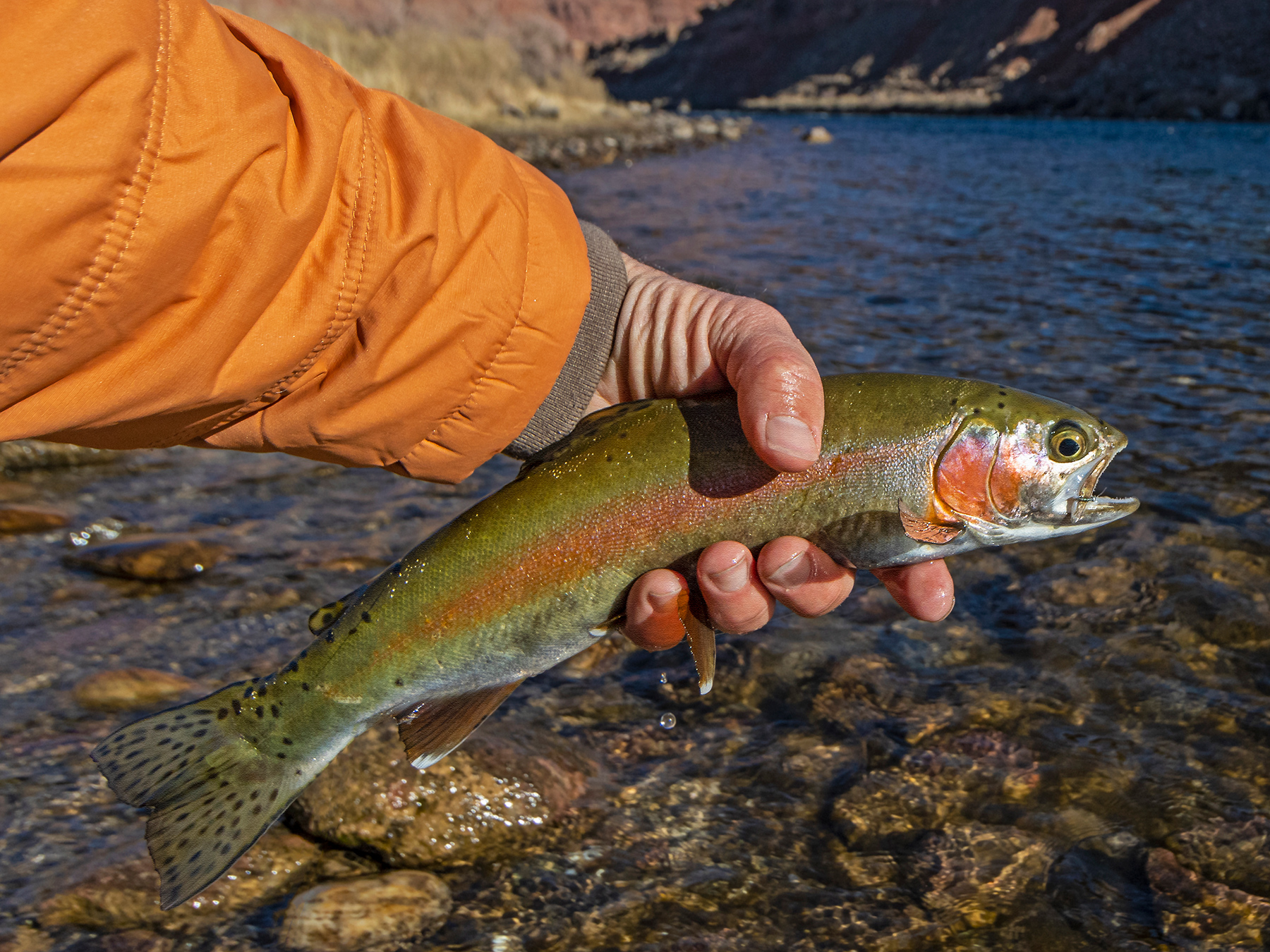
Lee's Ferry is Arizona's headline fishery: the Colorado River below Glen Canyon Dam near Page, running cold and green beneath sandstone walls, holding rainbow and brown trout. Fall through spring brings cooler water and steadier flows; summer can fish well too, when terrestrials — hoppers, ants, beetles, and cicada-style patterns — take over from the year-round midge base. Both boat and wade access matter here, via the Lee's Ferry area and surrounding Glen Canyon National Recreation Area reaches. The fishery is under specialized trout management and sees heavy pressure, so check current special regulations before fishing. Full Lee's Ferry guide
Oak Creek
Oak Creek runs through Oak Creek Canyon near Sedona — a spring creek in one of the most photographed landscapes in the Southwest. Rainbows and browns are the main quarry, with smallmouth bass in the mix on the lower water. Spring and fall are the most comfortable and consistent windows; summer mornings and evenings still produce. The trout feed on mayflies, caddis, and midges, with terrestrials increasingly important in the warm months. Access is a patchwork of roadside pullouts, canyon trails, and public land stretches in the canyon and nearby recreation areas. Management varies by stretch — some water may carry artificial-lure, fly-only, or seasonal rules — so verify before you fish.
Black River
The Black is the backbone of White Mountains fly fishing: a freestone in the Apache-Sitgreaves National Forest holding Apache trout alongside rainbows and browns. Late spring through early fall is the season, once mountain roads open and insect activity peaks — mayflies, caddis, and summer terrestrials are the staples. Access is by forest roads, trailheads, and dispersed public land reaches, which keeps pressure light for anyone willing to walk. Sections may carry special native-trout regulations, so confirm the current rules for Apache trout waters before keeping anything.
West Fork of the Black River
The West Fork is the Black's smaller, higher sibling — classic White Mountains pocket water for Apache trout and rainbows. The window is the same late-spring-through-early-fall season, with the best fishing often at moderate flows after snowmelt drops out. Mayflies, caddis, and terrestrials cover the hatch chart; this is light-rod, short-cast fishing where presentation matters more than pattern. Access runs through national forest land and road-based trails near Alpine and Greer. Native-trout protections may apply — check current regulations.
East Fork of the White River
Another Apache-Sitgreaves freestone near Alpine and Greer, the East Fork of the White adds brook trout to the Apache-and-rainbow mix. Late spring through early fall is the reliable window for both access and active feeding, with mayflies, caddis, and terrestrials as the primary foods. Public access is through forest roads and trailheads. The stream is closely associated with native-trout conservation, and special rules are common — read the current regulations before targeting Apache trout.
Little Colorado River
The Little Colorado's headwaters in the White Mountains near Springerville and Eagar hold Apache trout and rainbows in small, remote water. Late spring through fall is the season, when flows are manageable and road access is open. Expect standard coldwater fare — mayflies, caddis, terrestrials — and expect to work for access via national forest lands, remote road corridors, and trails. Arizona's native-trout waters often carry restrictive harvest rules, and this drainage is central to Apache trout recovery, so check the special regulations carefully.
Lower Salt River
The Lower Salt, below Saguaro Lake east of Phoenix, is the desert's odd and excellent answer to a trout stream: a tailwater where rainbows fish best in winter and early spring, then hand the river over to largemouth, smallmouth, and carp as the water warms. Trout eat midges and small aquatic insects; the warmwater crowd keys on baitfish, crayfish, and — for the carp — algae-based feeding that demands patient presentations. Public access is strong through Tonto National Forest recreation areas and river access points, and wading is the norm. Some stretches carry seasonal or gear restrictions under Arizona Game and Fish rules.
Verde River
The Verde is central Arizona's year-round generalist river. The lower and middle sections near Cottonwood and Camp Verde fish as warmwater — smallmouth, largemouth, catfish, and carp, best in spring and fall — while cooler upper reaches can hold trout in winter and spring. Forage is minnows, crayfish, and terrestrials along vegetated banks, so streamers and hopper-style dries do most of the work. Access varies by reach through state parks, national forest boundaries, and river access areas. Regulations vary substantially by stretch, including possible harvest or gear restrictions, so check the rules for the water you plan to fish.
Seasons at a glance
Think of Arizona as two fisheries on opposite calendars. From late fall through spring, the low-elevation water peaks: Lee's Ferry fishes its best in the cool months, the Lower Salt runs its winter trout season, and the Verde's upper reaches hold trout through winter and spring. From late spring through early fall, the action moves up to the White Mountains, where snowmelt recedes, forest roads open, and Apache trout streams come alive with mayflies, caddis, and terrestrials.
Summer is the one season that requires care: the low desert gets brutally hot and its fisheries suffer, but high-country streams and terrestrial fishing at Lee's Ferry can still be excellent. Spring and fall are the crossover windows when nearly everything fishes.
Beyond trout
Arizona's best non-trout fly fishing is warmwater: bass, carp, and catfish on the reservoirs and rivers around Phoenix, especially the Salt River system and lakes like Pleasant and Roosevelt. Lake Pleasant is known for largemouth and striped bass, while the Lower Salt and Verde produce carp and bass on flies through the warm months. Being landlocked, Arizona has no saltwater game — the carp flats are the closest local substitute, and plenty of anglers treat them that way.
Licenses and regulations
Fishing in Arizona is managed by the Arizona Game and Fish Department. Anglers need a valid license, with resident, nonresident, and short-term options; a separate trout stamp is not generally required. Note that special area or tribal rules may apply on some waters, and native-trout waters carry restrictive harvest rules. Special-regulation notes are listed per river above. Regulations change annually, so verify current rules with the Arizona Game and Fish Department before your trip.
What's changing
Glen Canyon Dam releases remain variable under ongoing drought protocols, which continues to affect wadeability and insect production at Lee's Ferry — check flow projections before committing to a wade trip. In the White Mountains, Apache trout recovery has progressed far enough that limited additional angling opportunities have opened in tributaries previously closed to fishing. A riparian fencing and bank stabilization project on the upper Verde was completed in 2024. The 2025–26 AZGFD regulations show no broad statewide rule or stocking changes.
Where to start
One weekend in Arizona: in the cool half of the year, drive to Page and fish Lee's Ferry — it is the state's signature water and winter is its prime time — or stay near Phoenix and pair Lower Salt trout with Verde smallmouth. In summer, head for the White Mountains out of Alpine or Greer, and put an Apache trout on your list; catching a native fish that exists almost nowhere else is the most distinctly Arizonan thing you can do with a fly rod.
Neighboring states worth pairing with an Arizona trip:
Fly Fishing in New Mexico Fly Fishing in Utah Fly Fishing in Colorado