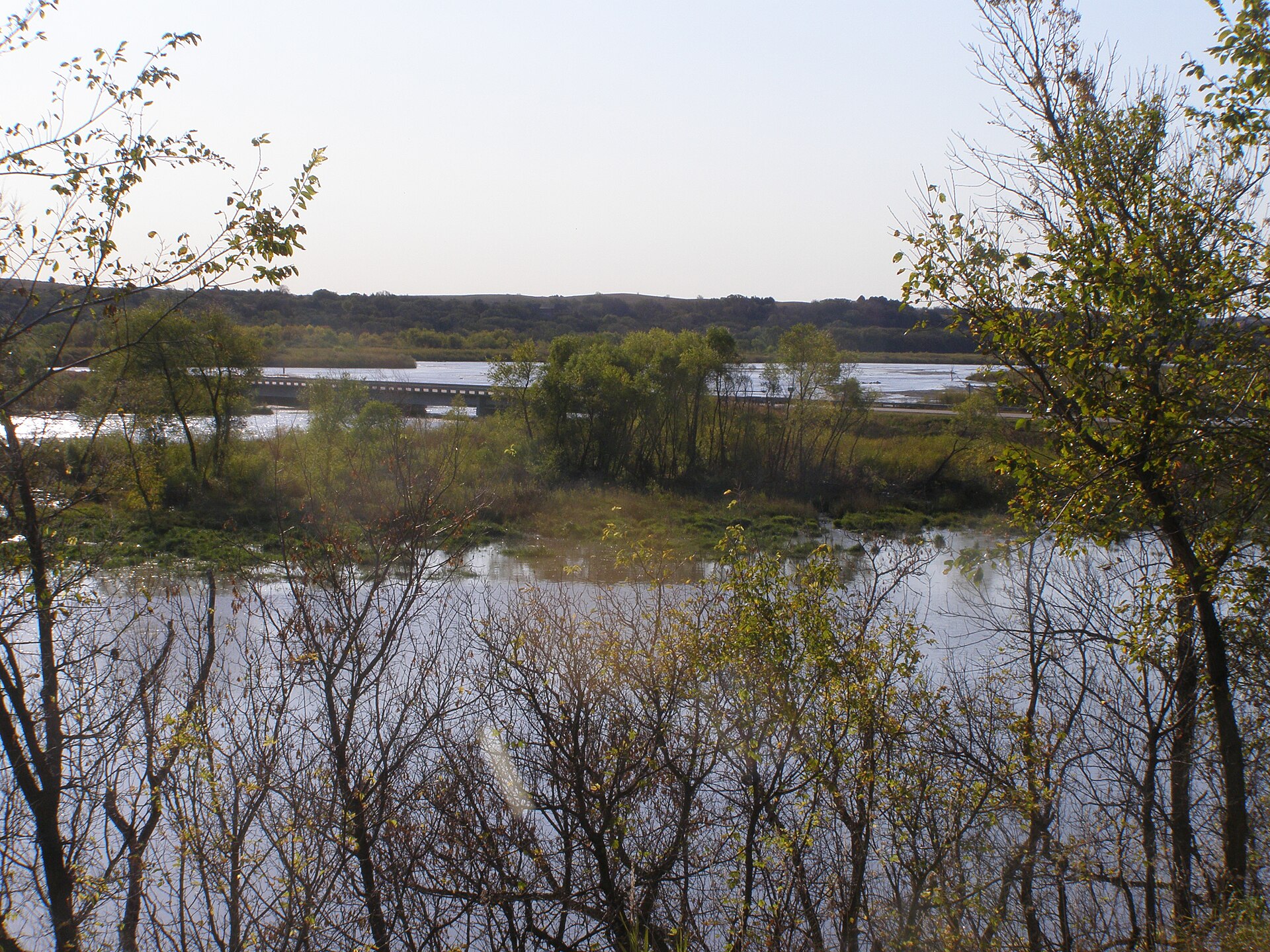
Quick reference
| Field | Value |
|---|---|
| State / region | Nebraska, northern part of the state — running east across the Sandhills toward the Missouri River |
| Species | Smallmouth bass, brown trout, rainbow trout, northern pike, largemouth bass, panfish |
| Best months | March–June for trout before summer heat; July–August for smallmouth and other warmwater species |
| Water type | Warmwater river with stocked trout reaches in the northern counties |
| Difficulty | Intermediate — the tactics are forgiving, but finding legal, fishable water takes homework |
| Wading | Variable. Wading works around bridge crossings and public parcels, but the best fish-holding water is often deep and slack; boots with good grip are worth it |
Why fish here
The Niobrara is a long Great Plains river that does not fit the classic trout-stream mold — and that is precisely its appeal. The best-known fly fishing sits in the northern reaches, in Sioux, Dawes, and Box Butte counties, where brown and rainbow trout are stocked and the fishing has an exploratory feel: much of the river runs through private land, so public water concentrates effort and rewards anglers willing to scout. This is lightly pressured water by most standards, in scenic river country better known to paddlers than to anglers.
The other half of the case is the species list. Beyond the stocked trout, the broader Niobrara system holds smallmouth and largemouth bass, catfish, sauger, walleye, northern pike, white bass, crappie, carp, and buffalo depending on reach — which means the river keeps producing when trout action slows and offers a legitimate warmwater program through the heat of summer. Fish it as a mixed fishery: trout water in spring, deep slack-water seams and structure for everything else as temperatures climb.
Set expectations accordingly. The river's own management sources are candid that some reaches — including the refuge corridor near Valentine — are not high-value fisheries. The reward here is not numbers or size records; it is having a plains river mostly to yourself, with enough variety to fill a weekend.
The river, section by section
Upper Niobrara trout reach (Sioux, Dawes, and Box Butte counties)
Access: Documented public access at Agate Fossil Beds National Monument; much of the reach is private and requires landowner permission Character: Trout-managed water on a larger plains river — mixed runs with deeper slack water as the important fish-holding habitat; more about locating seams and slow pockets than technical pocket-water wading Species mix: Stocked brown and rainbow trout are the documented targets; the broader system adds smallmouth, largemouth, catfish, sauger, walleye, pike, white bass, and crappie by reach Crowding: Not documented as heavily crowded, but limited public access concentrates pressure at accessible spots — expect more company on spring weekends Notable hatches: Caddis, Blue-Winged Olives, and general mayfly/nymph fishing are the best-documented categories, with terrestrials producing in warmer months
This is the exploratory end of the river. The trout are here, the public water is scarce, and the anglers who do well treat access as the first problem to solve — starting from Agate Fossil Beds and building from there with landowner permission where possible.
Once on the water, the program is uncomplicated: dead-drift nymphs and small dries through the deeper seams and slower pockets where trout hold, and cover water until fish show.
Fort Niobrara / Cornell Dam downstream reach
Access: Fishing is allowed on the river downstream from Cornell Dam within Fort Niobrara National Wildlife Refuge; everything upstream of the dam is closed to public access Character: A float-influenced refuge corridor with deeper water and limited bank access — legal access runs sunrise to sunset, and the refuge itself notes this is not known as a high-value fishery Species mix: Subject to Nebraska regulations; the refuge lists no special species mix, but the corridor can hold the river's mixed species depending on location Crowding: Float traffic is significant — the refuge prohibits limb and set lines specifically because of the volume of river floaters Notable hatches: No refuge-specific hatch documentation; standard Nebraska trout-stream patterns and terrestrials are the best-supported choices
Fish this reach with clear eyes: it is a legal, accessible piece of a river that is mostly closed or private nearby, not a destination fishery in its own right. Timing matters more than usual here — early starts beat the tube-and-canoe traffic that builds through summer days, and the sunrise-to-sunset access window is enforced.
Refuge rules add a few wrinkles beyond state law, including a required wristband purchased at the launch kiosk for all river users and prohibitions on collecting baitfish, frogs, and turtles.
Niobrara State Park / town of Niobrara reach
Access: Niobrara State Park on the east side of the town of Niobrara, with additional access along State Highway 14 Character: Big-river water near the Missouri confluence — access-oriented fishing where the play is deep water and slack current, especially as temperatures rise; dead-drifted nymphs and slow-stripped streamers into softer water are the core presentations Species mix: Trout are documented fly targets, with bass and panfish in some stretches of this lower river Crowding: The best-documented public access on the river, so the most likely place to see other anglers — spring and weekends busiest Notable hatches: Elk Hair Caddis, gnats, Pheasant Tails, Prince Nymphs, and later-summer terrestrials such as chubby-style dries are specifically documented for this water
The state park is the river's most reliable single access and the natural base for a first Niobrara trip. The fishing rewards patience over coverage: rather than pounding fast water, find the deep, slow holding water and work it thoroughly with nymphs, then switch to terrestrials or streamers as the day warms.
Highway 14 provides supplementary access along this reach, though no single named pull-off is documented — treat it as a scouting corridor rather than a mapped destination.
Reservoir-influenced and warmwater transition reaches
Access: No single named access point is documented; access is public only where specifically designated, with substantial private land elsewhere Character: Mixed river habitat tied to deeper water, slack seams, and warmwater structure rather than trout-stream form; conditions shift with flows and reservoir influence Species mix: The full warmwater roster — catfish, sauger, walleye, northern pike, buffalo, carp, largemouth and smallmouth bass, white bass, and crappie are documented in the system Crowding: Not specifically documented; the known public access points and scenic-river sections draw the most attention Notable hatches: Forage-driven fishing — streamers, terrestrials, and attractor nymphs beat precise hatch-matching in these reaches
These transitions are where the Niobrara becomes an honest warmwater fishery, and they extend the season past the point where trout fishing fades. A streamer worked slow along structure covers most of the species list in one presentation.
Hatches and seasons
| Months | Hatches | Flies |
|---|---|---|
| Mar–Apr | Early-season mayflies, midges/gnats, and caddis; nymphing and small dries are the practical tactics | Pheasant Tail Nymph #14–18, Prince Nymph #14–18, Elk Hair Caddis #16–18, small gnat patterns #18–20 |
| May–Jun | The strongest documented window — caddis, mayflies, and building terrestrial activity | Elk Hair Caddis #16–18, Blue-Winged Olive patterns #18–20, Hare's Ear Nymph #14–16, Chubby Chernobyl #8–12 |
| Jul–Aug | Terrestrials take over — hoppers, chubbies, crickets, and surface attractors, fished near deeper water and slack seams | Chubby Chernobyl #8–12, hopper patterns #6–10, cricket patterns #10–14, Woolly Bugger #4–8 |
| Sep–Nov | Pattern-driven rather than hatch-driven; nymphs and streamers stay reliable as water cools | Woolly Bugger #4–8, Pheasant Tail Nymph #14–18, Prince Nymph #14–18, small caddis dries #16–18 |
Recommended flies (by season)
| Season | Top patterns | Why |
|---|---|---|
| Spring | Elk Hair Caddis, Pheasant Tail Nymph, Prince Nymph, Hare's Ear Nymph, BWO dries and emergers, small Woolly Bugger | Spring is the best-documented season on the trout water, and sources specifically recommend caddis, small nymphs, and streamers for working the deeper seams |
| Summer | Chubby Chernobyl, hoppers, cricket patterns, Woolly Bugger, small caddis dries | As water warms, terrestrials become the main event, fished to the deeper, slower water where trout and warmwater fish both hold |
| Fall | Woolly Bugger, Muddler-style streamers, Pheasant Tail and Prince Nymphs | Fall is covering-water season — streamers and nymphs find aggressive fish as surface activity turns unpredictable |
| Winter | Small nymphs, midge and gnat patterns, sparse streamers | Winter-specific Niobrara data is thin, so small subsurface patterns fished slowly are the defensible cold-water play |
Gear notes
A 9-foot 5-weight is the documented rod recommendation for the Niobrara, and a 5-weight sink-tip line earns its place for streamer work in the deep, slow water that holds most of the fish. Run 7.5–9 foot leaders tapered to 3X–5X for nymphs and dries, and carry 0X–3X for larger streamers. Wading boots matter because the productive water is often deeper and slower than it looks. In summer, add a box of terrestrials and a net — the river rewards close-range presentations into slack water and deep seams.
Logistics
- Regulations: Nebraska Game and Parks Commission statewide regulations apply; a fishing permit is required for residents and non-residents 16 and older. The statewide trout limit cited in the research is five daily and twelve in possession, with no more than one fish over 16 inches. Fort Niobrara National Wildlife Refuge (U.S. Fish and Wildlife Service) adds its own rules: fishing only on Minnechaduza Creek and the river downstream from Cornell Dam, sunrise-to-sunset access, a required wristband from the refuge launch kiosk, and prohibitions on limb/set lines and collecting baitfish, frogs, and turtles. Hook-and-line fishing is open year-round statewide except where posted. Regulations change annually — verify before the trip.
- Access points:
- Niobrara State Park — key access on the east side of the town of Niobrara; one of the river's better public locations
- State Highway 14 crossings — documented general access along the lower river, without a single named pull-off
- Agate Fossil Beds National Monument — public access on the trout-oriented northern water
- Cornell Dam / Fort Niobrara NWR downstream fishing area — legal refuge water below the dam; upstream is closed
- Fort Niobrara NWR launch kiosk — wristband pickup point for all river users
- Nearest towns: Niobrara, Valentine, Verdigre, Ainsworth, Alliance
- Closest gauge: USGS 06461500 — Niobrara River near Sparks, NE — a state recreation report gives 460–1,200 cfs as acceptable and 600–900 cfs as optimal for floating this river
When NOT to fish here
Avoid high or blown-out water after runoff and major rain — the river fishes best through its deeper, calmer water, and marginal access gets worse when flows are up. The refuge corridor's sunrise-to-sunset window is a hard constraint, and summer float traffic below Cornell Dam can make midday fishing there an exercise in dodging tubes. The best-known public access points draw their heaviest use on spring weekends. And for anyone combining fishing with floating, flows outside the documented 460–1,200 cfs recreation range make for a poor trip.
Where to fish next
- Fly Fishing in Nebraska — the full state guide
- Verdigre Creek — a nearby stocked trout stream option in the same corner of the state
- Missouri River — the big water the Niobrara feeds, with a full warmwater and walleye fishery